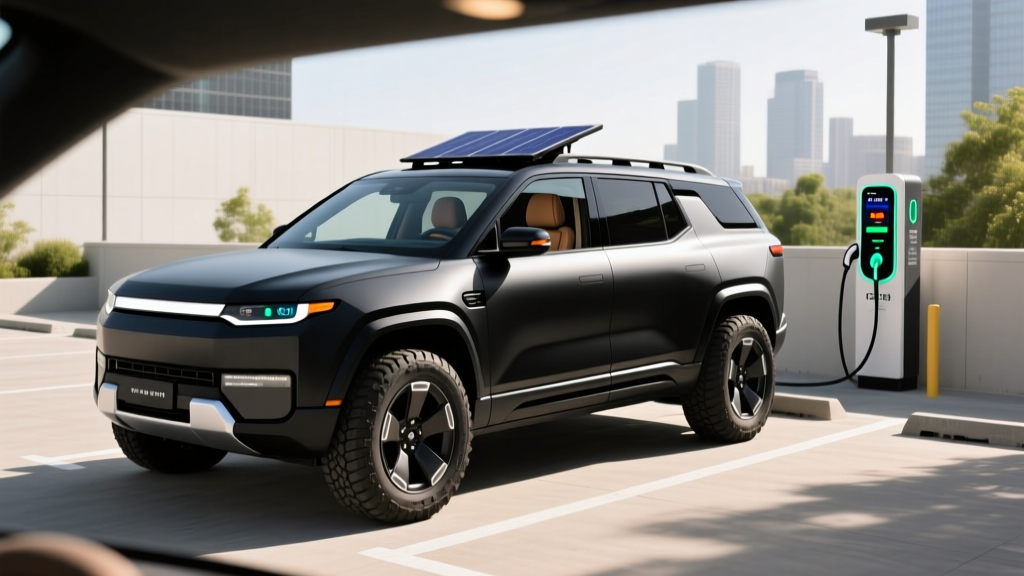
The Rivian R1S occupies a rare position in the EV market: a three-row, body-on-frame electric SUV that can tow 7,700 pounds, tackle off-road trails, and still hit 60 mph in under three seconds in quad-motor form. But for families shopping the R1S, the first question is often about crash protection. In this review, we examine the Rivian R1S safety rating in detail, then cover the specs that matter for daily ownership — real-world range, charging speed, pricing after federal tax credits, and how it stacks up against the Tesla Model X, Hyundai Ioniq 9, and Cadillac Escalade IQ.
Rivian R1S Safety Rating: IIHS and NHTSA Results
The second-generation R1S (introduced for the 2025 model year and continuing into 2026) earned strong safety credentials. The Insurance Institute for Highway Safety (IIHS) named the R1S a TOP SAFETY PICK+ for the 2025 model year — the highest distinction the institute awards — with Good ratings across all crashworthiness tests including the updated moderate overlap front and side tests.
On the federal side, the National Highway Traffic Safety Administration (NHTSA) awarded the R1S a 5-Star Overall Safety Rating, with five stars in frontal crash, side crash, and rollover categories. The low center of gravity from the under-floor battery pack contributes to excellent rollover resistance — a historic weak point for tall, body-on-frame SUVs.
Standard Driver-Assistance and Active Safety
Every R1S comes equipped with Rivian's Driver+ suite, which includes:
- Adaptive cruise control with stop-and-go
- Lane-centering assist on divided highways
- Automatic emergency braking with pedestrian detection
- Blind-spot monitoring with rear cross-traffic alert
- 360-degree camera system
- Trailer-assist reverse guidance
Range, Battery, and Real-World Efficiency
The 2026 R1S is offered with three battery pack options. The second-generation R1S moved to a more efficient dual-motor architecture and an available Max Pack that pushes EPA range well past 400 miles.
| Pack | Usable Capacity | Chemistry | EPA Range (Dual-Motor) | EPA Range (Performance Dual) |
|---|---|---|---|---|
| Standard | 92 kWh | LFP (prismatic) | ~270 mi | ~250 mi |
| Large | 109 kWh | NMC (cylindrical) | ~330 mi | ~315 mi |
| Max | 141 kWh | NMC (cylindrical, 46mm) | ~410 mi | ~390 mi |
Efficiency for the Dual-Motor Large Pack lands around 73 MPGe combined (per fueleconomy.gov), which translates to approximately 46 kWh per 100 miles. That's reasonable for a 6,900-pound three-row SUV but trails unibody crossovers like the Hyundai Ioniq 9.
Charging Speed: DC Fast and Home Level 2
The second-generation R1S brought a meaningful charging architecture upgrade. Dual-motor configurations now support up to 220 kW peak DC fast charging on the Max Pack and Large Pack, while the Standard LFP pack peaks around 175 kW. Quad-motor variants are capped lower at roughly 190 kW.
| Charging Level | Power | Speed / Time | Notes |
|---|---|---|---|
| Level 1 (120V) | ~1.4 kW | ~3 mi/hr | Emergency/trickle only |
| Level 2 (240V, 48A) | 11.5 kW | ~25 mi/hr | Full overnight charge in ~10-14 hrs |
| DC Fast (Max/Large Pack) | 220 kW peak | 10–80% in ~25 min | Tapers significantly above 80% |
| DC Fast (Standard LFP) | 175 kW peak | 10–80% in ~28 min | Smaller battery = faster absolute fill |
The R1S uses the NACS (North American Charging Standard) connector natively on 2025+ models, giving it direct access to the Tesla Supercharger network — over 20,000 stalls nationwide — without an adapter. This is a significant practical advantage for road-trip charging.
One real-world charging caveat: the 220 kW peak rate is only sustained between roughly 15% and 35% state of charge. Above 60%, the charge curve tapers steeply, and above 80%, you'll see rates drop below 50 kW. Always plan road-trip stops around 10–80% charges to minimize time at the plug.
Performance and Drivetrain Configurations
The 2026 R1S offers multiple drivetrain configurations that dramatically change its character:
- Dual-Motor AWD: 533 hp, 610 lb-ft torque, 0–60 mph in ~4.5 seconds. This is the volume seller and the range leader.
- Performance Dual-Motor AWD: 665 hp, 820 lb-ft, 0–60 in ~3.4 seconds.
- Quad-Motor AWD: 1,025 hp, 1,198 lb-ft, 0–60 in ~2.9 seconds. Independent motors at each wheel enable torque vectoring and tank turns.
- Tri-Motor AWD (Performance): 850 hp, 1,103 lb-ft, 0–60 in ~3.1 seconds. One rear motor deleted from the quad for a balance of performance and efficiency.
All configurations feature standard all-wheel drive, air suspension with adjustable ride height (up to 14.9 inches of ground clearance), and a maximum towing capacity of 7,700 pounds when properly equipped. The R1S's tow rating leads the Hyundai Ioniq 9 (towing not yet rated at launch) but trails the Tesla Model X (up to 5,000 lbs) in some configurations while exceeding it in others — the Model X maxes at 5,000 lbs.
Interior Space, Cargo, and Technology
As a three-row SUV, the R1S accommodates up to seven passengers (2+3+2) or six with optional second-row captain's chairs. Key interior dimensions:
- Cargo behind 3rd row: 11.6 cu ft
- Cargo behind 2nd row (3rd folded): 46.7 cu ft
- Max cargo (all rear seats folded): 91.6 cu ft
- Front trunk (frunk): 11.1 cu ft — lockable, drainable, and useful for gear or groceries
- Front headroom: 41.3 in
- Second-row legroom: 38.7 in
- Third-row legroom: 30.4 in (best for children or short trips)
The third row is tighter than a full-size SUV like the Escalade IQ but competitive with the Model X. The flat floor from the skateboard platform helps, and the available panoramic glass roof adds airiness.
Infotainment and Tech
The 2026 R1S features a 15.6-inch central touchscreen running Rivian's custom operating system, a 12.3-inch digital driver display, and a 6.8-inch rear passenger screen. Wireless Apple CarPlay and Android Auto are standard. The vehicle supports over-the-air (OTA) software updates that regularly add features — Rivian has a strong track record of meaningful OTA improvements, including enhanced camp mode, pet mode, and driver-assist refinements.
The available camp kitchen accessory (a slide-out induction cooktop and sink system that integrates with the vehicle's electrical system) remains a unique differentiator, as does the built-in flashlight stored in the driver's door and the gear tunnel pass-through (R1T truck only, but the R1S shares the platform DNA).
Pricing, Trims, and Federal Tax Credit Eligibility
| Trim | Drivetrain | Battery | Base MSRP |
|---|---|---|---|
| Adventure (Dual-Motor) | AWD | Standard (LFP) | ~$79,900 |
| Adventure (Dual-Motor) | AWD | Large (NMC) | ~$85,900 |
| Ascend (Dual-Motor) | AWD | Max (NMC) | ~$99,900 |
| Ascend (Tri-Motor) | AWD | Max (NMC) | ~$109,900 |
| Ascend (Quad-Motor) | AWD | Max (NMC) | ~$119,900 |
Federal EV Tax Credit: Does the R1S Qualify?
This is where R1S buyers need to pay close attention. Under IRS §30D rules, the federal clean vehicle credit of up to $7,500 has strict eligibility requirements:
- MSRP cap for SUVs: $80,000. Only the base Adventure Dual-Motor with the Standard LFP pack qualifies at ~$79,900 MSRP. Any upgrade to the Large or Max battery, or the Ascend trim, pushes the R1S above the cap and eliminates the credit.
- Buyer income cap: Modified adjusted gross income (MAGI) must not exceed $150,000 (single), $225,000 (head of household), or $300,000 (married filing jointly).
- Battery sourcing: A percentage of critical minerals and battery components must be sourced from the U.S. or free-trade-agreement countries. Rivian has been working to localize supply chains, but eligibility for the full $7,500 versus a partial $3,750 depends on the specific build date and battery pack. Check the DOE/EPA qualifying vehicle list at the time of purchase.
- Point-of-sale transfer: The credit can be applied at the dealer as an instant rebate, reducing your out-of-pocket cost at delivery.
Warranty and Long-Term Ownership
Rivian backs the 2026 R1S with:
- Battery and drive unit: 8 years / 175,000 miles (whichever comes first) with a guaranteed minimum 70% capacity retention
- Bumper-to-bumper: 5 years / 60,000 miles
- Corrosion perforation: 5 years / unlimited miles
The 175,000-mile battery warranty is competitive with industry standards (Tesla offers 8 years / 150,000 miles on the Model X, Hyundai offers 10 years / 100,000 miles on the Ioniq 9). The 70% retention threshold is standard, though we'd prefer to see 80%. Real-world degradation data on the second-gen Rivian packs is still accumulating, but first-generation R1S owners report approximately 5–8% degradation after 50,000 miles, which is in line with NMC industry averages.
Rivian operates a mobile service fleet for many repairs and has been expanding its physical service center network. However, service availability remains thinner than Tesla's in many regions — a factor worth considering if you're outside a major metro area.
R1S vs. Key Competitors: Which Should You Choose?
- Best-in-class safety ratings (IIHS TSP+ / NHTSA 5-Star)
- Up to ~410 miles EPA range with Max Pack
- Genuine off-road capability with air suspension
- 7,700-lb towing capacity
- NACS connector for Supercharger access
- Unique adventure features (camp kitchen, frunk)
- Strong OTA update track record
- Most trims exceed $80K MSRP cap — no tax credit
- Third row is tight for adults on long trips
- Charging speed (220 kW peak) trails Hyundai/Kia 800V architecture
- Service center coverage still limited in rural areas
- High starting price vs. non-electric 3-row SUVs
- Insurance premiums run 15-25% above gas equivalents
- Choose the R1S if: You need a three-row SUV that can tow, go off-road, and still deliver 300+ miles of range — and you value top-tier safety ratings above all. The R1S is the best adventure-family EV available.
- Choose the Tesla Model X if: You prioritize Supercharger network density (though R1S now has access), falcon-wing novelty, or slightly lower pricing with tax credit eligibility on base trims.
- Choose the Hyundai Ioniq 9 if: You want a more affordable three-row EV with ultra-fast 800V charging architecture, and you don't need serious towing or off-road capability.
- Choose the Cadillac Escalade IQ if: You want maximum luxury and third-row space, and budget is less of a concern (starting well over $100K).
Frequently Asked Questions
What is the real-world range of the Rivian R1S?
With the Max Pack Dual-Motor, the EPA rates the R1S at approximately 410 miles. In real-world highway driving at 70-75 mph in mild weather, expect 340–370 miles. In sub-freezing temperatures, plan for 300–340 miles due to battery resistance and cabin heating demands. The Standard LFP pack delivers roughly 220–250 real-world highway miles.
How fast does the R1S charge at home and on the road?
At home on a Level 2 (240V, 48A) charger, the R1S accepts up to 11.5 kW, adding about 25 miles of range per hour — a full charge takes 10–14 hours depending on pack size. On DC fast chargers, the Max and Large packs peak at 220 kW, reaching 10–80% in approximately 25 minutes. The Standard LFP pack peaks at 175 kW with a similar 10–80% time due to its smaller capacity.
Does the Rivian R1S qualify for the $7,500 federal EV tax credit?
Only the base Adventure Dual-Motor with the Standard battery qualifies, as it sits just under the $80,000 MSRP cap for SUVs under IRS §30D rules. All other trims and battery configurations exceed the cap. Even for the base model, you must meet income limits ($150K single / $300K joint) and the vehicle must satisfy battery critical-mineral and component sourcing requirements. Verify eligibility on irs.gov and consult a tax professional.
Is the Rivian R1S worth buying over the Tesla Model X?
It depends on your priorities. The R1S wins on off-road capability, towing (7,700 vs. 5,000 lbs), safety ratings (IIHS TOP SAFETY PICK+), and adventure utility. The Model X wins on Supercharger network maturity (though the R1S now has NACS access), slightly faster charging in some configurations, and a more established service network. If you tow or go off-road, the R1S is the stronger choice. If you want the lowest-friction ownership experience with maximum range, the Model X remains compelling.
What is the Rivian R1S battery warranty?
Rivian covers the battery and drive unit for 8 years or 175,000 miles, guaranteeing at least 70% capacity retention over that period. The bumper-to-bumper warranty covers 5 years or 60,000 miles.