Quick Verdict: The Hummer EV 2X in 2026
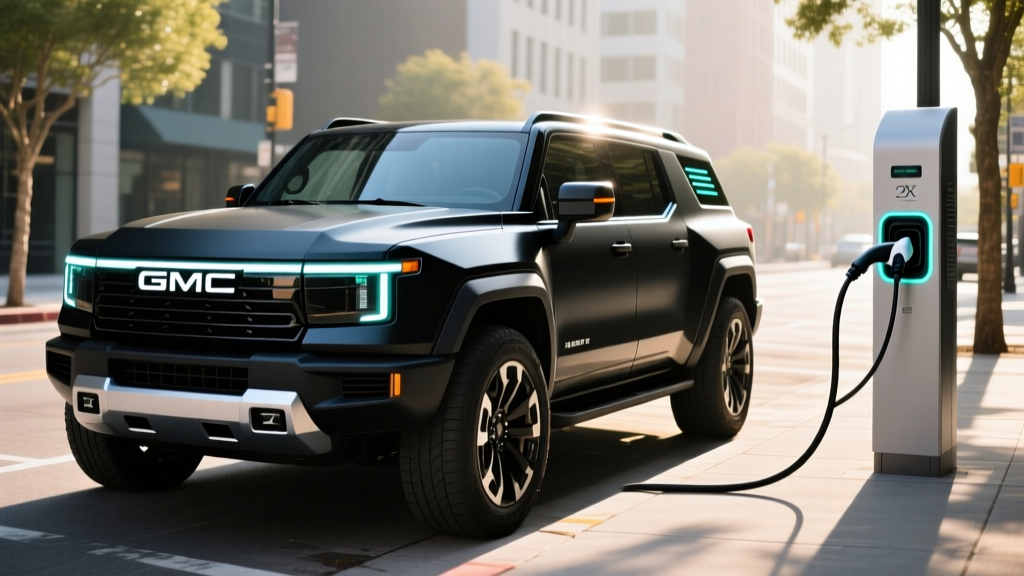
The 2026 GMC Hummer EV 2X occupies a space no other electric vehicle dares to fill: a 9,000-pound supertruck that can crab-walk diagonally, extract 655 horsepower from its dual-motor powertrain, and still deliver over 300 miles of EPA-estimated range. For the 2X trim specifically — the volume seller in the Hummer EV lineup — you get the Ultium platform's best combination of range, capability, and (relative) value, starting at $98,845 before any incentives.
But owning a Hummer EV 2X means accepting trade-offs that most EV buyers never face. Efficiency is poor by EV standards (47 MPGe combined), home charging requires serious electrical infrastructure, and the sheer physical footprint limits where you can park, garage, and charge it. This review breaks down every number that matters — from real-world highway range to DC fast-charge taper curves — so you know exactly what you're signing up for.
Range and Efficiency: EPA vs. the Real World
The 2026 Hummer EV 2X pickup carries an EPA-estimated range of 314 miles on its massive battery pack. That number places it squarely in competition with full-size electric trucks like the Ford F-150 Lightning Extended Range (320 miles) and the Rivian R1T Dual-Motor Max Pack (352 miles). But the EPA sticker only tells part of the story with a vehicle this heavy and aerodynamically challenged.
Real-World Highway (70-75 mph): ~245–270 miles
Cold Weather (below 32°F, highway): ~210–235 miles
City/Mixed Driving: ~280–305 miles
Why the gap? The Hummer EV 2X weighs over 9,000 lbs and has the aerodynamic profile of a brick. Highway speeds amplify both rolling resistance and drag, cutting range significantly below the EPA combined figure. Cold temperatures further reduce battery efficiency and increase cabin-heating load.
Efficiency is rated at 47 MPGe combined (45 city / 50 highway), which translates to roughly 71 kWh per 100 miles driven, according to fueleconomy.gov. For context, a Tesla Model Y uses about 28 kWh/100mi — the Hummer consumes more than 2.5 times the energy per mile. That's the physics of moving two and a half times the mass with three times the frontal area.
| Spec | Value |
|---|---|
| EPA Range | 314 miles |
| Battery (Usable) | ~212 kWh (NMC lithium-ion, Ultium platform) |
| Drivetrain | Dual-motor AWD (e4WD) |
| Horsepower | 655 hp |
| Torque | 7,400 lb-ft (wheel torque) |
| 0–60 mph | ~3.0 seconds |
| MPGe (Combined) | 47 MPGe |
| Energy Consumption | ~71 kWh/100mi |
| Max DC Fast Charge | 350 kW (peak) |
| Level 2 Charge Rate | 11.5 kW (onboard charger) |
| Towing Capacity | 7,500 lbs |
| Base MSRP (2X Pickup) | $98,845 |
| Battery/Powertrain Warranty | 8 years / 100,000 miles |
Battery Chemistry and Capacity
GMC equips the Hummer EV 2X with the largest Ultium battery pack in the GM portfolio: a double-stacked module configuration yielding approximately 212 kWh of usable capacity. The chemistry is NMC (nickel manganese cobalt), which GM has standardized across the Ultium platform for its energy density advantages — critical when you need 300+ miles from a vehicle this heavy.
The trade-off versus LFP (lithium iron phosphate) chemistry is that NMC is more sensitive to sustained high-state-of-charge storage and extreme heat, though GM's active thermal management system mitigates most day-to-day degradation concerns. The 8-year/100,000-mile battery warranty guarantees that the pack will retain at least 60% of its original capacity during the coverage period, though real-world Ultium degradation data from 2022–2025 model-year vehicles suggests most packs retain 90%+ capacity within normal use patterns over the first 50,000 miles.
Charging Speed: DC Fast, Level 2, and Infrastructure Reality
Charging a 212 kWh battery is a fundamentally different proposition than topping off a 75 kWh crossover pack. GMC rates the Hummer EV 2X at a peak 350 kW DC fast-charge rate on compatible CCS or NACS chargers (GM transitioned to NACS ports for the 2025 model year, granting native Tesla Supercharger access). However, peak rate and sustained rate are very different things — a distinction every Hummer EV buyer must understand.
| Level | Power (kW) | Miles Added per Hour | Notes |
|---|---|---|---|
| Level 1 (120V, 12A) | ~1.4 kW | ~2 mi/hr | Emergency only; 100+ hours for full charge |
| Level 2 (240V, 48A) | 11.5 kW | ~16 mi/hr | Full charge in ~18–20 hours |
| Level 2 (240V, 80A) | 19.2 kW | ~27 mi/hr | Requires upgraded home charger + 100A circuit |
| DC Fast (peak) | 350 kW | ~100 mi in ~12 min | Only at 350 kW stations; curve tapers heavily above 80% |
| DC Fast (10–80%) | Avg ~200 kW | — | ~34–38 minutes on a 350 kW charger |
The charge curve on the Hummer EV 2X is aggressive in the 10–50% state-of-charge window, where you'll see sustained rates above 300 kW on an appropriately rated station. But above 60% SoC, the rate begins tapering to protect the massive pack, and above 80% it drops sharply — to around 50–80 kW. This is why the 10–80% time of roughly 35 minutes is the practical metric to plan road trips around. Charging from 80% to 100% on DC fast charging can add another 30+ minutes for relatively few miles gained.
At home, the 11.5 kW onboard charger means a full overnight charge adds roughly 130 miles in 8 hours — adequate for most daily driving but far from the "wake up full every morning" experience EV owners with smaller packs enjoy. If your commute regularly exceeds 100 miles round-trip, consider upgrading to an 80-amp Level 2 station (such as the Grizzl-E Smart or ChargePoint Home Flex configured for 80A) paired with a 100-amp dedicated circuit. Expect $2,000–$4,500 in total home charging installation costs including the charger unit, electrical panel work, permits, and electrician labor — potentially more if your home needs a 200A to 400A panel upgrade to support the load.
Performance and Capability
The dual-motor AWD powertrain in the Hummer EV 2X produces 655 horsepower and a headline-grabbing 7,400 lb-ft of wheel torque (note: this is torque measured at the wheels after gear reduction, not motor output torque — the comparable motor-shaft figure is approximately 775 lb-ft). The result is a 0–60 mph sprint in approximately 3.0 seconds, which is astonishing for a vehicle with a curb weight north of 9,000 pounds.
Beyond straight-line speed, the 2X trim includes GM's 4-Wheel Steer system, which enables the rear wheels to turn up to 10 degrees in phase with the front wheels (for tighter highway lane changes) or opposite the front wheels (for a dramatically reduced turning circle). The signature CrabWalk mode — where all four wheels steer in the same direction to move the vehicle diagonally — remains a party trick with genuine off-road utility for navigating tight trail obstacles.
Adaptive air suspension provides up to 15.9 inches of ground clearance in Extract Mode and can lower the vehicle by 2 inches for easier entry and highway aerodynamics. Towing capacity is rated at 7,500 pounds, though expect range to drop to 150–180 miles when towing a heavy trailer at highway speeds — a reality shared by every electric truck on the market.
Interior Space, Cargo, and Technology
The Hummer EV 2X is a five-passenger crew-cab truck with generous interior dimensions:
- Front legroom: 45.6 inches
- Rear legroom: 43.4 inches
- Bed length: 5 feet (with standard bed); multi-pro tailgate extends load floor
- Bed cargo volume: ~43.5 cu ft
- Front trunk (e-trunk/frunk): ~8.8 cu ft — one of the largest in any EV, with power-operated hood
- Max payload: ~1,300 lbs
The infinity roof features removable modular panels that stow in the frunk, giving open-air driving capability — a genuine differentiator versus competitors. The infotainment system runs on a 13.4-inch diagonal touchscreen with Google Built-In (Google Maps, Google Assistant, Play Store), wireless Apple CarPlay and Android Auto, and a 12.3-inch driver information center. The UltraVision camera system provides up to 18 camera views, including underbody cameras for off-road trail navigation.
On the driver-assistance front, the Hummer EV 2X includes Super Cruise — GM's hands-free Level 2 highway driving system — as standard. Super Cruise operates on over 750,000 miles of mapped divided highways in North America, using a combination of LiDAR-mapped HD data, GPS, cameras, and radar. It is an SAE Level 2 system: the driver must remain attentive, and a driver-monitoring camera ensures your eyes are on the road. This is not autonomous driving — it is an advanced driver-assist system that reduces fatigue on long highway stretches.
Pricing, Trims, and Federal Tax Credit Eligibility
The 2026 GMC Hummer EV 2X pickup starts at a base MSRP of $98,845 (including destination charge). This positions it between the entry-level 2X and the high-performance 3X trim ($106,445), which adds the third rear motor and Watts to Freedom launch-control mode. The SUV variant of the 2X carries a slightly higher starting price.
| Item | Amount |
|---|---|
| 2X Pickup Base MSRP | $98,845 |
| Typical As-Tested Price (Luxury Pkg, tow mirrors) | $104,000–$108,000 |
| IRS §30D Federal Tax Credit (max) | Up to $7,500 (if eligible) |
| Effective Price After Max Credit | ~$91,345 |
Federal tax credit eligibility for the Hummer EV 2X requires careful attention to IRS §30D rules. Because the MSRP exceeds $80,000, the Hummer EV qualifies under the truck/van/SUV MSRP cap (currently $80,000 for these vehicle classes). However, buyer eligibility depends on:
- Income caps: Modified AGI must not exceed $300,000 (joint filers), $225,000 (head of household), or $150,000 (single). Check current-year limits at IRS.gov §30D guidelines.
- MSRP cap: The Hummer EV 2X at $98,845 falls under the $80,000 cap for trucks, vans, and SUVs — it qualifies on vehicle price.
- Battery sourcing: The credit splits into two $3,750 halves — one for critical-minerals sourcing and one for battery-component manufacturing. GM's Ultium battery sourcing has progressively met domestic-content requirements, but exact eligibility shifts with supply-chain changes. Verify current-year compliance on the manufacturer's credit-eligibility page or with a tax professional.
- Point-of-sale transfer: As of 2024+, buyers can transfer the credit to the dealer at purchase, reducing the upfront price rather than waiting for a tax refund. This requires the dealer to be registered with the IRS Energy Credits Online system.
State and local incentives vary significantly and are beyond the scope of this review — consult your state's energy office or DMV for current rebates.
Ownership Costs: Charging, Insurance, and Maintenance
Running a Hummer EV 2X costs more per mile than virtually any other electric vehicle. At a national average electricity rate of $0.17/kWh (EIA, 2025), charging the 212 kWh pack from 10% to 90% at home costs approximately $30–$32. That yields roughly 250 usable miles, working out to $0.12–$0.13 per mile on home electricity. DC fast charging at $0.35–$0.50/kWh pushes that to $0.25–$0.35 per mile — approaching the cost of a fuel-efficient gas vehicle.
Insurance premiums for the Hummer EV 2X run 30–50% higher than the EV average, driven by the vehicle's $100K+ replacement cost, expensive body panels, and specialized repair requirements. Expect $3,500–$5,500 annually depending on your location, driving history, and coverage level. Tire replacement is another ownership reality: the 35-inch Goodyear Wrangler Territory MT tires are $450–$550 each, and the Hummer's weight accelerates wear — plan for replacement every 25,000–35,000 miles.
On the positive side, the Hummer EV eliminates oil changes, transmission fluid, and most brake wear (regenerative braking handles the majority of deceleration). GM's 8-year/100,000-mile battery and powertrain warranty covers the Ultium pack and both drive motors, with the battery guaranteed to retain at least 60% capacity over that period.
Pros
- 314-mile EPA range is competitive for a full-size EV truck
- 350 kW peak DC charging — among the fastest in its class
- Super Cruise standard for hands-free highway driving
- CrabWalk, 4-Wheel Steer, and Extract Mode are genuinely useful off-road
- Massive frunk and removable roof panels are unique differentiators
- 3.0-second 0–60 in a 9,000-lb truck is engineering wizardry
Cons
- 47 MPGe is the worst efficiency of any mainstream EV sold in 2026
- Base price near $100K; tax credit eligibility is income-dependent
- Real-world highway range drops to ~250 miles — plan road trips carefully
- Home charging requires expensive electrical upgrades for practical use
- Insurance and tire costs are substantially above EV averages
- Too large for many standard parking spaces and garage bays
Who Should Buy the Hummer EV 2X?
The Hummer EV 2X is the right choice if you need a full-size electric pickup with genuine off-road capability, want the most attention-grabbing EV on the road, and have the home infrastructure (240V/80A charging, oversized garage) to support it. It works well as a daily driver for suburban or rural owners with short-to-moderate commutes who also want weekend trail and towing capability.
It is the wrong choice if efficiency and low running costs are priorities, if you live in an apartment or lack home-charging access, or if you primarily drive in dense urban environments where the vehicle's 81.5-inch width and 18-foot length become daily frustrations. For those buyers, the Rivian R1T, Ford F-150 Lightning, or even the Chevrolet Silverado EV offer more practical proportions with similar capability.
Consider the Rivian R1T Dual-Motor instead if: You want a more practical size, better efficiency (70+ MPGe), a growing adventure network of Rivian chargers, and a starting price ~$25K lower.
Consider the Ford F-150 Lightning Extended Range if: You prioritize proven fleet reliability, wider dealer service access, and lower insurance costs in a full-size electric truck.
Frequently Asked Questions
What is the real-world range of the Hummer EV 2X?
The EPA rates it at 314 miles combined, but expect approximately 245–270 miles at sustained highway speeds (70–75 mph) and 210–235 miles in cold weather (below 32°F). City and mixed driving yields closer to the EPA figure at 280–305 miles. The vehicle's 9,000+ pound weight and poor aerodynamics disproportionately hurt highway efficiency.
How fast does the Hummer EV 2X charge?
On a 350 kW DC fast charger, it peaks at 350 kW and charges from 10–80% in approximately 34–38 minutes. The sustained average during that window is around 200 kW due to charge-curve tapering above 60% SoC. At home on a standard 48-amp Level 2 charger (11.5 kW), you'll add about 16 miles per hour — a full charge takes 18–20 hours.
How much does the Hummer EV 2X cost after tax credits?
The base MSRP is $98,845. If you meet all IRS §30D requirements — income caps, battery sourcing compliance, and point-of-sale transfer through a registered dealer — the maximum $7,500 credit brings the effective price to approximately $91,345. However, eligibility is not guaranteed for every buyer; verify your specific situation with the IRS guidelines and a tax professional.
Does the Hummer EV 2X qualify for the federal EV tax credit?
The vehicle itself qualifies under the §30D truck/SUV MSRP cap (under $80,000 threshold for these classes). Whether you personally receive the credit depends on your modified adjusted gross income, the battery's critical-mineral and component sourcing compliance in the current tax year, and purchasing through an IRS-registered dealer. GM's Ultium batteries have progressively met domestic-content requirements, but rules shift — always verify at IRS.gov before purchasing.
Is the Hummer EV 2X worth buying versus competitors?
It depends on your priorities. For pure off-road capability, presence, and technology showcase, nothing else matches it. For practical daily use, efficiency, and total cost of ownership, the Rivian R1T and Ford F-150 Lightning are more rational choices. The Hummer EV 2X is a statement vehicle that happens to be electric — buy it because you want exactly what it offers, not because it's the most economical path to electric-truck ownership.
What is the biggest drawback of owning a Hummer EV 2X?
Efficiency and charging logistics. At 71 kWh per 100 miles, the Hummer EV 2X consumes energy at more than double the rate of most EVs. This means higher electricity bills, longer charging sessions, and more frequent stops on road trips. Combined with its physical size — which limits compatible charging stalls and parking options — daily ownership requires more planning than any other EV on the market.