Quick Verdict: The Hummer EV Is a Physics-Defying Electric Supertruck
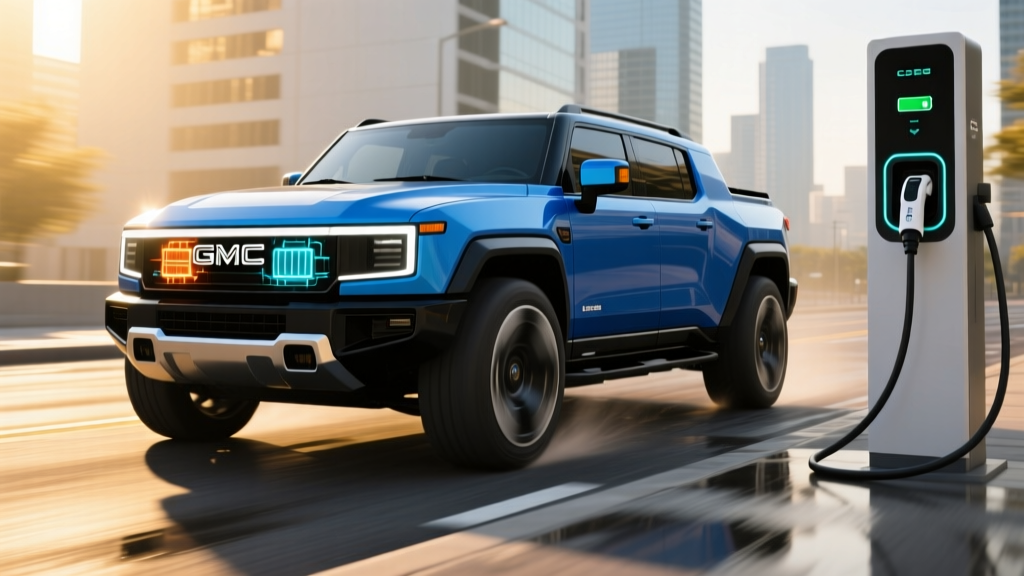
The GMC Hummer EV is the automotive equivalent of dropping a battleship into a sports-car race. With up to 1,000 horsepower (via Watts to Freedom mode), a curb weight approaching 9,500 pounds, and a 0-60 mph time of roughly 3.0 seconds in the Edition 1 and 3X trims, this electric supertruck rewrites what a full-size pickup can do. But beyond the headline-grabbing acceleration, the Hummer EV raises serious ownership questions: How far does it really go on a charge? Can you actually fast-charge something this massive? And does the math work after tax credits?
This review covers the 2026 GMC Hummer EV Pickup across its available trims — the 2X and 3X — with hard numbers on range, charging, efficiency, and cost. We'll also address the elephant in the garage: this truck is enormous, expensive, and purpose-built for a very specific buyer.
Spec Table: 2026 GMC Hummer EV Pickup at a Glance
| Specification | 2X Trim | 3X Trim |
|---|---|---|
| EPA Range | ~314 miles | ~329 miles |
| Battery (Usable) | ~212.7 kWh (NMC) | ~212.7 kWh (NMC) |
| Drivetrain | Dual-Motor AWD | Tri-Motor AWD |
| Horsepower | ~625 hp | ~1,000 hp (WTF mode) |
| 0-60 mph | ~5.0 sec | ~3.0 sec |
| Max DC Fast Charge | 350 kW (800V) | 350 kW (800V) |
| 10-80% DC Charge | ~34 min | ~34 min |
| Level 2 Charge Rate | 11.5 kW (~21 mi/hr) | 11.5 kW (~21 mi/hr) |
| Efficiency (MPGe) | ~47 MPGe | ~45 MPGe |
| Base MSRP | ~$106,395 | ~$121,395 |
| Battery Warranty | 8 yr / 100,000 mi | 8 yr / 100,000 mi |
0-60 mph and Performance: How Fast Is the Hummer EV Really?
The Hummer EV 0-60 time is the stat that dominates every headline, and for good reason. Engage Watts to Freedom (WTF) mode — which lowers the adaptive air suspension by roughly 2 inches, stiffens the dampers, and preconditions the battery and powertrain — and the tri-motor 3X launches to 60 mph in approximately 3.0 seconds. That puts a 9,500-pound truck in the same acceleration bracket as a Porsche 911 Carrera S.
The dual-motor 2X trim is no slouch either, hitting 60 mph in roughly 5.0 seconds with its estimated 625 hp. That's quicker than most gas-powered full-size trucks in their top performance trims.
Beyond straight-line speed, the Hummer EV's Ultium-based platform enables four-wheel steering (which GMC calls CrabWalk), allowing diagonal movement at low speeds — genuinely useful for tight off-road trails and surprisingly handy in parking situations. The air suspension offers up to 15.9 inches of ground clearance in Extract Mode, and the approach/departure angles rival dedicated off-road rigs.
The trade-off is mass. At nearly 9,500 pounds, the Hummer EV carries enormous kinetic energy. Braking distances are longer than lighter EVs, tire wear will be significant (GMC specifies 37-inch all-terrains), and the energy consumption reflects the weight.
Real-World Range: What the EPA Number Doesn't Tell You
EPA Estimated: 329 miles (3X) / 314 miles (2X)
Real-World Highway (70 mph): Expect 250–280 miles
Real-World Cold Weather (below 32°F): Expect 200–240 miles
Real-World Towing (5,000+ lb trailer): Expect 150–180 miles
The Hummer EV's EPA range figures look respectable for a truck of this size, but real-world physics intervene aggressively. The 212.7 kWh usable battery (gross capacity is approximately 246 kWh) is the largest in any production EV, yet the truck's aerodynamic profile — a brick wall with a windshield — and its massive weight crush efficiency at highway speeds.
In mixed city/highway driving at moderate temperatures, owners report achieving roughly 280–310 miles before needing a charge. Sustained 75-80 mph highway driving drops that to 250–280 miles. Cold weather (below freezing) compounds the loss: battery chemistry slows, cabin heating draws significant energy, and you can expect 200–240 miles of real range.
If you plan to tow — the Hummer EV is rated for 7,500 pounds — range collapses further. Towing a moderately loaded trailer cuts real-world range to approximately 150–180 miles. This isn't a GMC-specific issue; it's the reality of moving 15,000+ combined pounds through the air.
For daily commuting and local driving, the enormous battery provides ample buffer. For road trips, route planning around DC fast chargers is essential, and you should plan to stop more frequently than in a lighter EV like the Rivian R1T or Tesla Cybertruck.
Charging Speed: 800V Architecture and 350-kW Capability
The Hummer EV uses an 800-volt architecture, enabling peak DC fast-charging rates up to 350 kW — but only at compatible stations (Electrify America 350-kW chargers, select Tesla Superchargers with NACS adapter via the Ultium Charge network). At peak rate, GMC estimates a 10-80% charge in approximately 34 minutes.
Here's the nuance that spec sheets don't emphasize: the charging curve on a 212.7 kWh battery is long and flat compared to smaller packs. The Hummer EV sustains high charge rates for an extended window because the battery has so much capacity to fill. You'll see peak rates above 300 kW in the 10-40% range, then a taper through the 40-80% range. The sheer battery size means even a tapered charge rate at 60-80% SoC still adds meaningful range per minute.
| Charging Level | Power | Miles Added per Hour | Notes |
|---|---|---|---|
| Level 1 (120V) | ~1.4 kW | ~2–3 mi/hr | Emergency/trickle only; full charge takes days |
| Level 2 (240V, 48A) | 11.5 kW | ~21 mi/hr | Full charge in ~18–20 hours; overnight top-up realistic |
| DC Fast (350 kW) | Up to 350 kW | ~500+ mi/hr (peak) | 10-80% in ~34 min; requires 800V-capable station |
Home charging on Level 2 is practical for daily use but painfully slow for a full recharge. At 11.5 kW, adding 200 miles of range takes roughly 9.5 hours. A full 0-100% charge on Level 2 takes approximately 18–20 hours. Most owners will charge nightly, topping up 50–100 miles of daily use in 3–5 hours, which is perfectly workable.
Critical infrastructure note: to achieve the 11.5 kW Level 2 rate, you need a hardwired 60-amp circuit (or a 48-amp capable wall connector on a 60-amp breaker). Many homes will require a panel upgrade to support this — especially if you already have high-draw appliances. Budget $500–$2,000+ for electrical work depending on your panel capacity and run distance. Always consult a licensed electrician for final specifications.
Efficiency and Energy Consumption
According to fueleconomy.gov, the Hummer EV Pickup achieves approximately 45–47 MPGe combined, which translates to roughly 72–76 kWh per 100 miles driven. For context, the Rivian R1T Dual-Motor achieves about 73 MPGe (46 kWh/100mi), and the Tesla Cybertruck AWD sits around 119 MPGe (29 kWh/100mi for the smaller battery variant).
The Hummer EV consumes nearly three times the energy per mile of a Cybertruck. This is the cost of 9,500 pounds, a flat frontal area, and 37-inch tires. At the national average electricity rate of ~$0.17/kWh (as of early 2026), driving the Hummer EV costs approximately $0.12–$0.13 per mile — still cheaper than the ~$0.20–$0.25/mile fuel cost of a comparable gas truck getting 14 mpg, but the gap narrows significantly compared to efficient EVs.
Pricing, Trims, and Federal Tax Credit Eligibility
The 2026 GMC Hummer EV Pickup is available in two primary trims:
- 2X: Starting at approximately $106,395 (including destination). Dual-motor AWD, ~625 hp, 314-mile range.
- 3X: Starting at approximately $121,395 (including destination). Tri-motor AWD, ~1,000 hp, 329-mile range. Includes CrabWalk, Extract Mode, and advanced adaptive damping.
Optional packages (Extreme Off-Road, Infinity Roof with removable panels) can push as-tested prices to $130,000–$140,000+.
Does the Hummer EV qualify? No — the Hummer EV Pickup exceeds the $80,000 MSRP cap for trucks set by the IRS under §30D. Additionally, most buyers will exceed the income caps ($150,000 single / $300,000 married filing jointly).
Key §30D Requirements (2026):
- MSRP cap: $80,000 for trucks, $55,000 for sedans
- Buyer income cap: $150K single / $225K head of household / $300K joint
- Battery critical-mineral and component sourcing requirements
- Point-of-sale transfer available for qualifying vehicles
The Hummer EV's price disqualifies it from the federal new-vehicle tax credit. State incentives vary — some states offer rebates without MSRP caps, but many follow similar income/price limits. Check your state energy office for specifics.
Cargo, Passenger Space, and Practicality
The Hummer EV Pickup is a crew-cab truck with a 5-foot bed. Key dimensions:
- Bed length: ~5 feet (60 inches)
- Bed volume: ~38.1 cu ft
- Front headroom: ~42.5 inches
- Front legroom: ~44.5 inches
- Rear legroom: ~40.2 inches
- Frunk (e-trunk): ~11.3 cu ft (front trunk, lockable)
The frunk is a genuine advantage — lockable, weather-sealed, and useful for groceries or gear you want out of sight. The 5-foot bed is shorter than competitors (the Rivian R1T offers a 4.5-foot bed with a tunnel system, while the Ford F-150 Lightning offers a 5.5-foot bed with a larger frunk).
Inside, the cabin features a 13.4-inch infotainment touchscreen running GMC's latest Ultifi software, a 12.3-inch driver display, and Google Built-In with native Google Maps, Assistant, and Play Store. The available UltraVision camera system provides up to 18 camera views — invaluable for off-road navigation and trailer hookups.
Pros, Cons, and Who Should Buy the Hummer EV
- Sub-3-second 0-60 mph in 3X — supercar acceleration in a truck
- CrabWalk and 4-wheel steering for unmatched low-speed maneuverability
- 350-kW 800V charging architecture
- Massive 212.7 kWh battery — largest in any production EV
- 15.9 inches ground clearance in Extract Mode
- Removable roof panels for open-air driving
- Quiet, refined highway ride despite the size
- Over 9,000 lbs — enormous tire wear, long braking distances
- 45–47 MPGe efficiency — worst in the EV truck segment
- No federal tax credit due to MSRP cap
- $106K–$140K+ pricing
- 5-foot bed is short for a full-size truck
- Real-world highway range drops to ~250–280 miles
- Too wide for many standard parking spaces (~86.7 inches wide)
- Limited public charger availability at 350 kW in many regions
Best for: Enthusiast buyers who want maximum performance and off-road capability in an electric truck, have home charging access, and use the truck primarily for recreation rather than daily commuting or commercial towing. The Hummer EV is a halo vehicle — a statement of what electric powertrains can do when unconstrained by efficiency targets.
Not ideal for: Budget-conscious buyers, daily commuters covering 100+ highway miles, commercial fleet operators needing long towing range, or anyone who regularly navigates tight urban parking.
How the Hummer EV Compares to Key Rivals
The Hummer EV occupies a unique niche, but several competitors address overlapping use cases:
- Rivian R1T (Tri-Motor): ~850 hp, 0-60 in ~3.0 sec, EPA range up to 420 miles (Max Pack), starting ~$99,900. More efficient, better range, smaller overall footprint. Less extreme off-road hardware.
- Tesla Cybertruck (Cyberbeast): ~845 hp, 0-60 in ~2.6 sec, EPA range 320 miles, starting ~$99,990. Faster, far more efficient, NACS native. Polarizing design, build-quality concerns, smaller bed.
- Ford F-150 Lightning (Platinum): ~580 hp, 0-60 in ~4.0 sec, EPA range 320 miles (Extended Range), starting ~$77,000. More affordable, larger bed, Pro Power Onboard. Significantly less power and performance.
If you want the most extreme off-road capability and the largest battery in production, the Hummer EV stands alone. If you want the best balance of range, performance, and practicality, the Rivian R1T is the more rational choice. If price and efficiency matter most, the F-150 Lightning delivers the most truck for the money.
Battery Warranty and Long-Term Ownership
GMC backs the Hummer EV's Ultium battery pack with an 8-year / 100,000-mile warranty (whichever comes first), covering defects and capacity loss below 70% of original capacity. The powertrain (motors, power electronics) carries the same 8-year/100,000-mile coverage.
The 212.7 kWh NMC (nickel-manganese-cobalt) battery is an engineering marvel but carries replacement-cost risk outside warranty. Industry estimates for a pack this size range from $25,000–$40,000+ for a full replacement — though module-level repairs may be possible at lower cost. Given the battery's massive size, degradation in percentage terms translates to large absolute range losses: a 10% capacity drop means losing roughly 33 miles of EPA range.
For long-term ownership, follow best practices: avoid routinely charging to 100% (the Hummer EV allows you to set a charge limit), minimize repeated DC fast-charging to 100%, and use preconditioning before fast charging to protect battery health. The liquid-cooled thermal management system is robust, but the battery's sheer size means thermal stress is distributed across many cells.
Frequently Asked Questions
What is the real-world range of the GMC Hummer EV?
The EPA rates the 3X at 329 miles and the 2X at 314 miles. In real-world mixed driving, expect 280–310 miles. Highway driving at 75 mph drops this to roughly 250–280 miles, and cold weather (below freezing) can reduce range to 200–240 miles. Towing cuts range further to 150–180 miles.
How fast does the Hummer EV charge at home and on the road?
At home on Level 2 (240V, 48A), the Hummer EV charges at 11.5 kW, adding roughly 21 miles of range per hour. A full charge takes 18–20 hours. On a 350-kW DC fast charger, the 10-80% charge takes approximately 34 minutes, though you need a compatible 800V station to achieve peak rates.
Does the Hummer EV qualify for the $7,500 federal tax credit?
No. The Hummer EV exceeds the $80,000 MSRP cap for trucks under IRS §30D rules, and most buyers will exceed the income caps ($150K single / $300K joint). State incentives may apply depending on your jurisdiction — check your state energy office for current programs.
Is the Hummer EV worth buying over the Rivian R1T or Cybertruck?
It depends on your priorities. The Hummer EV offers the largest battery, the most extreme off-road hardware (Extract Mode, CrabWalk), and a unique open-air experience. The Rivian R1T delivers better range (up to 420 miles with Max Pack), greater efficiency, and a more practical size. The Cybertruck is faster, far more efficient, and has NACS native charging. If you want a statement vehicle with unmatched capability and can accept the efficiency and cost trade-offs, the Hummer EV delivers. For most buyers, the R1T is the more rational electric truck.
How fast is the Hummer EV 0-60?
The tri-motor 3X achieves a 0-60 mph time of approximately 3.0 seconds using Watts to Freedom mode. The dual-motor 2X reaches 60 mph in roughly 5.0 seconds. Both figures are remarkable for a vehicle weighing over 9,000 pounds.
What battery chemistry does the Hummer EV use?
The Hummer EV uses an NMC (nickel-manganese-cobalt) lithium-ion battery built on GM's Ultium platform. The usable capacity is approximately 212.7 kWh (gross ~246 kWh) — the largest battery in any production vehicle. NMC offers high energy density suited to this application, though it requires more careful thermal management and charge-limit practices than LFP chemistry for long-term longevity.