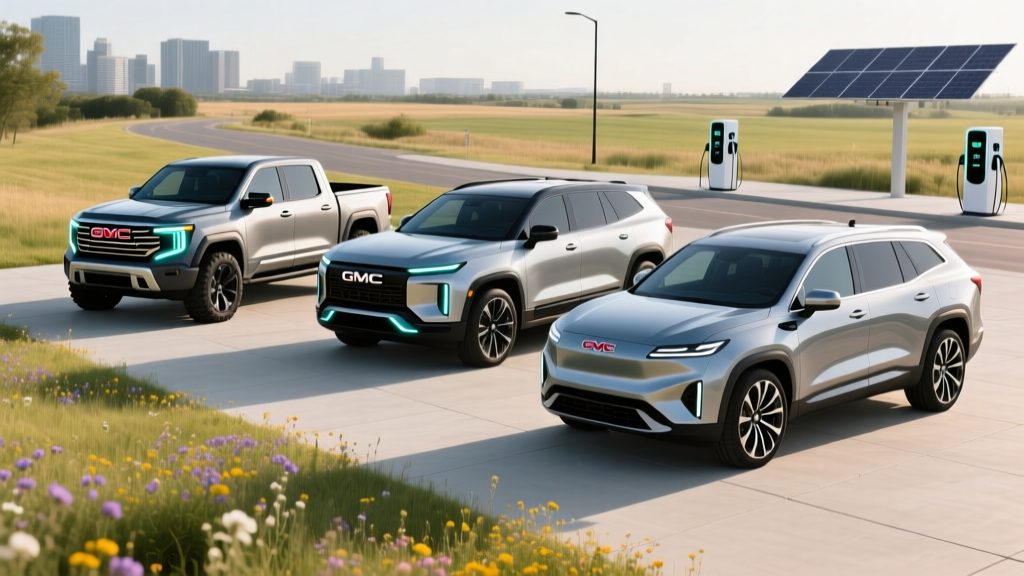
Quick Answer: GMC's 2026 EV lineup centers on three Ultium-platform vehicles: the Sierra EV (up to 440 miles EPA range, starting ~$57,000), the Hummer EV Pickup and SUV (up to 381 miles EPA, starting ~$99,995), and the upcoming Acadia EV (announced, expected late 2026/2027). All use GM's Ultium battery architecture with NMC chemistry, support DC fast charging up to 350 kW on the Sierra EV Denali, and qualify for varying levels of the federal §30D tax credit depending on trim, MSRP caps, and buyer income. The Sierra EV is the volume play for truck buyers transitioning from gas; the Hummer EV remains a low-volume performance flagship.
GMC's EV Strategy: What the Ultium Platform Delivers
GMC's electric transition runs on GM's Ultium battery platform — a modular architecture using nickel-manganese-cobalt (NMC) lithium-ion pouch cells arranged horizontally in large packs ranging from roughly 100 kWh to over 200 kWh usable capacity. Unlike some competitors using lithium iron phosphate (LFP) for cost savings, GMC has prioritized energy density and power output, which matters for vehicles weighing 8,000+ pounds.
For 2026, the practical result is a lineup that prioritizes range and towing capability over affordability. The Sierra EV targets the mainstream full-size truck market, while the Hummer EV occupies the ultra-premium segment. The announced Acadia EV aims to fill the three-row family SUV gap currently dominated by the Kia EV9 and Rivian R1S.
If you're cross-shopping a GMC EV against a gas truck, the calculus has shifted. A 2026 GMC Sierra 1500 gas model with the 5.3L V8 returns roughly 19 MPG combined per fueleconomy.gov. At $3.40/gallon, that's about $0.18/mile in fuel. The Sierra EV at roughly 2.0 kWh/mile costs about $0.07/mile charging at home on a $0.14/kWh utility rate — a 60% per-mile energy savings before maintenance differences.
2026 GMC Sierra EV: Range, Charging, and Real-World Numbers
The Sierra EV is GMC's most consequential electric vehicle. It shares its Ultium underpinnings with the Chevrolet Silverado EV but wears more premium styling and targets higher trim levels. Here's what the spec sheet looks like across the current lineup:
| Spec | Sierra EV Elevation | Sierra EV AT4 | Sierra EV Denali |
|---|---|---|---|
| EPA Range | ~390 mi | ~362 mi | ~440 mi |
| Battery (usable) | ~150 kWh (NMC) | ~150 kWh (NMC) | ~200 kWh (NMC) |
| Horsepower | 510 hp | 510 hp | 760 hp |
| 0-60 mph | ~5.0 sec | ~5.0 sec | ~4.3 sec |
| Max DC Fast Charge | 200 kW | 200 kW | 350 kW |
| 10-80% DCFC Time | ~38 min | ~38 min | ~22 min |
| Level 2 Charge Rate | 11.5 kW | 11.5 kW | 19.2 kW |
| Max Towing | 10,000 lbs | 10,000 lbs | 12,000 lbs |
| Base MSRP | ~$57,000 | ~$72,000 | ~$99,495 |
| Battery/Powertrain Warranty | 8 yr / 100,000 mi | 8 yr / 100,000 mi | 8 yr / 100,000 mi |
Real-World Range Reality: The Denali's 440-mile EPA figure is impressive on paper, but expect 350-380 miles in mixed highway driving at 70+ mph, and potentially 280-310 miles in sub-freezing temperatures. The massive 200 kWh pack gives a large buffer, but aerodynamic drag and cold-weather battery resistance take a predictable toll. The Elevation trim's 390 EPA miles translates more realistically to 320-350 highway miles. If you tow — even a modest 5,000-lb trailer — plan on 180-220 miles between charges.
The Sierra EV Denali's 350 kW peak DC fast-charging capability is among the fastest available in any production vehicle. However, peak rate isn't sustained rate. In real-world testing, the Denali holds near 300+ kW from roughly 10-40% state of charge, then tapers progressively. The 10-80% time of approximately 22 minutes assumes a charger capable of delivering 350 kW (such as Electrify America's latest 350 kW stalls or Tesla Supercharger V4 with NACS adapter access). On a 150 kW station, add roughly 10-12 minutes.
Hummer EV Pickup & SUV: The 9,000-Pound Statement
The Hummer EV remains GMC's halo product — a vehicle that exists more to demonstrate Ultium's capability than to drive volume sales. Available as both a pickup and an SUV, the 2026 models continue with three-motor configurations and the Watts to Freedom launch mode.
| Spec | Hummer EV Pickup (3X) | Hummer EV SUV (3X) |
|---|---|---|
| EPA Range | ~381 mi | ~314 mi |
| Battery (usable) | ~212 kWh (NMC) | ~170 kWh (NMC) |
| Horsepower | 1,000 hp | 830 hp |
| 0-60 mph | ~3.0 sec | ~3.5 sec |
| Max DC Fast Charge | 300 kW | 300 kW |
| 10-80% DCFC Time | ~32 min | ~28 min |
| Curb Weight | ~9,046 lbs | ~8,600 lbs |
| Base MSRP | ~$99,995 | ~$99,995 |
The Hummer EV's efficiency is predictably poor for an EV: roughly 1.8-2.2 kWh/mile depending on driving conditions. That's roughly equivalent to 30-35 MPGe. For context, a Hyundai Ioniq 5 achieves around 3.5-4.0 miles per kWh. The Hummer EV's appeal isn't efficiency — it's the combination of 1,000 hp, extractable roof panels, available CrabWalk diagonal driving, and the sheer presence of the thing.
Charging a 212 kWh pack at home is a real consideration. On a standard 11.5 kW Level 2 home charger, a full 0-100% charge takes roughly 18+ hours. Most owners will charge from 20-80% overnight, which takes about 11 hours on Level 2 — manageable, but it means you need a dedicated 48-amp Level 2 circuit (requiring a 60-amp breaker) to maximize your home charging speed.
GMC EV vs. Gas Truck: The Real Cost Comparison
Let's run the numbers on the most relevant comparison: a 2026 GMC Sierra EV Elevation (~$57,000 MSRP) versus a 2026 GMC Sierra 1500 Elevation gas model (~$49,000 MSRP) over five years and 75,000 miles.
| Cost Factor (5 yr / 75k mi) | Sierra EV Elevation | Sierra 1500 Gas (5.3L V8) |
|---|---|---|
| Purchase Price (MSRP) | $57,000 | $49,000 |
| Est. Federal Tax Credit (§30D) | Up to $7,500* | $0 |
| Effective Purchase Price | ~$49,500 | $49,000 |
| Fuel/Energy (75,000 mi) | ~$5,250 (home charging) | ~$13,275 ($3.40/gal, 19 MPG) |
| Maintenance (est.) | ~$1,800 | ~$4,500 |
| Insurance (est. avg/yr × 5) | ~$12,500 | ~$9,500 |
| Total 5-Year Cost | ~$69,050 | ~$76,275 |
*§30D tax credit eligibility depends on MSRP caps ($80,000 for trucks/vans/SUVs per IRS guidelines), buyer income limits ($300,000 joint / $150,000 single modified AGI), and battery critical-mineral sourcing requirements that continue to tighten. The Sierra EV Elevation at ~$57,000 MSRP clears the cap, but confirm your personal eligibility with a tax professional. Point-of-sale transfer is available, reducing your dealer price directly.
The Sierra EV breaks even on purchase price once the tax credit applies, then pulls ahead through dramatically lower fuel and maintenance costs. EV insurance premiums remain 20-30% higher on average due to repair costs and total-loss thresholds on large battery packs — this partially offsets energy savings.
Common GMC EV Misconceptions
| Myth | Fact |
|---|---|
| "The battery will need replacing in 5 years" | GM warranties the Ultium pack for 8 years/100,000 miles against degradation below 60% capacity. Real-world data from GM's Bolt EV fleet shows roughly 8-12% degradation over 100,000 miles with NMC packs. |
| "You can't tow with an electric truck" | The Sierra EV Denali is rated for 12,000 lbs towing. However, towing cuts range by 40-55%. A 440-mile range becomes roughly 200-250 miles while towing — plan charging stops accordingly. |
| "Charging takes too long for road trips" | At a 350 kW station, the Sierra EV Denali adds roughly 200 miles in 12-15 minutes. For a 600-mile trip, plan one 20-minute stop — comparable to a gas stop with a rest break. |
| "GMC EVs can't use Tesla Superchargers" | GM vehicles gained access to Tesla's Supercharger network via NACS adapter starting in 2024. By 2026, newer GMC EVs are shipping with native NACS ports, eliminating the adapter requirement. |
Real-World Ownership: What First-Time GMC EV Buyers Must Know
Before committing to a Sierra EV or Hummer EV, these ownership realities will shape your daily experience:
Home charging is essential, not optional. Public DC fast charging costs $0.35-$0.55/kWh at most networks — comparable to or exceeding gasoline on a per-mile basis. The economics only work with home Level 2 charging at $0.10-$0.18/kWh. Installing a 48-amp Level 2 home charger typically costs $1,200-$2,500 (equipment plus licensed electrician), but may require a panel upgrade to 200 amps in older homes — adding $2,000-$4,000. Confirm your electrical panel capacity with a licensed electrician before ordering.
The Sierra EV's size demands garage space. At over 233 inches long and 81 inches wide (excluding mirrors), the Sierra EV requires a full-size garage. Measure before ordering — many standard two-car garages are tight with two vehicles inside.
Cold-weather range loss is real and proportional. NMC batteries lose roughly 20-30% range at 20°F compared to 70°F operation, primarily due to increased internal resistance and cabin heating demands. The Sierra EV Denali's heat pump (standard on higher trims) mitigates this somewhat, but a 440-mile EPA range becomes roughly 310-350 miles in sustained winter conditions. If you live in the Upper Midwest or Northeast, budget for this honestly.
Regenerative braking changes driving habits. GMC's Ultium vehicles offer adjustable regen, including a one-pedal driving mode that recovers significant energy in stop-and-go traffic. Expect a 1-2 week adaptation period if you're coming from a gas truck.
Tax Credit and Incentive Landscape for GMC EVs
The federal §30D clean vehicle credit remains the most significant purchase incentive, but eligibility requires navigating several requirements:
- MSRP Cap: Trucks, vans, and SUVs must have an MSRP at or below $80,000. This means the Sierra EV Elevation (~$57,000) and AT4 (~$72,000) qualify, but the Denali (~$99,495) does not. The Hummer EV at ~$99,995 also exceeds the cap.
- Buyer Income Limits: Modified adjusted gross income must not exceed $300,000 (joint filers), $225,000 (head of household), or $150,000 (single filers).
- Battery Sourcing: Critical minerals and battery component requirements phase in annually. For 2026, a higher percentage of critical minerals must be sourced from the U.S. or free-trade-agreement countries, or recycled domestically. The credit is split: $3,750 for meeting the critical-minerals requirement and $3,750 for the battery-components requirement.
- Point-of-Sale Transfer: You can transfer the credit to the dealer at purchase, reducing your out-of-pocket cost immediately rather than waiting to claim it on your tax return.
State and local incentives vary significantly. California's CVRP, Colorado's state credit, and various utility rebates for home charger installation can stack on top of federal incentives. Check your state energy office and local utility for current programs.
Decision Framework: Which GMC EV Fits Your Situation?
Choose the Sierra EV Elevation if: You need a full-size truck for daily commuting and light hauling, have home Level 2 charging access, your typical daily driving is under 150 miles, and you want to minimize operating costs while staying under the $80,000 MSRP tax-credit cap. Effective price after credit: ~$49,500.
Choose the Sierra EV AT4 if: You want off-road-oriented suspension tuning, need the same utility as the Elevation but prefer the AT4 trim's equipment, and are willing to trade ~28 miles of EPA range for the off-road package. Tax credit eligible at ~$72,000 MSRP.
Choose the Sierra EV Denali if: You prioritize maximum range (440 mi EPA) and fastest charging (350 kW peak), value premium interior materials and technology, and don't need the federal tax credit (MSRP exceeds the $80,000 cap). Best for high-mileage drivers who road-trip frequently.
Choose the Hummer EV if: Performance and presence matter more than efficiency, you have a budget approaching $100,000+, you want a conversation piece with legitimate off-road capability, and you accept 1.8-2.2 kWh/mile energy consumption as the cost of 1,000 hp.
Wait for the Acadia EV if: You need three rows of seating in an electric GMC SUV. The Acadia EV is announced but not yet on sale — expect pricing details and EPA range figures closer to its anticipated late-2026 or 2027 launch. If you need a three-row EV now, the Kia EV9 (EPA range up to 304 mi, starting ~$54,900) is the current benchmark in the segment.
Stick with a gas Sierra 1500 if: You regularly tow over 8,000 lbs on long trips (towing range drops below 200 miles in the Sierra EV), you lack reliable home charging access, your daily driving includes remote areas with sparse DC fast-charging infrastructure, or your budget can't accommodate the EV's higher upfront cost even after incentives.
Frequently Asked Questions
Does the GMC Sierra EV qualify for the $7,500 federal tax credit?
The Sierra EV Elevation and AT4 trims fall under the $80,000 MSRP cap for trucks, making them potentially eligible for up to $7,500 in §30D credits — provided you meet income limits and the battery sourcing requirements are satisfied for the specific build date. The Denali trim exceeds the MSRP cap and does not qualify. Always verify current eligibility on fueleconomy.gov before purchasing.
How long does it take to charge a GMC Sierra EV at home?
On a 48-amp, 11.5 kW Level 2 home charger, the Sierra EV Elevation's ~150 kWh pack charges from 10-80% in approximately 9-10 hours — suitable for overnight charging. The Denali's larger ~200 kWh pack takes roughly 12-13 hours for the same 10-80% session on 11.5 kW. The Denali supports 19.2 kW Level 2 charging (requires an 80-amp circuit), which cuts that time to approximately 7-8 hours.
Can the GMC Sierra EV tow a boat or travel trailer?
Yes — the Denali is rated for up to 12,000 lbs, and the Elevation/AT4 for 10,000 lbs. However, towing at or near capacity reduces range by 40-55%. A Sierra EV Denali towing a 7,000-lb travel trailer can expect roughly 220-260 miles of range in moderate conditions. Plan charging stops every 200 miles on long towing trips.
What happens if the Ultium battery fails out of warranty?
GM's battery warranty covers 8 years/100,000 miles with a capacity retention threshold (typically 60% of original capacity). Out-of-warranty replacement for a 150-200 kWh Ultium pack is estimated at $20,000-$35,000 based on current industry pricing for large-format packs. However, module-level repair (replacing individual cell modules rather than the entire pack) may reduce costs significantly. NMC packs in GM's Ultium architecture have shown modest degradation in early fleet data.
Is the GMC Hummer EV practical as a daily driver?
It depends on your definition of practical. With a 44-foot turning circle, 9,000+ lb curb weight, and width exceeding 86 inches with mirrors, the Hummer EV is challenging in urban environments and parking structures. Daily energy consumption of 50-60 kWh for a 30-mile round trip is substantial. For buyers who want daily usability in a GMC EV, the Sierra EV is the more rational choice.