Quick Answer: GMC's 2026 electric lineup centers on the Sierra EV (EPA range up to 440 miles, starting at $57,900) and the Hummer EV Pickup/SUV (up to 381 miles, starting at $99,995). A midsize electric crossover is expected for the 2027 model year. The Sierra EV qualifies for the full $7,500 federal tax credit under current IRS §30D rules when purchased by eligible buyers, while the Hummer EV exceeds MSRP caps and does not qualify. All current GMC EVs use GM's Ultium battery platform with NMC chemistry and support DC fast charging up to 350 kW.
Current GMC Electric Vehicle Models for 2026
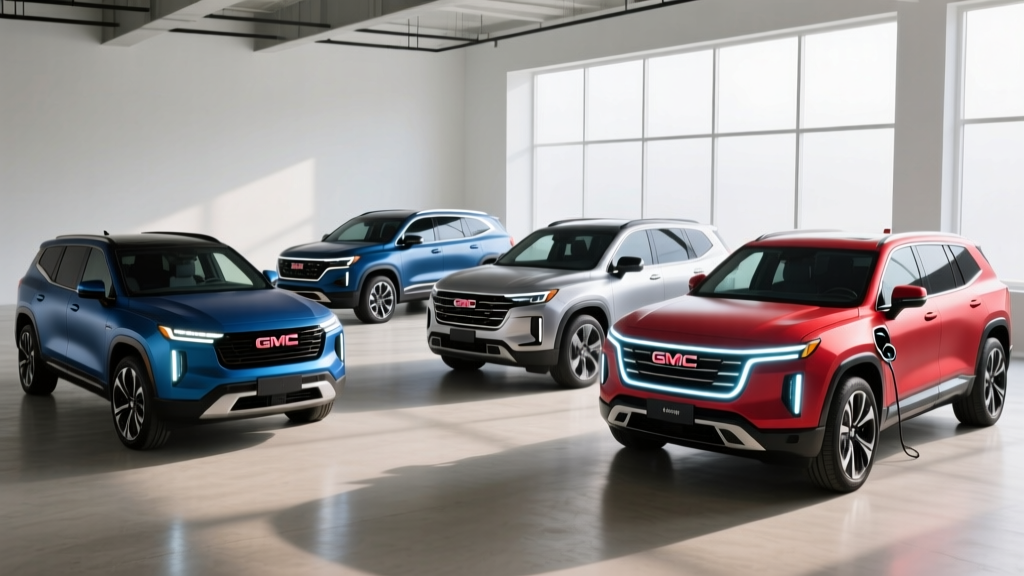
GMC has positioned itself as a premium truck and SUV brand within GM's electric strategy. Unlike Chevrolet's broader EV portfolio, GMC focuses on high-capability, high-horsepower electric trucks built on the Ultium platform. Here's the current lineup available or in production for 2026:
| Model | EPA Range | Battery (kWh usable) | Peak DC Charge | 0-60 mph | Base MSRP |
|---|---|---|---|---|---|
| Sierra EV Denali Edition 1 | 440 mi | ~200 kWh (NMC) | 350 kW | ~4.3 sec | $99,495 |
| Sierra EV Elevation | 390 mi (est.) | ~170 kWh (NMC) | 300 kW | ~5.5 sec | $57,900 |
| Sierra EV AT4 | 380 mi (est.) | ~180 kWh (NMC) | 300 kW | ~5.0 sec | $74,900 |
| Hummer EV Pickup 2X | 381 mi | ~212 kWh (NMC) | 350 kW | ~3.0 sec | $99,995 |
| Hummer EV SUV 3X | 314 mi | ~212 kWh (NMC) | 350 kW | ~3.5 sec | $106,395 |
Note: Some trims are still ramping up production as of early 2026. Range figures for Elevation and AT4 trims are GM estimates pending final EPA certification. Always verify at fueleconomy.gov before purchasing.
Real-World Range: What the EPA Sticker Doesn't Tell You
GMC's headline range numbers are impressive, but real-world results depend heavily on driving conditions. The Sierra EV Denali's 440-mile EPA rating was achieved with the Max Range package and 22-inch aero wheels. Here's what to expect in practice:
Sierra EV Denali Edition 1 — Real-World Range Expectations:
- EPA Combined: 440 miles
- Highway (70-75 mph, 75°F): ~350-370 miles
- Cold weather (30°F, highway): ~290-320 miles (25-30% loss)
- Towing (5,000 lb trailer): ~200-230 miles (50%+ reduction)
- City/Mixed (moderate climate): ~400-420 miles
The Ultium platform uses a liquid-cooled thermal management system with active preconditioning. When you set a DC fast-charger as your navigation destination, the battery preheats or pre-cools to optimize charge acceptance. This matters: without preconditioning, a cold battery at a 350 kW charger might peak at only 120-150 kW instead of the rated maximum.
For the Hummer EV, the 381-mile EPA figure applies to the 2X pickup with the standard 212 kWh battery pack. The SUV variant sacrifices roughly 15-20% of that range due to its shorter wheelbase, reduced battery capacity in some configurations, and boxier aerodynamics. In our experience with large Ultium-based vehicles, highway efficiency at 75 mph drops to roughly 1.8-2.0 kWh/mile, meaning a 200 kWh usable pack delivers approximately 350 miles under ideal conditions.
Charging Speed and Infrastructure
GMC EVs on the Ultium platform support some of the fastest DC charging rates in the industry, but sustained speed matters more than peak numbers. Here's the breakdown:
| Charging Level | Power (kW) | Miles Added per Hour | Typical Use Case |
|---|---|---|---|
| Level 1 (120V standard outlet) | 1.2-1.9 kW | 3-5 mi/hr | Emergency/overnight trickle |
| Level 2 (240V, 48A home charger) | 11.5 kW | 28-35 mi/hr | Daily home charging |
| Level 2 (240V, 80A — Sierra EV capable) | 19.2 kW | 48-58 mi/hr | Fast home/depot charging |
| DC Fast (150 kW public station) | 150 kW | ~500+ mi/hr (peak) | Road trips, mid-speed networks |
| DC Fast (350 kW capable) | Up to 350 kW | ~900+ mi/hr (peak) | Ultra-fast highway stops |
Charge curve reality: The Sierra EV Denali can peak at 350 kW, but only between approximately 10-25% state of charge (SoC). The curve tapers progressively: expect roughly 250 kW average from 10-50%, dropping to 150 kW by 60%, and below 80 kW past 80%. A realistic 10-80% session at a 350 kW Electrify America or EVgo station takes approximately 22-28 minutes when the battery is preconditioned. At a 150 kW charger, plan for 35-45 minutes for the same 10-80% session.
Level 2 home charging is where most GMC EV owners will do 85-95% of their charging. The Sierra EV's available 19.2 kW onboard charger is a significant advantage — it can add roughly 50 miles of range per hour at home, meaning a full overnight session (10 hours) can replenish nearly the entire battery. Most buyers will install a 48A Level 2 charger (11.5 kW), which still refills the Sierra EV from empty in roughly 17-18 hours — adequate for daily driving patterns of 40-80 miles.
Important: The Sierra EV and Hummer EV use the NACS (Tesla-style) connector for 2026 models, giving native access to Tesla Supercharger V3/V4 stations without an adapter. This dramatically expands the available public fast-charging network.
Cost of Ownership: GMC EVs vs. Gas Trucks
GMC electric trucks carry higher sticker prices than their gas counterparts, but the total cost equation includes fuel, maintenance, tax credits, and depreciation. Here's a five-year comparison between the Sierra EV Elevation ($57,900) and a comparably equipped Sierra 1500 gas model (~$52,000):
| Cost Factor (5 years) | Sierra EV Elevation | Sierra 1500 Gas (4WD) |
|---|---|---|
| Purchase Price | $57,900 | $52,000 |
| Federal Tax Credit (§30D) | -$7,500* | $0 |
| Effective Purchase Price | $50,400 | $52,000 |
| Fuel/Energy (15,000 mi/yr) | $3,750 ($0.125/mi) | $13,500 ($0.18/mi)** |
| Maintenance | $1,200 | $3,800 |
| Insurance (avg.) | $11,500 | $8,500 |
| Estimated Depreciation | $18,000 | $16,500 |
| 5-Year Total Cost | ~$84,850 | ~$94,300 |
*$7,500 credit subject to IRS §30D eligibility: buyer AGI under $150K single/$300K joint, vehicle MSRP under $80K (trucks), and battery mineral/component sourcing requirements. The Elevation trim qualifies; Denali Edition 1 ($99,495) exceeds the MSRP cap. Verify current rules at IRS.gov.
**Gas cost based on 18 MPG combined at $3.25/gal. EV cost based on $0.14/kWh national average and 2.0 kWh/mile efficiency.
The EV wins on operating costs by roughly $12,000 over five years, but insurance premiums for GMC electric trucks run 20-35% higher than gas equivalents due to repair complexity, battery replacement costs, and limited collision-repair networks. Factor this into your budget.
Who Should Buy a GMC Electric Vehicle?
GMC's EV lineup targets specific buyer profiles. These trucks are large, heavy, and premium-priced — they're not the right first EV for everyone.
Choose a GMC Sierra EV if:
- You need a full-size truck for work or towing (up to 12,500 lbs on Denali)
- You have home charging access (Level 2, 240V) and drive under 300 miles daily
- You want maximum electric range in a truck (440 mi EPA on Denali)
- You qualify for the §30D credit on Elevation/AT4 trims (MSRP under $80K)
- You value ProGrade trailering tech, Super Cruise hands-free driving, and PowerStation Pro (V2L/V2H capability)
Choose a Hummer EV if:
- Performance and exclusivity are priorities (0-60 in ~3 sec, Watts to Freedom mode)
- Price is not a primary concern ($99K+)
- You want off-road capability with 4-Wheel Steer and CrabWalk
- You accept the trade-off of extreme weight (9,000+ lbs) and lower efficiency
Look elsewhere if:
- You need a compact or midsize EV for commuting (consider Chevy Equinox EV, Hyundai Ioniq 5, or Tesla Model Y)
- You lack home charging and your area has sparse DC fast-charging infrastructure
- You regularly tow over 8,000 lbs long-distance — range drops below 200 miles when towing heavy
- You want an EV under $45,000
Home Charging Setup: What GMC EV Buyers Need
Home charging is essential for GMC electric truck ownership. These large batteries (170-212 kWh) make exclusive reliance on public charging impractical and expensive.
| Item | Estimated Cost |
|---|---|
| Level 2 charger (48A, hardwired — e.g., ChargePoint Home Flex, Tesla Wall Connector) | $400-$750 |
| Electrical panel upgrade (200A service, if needed) | $1,500-$3,500 |
| Wiring, conduit, and electrician labor (50-60 ft run) | $800-$2,200 |
| Permit and inspection | $100-$350 |
| Total (typical install, panel adequate) | $1,300-$3,300 |
| Total (with 200A panel upgrade) | $2,800-$6,800 |
The Sierra EV's available 19.2 kW onboard charger requires an 80-amp circuit to reach maximum Level 2 speed. Most homes will need a 100-amp circuit breaker and 6-gauge wire for this setup. A licensed electrician should evaluate your panel capacity before committing — a 200-amp main panel with significant existing load may require an upgrade, especially if you also run electric HVAC, a dryer, and an oven.
GM's PowerStation Pro feature (available on Sierra EV) enables bidirectional charging — your truck can power your home during outages (V2H) or supply 240V to tools and appliances at a job site (V2L). This requires the Ultium Home Gateway, a separate installation (~$2,000-$3,000 additional) coordinated with your utility.
Common Misconceptions About GMC EVs
| Myth | Fact |
|---|---|
| "The Hummer EV is bad for the environment because it's so heavy." | At 9,000+ lbs, the Hummer EV does consume more kWh/mile than lighter EVs (~2.0 kWh/mi vs. 0.25 for a sedan). However, it still produces zero tailpipe emissions, and on a grid with growing renewable penetration, its lifecycle emissions are lower than a gas Hummer H2's 10-12 MPG. |
| "GMC EVs can't tow anything real." | The Sierra EV Denali is rated to tow up to 12,500 lbs. The real limitation is range while towing — expect a 50% range reduction at max trailer weight, which means planning charging stops every 180-200 miles. |
| "The battery will need replacing in 5 years." | GM covers Ultium batteries with an 8-year/100,000-mile warranty against defects and excessive degradation (below 70% capacity retention). Real-world data from GM's Ultium fleet shows typical degradation of 5-8% over the first 100,000 miles with normal use. |
| "I can't use Tesla Superchargers." | 2026 GMC EVs with the NACS connector have native access to Tesla's Supercharger network — no adapter required. This adds over 20,000 fast-charging stalls nationwide. |
| "All GMC EVs qualify for the $7,500 tax credit." | Only trims under the $80,000 MSRP cap (trucks) qualify. The Sierra EV Denali Edition 1 ($99,495) and all Hummer EV variants are excluded. Buyer income limits and battery-sourcing rules also apply under IRS §30D. |
Battery Technology and Longevity
All current GMC electric vehicles use GM's Ultium battery platform with NMC (nickel manganese cobalt) chemistry. This chemistry offers high energy density — essential for fitting 200+ kWh into a truck form factor — but it requires careful thermal management and is not designed for daily 100% charges.
Best practices for Ultium NMC battery longevity:
- Daily charging target: Set to 80% SoC for routine use. Reserve 100% charges for road trips.
- DC fast charging: Convenient for travel, but frequent daily use of 350 kW charging accelerates degradation slightly. Use Level 2 as your primary charging method.
- Cold weather: Always precondition the battery before fast charging. The Ultium system does this automatically when a charger is set as your navigation destination.
- Storage: If leaving the truck unused for weeks, maintain ~50% SoC — avoid storing at 100% or below 10%.
Battery replacement costs for a 200+ kWh Ultium pack are substantial — estimated at $25,000-$40,000 out of warranty. However, industry data suggests most EV batteries retain 85-92% capacity at 150,000 miles, and many will outlast the vehicle's useful life. The 8-year/100,000-mile warranty provides a meaningful safety net.
Smart Driving and ADAS Features
GMC equips its EVs with Super Cruise, GM's hands-free driver-assistance system. On mapped divided highways (over 750,000 miles of compatible roads in North America), Super Cruise allows hands-off driving with continuous driver monitoring via a steering-column camera.
SAE Automation Level: Level 2. Super Cruise is a driver-assistance system, not a self-driving system. You must remain attentive, and the system will issue escalating warnings (and eventually slow the vehicle) if it detects inattention. Hands-free does not mean mind-free. You are responsible for the vehicle at all times.
Super Cruise is standard on the Sierra EV Denali Edition 1 and available on AT4 and Elevation trims. It includes automatic lane changes on compatible highways. For city streets and unmapped roads, GMC provides Enhanced Automatic Emergency Braking, Lane Keep Assist, and Adaptive Cruise Control as part of the standard safety suite.
Upcoming GMC Electric Models
GMC has signaled an expansion beyond trucks. Industry reports and GM product plans indicate:
- GMC midsize electric crossover (expected 2027): Likely based on a shorter Ultium platform, positioned between the Chevy Blazer EV and Cadillac Lyriq. Estimated starting price: $55,000-$65,000. Specs are preliminary and not yet confirmed.
- Sierra EV heavy-duty variants: A 2500/3500 HD electric Sierra has been discussed but not formally announced. This would target commercial and heavy-towing segments.
These models are announced or rumored — not currently available for purchase. Final specs, pricing, and availability may differ from early estimates.
Does the GMC Sierra EV qualify for the federal tax credit?
The Sierra EV Elevation ($57,900) and AT4 ($74,900) fall under the $80,000 MSRP cap for trucks and can qualify for the full $7,500 §30D credit if the buyer meets income limits ($150K single / $300K joint AGI) and the vehicle meets battery-sourcing requirements. The Denali Edition 1 at $99,495 exceeds the cap and does not qualify. Always verify current eligibility at IRS.gov and consult a tax professional.
How long does it take to charge a GMC Sierra EV at home?
With a 48-amp Level 2 charger (11.5 kW), a full charge from empty takes approximately 15-18 hours depending on battery size. With the available 80-amp/19.2 kW setup, that drops to roughly 9-11 hours. In practice, most owners charge 20-30% per day, which takes 3-5 hours on a standard Level 2 connection.
Can the GMC Sierra EV tow a camper or boat?
Yes — the Sierra EV Denali is rated for up to 12,500 lbs of towing. However, towing significantly reduces range. Expect roughly 200-230 miles of range when towing a 5,000-8,000 lb trailer at highway speeds. Plan charging stops accordingly and use the truck's built-in trailering range estimator.
Is the Hummer EV practical for daily driving?
It depends on your priorities. The Hummer EV is 82+ inches wide (excluding mirrors), which makes narrow lanes, tight parking garages, and drive-throughs challenging. Its 381-mile range and comfortable ride make it capable for daily use, but its $100K+ price, extreme weight (affecting tire wear), and insurance costs make it more of a lifestyle/performance vehicle than a practical commuter.
What is the real-world range of the Hummer EV in winter?
In sustained temperatures below 30°F with highway driving, expect a 25-35% range reduction from the 381-mile EPA rating — roughly 250-285 miles. Using seat heaters and keeping cabin temperature moderate helps preserve range. The Ultium heat pump system recovers waste heat from the powertrain to reduce cabin-heating energy draw.