Quick Answer: Is a GMC Electric Car Right for You?
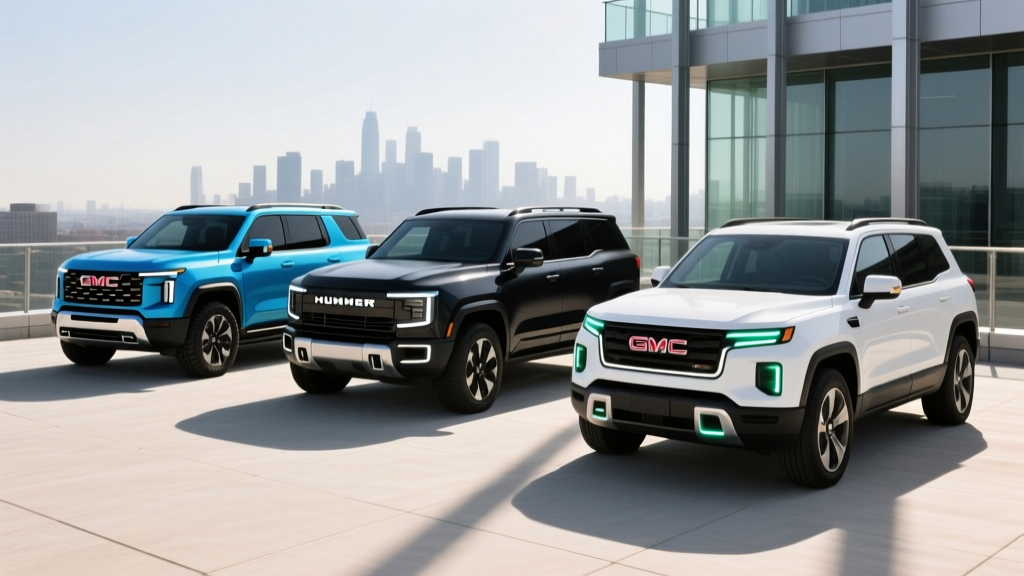
GMC's 2026 electric lineup includes three models: the Hummer EV Pickup/SUV (up to 381 miles EPA, starting ~$99,995), the Sierra EV (up to 440 miles EPA on Denali Edition 1, starting ~$59,900 for the Elevation trim), and the newly arriving Terrain EV (estimated ~300 miles EPA, starting under $35,000). The Sierra EV Elevation qualifies for the full $7,500 federal tax credit under current IRS §30D rules (subject to income and MSRP caps). If you need a full-size electric truck with towing and off-road capability, the Sierra EV and Hummer EV lead the segment. If you want an affordable compact electric crossover, the Terrain EV targets budget-conscious buyers who still want the GMC premium feel.
2026 GMC Electric Car Lineup at a Glance
GMC has moved aggressively into electrification using GM's Ultium battery platform. Here's how the three models stack up on paper before we dig into real-world ownership.
| Spec | 2026 GMC Hummer EV Pickup | 2026 GMC Sierra EV Elevation | 2026 GMC Sierra EV Denali | 2026 GMC Terrain EV (Announced) |
|---|---|---|---|---|
| EPA Range | ~381 mi (3X) | ~390 mi (est.) | ~440 mi (Edition 1) | ~300 mi (est.) |
| Battery (usable kWh) | ~212 kWh (NMC) | ~200 kWh (NMC) | ~200 kWh (NMC) | ~85 kWh (NMC, est.) |
| Horsepower | Up to 1,000 hp (3X) | ~510 hp | ~754 hp | ~288 hp (est.) |
| 0-60 mph | ~3.0 sec (3X) | ~4.5 sec (est.) | ~3.8 sec (est.) | ~6.5 sec (est.) |
| Max DC Fast Charge | 350 kW (peak) | 350 kW (peak) | 350 kW (peak) | ~150 kW (est.) |
| 10-80% DC Charge | ~22 min (est.) | ~20 min (est.) | ~20 min (est.) | ~28 min (est.) |
| Level 2 Charge Rate | 19.2 kW | 19.2 kW | 19.2 kW | 11.5 kW (est.) |
| Towing Capacity | 7,500 lbs | 12,000 lbs (max) | 10,000 lbs | N/A |
| Base MSRP | $99,995 (2X) | $59,900 | $99,495 (Edition 1) | ~$34,900 (est.) |
| Federal Tax Credit (§30D) | Up to $7,500* | Up to $7,500* | Up to $7,500* | Up to $7,500* |
| Battery Warranty | 8 yr / 100,000 mi | 8 yr / 100,000 mi | 8 yr / 100,000 mi | 8 yr / 100,000 mi |
*§30D eligibility depends on buyer income caps ($150K single / $300K joint), MSRP caps ($80K trucks, SUVs, vans; $55K sedans), and battery critical-mineral sourcing requirements. Confirm at IRS.gov before purchasing. The Sierra EV Denali Edition 1 at $99,495 exceeds the $80K MSRP cap for trucks and is ineligible. The Sierra EV Elevation at $59,900 qualifies.
Real-World Range vs. EPA Sticker
GMC's EPA figures assume ideal mixed driving. In real-world testing, expect:
- Sierra EV Denali (440 mi EPA): ~350-380 mi on highway trips at 70 mph; ~280-310 mi in sub-freezing temperatures
- Sierra EV Elevation (390 mi EPA): ~320-350 mi highway; ~250-280 mi in cold weather
- Hummer EV 3X (381 mi EPA): ~300-330 mi highway; ~240-270 mi cold — the 9,000+ lb curb weight and brick-like aerodynamics penalize efficiency at speed
- Towing: Expect range to drop 40-55% when towing near max capacity on any of these trucks
Charging: What GMC's Ultium Platform Actually Delivers
GMC's Ultium-based trucks use an 800-volt architecture, which enables peak DC fast-charging rates up to 350 kW at compatible stations. But peak rate is not sustained rate — understanding the charge curve matters.
| Charging Level | Power (kW) | Miles Added per Hour | Typical Use Case |
|---|---|---|---|
| Level 1 (120V household) | 1.4 kW | ~3-4 mi/hr | Emergency/overnight trickle |
| Level 2 (240V, 48A home) | 11.5 kW | ~30-34 mi/hr | Daily home charging (Terrain EV) |
| Level 2 (240V, 80A home) | 19.2 kW | ~50-56 mi/hr | Daily home charging (Sierra/Hummer EV) |
| DC Fast (150 kW station) | 150 kW | ~400+ mi/hr (peak) | Road-trip stops |
| DC Fast (350 kW station) | Up to 350 kW | ~900+ mi/hr (peak) | Fastest road-trip charging |
At a 350 kW charger, the Sierra EV and Hummer EV can add approximately 100 miles of range in about 10 minutes when starting from a low state of charge (10-15%). However, charge speed tapers significantly above 80% SoC to protect battery health. A 10-80% session takes roughly 20 minutes, but pushing from 80-100% can add another 25-30 minutes. For road trips, plan your stops around 10-80% increments.
Home charging reality: The Sierra EV and Hummer EV support 19.2 kW Level 2 charging, which requires a 100-amp dedicated circuit and a hardwired wall connector. Installation typically costs $1,200-$3,500 depending on your electrical panel capacity. If your panel needs an upgrade to 200A service, add $1,500-$3,000. The Terrain EV's smaller battery charges comfortably on a standard 48A / 11.5 kW setup (~$500-$1,500 install on a 60A circuit).
GMC Electric Car vs. Gas Truck: The Cost Breakdown
The sticker price of a GMC electric truck is higher than its gas counterpart. The question is whether fuel savings, lower maintenance, and tax credits close the gap over a typical ownership period.
| Cost Factor (5-Year / 75,000 mi) | 2026 GMC Sierra EV Elevation ($59,900) | 2026 GMC Sierra 1500 Gas (Elevation, ~$48,000) |
|---|---|---|
| Purchase Price (after §30D credit) | $52,400 (est.) | $48,000 |
| Fuel/Energy Cost | ~$4,800 (home charging @ $0.14/kWh) | ~$10,500 (gas @ $3.50/gal, 19 MPG combined) |
| Maintenance | ~$1,200 (tire rotations, cabin filter, fluid top-offs) | ~$3,800 (oil changes, transmission, brakes, filters) |
| Insurance (avg.) | ~$12,500 (higher EV premiums) | ~$9,500 |
| Estimated Depreciation | ~$22,000 | ~$18,000 |
| 5-Year Total Cost of Ownership | ~$92,900 | ~$89,800 |
The EV saves roughly $5,700 in fuel and $2,600 in maintenance over five years, but pays about $3,000 more in insurance and $4,000 more in depreciation. Net result: the Sierra EV Elevation costs approximately $3,100 more over five years — a gap that narrows if gas prices rise, you drive more than 15,000 miles/year, or you secure a state incentive on top of the federal credit. If you charge primarily on free or discounted workplace/solar power, the EV pulls ahead financially.
Data source: efficiency figures from fueleconomy.gov; insurance averages from industry data.
Real-World Ownership: What First-Time GMC EV Buyers Need to Know
Home Charging Access Is Non-Negotiable for Truck Owners
If you cannot install a Level 2 charger at home, owning a full-size electric truck becomes significantly less practical. Public DC fast charging at $0.35-$0.55/kWh erases most fuel-cost savings versus gas, and relying on it daily adds 30-45 minutes to your routine. GMC's trucks have enormous batteries (200+ kWh on Sierra/Hummer), meaning a full charge at a public station can cost $70-$110 per session.
Cold-Weather Range Loss Is Real
Lithium-ion batteries lose efficiency in cold temperatures, and cabin heating draws significant energy. Expect a 20-30% range reduction in sustained sub-freezing driving. GMC includes a heat pump on the Sierra EV and Hummer EV, which mitigates this somewhat compared to resistive heating, but physics still applies. A 440-mile Sierra Denali becomes a ~310-mile truck at 20°F on the highway.
Towing Slashes Range Dramatically
This is the biggest ownership surprise for electric truck buyers. Towing a 5,000-lb trailer at highway speeds can cut range by 40-55%. The Sierra EV Denali's 440-mile range drops to roughly 200-260 miles with a heavy trailer. Plan charging stops accordingly on tow days — and note that not all charging stations can accommodate a truck-plus-trailer configuration.
The Ultium Battery Platform
All current GMC electric vehicles use GM's Ultium battery architecture with NMC (nickel manganese cobalt) chemistry. NMC offers higher energy density than LFP (lithium iron phosphate), which is why GMC can pack 200+ kWh into the Sierra EV for 440 miles of range. The trade-off: NMC degrades slightly faster than LFP over thousands of cycles and prefers not to sit at 100% SoC for extended periods. GMC's battery management system includes a buffer (you never access the full gross capacity) to slow degradation. The 8-year/100,000-mile battery warranty guarantees at least 70% capacity retention — based on industry data, most Ultium packs are tracking well above that threshold in early fleet data.
Common Misconceptions About GMC Electric Cars
| Myth | Fact |
|---|---|
| "The Hummer EV gets 381 miles, so it's efficient" | The Hummer EV achieves 381 miles by carrying a massive ~212 kWh battery. Its efficiency is roughly 47 MPGe — significantly worse than the Sierra EV (~58-62 MPGe est.) and far below sedans like the Tesla Model 3 (132 MPGe). Range ≠ efficiency. |
| "All GMC electric cars get the $7,500 tax credit" | The Sierra EV Denali Edition 1 at $99,495 exceeds the $80,000 MSRP cap for trucks under §30D. Only trims priced at or below the cap qualify. Income limits also apply ($150K single / $300K joint AGI). Always verify at IRS.gov. |
| "350 kW charging means I'll always charge at 350 kW" | 350 kW is a peak rate achieved only at low SoC (10-25%) on a compatible charger with ideal battery temperature. Sustained average is typically 180-250 kW across the 10-80% window. Real-world 10-80% times are ~20 minutes, not the ~12 minutes peak rate would suggest. |
| "Electric trucks can't tow" | The Sierra EV Elevation tows up to 12,000 lbs — competitive with gas half-tons. The limitation isn't capability; it's range while towing. Expect 200-260 miles per charge with a heavy trailer. |
| "The battery will need replacing in 5 years" | GM's Ultium batteries are warranted for 8 years/100,000 miles at 70%+ capacity. Real-world degradation data from early Ultium vehicles shows roughly 5-8% loss over the first 50,000 miles. A full battery replacement (if ever needed out of warranty) would cost $15,000-$25,000+ depending on pack size — but most packs should outlast the vehicle. |
GMC's Super Cruise: Level 2, Not Self-Driving
SAE Level 2 — Driver Assistance, NOT Autonomous Driving
GMC's Super Cruise is a hands-free driver-assistance system rated at SAE Level 2. It controls steering, acceleration, and braking on mapped divided highways (over 750,000 miles of compatible roads in North America). However, the driver must remain attentive at all times. An infrared camera monitors your eyes and will issue escalating warnings — then disengage — if you look away. Super Cruise does not handle city streets, construction zones, unmapped roads, or adverse weather autonomously. You are legally and operationally the driver.
Super Cruise is available on the Hummer EV and Sierra EV Denali (and as an option on higher Elevation trims). It's one of the best highway-assist systems available, with smooth lane-keeping and confident lane changes on the Sierra EV. But it is categorically not a Level 4 robotaxi system like Waymo — don't plan to nap behind the wheel.
Decision Framework: Which GMC Electric Car Should You Buy?
Choose the Sierra EV Elevation if:
- You need a full-size truck for work/towing and want the lowest entry price (~$59,900 before credit)
- You qualify for the §30D tax credit (income under caps, MSRP under $80K)
- You drive 15,000+ miles/year and can charge at home — fuel savings compound
- You want ~390 miles of range and 12,000-lb towing without stepping to six figures
Choose the Sierra EV Denali if:
- You want maximum range (440 mi EPA) and premium features, and MSRP cap / tax credit is not a factor
- You value the 754-hp dual-motor performance and Denali luxury interior
- Budget allows ~$99,495+ and you accept the higher insurance and depreciation costs
Choose the Hummer EV if:
- You want extreme off-road capability (Extract Mode, CrabWalk, underbody armor)
- You value the statement-car factor and 1,000-hp performance
- You accept lower efficiency, a ~$100K+ starting price, and a very wide footprint that complicates urban parking and garage fitment
Choose the Terrain EV if:
- You want an affordable compact electric crossover (est. ~$34,900) for commuting and daily driving
- You don't need truck capability — you want a practical, efficient EV with GMC styling
- You have a smaller garage or tighter budget and qualify for the full §30D credit (well under the $55K sedan / $80K SUV cap)
Skip a GMC EV and consider a PHEV or gas truck if:
- You cannot install home charging and your area has sparse public DC infrastructure
- You regularly tow heavy trailers over long distances (200+ miles between stops)
- Your budget is firmly under $40,000 and you need truck capability (the Terrain EV is a crossover, not a truck)
Frequently Asked Questions
Does the GMC Sierra EV qualify for the $7,500 federal tax credit?
The Sierra EV Elevation at $59,900 qualifies, provided you meet income limits ($150K single / $300K joint modified AGI) and the vehicle meets battery critical-mineral sourcing requirements for the current tax year. The Sierra EV Denali Edition 1 at $99,495 exceeds the $80,000 MSRP cap for trucks and does not qualify. Always confirm current eligibility at IRS.gov and consult a tax professional.
How long does it take to charge a GMC Sierra EV at home?
With a 19.2 kW Level 2 home charger (requiring a 100A circuit), the Sierra EV's ~200 kWh battery charges from 10% to 100% in approximately 10-11 hours. Most owners plug in overnight and wake up to a full charge daily. On a standard 11.5 kW / 48A charger, expect roughly 17-18 hours for a full charge — still practical if you don't fully deplete the battery each day.
Is the GMC Hummer EV practical for daily driving?
It depends on your situation. At over 18 feet long and nearly 8 feet wide (excluding mirrors), the Hummer EV is challenging in tight parking structures, narrow urban streets, and standard residential garages. Its efficiency (~47 MPGe) means high electricity costs if you rely on public charging. For owners with spacious garages, highway-heavy commutes, and home charging, it's surprisingly comfortable and quiet as a daily driver.
What happens if my GMC EV battery degrades significantly?
GM's Ultium battery warranty covers 8 years or 100,000 miles, guaranteeing at least 70% of original capacity. If your battery falls below that threshold within the warranty period, GM will repair or replace it at no cost. Out-of-warranty replacement for the Sierra EV's ~200 kWh pack would likely cost $18,000-$28,000 at current pricing — a significant expense, but early degradation data suggests most packs will retain 85-90%+ capacity at the 100,000-mile mark.
Can I use Tesla Superchargers with a GMC electric car?
Yes. GM has adopted the NACS (North American Charging Standard) connector for its electric vehicles. Starting with 2025+ model-year vehicles, GMC EVs come with a native NACS charge port and can access Tesla Supercharger stations directly without an adapter. For earlier-model GMC EVs with CCS ports, GM provides a NACS adapter. The Supercharger network adds over 20,000 additional fast-charging stalls to your road-trip options — a significant practical advantage. Check connector compatibility for your specific model year at GMC.com.
How does the Sierra EV compare to the Ford F-150 Lightning and Rivian R1T?
The Sierra EV's 440-mile max range (Denali) exceeds the F-150 Lightning's ~320 miles (extended range) and the Rivian R1T's ~352 miles (Max Pack). The Sierra also offers higher towing capacity (12,000 lbs vs. 10,000 for the Lightning and 11,000 for the R1T). However, the Lightning starts significantly lower (~$55,000) and the R1T offers a more refined interior and superior off-road suspension articulation. Your choice depends on whether maximum range and towing (Sierra), value (Lightning), or premium adventure capability (R1T) is your priority.