The Short Answer on the GMC Canyon EV
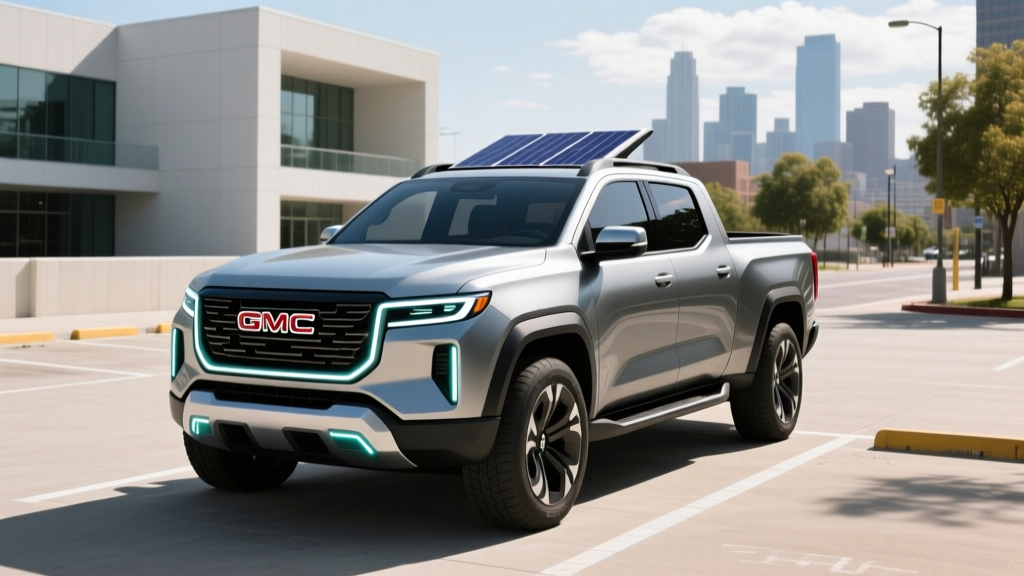
As of early 2026, General Motors has not officially announced a GMC Canyon EV. The current third-generation Canyon (refreshed for 2025) remains a gas-only midsize pickup powered by a 2.7L TurboMax I-4. However, GM executives have signaled that an electrified midsize truck is under evaluation, and the Ultium platform architecture is technically scalable to midsize applications. If a Canyon EV arrives, expect it no earlier than the 2028 model year, likely as a 2027 announcement. For buyers considering an electric midsize truck today, the closest existing alternatives are the Ford Maverick (hybrid only, no EV yet), the Chevrolet Colorado (gas-only), and upcoming entries like the Ram 1500 REV midsize variants or Rivian R2T. Below, we break down what a Canyon EV would likely cost, how it would compare to the gas Canyon, and what you should do if you're shopping now.
Where the GMC Canyon EV Stands in 2026
The GMC Canyon has been one of GM's most profitable midsize trucks since its 2023 redesign, competing directly with the Toyota Tacoma and Ford Ranger. But unlike the full-size Sierra—which already has the Sierra EV on sale with up to 440 miles of EPA range and 754 hp—the Canyon lineup has no electrified variant on the production calendar as of this writing.
What we do know from GM's investor briefings and product roadmap disclosures:
- GM's Ultium battery platform supports vehicles from compact crossovers to full-size trucks, meaning the engineering groundwork for a midsize electric pickup exists.
- The Sierra EV and Chevrolet Silverado EV share the BT1 electric truck platform, which is too large and expensive for a midsize application without significant re-engineering.
- GM CEO Mary Barra has confirmed that midsize and compact truck electrification is being studied, but no production commitment has been made public.
- The Chevrolet Colorado ZR2 and GMC Canyon AT4X are currently positioned as the off-road halo trims; an EV variant would need to match or exceed their capability to justify the premium.
Industry analysts at Automotive News and BloombergNEF project that if GM greenlights a Canyon EV, it would likely ride on a shortened version of the BT1 platform or an entirely new midsize EV skateboard, targeting a 2028-2029 launch window.
What a GMC Canyon EV Would Likely Cost and Spec Out
Since no official specs exist, we can build a data-grounded estimate using the Sierra EV as an upper bound, the current gas Canyon as a lower bound, and competitor pricing as a market anchor.
| Attribute | Current Gas Canyon (2026) | Estimated Canyon EV | Sierra EV (Reference) |
|---|---|---|---|
| Base MSRP | $38,395 (Elevation) | $48,000–$55,000 | $57,995 (Pro) |
| EPA Range | N/A (gas, ~450 mi per tank) | 280–350 mi | 390–440 mi |
| Battery Capacity | N/A | ~85–100 kWh (NMC) | 200 kWh (Denali) |
| Horsepower | 310 hp (TurboMax) | 400–550 hp (dual motor) | 510–754 hp |
| 0–60 mph | ~6.5 sec | ~4.0–5.5 sec | 4.3 sec (Denali) |
| Max DC Fast Charge | N/A | ~175–200 kW (est.) | 350 kW (Denali) |
| 10–80% DC Charge | N/A | ~28–35 min | ~18 min |
| Max Towing Capacity | 7,700 lbs | 7,000–9,000 lbs (est.) | 13,000 lbs (Max Tow) |
| Payload | 1,640 lbs | 1,400–1,700 lbs (est.) | 1,800 lbs |
| Federal Tax Credit (§30D) | $0 | Up to $7,500 (if eligible) | Up to $7,500 |
Key takeaway: A Canyon EV would likely start around $50,000 before incentives—roughly $12,000–$15,000 more than the gas Canyon Elevation—but could undercut the Sierra EV by $8,000+ while offering similar daily usability for most buyers who don't need full-size dimensions.
GMC Canyon Gas vs. a Potential Canyon EV: Total Cost of Ownership
Whether a Canyon EV would save you money depends entirely on your driving pattern, electricity cost, and how long you keep the truck. Here's a 5-year, 75,000-mile comparison using realistic assumptions.
| Cost Category | 2026 Canyon AT4 ($49,395) | Est. Canyon EV AWD (~$52,000 after credit) |
|---|---|---|
| Purchase Price (after incentives) | $49,395 | $52,000 (est. after $7,500 §30D credit) |
| Fuel / Electricity (75k mi) | $9,840 (19 MPG avg, $3.30/gal) | $3,150 (2.8 kWh/mi, $0.15/kWh home) |
| Maintenance (5 yr) | $3,200 (oil, filters, brakes, fluids) | $1,100 (cabin filter, tire rotation, wipers) |
| Insurance (5 yr avg) | $8,750 ($1,750/yr) | $10,250 ($2,050/yr — EVs cost ~15-20% more to insure) |
| Estimated Depreciation | $17,500 (~35% over 5 yr) | $20,800 (~40% over 5 yr — EV depreciation still higher) |
| Total 5-Year Cost | $88,685 | $87,300 |
| Cost Per Mile | $1.18/mi | $1.16/mi |
The reality: The EV wins narrowly on fuel and maintenance but gives back some ground on insurance and depreciation. Your actual numbers depend heavily on local electricity rates (home solar drops EV fuel cost to near zero), state incentives beyond the federal credit, and whether EV depreciation normalizes by the late 2020s. If you drive more than 15,000 miles per year, the EV's fuel savings widen considerably.
What Midsize Electric Truck Buyers Can Actually Get Today
Since the GMC Canyon EV doesn't exist yet, here's the real competitive landscape for buyers who want an electrified truck in the midsize-or-smaller segment right now:
- Ford Maverick Hybrid: Not a full EV, but the 2026 Maverick Hybrid delivers an EPA-estimated 42 MPG city and starts at $28,395. It's the most affordable electrified truck on the market and a strong stopgap for Canyon intenders who want fuel savings now.
- Rivian R1T (Dual Motor): A premium electric truck starting at $69,900, with 270 miles of EPA range, 533 hp, and genuine off-road capability. Larger than a Canyon but smaller than a full-size. No federal tax credit due to price and sourcing rules.
- Chevrolet Silverado EV (4WT / LT): Full-size, not midsize, but the 4WT fleet-oriented trim starts at $39,900 (before incentives) with 280 miles of range. If you can live with a full-size footprint, this is GM's most affordable electric truck today.
- Tesla Cybertruck (AWD): Starts at $79,990 for the AWD trim with 340 miles of EPA range. Polarizing design and limited off-road capability compared to a Canyon AT4X, but the most technologically advanced electric truck available.
None of these is a true midsize electric pickup at a mainstream price point—which is exactly the gap a Canyon EV would fill.
EV Truck Misconceptions: Myth vs. Fact
Truck buyers tend to be more skeptical of electrification than sedan or SUV shoppers, and for some valid reasons. Let's address the most common claims with data.
| Myth | Fact (with data) |
|---|---|
| "Electric trucks can't tow." | The Silverado EV Max Tow pulls 13,000 lbs. Towing does slash range by 30–50%, but for occasional towing under 5,000 lbs, a midsize EV truck handles it with manageable range loss. |
| "EV batteries die after a few years and cost $20,000 to replace." | GM's Ultium batteries carry an 8-year/100,000-mile warranty with a capacity retention threshold of 60%. Real-world data from fueleconomy.gov shows most EV batteries lose 8–15% capacity over 8 years, not catastrophic failure. Full replacement is rare and trending cheaper. |
| "You'll be stranded with no charging stations." | As of 2026, the U.S. has over 70,000 public charging ports. The NACS (Tesla-style) connector is now the industry standard, giving non-Tesla EVs access to 25,000+ Superchargers via adapters. Rural gaps still exist—plan accordingly. |
| "EVs are worse in cold weather." | Cold reduces range by 20–30% at 20°F due to battery chemistry and cabin heating. This is real but manageable: a 320-mile truck becomes ~230 miles in deep cold. Heat pumps (standard on most new EVs) help. Preconditioning while plugged in mitigates most loss. |
| "The tax credit is basically free money." | The IRS §30D credit has strict rules: buyer AGI caps ($150K single / $300K joint), MSRP caps ($80K for trucks/SUVs), and battery critical-mineral sourcing requirements. Many EVs qualify for only $3,750 or nothing. Always verify eligibility before counting on it. |
Real-World Ownership Considerations Before You Wait for a Canyon EV
If you're seriously considering holding out for a GMC Canyon EV—or switching to any electric truck—these practical factors determine whether it will actually work in your life:
Home Charging Access Is Non-Negotiable for Most Owners
Over 80% of EV charging happens at home. If you have a garage or driveway where a Level 2 (240V, 7.2–11.5 kW) charger can be installed, an electric truck is practical. Installation typically costs $800–$2,500 depending on panel capacity and wiring distance. If you live in an apartment or rely solely on street parking, daily EV truck ownership is significantly harder—public DC fast charging is expensive ($0.35–$0.55/kWh) and time-consuming for daily use.
Climate Matters More Than Marketing Suggests
If you live in the Sun Belt or Pacific coast, a Canyon EV's EPA range will be close to achievable year-round. In the Upper Midwest or Mountain West, plan for 20–30% winter range loss and slower DC charging speeds in sub-freezing temperatures (batteries charge slower when cold unless preconditioned).
Driving Patterns Decide the Economics
High-mileage commuters (40+ miles/day) benefit most from EV fuel savings. If you drive 8,000 miles per year, the gas-to-electric fuel savings are only ~$900/year—making the EV's higher purchase price harder to justify purely on economics. Off-road enthusiasts should note that EVs offer instant torque (great for rock crawling) but added weight (harder on tires and suspension in extreme terrain).
Decision Framework: Should You Wait, Buy Gas, or Go Electric Now?
If-Then Guide for GMC Canyon Shoppers
- If you need a midsize truck in the next 12 months and want electrification: Buy the Ford Maverick Hybrid (if compact works) or the Silverado EV 4WT (if full-size works). The Canyon EV won't arrive before 2028 at the earliest.
- If you specifically want a GMC-badged midsize truck now: The 2026 Canyon AT4 ($49,395) or Denali ($53,895) are excellent gas trucks with strong resale value. Buy one, enjoy it, and trade into an EV in 4–5 years when more options exist.
- If you can wait 2–3 years and are committed to electric: Hold out. By 2028–2029, expect a Canyon EV (if GM greenlights it), plus likely midsize EV trucks from Ford, Toyota, and Stellantis. Battery costs will be lower, and charging infrastructure more mature.
- If you tow more than 7,000 lbs regularly: Stick with gas or diesel for now. EV towing range loss remains a genuine limitation for heavy, frequent towing. The Silverado EV Max Tow handles it but at a premium price and full-size footprint.
- If you want off-road capability and electric power: The Rivian R1T Quad Motor ($89,900) is the only current option that combines serious trail capability with EV powertrain. Expensive, but proven.
Frequently Asked Questions
Has GMC officially confirmed a Canyon EV?
No. As of early 2026, GM has not announced a production GMC Canyon EV. The current Canyon is gas-only. GM has indicated that midsize truck electrification is being evaluated, but no timeline or commitment has been made public.
How much would a GMC Canyon EV cost?
Based on GM's EV pricing strategy with the Sierra EV and Equinox EV, a Canyon EV would likely start between $48,000 and $55,000 before incentives, with off-road AT4X variants potentially reaching $65,000+. The federal §30D tax credit could reduce the effective price by up to $7,500, subject to income, MSRP, and battery-sourcing eligibility.
What electric truck should I buy instead of waiting for the Canyon EV?
If you need an electric truck now: the Chevrolet Silverado EV 4WT ($39,900) offers the best value in GM's lineup. The Ford F-150 Lightning (if still available in your market) and Rivian R1T are the most capable. For a midsize footprint with electrification, the Ford Maverick Hybrid is the closest practical alternative, though it's a hybrid, not a full EV.
Will the Canyon EV have NACS or CCS charging?
GM has committed to the NACS (Tesla-style) connector for all new EVs starting with 2025+ models. A future Canyon EV would almost certainly use NACS natively, giving it direct access to the Tesla Supercharger network without an adapter.
Is it worth buying a gas Canyon now and switching to EV later?
If you need a truck now and the Canyon fits your requirements, yes. The 2026 Canyon has strong projected resale value (Kelley Blue Book and J.D. Power consistently rate it highly), meaning you can sell or trade it in 3–5 years with reasonable depreciation, then move into an EV when more midsize options exist and charging infrastructure is more mature.