Quick Answer: Is the GMC AT4 EV Right for You?
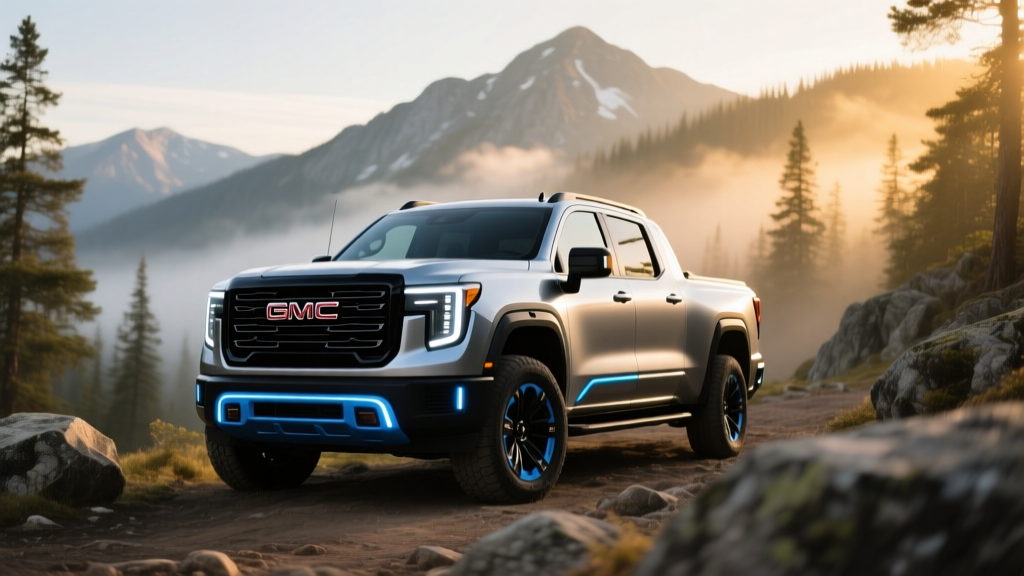
The GMC AT4 EV — officially the 2026 Sierra EV AT4 — is GMC's off-road-oriented electric pickup, slotting between the luxury Denali and work-focused Elevation trims. It targets buyers who want serious trail capability without tailpipe emissions. Expect an EPA-estimated range around 360–390 miles (depending on final battery configuration), DC fast charging up to 350 kW on the Ultium platform, and a starting MSRP likely in the $80,000–$85,000 range before incentives. If you tow heavy, live in a charging desert, or lack home charging access, read the ownership realities below before committing.
What Exactly Is the GMC AT4 EV?
GMC has used the AT4 badge since 2019 to designate its off-road-focused trims across the Sierra, Canyon, and Yukon lineups. The Sierra EV AT4 brings that same philosophy to the electric truck segment. Built on GM's dedicated BT1 electric platform (shared with the Chevrolet Silverado EV and GMC Hummer EV), the AT4 EV is not a converted gas truck — it's engineered from the ground up as a battery-electric vehicle.
Key differentiators for the AT4 EV versus other Sierra EV trims include:
- Off-road suspension tuning with increased ground clearance and adaptive damping
- Underbody skid plates protecting the battery pack and drivetrain
- All-terrain tires on dedicated AT4 wheels (typically 35-inch OD)
- Terrain-select drive modes including dedicated Off-Road and Tow/Haul settings
- Approach/departure/breakover angles optimized for trail use
GMC positions the Sierra EV AT4 against the Ford F-150 Lightning (which lacks a dedicated off-road trim) and the Rivian R1T (which offers strong off-road capability but at a premium). The Rivian R1T Quad-Motor starts above $90,000, making the Sierra EV AT4 a potentially more accessible off-road electric truck.
Range, Battery, and Charging: The Numbers That Matter
| Specification | Value |
|---|---|
| EPA Range (est.) | ~360–390 miles |
| Battery Capacity (usable) | ~200 kWh (Ultium, NMC chemistry) |
| Battery Chemistry | NMC (Nickel Manganese Cobalt) |
| Peak DC Fast Charge Rate | Up to 350 kW |
| 10–80% DC Fast Charge Time (est.) | ~25–30 minutes |
| Level 2 AC Charge Rate | 11.5 kW (standard) / 19.2 kW (available) |
| Level 2 Miles per Hour (11.5 kW) | ~27 mi/hr |
| Horsepower (est.) | ~655 hp (dual-motor e4WD) |
| 0–60 mph (est.) | ~4.5 seconds |
| Max Towing Capacity (est.) | ~10,000 lbs (with Max Trailering Pkg) |
| Battery/Powertrain Warranty | 8 years / 100,000 miles |
| Starting MSRP (est.) | ~$80,000–$85,000 |
Real-World Range vs. EPA Sticker
The EPA estimate of ~360–390 miles assumes mixed driving at moderate temperatures. Here's what to actually expect:
- Highway cruising at 70–75 mph: Expect ~290–330 miles. Aerodynamic drag hits trucks hard at speed.
- Cold weather (below 32°F): Range drops 20–30%. A 380-mile EPA truck may deliver 265–300 miles in winter conditions, especially with cabin heating demands.
- Towing a 5,000-lb trailer: Range can halve to ~180–220 miles. This is a physics reality for all electric trucks, not unique to GMC.
- Off-road/low-speed trail use: Efficiency improves at low speeds, but accessory loads (lights, winch, HVAC) still draw from the pack.
The Sierra EV's Ultium battery uses NMC (nickel manganese cobalt) chemistry, which offers higher energy density than LFP but is more sensitive to sustained high states of charge. For daily driving, GM recommends charging to 80–90% and reserving 100% for road trips to maximize long-term battery health.
Charging Curve Reality
The 350 kW peak charge rate is impressive, but no EV sustains peak speed across the full session. Expect the Sierra EV AT4 to hold near-peak rates from roughly 10–40% State of Charge, then taper progressively. A typical 10–80% session on a 350 kW-capable station should take approximately 25–30 minutes. Above 80%, charging slows dramatically to protect battery longevity — plan to unplug at 80% on road trips unless you need the extra miles.
For home charging on a Level 2 (240V) station:
- 11.5 kW (48A): Adds ~27 miles of range per hour. A full charge from 10% takes roughly 14–15 hours.
- 19.2 kW (80A): Adds ~45 miles per hour. Full charge in ~9 hours. This requires a 100A dedicated circuit and likely a panel upgrade if your home has a 100A or 150A main panel.
Cost Breakdown: Purchase, Fueling, and Ownership
| Cost Category | Sierra EV AT4 (est.) | Sierra 1500 Gas AT4 (est.) |
|---|---|---|
| Purchase Price (MSRP) | $82,000 | $62,000 |
| Federal Tax Credit (§30D) | Up to $7,500 (see eligibility below) | $0 |
| Effective Purchase Price | ~$74,500 | $62,000 |
| Fuel/Energy (5 yr / 75,000 mi) | $3,500–$5,500 (home + public mix) | $11,000–$14,000 (gas at $3.50/gal, 17 MPG) |
| Maintenance (5 yr) | $1,200–$1,800 | $3,500–$5,000 |
| Insurance (5 yr avg.) | $12,000–$15,000 | $8,500–$11,000 |
| Estimated Depreciation (5 yr) | $30,000–$38,000 | $22,000–$28,000 |
| Total 5-Year Cost (est.) | $90,000–$102,000 | $85,000–$98,000 |
Key takeaways from the numbers:
- The EV AT4 saves roughly $6,000–$9,000 on fuel over 5 years if you charge primarily at home on residential electricity rates ($0.12–$0.18/kWh national average).
- Maintenance savings are real — no oil changes, no transmission fluid, fewer brake replacements thanks to regenerative braking.
- Insurance costs 25–40% more for the electric Sierra. EV repair costs, battery replacement risk, and higher vehicle values drive premiums up.
- Depreciation remains the wildcard. Electric trucks are newer to the used market, and long-term resale values are still being established.
Federal Tax Credit Eligibility (§30D)
For 2026, the IRS §30D clean vehicle credit offers up to $7,500, but eligibility is not guaranteed. Requirements include:
- MSRP cap: Trucks must be at or below $80,000. The Sierra EV AT4's base MSRP must land at or under this threshold to qualify — higher trims or optioned units may exceed it.
- Buyer income limits: Modified AGI cannot exceed $150,000 (single), $225,000 (head of household), or $300,000 (married filing jointly).
- Battery sourcing: Critical minerals and battery components must meet escalating domestic-content thresholds that tighten each year. Check GM's official eligibility guidance at point of sale.
- Point-of-sale transfer: You can transfer the credit to the dealer for an upfront price reduction, which helps with cash flow at purchase.
Always verify current eligibility on fueleconomy.gov and consult a tax professional before relying on the credit.
EV vs. Gas Sierra AT4: Which Should You Buy?
| Factor | Sierra EV AT4 | Sierra 1500 Gas AT4 |
|---|---|---|
| Instant Torque (off-road advantage) | Immediate, precise low-speed control | Requires RPM build-up, less modulation |
| Range (real-world mixed) | ~290–360 mi | ~440–500 mi (24-gal tank, 17–19 MPG) |
| Refuel/Recharge Time | 25–30 min (10–80% DC fast) | 5 minutes (gas station) |
| Towing Range Impact | Severe: 40–50% range loss | Moderate: MPG drops to 10–12 |
| Home "Refueling" | Yes — wake up "full" daily | No — must visit gas station |
| Cold-Weather Penalty | 20–30% range loss | 5–10% MPG loss |
| Off-Road Weight | Heavier (~9,000+ lbs) — more momentum on descents | Lighter (~5,200 lbs) — more nimble |
| ProPower/Export Power | Yes — V2L/V2H capable (power tools, campsite, home backup) | Limited (aftermarket inverter only) |
| Trail Noise | Near-silent operation | Engine noise (can be an advantage for spotting wildlife or group communication) |
Real-World Ownership: What First-Time EV Truck Buyers Must Know
Home Charging Is Almost Mandatory
Owning any large-battery EV without home charging is a significant burden. A ~200 kWh battery means Level 1 (120V) charging adds only ~3–4 miles per hour — essentially unusable for daily driving. You need a Level 2 (240V) home charger to make ownership practical.
Typical home Level 2 installation costs:
- Equipment (charger unit): $400–$1,200 (e.g., ChargePoint Home Flex, Emporia Vue, Wallbox Pulsar Plus)
- Electrician labor (240V/50A circuit): $800–$2,500 depending on panel proximity and conduit runs
- Panel upgrade (if needed): $1,500–$3,500 to upgrade from 100A to 200A service
- Permit and inspection: $100–$400
- Total typical install: $1,300–$3,500 without panel upgrade; $3,000–$7,000 with panel upgrade
Public Charging Infrastructure for Trucks
DC fast charging with a truck presents unique challenges. Many existing fast-charging stalls have short cables designed for passenger cars, and pull-through stalls (essential for trucks with trailers) remain limited. Networks like Electrify America and Tesla Supercharger (now open to non-Tesla vehicles via NACS adapter or built-in NACS port) are expanding truck-friendly stations, but coverage in rural and mountain areas — exactly where you'd take an AT4 — is still sparse.
Before buying, map your most common routes and verify DC fast charging availability using apps like PlugShare or A Better Routeplanner. If your off-road adventures take you deep into national forests or BLM land, you'll need to plan charging around gateway towns.
Cold Climate Realities
If you live in the northern U.S. or mountain states, the Sierra EV AT4's range will drop significantly in winter. Battery chemistry (NMC) is less efficient below freezing, and cabin heating draws substantial energy. GM includes a heat pump in the Ultium platform to mitigate this, but expect 20–30% range reduction when temperatures stay below 32°F. Preconditioning the battery while plugged in helps preserve range and improves DC fast charging speeds in cold weather.
Common Misconceptions About the GMC AT4 EV
| Myth | Fact |
|---|---|
| "Electric trucks can't tow." | They can tow at rated capacity (~10,000 lbs), but range drops 40–50%. Plan charging stops carefully on tow days. |
| "The battery will need replacing in 5 years." | GM warranties the Ultium battery for 8 years/100,000 miles against capacity loss below 70%. Real-world degradation data from Bolt EV and Hummer EV owners shows ~5–8% loss over 100,000 miles with proper charging habits. |
| "I'll save $7,500 no matter what." | The §30D credit has MSRP caps, income limits, and battery-sourcing requirements. Not every buyer or every configuration qualifies. |
| "Charging takes too long for road trips." | A 10–80% charge in ~25–30 minutes aligns with a typical rest stop. The issue is station availability and reliability, not charge speed itself. |
| "Electric trucks are silent off-road, which is dangerous." | Near-silent operation is actually an advantage for precise throttle modulation on technical terrain. GM includes an external pedestrian warning sound at low speeds per NHTSA requirements. |
| "I can charge on any standard outlet." | Level 1 (120V) adds ~3–4 miles per hour — roughly 40–50 miles overnight. That's insufficient for most truck owners. Level 2 is practically required. |
Decision Framework: Should You Buy the GMC Sierra EV AT4?
Choose the Sierra EV AT4 If:
- You have reliable home charging (or can install a Level 2 station) — this is non-negotiable for daily usability.
- Your daily driving is under 200 miles — you'll rarely need public charging for routine use.
- You value instant torque for off-road precision — electric motors deliver immediate, modulated power that's superior to gas on technical trails.
- You want V2L/V2H capability — power job-site tools, run a campsite, or provide home backup during outages directly from the truck's battery.
- You qualify for the §30D tax credit — the $7,500 credit meaningfully narrows the price gap with the gas AT4.
- You tow infrequently or on short routes — occasional towing is manageable; frequent long-distance towing remains a gas-truck advantage.
Stick With the Gas Sierra AT4 (or Wait) If:
- You cannot install home charging — apartment/condo living without charging access makes large-battery EV ownership painful.
- You regularly tow over 200 miles — the range penalty and charging logistics make gas or diesel more practical today.
- Your off-road trips are remote and multi-day — deep backcountry travel where charging doesn't exist still favors gas/diesel with jerry cans.
- The MSRP exceeds the $80,000 §30D cap with your preferred options — losing the tax credit significantly worsens the cost equation.
- You live in extreme cold and drive long distances daily — the combined range penalty of cold + highway speeds may not meet your needs.
Frequently Asked Questions
Is the GMC AT4 EV the same as the Sierra EV?
Yes. The "AT4 EV" refers to the AT4 off-road trim of the GMC Sierra EV lineup. GMC uses AT4 as a trim designation, not a standalone model. The Sierra EV also comes in Denali (luxury) and Elevation (value/work) trims.
What connector does the Sierra EV AT4 use — NACS or CCS?
GM has committed to the NACS (North American Charging Standard) connector for its EVs beginning with the 2025 model year. The 2026 Sierra EV AT4 should come equipped with a native NACS port, granting direct access to Tesla Supercharger stations (now open to non-Tesla vehicles) without an adapter. This is a significant infrastructure advantage over CCS-equipped competitors.
How much does it cost to charge the Sierra EV AT4 at home?
With a ~200 kWh battery and national average electricity rates of $0.14/kWh, a full home charge costs approximately $28. For context, filling the gas Sierra AT4's 24-gallon tank at $3.50/gallon costs $84. Over a year of 15,000 miles, home charging costs roughly $700–$1,000 versus $2,200–$2,800 in gasoline.
Can the Sierra EV AT4 power my home during an outage?
GM has announced V2H (vehicle-to-home) capability for the Ultium-based Sierra EV platform, which would allow the truck's large battery to power home circuits during outages via a compatible bidirectional charger (like the GM Energy PowerShift Charger). A ~200 kWh battery could theoretically power an average U.S. home (30 kWh/day) for roughly 5–6 days. Confirm V2H availability and required equipment with your dealer at time of purchase, as this feature may require specific hardware and utility coordination.
How does the Sierra EV AT4 compare to the Rivian R1T for off-roading?
The Rivian R1T offers comparable (and in some metrics superior) off-road capability with its quad-motor configuration, adjustable air suspension, and ~14.9 inches of ground clearance. However, the R1T starts above $90,000 and is a midsize truck with a smaller bed and lower towing capacity. The Sierra EV AT4 offers a full-size truck platform with a larger bed, higher tow rating, and a lower starting price — at the cost of a heavier, larger vehicle that's less nimble on tight trails.
What happens to the battery warranty if I go off-road?
GM's 8-year/100,000-mile battery warranty covers capacity degradation below 70% regardless of use case, including off-road driving. However, physical damage to the battery pack from trail obstacles (rock strikes, submersion, etc.) would be covered by your comprehensive/collision insurance, not the powertrain warranty. The AT4's underbody skid plates are designed to mitigate this risk, but they're not invincible on extreme terrain.
Note: Specifications for the 2026 GMC Sierra EV AT4 are based on GM's published Ultium platform data, preliminary announcements, and estimated figures. Final EPA range, pricing, and feature availability will be confirmed closer to the on-sale date. Always verify specs with your local GMC dealer and consult fueleconomy.gov for official EPA ratings once published.