Quick Answer: What Is a GM V8 EV Conversion?
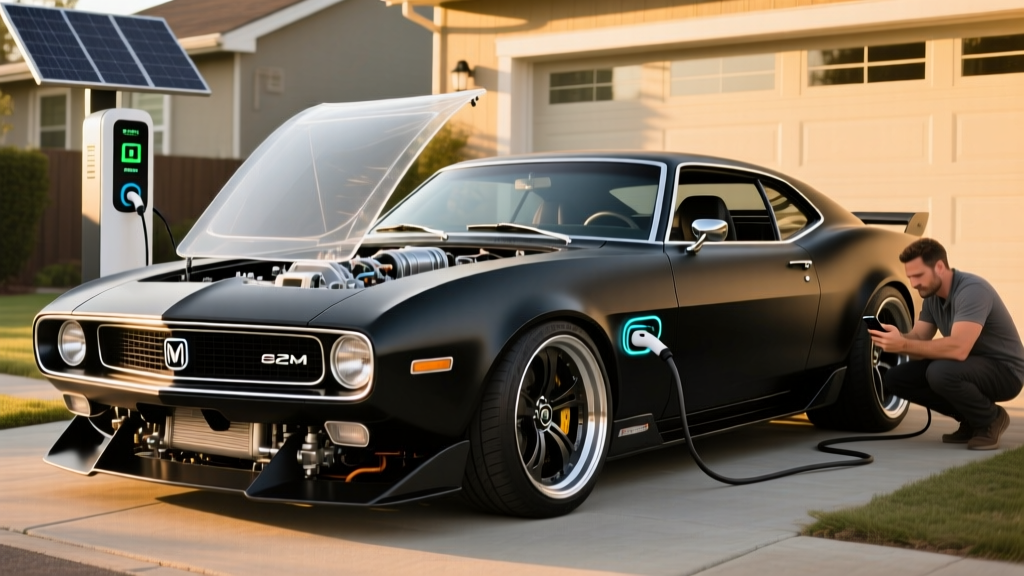
A GM V8 EV conversion replaces the gasoline V8 engine (typically an LS, LT, or older small-block) in a GM truck, SUV, or muscle car with an electric motor and battery pack. In 2026, a complete conversion costs between $25,000 and $60,000+ on top of the donor vehicle price, delivers 100–200 miles of real-world range depending on pack size, and adds 200–400+ hp with instant torque. It's a niche path for classic-car enthusiasts and hot-rodders — not a budget alternative to buying a factory EV. If you're considering a GM V8 EV conversion, this guide covers every cost, range expectation, charging reality, and ownership factor you need to decide.
Why Convert a GM V8 to Electric?
GM's V8 platforms — from the iconic LS-series (4.8L, 5.3L, 6.0L, 6.2L) found in Silverados, Tahoes, Camaros, and Corvettes, to the newer LT variants — are among the most swapped and modified engines in automotive history. Converting one to electric power appeals to builders who want:
- Instant torque: Electric motors deliver peak torque at 0 RPM. A converted C10 truck or C3 Corvette can hit 0–60 mph in the 3–5 second range, embarrassing stock V8 performance.
- Simplified maintenance: No oil changes, timing chains, fuel pumps, exhaust systems, or emissions components. The drivetrain has far fewer wear items.
- Classic styling with modern drivability: Keep the body you love, lose the carburetor tuning and cold-start headaches.
- Lower per-mile energy cost: Electricity at $0.13/kWh costs roughly $0.04–$0.05 per mile for a converted vehicle, versus $0.15–$0.22/mile for a V8 getting 12–16 MPG on $3.40/gallon gas.
But conversions come with real trade-offs: high upfront cost, limited range compared to factory EVs, no federal tax credit eligibility, and the engineering complexity of a one-off build.
GM V8 EV Conversion Cost Breakdown
Here's where the math gets real. A GM V8 EV conversion is a premium hobbyist project, not a cost-saving measure versus buying a used EV.
| Component | Budget Build | Mid-Range Build | High-Performance Build |
|---|---|---|---|
| Donor vehicle (GM V8 platform) | $3,000–$8,000 | $8,000–$20,000 | $15,000–$40,000+ |
| Electric motor + controller | $3,000–$5,000 | $5,000–$9,000 | $8,000–$15,000 |
| Battery pack (modules + BMS) | $6,000–$12,000 (30–50 kWh, salvaged) | $12,000–$22,000 (50–80 kWh, new/remanned) | $20,000–$35,000 (80–100+ kWh, new) |
| Charger (onboard, Level 2) | $800–$1,500 | $1,500–$3,000 | $2,500–$4,000 |
| DC-DC converter, wiring, cooling | $2,000–$3,500 | $3,500–$6,000 | $5,000–$8,000 |
| Fabrication, adapters, mounts | $2,000–$5,000 | $4,000–$8,000 | $6,000–$12,000 |
| Labor (if not DIY) | $5,000–$10,000 | $10,000–$20,000 | $15,000–$30,000 |
| Registration, inspection, insurance | $500–$1,500 | $1,000–$2,500 | $1,500–$3,500 |
| TOTAL (approx.) | $22,300–$45,000 | $44,000–$90,500 | $78,000–$147,500 |
For context, a new 2026 Chevrolet Silverado EV starts around $57,900 MSRP with an EPA-estimated 380+ miles of range, DC fast charging at up to 350 kW (10–80% in ~18 minutes on a capable charger), a full factory warranty, and potential eligibility for the §30D federal tax credit (up to $7,500 at point of sale, subject to income caps, MSRP limits, and battery-sourcing requirements — consult a tax professional). A conversion only makes financial sense if the donor vehicle has sentimental, collectible, or performance value that a factory EV cannot replicate.
Range, Charging, and Performance: Real Numbers
Conversion range depends almost entirely on battery pack size (kWh) and vehicle weight. A heavy GM truck like a C10 or Square Body (4,500–5,500 lbs post-conversion) consumes energy at roughly 350–500 Wh/mile. A lighter muscle car (Camaro, Corvette) may achieve 250–350 Wh/mile.
| Metric | Stock GM V8 (5.3L, gas) | Budget EV Conversion (40 kWh) | Mid-Range EV Conversion (70 kWh) | 2026 Silverado EV (factory) |
|---|---|---|---|---|
| Range | 300–400 mi (16 MPG, 26-gal tank) | 80–115 mi (real-world) | 140–200 mi (real-world) | 380+ mi (EPA est.) |
| Energy/fuel cost per mile | ~$0.18–$0.22 | ~$0.04–$0.06 | ~$0.04–$0.06 | ~$0.04–$0.05 |
| 0–60 mph | 7.0–8.5 sec | 5.0–7.0 sec (200–300 hp) | 3.5–5.5 sec (300–450 hp) | 4.5–6.0 sec (varies by trim) |
| Home charge time (Level 2, 7.2 kW) | N/A | ~5–6 hours (0–100%) | ~9–11 hours (0–100%) | ~10–13 hours (0–100%) |
| DC fast charging | N/A | Rarely available | Optional; 50–150 kW typical | Up to 350 kW; 10–80% ~18 min |
| Maintenance (annual est.) | $800–$1,500 | $100–$300 | $100–$300 | $100–$300 |
Real-world range caveat: Converted vehicles lack the sophisticated thermal management of factory EVs. Expect 20–35% range loss in cold weather (below 40°F), and highway driving at 70+ mph will reduce range by 15–25% versus city driving due to the absence of regenerative braking benefits and higher aerodynamic drag on trucks.
Popular Conversion Kits and Motor Options for GM V8 Platforms
Several companies offer turnkey or semi-complete kits designed to mate electric motors to GM bellhousing patterns (TH350, TH400, 4L60E, T-56). As of 2026, the most common setups include:
- NetGain Hyper9: A compact AC motor producing up to 120 kW (161 hp) continuous / 200+ kW peak. Popular for lighter GM builds (S-10, early Camaros). Motor + controller package: ~$4,500–$6,000.
- Cascadia Motion / REV (RE Volt): Offers adapter plates for GM transmissions and LS-pattern motors. Their iDM systems (integrated drive modules) combine motor, inverter, and gearbox in one unit: 150–250 kW output. Packages: $8,000–$14,000.
- Tesla drive unit swaps: Salvaged Tesla large drive units (LDU) from Model S/X produce 200–300+ kW (268–402+ hp) and are increasingly adapted to GM platforms using aftermarket adapter plates (e.g., from EV West or CanEV). Cost: $3,500–$7,000 for a used unit, plus $2,000–$4,000 for adapters and controllers.
- GM's own eCrate motor: GM Performance sells the "Connect & Cruise" electric crate motor — essentially the drive unit from the Bolt EV — rated at 150 kW (200 hp) and 266 lb-ft of torque. MSRP: ~$7,500 for the motor/inverter combo. This is the most "plug-and-play" option for GM loyalists.
Battery sourcing is the biggest variable. Salvaged modules from Nissan Leaf (LMO/NMC), Chevy Bolt (NMC), or Tesla Model S (NCA) packs are common in budget builds. New LFP (lithium iron phosphate) modules from CATL or EVE are increasingly popular for their longer cycle life (3,000–5,000 cycles) and thermal stability, though they carry a weight penalty versus NMC chemistry.
Charging at Home: What You Actually Need
Most GM V8 conversions use a Level 2 onboard charger rated between 3.3 kW and 7.2 kW. This means you'll need a 240V circuit — the same as a clothes dryer or electric range.
Home Charging Setup for a Conversion
- Circuit required: 30A or 50A, 240V dedicated circuit (NEMA 14-50 or hardwired)
- EVSE (charger unit): $300–$700 for a quality Level 2 unit (e.g., Emporia, ChargePoint Home Flex, Wallbox Pulsar Plus)
- Electrician install cost: $500–$2,500 depending on panel capacity and run length. If your home has a 100A panel, expect a potential $1,500–$3,500 panel upgrade to 200A.
- Charge time (40 kWh pack, 7.2 kW): ~5.5 hours from empty to full
- Charge time (70 kWh pack, 7.2 kW): ~9.5 hours from empty to full
DC fast charging on a conversion is possible but adds $3,000–$8,000 for the hardware (CHAdeMO or CCS inlet, high-voltage contactors, capable BMS) and significant integration complexity. Most builders skip it and rely on overnight Level 2 charging.
Tax Credits, Insurance, and Registration: The Fine Print
Here's where conversions diverge sharply from factory EVs:
- Federal §30D tax credit: Converted vehicles do not qualify for the new clean vehicle credit. The credit applies only to new vehicles purchased from a manufacturer with specific battery-sourcing and MSRP requirements. A converted classic is neither new nor factory-certified.
- Used EV credit (§25E): Also does not apply — this credit requires a dealer-sold used EV from a qualified manufacturer, under $25,000.
- State incentives: Vary widely. Some states offer rebates for EV registration or home charger installation that may apply to conversions. Check your state's energy office or AFDC incentive database for specifics.
- Insurance: Specialty insurers like Hagerty, Grundy, or Heacock Classic cover converted vehicles, typically under agreed-value classic-car policies. Expect premiums of $800–$2,500/year depending on appraised value, mileage limits, and storage requirements. Standard insurers may decline coverage or require a specialized appraisal.
- Registration and inspection: Requirements vary by state. Some states (California, Texas, Florida) have established procedures for registering converted EVs, including smog-exempt status. Others may require a special inspection or "constructed vehicle" title. Budget $200–$1,000 for registration, inspection, and titling paperwork.
| Myth | Fact |
|---|---|
| "EV conversions save money versus buying a new EV." | Most conversions cost $40,000–$90,000+ total (donor + parts + labor). A new Chevy Equinox EV starts at ~$33,600 MSRP before incentives. |
| "You'll get 200+ miles of range easily." | Only with a 70+ kWh pack in a lighter vehicle. Most truck conversions with 40–50 kWh packs achieve 80–130 real-world miles. |
| "Conversions qualify for the $7,500 federal tax credit." | They do not. §30D applies only to new factory EVs meeting battery-sourcing and MSRP requirements. |
| "Any mechanic can do an EV swap." | High-voltage systems (300–400V+) require specialized training. Improper wiring can cause fires or electrocution. Use a qualified EV conversion shop or have deep electrical knowledge. |
| "EV conversions are maintenance-free." | The drivetrain is low-maintenance, but suspension, brakes, steering, and 12V systems still need regular attention. Battery degradation over 10–15 years will require eventual pack replacement ($8,000–$25,000). |
Decision Framework: Should You Convert Your GM V8?
Choose a GM V8 EV Conversion If:
- You own a GM classic (C10, C3/C4 Corvette, '69 Camaro, Square Body) with sentimental or collector value you want to preserve while modernizing the drivetrain.
- You have a garage with 240V access and a daily commute under 80 miles round-trip.
- You enjoy hands-on mechanical projects or have a trusted EV conversion shop within driving distance.
- Your budget is $40,000–$90,000+ and you view this as a hobby investment, not a cost-saving measure.
- You want instant-torque performance that embarrasses the stock V8 at stoplights.
Buy a Factory EV Instead If:
- You need 250+ miles of reliable, all-weather range without range-planning anxiety.
- You want DC fast charging for road trips (10–80% in under 25 minutes).
- You want federal tax credit eligibility (up to $7,500 point-of-sale, subject to IRS §30D rules including income caps and MSRP limits).
- You need a factory warranty covering battery and powertrain for 8 years / 100,000 miles.
- Your total budget is under $40,000 — a used Chevy Bolt EV (259 mi EPA range) can be found for $15,000–$22,000 in 2026.
Frequently Asked Questions
How long does a GM V8 EV conversion take?
A professional shop typically takes 3–6 months for a complete conversion, including fabrication, wiring, BMS programming, and testing. A skilled DIY builder might complete a simpler build in 2–4 months of weekends. Expect delays sourcing battery modules and custom adapter plates.
Can I keep the original GM transmission?
Yes — many conversions retain the stock manual or automatic transmission (e.g., T-56, 4L60E) using an adapter plate between the electric motor and the bellhousing. This preserves the existing driveshaft, rear axle, and shifter. Some builders use a single-speed reduction gear instead for simplicity, but keeping the transmission allows gear selection for performance or efficiency.
What battery chemistry is best for a conversion?
LFP (lithium iron phosphate) is the safest and longest-lasting choice for conversions — it's thermally stable, tolerates 100% daily charging, and offers 3,000–5,000+ cycles. The trade-off is ~20% more weight per kWh than NMC. NMC (nickel manganese cobalt) is lighter and more energy-dense, better for performance builds where weight matters, but degrades faster if regularly charged above 80% and is more thermally sensitive.
Is a converted EV safe in a crash?
This is a legitimate concern. Factory EVs undergo NHTSA crash testing with specific battery-protection engineering. A one-off conversion lacks crash validation. Proper builders add reinforced battery enclosures, high-voltage disconnect switches, and inertia cut-off switches, but there's no crash-test rating for a converted vehicle. If safety is a top priority, a factory EV is the clear choice.
What's the resale value of a GM V8 EV conversion?
Resale is unpredictable and highly dependent on build quality, documentation, and buyer taste. Well-executed conversions of desirable classics (C2/C3 Corvettes, first-gen Camaros, C10 trucks) have sold at auction for $60,000–$120,000+. Poorly documented or low-range conversions may sell for less than the sum of their parts. Keep meticulous build records, receipts, and wiring diagrams.
Do I need a special license to drive a converted EV?
No. A converted EV drives like any automatic-transmission vehicle (in fact, simpler — no shifting if running a single-speed setup). No special license or endorsement is required. However, your state DMV may require updated registration reflecting the electric powertrain, and some states require a special inspection.