Quick Answer: Which GM Affordable EV Is Right for You?
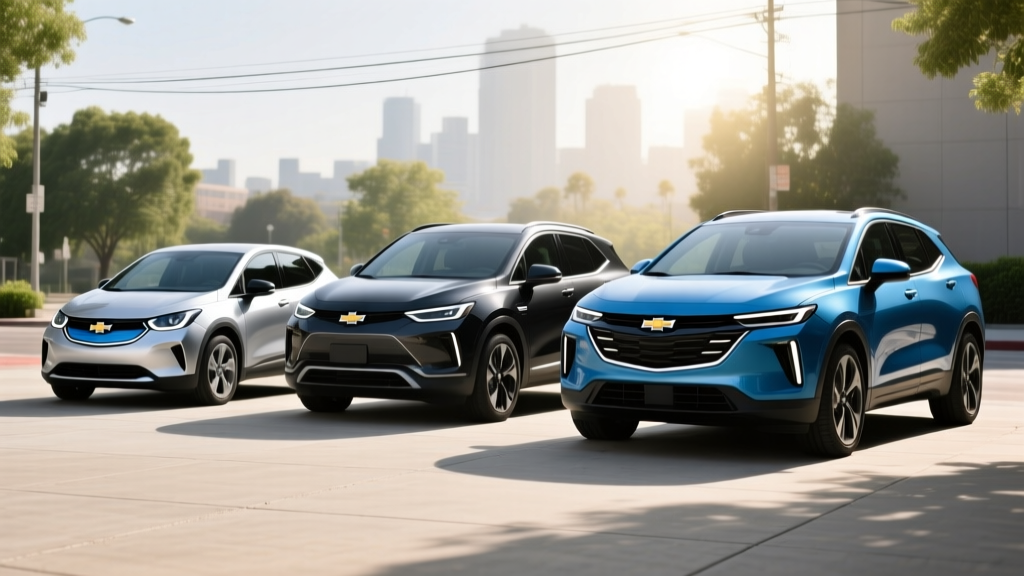
If you're researching a GM new affordable EV, the 2026 lineup offers three distinct price tiers: the Chevrolet Bolt EV/EUV starts around $26,500 (259 miles EPA), the Chevrolet Equinox EV starts near $33,600 (up to 319 miles EPA), and the Chevrolet Blazer EV begins at roughly $44,600 (up to 324 miles EPA). All three may qualify for the $7,500 federal tax credit under IRS §30D, depending on your income, the vehicle's MSRP cap compliance, and battery-sourcing requirements. The Bolt is the value king for commuters; the Equinox EV hits the sweet spot for families needing space and range; the Blazer EV suits buyers wanting performance and a larger footprint.
The 2026 GM Affordable EV Lineup at a Glance
General Motors has restructured its accessible electric vehicle portfolio around the Ultium battery platform while reintroducing the Bolt on an updated architecture. Here's how the three core models stack up on the specifications that actually matter for ownership decisions.
| Spec | 2026 Chevy Bolt EV | 2026 Chevy Equinox EV | 2026 Chevy Blazer EV |
|---|---|---|---|
| Base MSRP | $26,500 | $33,600 | $44,600 |
| EPA Range (max config) | 259 mi | 319 mi | 324 mi |
| Battery (usable, chemistry) | 65 kWh, LFP | 85 kWh, NMC | 102 kWh, NMC |
| Peak DC Fast Charge | 115 kW | 150 kW | 190 kW |
| 10–80% DCFC Time | ~32 min | ~25 min | ~22 min |
| Level 2 Charge Rate | 11.5 kW | 11.5 kW | 11.5 kW |
| Horsepower | 200 hp | 213 hp (FWD) / 288 hp (AWD) | 288 hp (RS AWD) |
| 0–60 mph | ~7.0 sec | ~8.0 sec (FWD) / ~6.0 sec (AWD) | ~6.0 sec (RS AWD) |
| MPGe (combined) | 120 MPGe | 115 MPGe | 100 MPGe |
| Cargo Volume | 28.1 cu ft | 26.4 cu ft | 25.8 cu ft |
| Battery/Powertrain Warranty | 8 yr / 100,000 mi | 8 yr / 100,000 mi | 8 yr / 100,000 mi |
Sources: fueleconomy.gov (EPA estimates), Chevrolet EV configurator. Real-world highway range typically runs 10–15% below EPA; cold-weather (below 30°F) can reduce range by 20–30% due to battery heating demands and cabin climate load.
Real-World Range Reality Check
EPA 319 mi (Equinox EV LT): Expect ~270–285 mi on a 70°F highway trip at 70 mph. In winter conditions (20°F), plan for ~220–240 mi per charge. The Bolt's 259-mi EPA translates to roughly 220 mi highway in mild weather and ~180 mi in deep cold. The Blazer EV's larger 102 kWh pack provides more buffer, but its heavier mass and less efficient aero mean real-world highway numbers land around 275 mi mild / 210 mi cold.
Cost Breakdown: Purchase Price, Tax Credits & Ownership
The sticker price is just the starting point. Here's the full financial picture across purchase incentives, fueling, maintenance, and insurance for each GM affordable EV.
Federal Tax Credit Eligibility (§30D)
All three vehicles are assembled in North America, but eligibility for the $7,500 federal tax credit depends on several moving targets. Under current IRS §30D rules:
- MSRP Cap: SUVs (Equinox EV, Blazer EV) must have an MSRP ≤ $80,000; cars (Bolt EV) must be ≤ $55,000. All three base trims clear this easily.
- Income Cap: Adjusted gross income ≤ $150,000 (single), $225,000 (head of household), $300,000 (joint).
- Battery Sourcing: Critical minerals and battery component requirements phase in annually. Full $7,500 requires meeting both the critical-minerals and battery-component thresholds. GM has been working to shift supply chains, but confirm current-year eligibility on the IRS qualified vehicles list before purchase.
- Point-of-Sale Transfer: You can transfer the credit to the dealer at purchase, reducing your out-of-pocket cost immediately rather than waiting for tax filing.
Note: Tax credit rules shift with regulatory guidance. Always verify on irs.gov and consult a tax professional for your specific situation.
| Cost Factor (5-Year / 75,000 mi) | Bolt EV | Equinox EV | Blazer EV | Gas Compact SUV (baseline) |
|---|---|---|---|---|
| Base MSRP | $26,500 | $33,600 | $44,600 | $30,000 |
| Fed Tax Credit (if eligible) | −$7,500 | −$7,500 | −$7,500 | $0 |
| Effective Purchase Price | $19,000 | $26,100 | $37,100 | $30,000 |
| Fueling / Charging (5 yr) | $2,850 | $3,200 | $3,900 | $8,750 |
| Maintenance (5 yr) | $1,200 | $1,400 | $1,600 | $3,500 |
| Insurance (5 yr, avg) | $7,500 | $8,250 | $9,500 | $6,750 |
| Total 5-Year Cost | $30,550 | $38,950 | $52,100 | $49,000 |
Assumptions: $0.14/kWh average home electricity; $3.50/gal gasoline; 25 MPG combined for gas SUV; 15,000 mi/yr; insurance based on national EV averages (~15–25% higher than gas equivalents). DC fast-charging on road trips adds ~$0.04–0.06/mi vs home charging.
EV vs Gas vs Hybrid: Which Saves More?
The decision isn't purely EV-or-bust. Here's how a GM affordable EV compares to the alternatives most buyers cross-shop.
| Metric | Equinox EV (2LT AWD) | Toyota RAV4 Hybrid | Toyota RAV4 (Gas) |
|---|---|---|---|
| MSRP | $38,900 | $34,400 | $30,800 |
| Effective Price (after credit) | $31,400 | $34,400 | $30,800 |
| EPA Efficiency | 112 MPGe | 39 MPG combined | 30 MPG combined |
| Cost per Mile (fuel/energy) | $0.04 | $0.09 | $0.12 |
| 5-Year Fuel/Energy Cost | $3,000 | $6,750 | $9,000 |
| 5-Year Maintenance | $1,400 | $2,800 | $3,500 |
| Annual Maintenance | ~$280 | ~$560 | ~$700 |
The Equinox EV's effective purchase price (after the $7,500 credit) actually undercuts the RAV4 Hybrid, and the per-mile energy cost is less than half. The break-even point versus a gas RAV4 arrives within 2–3 years for most drivers covering 12,000+ miles annually.
Charging at Home and on the Road
Home charging access remains the single biggest variable in EV satisfaction. Here's what GM's affordable EV buyers need to budget for.
Home Level 2 Installation
All three models accept 11.5 kW on Level 2 (240V, 48A), adding roughly 35–45 miles of range per hour. A full overnight charge from 20% to 100% takes about 6–8 hours.
| Item | Typical Cost Range | Notes |
|---|---|---|
| Level 2 Charger (48A, hardwired) | $400–$700 | ChargePoint Home Flex, Emporia, Wallbox |
| Electrician Labor (50-ft run) | $500–$1,500 | Varies by region, conduit length |
| Panel Upgrade (if needed) | $1,500–$3,500 | Required if panel is maxed at 100A |
| Permit | $50–$250 | Local jurisdiction dependent |
| Total (no panel upgrade) | $950–$2,450 | Most common scenario |
| Total (with panel upgrade) | $2,450–$5,950 | Older homes with 100A service |
Have a licensed electrician evaluate your panel capacity before purchasing equipment. A 200A panel typically supports a 48A EV circuit without upgrades.
DC Fast Charging
GM's Ultium-based vehicles (Equinox and Blazer EV) use the NACS (Tesla-style) connector as standard, granting native access to the Tesla Supercharger network — over 25,000 stalls in North America. The refreshed Bolt also transitions to NACS. This is a significant practical advantage over CCS-only vehicles, which rely on Electrify America, EVgo, and ChargePoint networks with more variable uptime.
Peak charge rates matter less than sustained charge curves. The Blazer EV peaks at 190 kW but tapers significantly above 80% SoC — a typical 10–80% session takes ~22 minutes, while 80–100% can take another 20 minutes. Plan road-trip stops around 10–80% charges for optimal time efficiency.
Real-World Ownership Considerations
Data sheets don't capture the daily ownership experience. These are the factors that separate happy GM EV owners from frustrated ones.
Climate and Driving Pattern Reality
Cold-weather buyers (Northern US, Mountain states): LFP chemistry in the Bolt EV is more resistant to degradation over time but suffers slightly more range loss in extreme cold than NMC packs. Budget for 25–30% range reduction below freezing. The Equinox and Blazer EV include a heat pump on most trims, which cuts cabin-heating energy consumption by roughly 30–40% versus resistive heating — a meaningful advantage in sub-40°F climates.
High-mileage commuters (40+ mi/day round trip): The Bolt's 259-mi EPA range handles this easily, even with cold-weather losses. But if your commute involves sustained 75–80 mph highway driving, real consumption rises to ~3.5–4.0 mi/kWh, reducing effective range to ~210 mi. The Equinox EV's larger 85 kWh pack provides a more comfortable buffer.
Apartment/rental dwellers without home charging: Public DC fast charging costs $0.30–$0.50/kWh at most networks, making per-mile costs comparable to a 35+ MPG hybrid. If you can't install a Level 2 charger, a PHEV like the Toyota RAV4 Prime may be a more practical electrified option.
Battery Longevity and Warranty
All three models carry GM's 8-year / 100,000-mile battery warranty, which covers capacity loss below 70% of original. Real-world degradation data from Ultium-platform vehicles is still accumulating (the platform launched in 2023), but industry-wide, modern NMC packs typically lose 8–12% capacity over 100,000 miles, while LFP packs (Bolt) often lose 5–8%. A full Ultium battery replacement currently ranges from $9,000–$16,000 depending on pack size, though most owners will never need one within the warranty period.
Common Misconceptions About GM's Affordable EVs
| Myth | Fact |
|---|---|
| "Affordable EVs have terrible range." | The Equinox EV delivers 319 mi EPA — more than most gas cars per tank — at a sub-$34K starting price. |
| "The Bolt was recalled and is unreliable." | The original Bolt's LG battery recall (2021–2022) was fully remedied. The 2026 Bolt uses an entirely new battery architecture with no connection to the recalled cells. |
| "You can't road-trip an affordable EV." | With NACS access to Superchargers and 150–190 kW DCFC, the Equinox and Blazer EV add ~150–200 miles in a 25-minute stop. Planning apps like A Better Routeplanner handle the logistics. |
| "EV batteries need replacing every few years." | Modern lithium-ion packs are engineered for 200,000+ mile lifespans with <15% degradation. The 8yr/100k-mi warranty backs this up. |
| "The $7,500 credit is automatic for everyone." | Income caps, MSRP caps, and battery-sourcing rules all apply. Verify on the IRS qualified vehicles list before committing. |
Decision Framework: Which GM Affordable EV Should You Buy?
Choose the Chevy Bolt EV if:
- Your budget is strictly under $28K before incentives
- Your daily commute is under 60 miles round-trip
- You primarily drive in urban/suburban settings under 70 mph
- You want the lowest cost-per-mile of any GM EV
- Cargo needs are modest (groceries, gym bags, not furniture)
Choose the Chevy Equinox EV if:
- You need a family vehicle with 319 mi of range and real cargo space
- You take 2–4 road trips per year and want comfortable Supercharger stops
- You live in a cold climate and value the heat pump's efficiency
- Your budget is $33K–$42K before incentives
- You want the best balance of range, space, and price in GM's lineup
Choose the Chevy Blazer EV if:
- You want sub-6-second 0–60 performance with AWD
- You need the largest battery (102 kWh) for maximum range buffer on long trips
- You prefer a sportier, more premium cabin experience
- Your budget is $44K–$55K before incentives
- You cross-shop the Tesla Model Y and Hyundai Ioniq 5 but prefer a traditional SUV layout
Frequently Asked Questions
Do all GM affordable EVs qualify for the $7,500 federal tax credit?
Not automatically. Eligibility depends on your income (≤$150K single / $300K joint), the vehicle's MSRP being under the cap ($55K cars, $80K SUVs), and current-year battery sourcing requirements. Check the IRS qualified clean vehicles list for the specific trim you're buying, and confirm with your dealer at point of sale.
Can I charge a GM EV at Tesla Superchargers?
Yes. The 2026 Bolt, Equinox EV, and Blazer EV all come with the NACS connector as standard equipment, providing native access to Tesla's Supercharger network without adapters. This is one of GM's strongest practical advantages for road-trip charging.
How much does it cost to charge at home versus fueling a gas car?
At the US average electricity rate of ~$0.14/kWh, charging the Equinox EV costs roughly $0.04/mile. A comparable gas SUV at 25 MPG with $3.50/gal fuel costs $0.14/mile — about 3.5× more. Over 15,000 miles/year, that's a savings of roughly $1,500 annually on energy alone.
What happens if I don't have access to home charging?
You can rely on public DC fast charging, but at $0.30–$0.50/kWh, your per-mile cost rises to $0.08–$0.12/mile — closer to a fuel-efficient hybrid. You'll also spend 20–30 minutes charging 2–3 times per week instead of plugging in overnight. If home or workplace charging isn't available, seriously consider whether a PHEV better fits your situation.
Is LFP or NMC battery chemistry better for long-term ownership?
LFP (used in the Bolt) offers slightly better cycle life and is less prone to thermal runaway, but has lower energy density (heavier pack for the same range). NMC (Equinox and Blazer EV) provides more range per pound and charges slightly faster but may degrade marginally more over 100,000+ miles. For most buyers, both chemistries will outlast the vehicle's useful life with proper care — avoid routinely charging to 100% on NMC packs unless preconditioning for a road trip.
How does the GM EV warranty compare to competitors?
GM's 8-year/100,000-mile battery and powertrain warranty matches the industry standard set by Hyundai, Kia, and most mainstream brands. Tesla offers 8yr/120,000–150,000 mi depending on model. The warranty covers battery capacity dropping below 70% of original — a threshold most Ultium packs won't approach within the warranty window based on early degradation data.