Quick Answer: Should China's EV Overproduction Change Your 2026 EV Purchase?
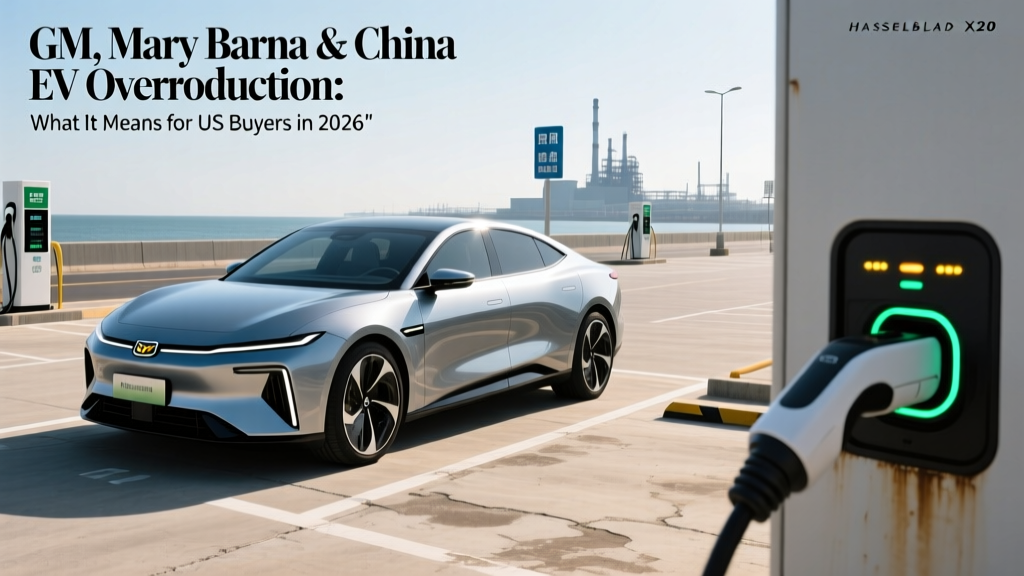
China's EV overcapacity—estimated at over 10 million excess units annually—has not resulted in a flood of cheap EVs in the US market, thanks to 100%+ tariffs on Chinese-built vehicles and strict battery-sourcing rules under the Inflation Reduction Act. GM CEO Mary Barra has been vocal about this imbalance, arguing it threatens Western automakers. For US buyers, the practical effect is this: you won't find $15,000 BYD models at American dealerships, but the global pricing pressure is helping hold down EV prices on domestic and allied-nation models. If you're shopping now, the bigger cost variables remain your home charging setup, the §30D tax credit eligibility, and your state's incentive landscape—not Chinese imports.
What "China EV Overproduction" Actually Means in Numbers
China produced approximately 30 million vehicles in 2025, with new-energy vehicles (BEVs and PHEVs) accounting for roughly 45% of domestic sales. The problem, as flagged by the EU, US Trade Representative, and GM's leadership, is that China's factory capacity significantly exceeds its domestic demand. Analysts at Rhodium Group and the Center for Strategic and International Studies (CSIS) have estimated China's excess auto production capacity at 10–15 million units per year—more than the entire annual US light-vehicle market.
This overcapacity has driven Chinese OEMs like BYD, NIO, XPeng, and Geely to push aggressively into export markets. BYD alone exported over 2 million vehicles in 2025, with the Seagull (a sub-$12,000 BEV in China) drawing particular alarm in Western capitals.
Mary Barra's Position
GM CEO Mary Barra has testified before Congress and spoken at industry events about the structural threat of Chinese EV overproduction. Her core argument: Chinese manufacturers benefit from state subsidies, vertically integrated battery supply chains (CATL, BYD's FinDreams), and lower labor/environmental compliance costs—creating an unlevel playing field. GM's response has been twofold:
- Cost reduction: Transitioning to LFP (lithium iron phosphate) battery packs on entry-level Ultium-based models to cut cell costs by 20–30% versus NMC chemistry.
- Policy advocacy: Supporting tariff barriers and IRA battery-sourcing requirements to prevent Chinese-built EVs and components from undercutting US-assembled vehicles.
How Tariffs and Trade Policy Shield (and Shape) the US EV Market
The US has erected substantial barriers against Chinese EV imports:
| Trade Measure | Rate / Requirement | Impact on US Buyers |
|---|---|---|
| Section 301 Tariff on Chinese BEVs | 100% (raised from 25% in 2024) | A $12,000 BYD Seagull would cost ~$24,000+ before shipping/dealer markup—eliminating price advantage |
| IRA §30D Battery Sourcing | Critical minerals and battery components must exclude "foreign entities of concern" (FEOC) | Disqualifies vehicles with Chinese-sourced battery materials from the $7,500 credit |
| EU Countervailing Duties | 17%–38% additional tariffs on Chinese BEVs (varies by OEM, 2024–2026) | Redirects Chinese exports away from Europe; some pressure on global pricing |
The practical result: Chinese EVs are effectively locked out of the US market. But the threat of their entry disciplines pricing. Automakers like GM, Ford, Hyundai, and Tesla know that if trade barriers ever loosen, sub-$25,000 Chinese BEVs would be formidable competitors. This is one reason the 2026 Chevy Equinox EV starts at $33,600 (before credits) rather than $45,000+.
2026 US EV Pricing: Where the Market Actually Stands
Despite the absence of Chinese imports, competition among domestic and allied-nation automakers has pushed entry-level EV pricing down meaningfully. Here's what the landscape looks like for buyers:
| Model | Base MSRP | EPA Range | Battery (kWh) | §30D Credit Eligible? | Effective Price (w/ credit) |
|---|---|---|---|---|---|
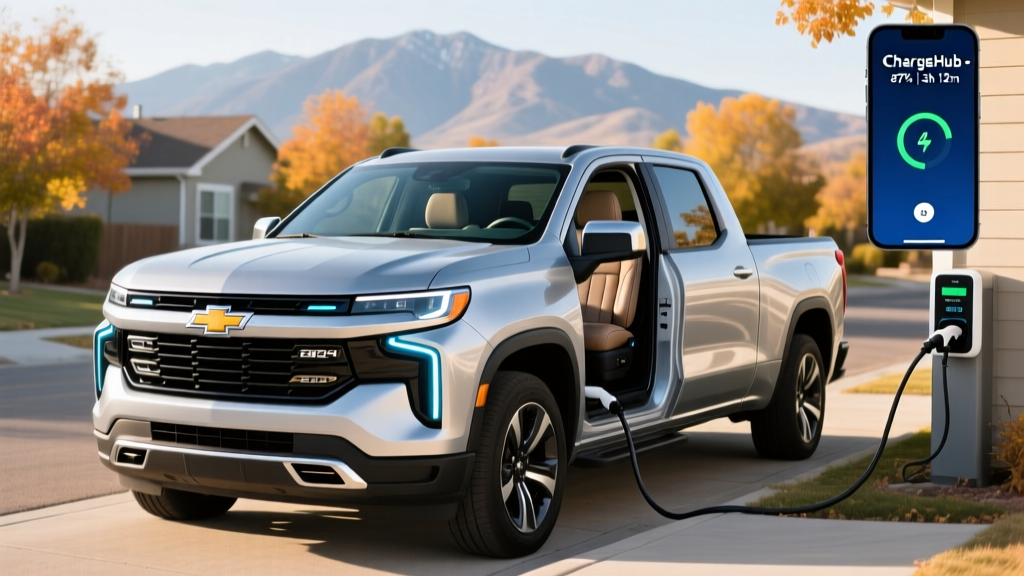
| 2026 Chevy Equinox EV LT | $33,600 | 319 mi | 85 kWh (NMC) | Yes (partial, $3,750–$7,500 varies by sourcing) | ~$26,100–$29,850 |
| 2026 Hyundai Ioniq 5 SE | $42,400 | 303 mi | 77.4 kWh (NMC) | Yes ($7,500, US-assembled) | ~$34,900 |
| 2026 Tesla Model 3 RWD | $38,990 | 272 mi | 60 kWh (LFP) | Yes ($7,500) | ~$31,490 |
| 2026 Nissan Leaf S | $28,140 | 149 mi | 40 kWh (NMC) | Partial ($3,750) | ~$24,390 |
| 2026 Ford Mustang Mach-E Select | $39,995 | 250 mi | 70 kWh (LFP) | Yes ($7,500) | ~$32,495 |
Note: §30D eligibility depends on MSRP caps ($55,000 sedans / $80,000 SUVs/trucks), buyer income limits ($150K single / $300K joint), and battery component/critical-mineral sourcing. Always verify current-year rules at IRS.gov and consult a tax professional. Point-of-sale transfer is available at participating dealers.
EV vs. Gas vs. Hybrid: Real Ownership Cost Comparison
The overproduction debate can feel abstract when you're trying to decide what to drive. Let's ground this in a concrete 5-year cost comparison using a midsize crossover as the baseline—comparing the 2026 Chevy Equinox EV (2LT, $38,900 MSRP), the 2026 Toyota RAV4 Hybrid (XLE, $33,425), and the 2026 Toyota RAV4 LE gas model ($29,825).
| Cost Factor (5 yr / 75,000 mi) | Equinox EV 2LT | RAV4 Hybrid XLE | RAV4 Gas LE |
|---|---|---|---|
| Purchase price (after credit) | $31,400 (est. $7,500 credit) | $33,425 | $29,825 |
| Fuel / electricity | $3,750 (home L2 @ $0.14/kWh avg) | $5,625 (39 MPG combined @ $3.50/gal) | $8,750 (30 MPG combined @ $3.50/gal) |
| Maintenance | $1,500 (no oil changes, fewer brake jobs w/ regen) | $3,000 | $3,500 |
| Insurance (avg) | $8,500 (EV premium ~15–20% higher) | $7,250 | $7,000 |
| Depreciation (est.) | $14,500 (47% retained value trending up) | $11,000 | $13,000 |
| 5-Year Total | $59,650 | $60,300 | $62,075 |
Assumptions: 15,000 mi/yr, national avg electricity $0.14/kWh (EIA), gas $3.50/gal, insurance from AAA/IIHS averages. Your results vary by state, utility rate, and driving pattern. Source: fueleconomy.gov.
The EV wins narrowly in this scenario—but only because of the federal tax credit and home charging at residential rates. If you lack home charging access and rely on DC fast charging at $0.35–$0.50/kWh, your fuel cost jumps to $7,500–$10,000 over 5 years, erasing the advantage.
Common Misconceptions About China's EV Threat
| Myth | Fact |
|---|---|
| "Chinese EVs are coming to US dealers imminently" | 100% Section 301 tariffs plus FEOC sourcing rules make direct Chinese EV imports economically nonviable through at least 2028 under current policy. |
| "China's overproduction will crash US EV prices" | US pricing is shaped by domestic competition, battery cost curves, and IRA incentives—not Chinese imports. Battery cell prices have fallen (LFP cells below $50/kWh in 2025), but vehicle pricing reflects many other cost inputs. |
| "GM can't compete on price, so they're just lobbying for protection" | GM has cut Equinox EV pricing to $33,600 base, adopted LFP cells for cost reduction, and consolidated Ultium platform production. Protectionism buys time, but GM is also restructuring costs. |
| "If tariffs dropped, a $12,000 BYD would be available tomorrow" | Even without tariffs, Chinese OEMs would need a US dealer/service network, NHTSA/FMVSS compliance certification, US-spec charging connectors (NACS by 2026), and crash-test validation—a 3–5 year process minimum. |
| "All EV batteries come from China anyway" | China dominates refining (~60% of lithium, ~80% of graphite), but IRA FEOC rules are forcing supply-chain diversification. GM sources cells from Ultium Cells LLC (joint venture with LG Energy Solution) in Ohio, Tennessee, and Michigan, with increasing non-Chinese mineral sourcing. |
What This Means for Your Purchase Decision: A Practical Framework
If-Then Buying Guide: 2026 EV Market Edition
- If you have home charging (Level 2, 240V) and drive <40 miles/day: A compact/midsize BEV like the Equinox EV or Tesla Model 3 is a strong buy. Your "fuel" cost is $3–$5/day. The China overproduction story doesn't change your math—buy based on your needs and credit eligibility.
- If you lack reliable home charging: A PHEV like the Toyota RAV4 Prime (42 mi electric range, 38 MPG gas) or the Hyundai Tucson PHEV (33 mi electric, 35 MPG) is the pragmatic choice. Public DC fast charging at $0.40/kWh makes pure BEV ownership significantly more expensive.
- If you're waiting for a sub-$25,000 EV: The next-generation Chevy Bolt (announced, expected late 2026/early 2027) and refreshed Nissan Leaf are your best domestic bets. Don't expect a Chinese import to fill this gap—trade policy prevents it.
- If you frequently drive 300+ miles in cold weather (below 20°F): Budget for 25–35% range loss on any BEV. A 319-mile Equinox EV becomes ~210–240 miles in a Minnesota January. Consider a PHEV or ensure your route has reliable DC fast chargers (Tesla Supercharger or Electrify America) every 150 miles.
- If total cost of ownership is your primary concern: Run your personal numbers. Use the DOE EV cost calculator with your utility rate, commute, and state incentives. The federal credit may not apply to you if your AGI exceeds $150K (single) or $300K (joint), and some models lose credit eligibility mid-year due to sourcing changes.
Real-World Ownership Considerations Beyond the Headlines
Home Charging: The Make-or-Break Variable
Regardless of trade policy, your EV experience hinges on charging access. A Level 2 home charger (7.2–11.5 kW, 240V) adds 25–44 miles of range per hour of charging—enough to fully replenish overnight. Installation costs range from $500 (simple outlet near panel) to $3,500+ (panel upgrade from 100A to 200A, long conduit runs). Get a quote from a licensed electrician before committing to an EV purchase.
Cold-Weather Range Reality
EPA range stickers assume moderate temperatures. In sustained sub-freezing conditions, expect:
- LFP batteries: 30–40% range loss (more sensitive to cold due to chemistry)
- NMC batteries: 20–30% range loss
- Vehicles with heat pumps (Hyundai Ioniq 5, Tesla Model 3): 5–10 percentage points less loss versus resistive heating
Preconditioning your battery while plugged in (a feature on most 2026 BEVs) mitigates this by warming the pack before departure.
Insurance Premiums
EV insurance runs 15–25% higher than equivalent gas vehicles, per AAA and IIHS data. The Equinox EV averages ~$1,700/year nationally versus ~$1,450 for the RAV4 Hybrid. Factor this into your 5-year cost. Some insurers (Geico, Progressive, State Farm) now offer EV-specific discounts—shop around.
Frequently Asked Questions
Will Chinese EVs ever be sold in the US?
Not under current trade policy. The 100% Section 301 tariff on Chinese-built BEVs, combined with FEOC battery-sourcing exclusions in the IRA, makes direct import economically unviable. Chinese OEMs like BYD could theoretically build US or Mexico factories, but FEOC rules would still restrict battery-component sourcing, and political opposition to such plants is intense. The earliest realistic scenario for Chinese-brand EVs in the US is a Mexico-assembled vehicle post-2028, and even that faces USMCA content and tariff scrutiny.
Does China's EV overproduction benefit US buyers indirectly?
Yes, in two ways. First, the global oversupply has driven battery cell prices down—LFP cells fell below $50/kWh in 2025, which reduces pack costs for all automakers, including GM and Tesla. Second, the competitive threat disciplines Western OEM pricing; GM's decision to price the Equinox EV at $33,600 reflects awareness that sub-$30K EVs must exist to compete globally, even if Chinese imports aren't on US lots.
Is Mary Barra right that Chinese EV subsidies create an unfair advantage?
The data supports the claim that Chinese EV manufacturers have benefited from extensive state support—estimated at $230+ billion across the EV supply chain from 2009–2025 (CSIS estimate). However, the US IRA itself provides $7,500 per-vehicle subsidies, and the EU has its own incentive structures. The "unfair" framing depends on which subsidies you count. What's objectively true is that China's vertical integration—from mineral refining to cell production to vehicle assembly—creates a cost structure Western OEMs cannot currently match without policy intervention.
Should I wait for EV prices to drop further because of Chinese competition?
If you need a vehicle now, waiting for hypothetical Chinese-market disruption is not a sound strategy—trade barriers prevent it for years. Instead, watch for: (1) domestic price cuts around model-year changeovers, (2) expanded §30D eligibility as automakers re-source battery minerals, and (3) the arrival of the next-gen Chevy Bolt and affordable Tesla Model 2 (announced, timing uncertain). These domestic developments—not Chinese imports—will set the floor for US EV pricing through 2028.
What's the cheapest new EV I can actually buy in 2026?
The 2026 Nissan Leaf S at $28,140 (before a partial $3,750 credit, bringing it to ~$24,390) remains the lowest-MSRP new BEV, but its 149-mile EPA range and CHAdeMO connector (increasingly orphaned as the industry standardizes on NACS) limit its appeal. The 2026 Chevy Equinox EV LT at $33,600 (potentially ~$26,100 after a full $7,500 credit) with 319 miles of range and NACS connectivity is the more practical budget pick for most buyers.
Sources: IRS §30D Clean Vehicle Credits, fueleconomy.gov, manufacturer spec sheets. Tax credit eligibility is subject to change; verify with a tax professional before purchasing.