The GM EV1 was General Motors' first production electric vehicle, produced from 1996–1999 and leased to roughly 1,117 drivers in California and Arizona before the program was terminated and most units were reclaimed and crushed. It is not available for purchase today. However, the EV1's engineering challenges — limited range (60–140 miles depending on battery chemistry), slow charging infrastructure, and manufacturer commitment — directly parallel the questions 2026 EV buyers still face. This guide uses the EV1's history to frame what has changed, what hasn't, and how to make a data-driven EV purchase decision today.
What the GM EV1 Was: Specs and History
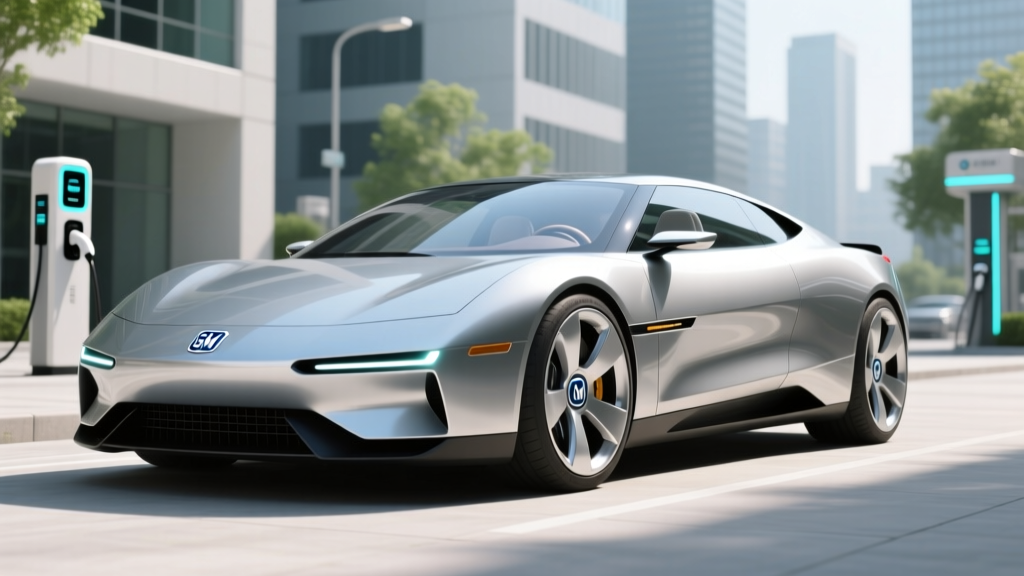
The GM EV1 launched in December 1996 as a two-seat, aerodynamic coupe built from the ground up as a battery-electric vehicle. It was available only through lease agreements — no outright purchases were permitted. GM produced two generations with different battery chemistries:
| Specification | Gen 1 (1996–1997) | Gen 2 (1999) |
|---|---|---|
| Battery Chemistry | Lead-acid (Delphi) | Nickel-metal hydride (Ovonic) |
| Battery Capacity | 16.5 kWh | 26.4 kWh |
| EPA-Equivalent Range | ~60 miles | ~100–140 miles |
| Motor Output | 102 kW (137 hp) | 102 kW (137 hp) |
| 0–60 mph | ~8 seconds | ~8 seconds |
| Charging (AC Level 1/2) | ~6–8 hours (full) | ~6–8 hours (full) |
| Inductive Paddle Charger | Yes (Magne Charge) | Yes (Magne Charge) |
| Curb Weight | ~2,970 lbs | ~3,060 lbs |
| Units Produced | ~1,117 total | |
| Availability | Lease only; program ended 2003 | |
The EV1 used a unique Magne Charge inductive paddle system — no physical electrical contact between the charger and the car. This was later abandoned industry-wide in favor of conductive connectors (today's CCS, NACS, and J1772 standards). According to EPA records, the EV1's efficiency was remarkable for its era at roughly 4–5 miles per kWh, comparable to modern EVs like the Tesla Model 3.
How the GM EV1 Compares to 2026 EVs
The EV1's limitations are instructive because they map onto the exact concerns today's first-time EV buyers raise. Here's a direct comparison between the EV1's best configuration and a representative 2026 EV — the Chevrolet Equinox EV (GM's current mainstream electric crossover):
| Metric | GM EV1 (Gen 2, 1999) | 2026 Chevrolet Equinox EV | 2026 Toyota Camry (Gas Baseline) |
|---|---|---|---|
| EPA Range | ~140 miles | 319 miles | ~510 miles (13.5 gal × 38 mpg hwy) |
| Battery / Tank | 26.4 kWh NiMH | 85 kWh NMC | 13.5 gal fuel tank |
| Energy Cost per Mile | ~$0.03 (1999 rates) | ~$0.04–$0.06 (home L2) | ~$0.10–$0.14 ($3.40/gal, 32 mpg) |
| Charge/Fuel Time | 6–8 hours (AC) | ~18 min 10–80% (DCFC 150 kW) | ~3 minutes (gas station) |
| Charging Network | None (home only) | 170,000+ public DCFC ports (US) | 150,000+ gas stations |
| Price (Adjusted) | $33,995 lease value (~$65k in 2026 $) | $33,600 MSRP (base) | $28,855 MSRP (base LE) |
| Federal Tax Credit | None (program predated credits) | Up to $7,500 (§30D, subject to eligibility) | None |
The range gap — 140 miles versus 319 miles — illustrates nearly three decades of battery energy-density improvement. But the charging infrastructure story is equally important. The EV1 could only charge at home via its proprietary paddle. A 2026 EV owner has access to a growing DC fast-charging network, though reliability and availability still vary significantly by region.
Real Costs and Savings: What the EV1 Couldn't Prove (Yet)
One reason GM discontinued the EV1 was the argument that total cost of ownership didn't justify the program's expense. In 2026, the math has shifted dramatically. Here's a realistic 5-year cost breakdown comparing a modern EV to a gas equivalent:
| 5-Year Cost Category | 2026 EV (e.g., Equinox EV RS) | 2026 Gas Crossover (e.g., Equinox RS AWD) |
|---|---|---|
| Purchase Price (MSRP) | $43,400 | $34,600 |
| Federal Tax Credit (§30D) | –$7,500 (if eligible) | $0 |
| Effective Purchase Price | $35,900 | $34,600 |
| Home Level 2 Charger Install | $1,200–$2,500 | $0 |
| Fuel / Electricity (5 yrs, 15k mi/yr) | $2,800–$4,200 | $8,200–$10,500 |
| Maintenance (5 yrs) | $1,500–$2,200 | $3,800–$5,200 |
| Insurance (5 yrs) | $7,500–$9,500 | $6,200–$8,000 |
| Estimated Depreciation | $14,000–$18,000 | $12,000–$15,000 |
| Total 5-Year Cost | $50,900–$59,800 | $52,800–$61,300 |
Key takeaways from this breakdown:
- The federal §30D tax credit (up to $7,500 as of 2026) is the single largest factor closing the upfront gap. However, eligibility depends on your adjusted gross income, the vehicle's MSRP cap ($55,000 for cars, $80,000 for SUVs/trucks), and battery-component/critical-mineral sourcing requirements. Check current rules at IRS.gov §30D.
- Fuel savings are real but variable. Home charging at $0.13/kWh yields roughly $0.04/mile. Public DC fast charging at $0.35–$0.50/kWh pushes that to $0.10–$0.15/mile — near gas parity. If you can't charge at home, the savings narrow significantly.
- Insurance runs 15–25% higher for EVs on average, driven by higher repair costs and parts pricing.
- Maintenance savings are genuine. No oil changes, fewer brake replacements (regen braking preserves pads), and simpler drivetrains reduce scheduled service.
What the GM EV1 Teaches First-Time EV Buyers in 2026
The EV1's cancellation wasn't primarily a technology failure — it was a commitment failure. GM chose not to invest in the charging ecosystem, battery supply chain, or long-term model development. For today's buyer, this history yields several practical lessons:
Lesson 1: Range Is Necessary but Not Sufficient
The EV1's Gen 2 NiMH pack delivered roughly 140 miles — adequate for daily commuting in 1999 Los Angeles. But without public charging options, any trip beyond that radius was impossible. In 2026, a 300+ mile EPA range (like the Equinox EV's 319 miles or the Hyundai Ioniq 5's 318 miles) is the practical minimum for a primary vehicle. However, real-world range drops 15–30% in cold weather and 10–20% at sustained highway speeds above 70 mph. Expect ~230–270 miles from a 319-mile EPA rating on a winter highway trip.
Lesson 2: Charging Access Determines Satisfaction
EV1 lessees who had reliable home charging were the program's most vocal advocates. Those without it struggled. This pattern holds in 2026. Home Level 2 charging (7–11 kW) is the single strongest predictor of EV ownership satisfaction. A typical installation costs $1,200–$2,500 for a hardwired 48-amp unit (including electrician labor, permit, and potential panel work), adding 25–44 miles of range per hour of charging. If your home electrical panel lacks capacity (common in older homes with 100-amp service), a panel upgrade to 200 amps can add $2,000–$4,000.
Lesson 3: Battery Chemistry Matters
The EV1's transition from lead-acid (60-mile range, 1,175-lb battery) to NiMH (140-mile range, 773-lb battery) demonstrated how chemistry dictates the entire vehicle package. In 2026, the relevant split is between LFP (lithium iron phosphate) and NMC/NCA (nickel manganese cobalt / nickel cobalt aluminum):
| Factor | LFP Chemistry | NMC / NCA Chemistry |
|---|---|---|
| Energy Density | Lower (~160 Wh/kg cell-level) | Higher (~250–300 Wh/kg cell-level) |
| Cycle Life | 3,000–5,000+ cycles | 1,000–2,000 cycles |
| Cold-Weather Performance | Weaker (greater range loss below 32°F) | Better (more consistent in cold) |
| Recommended Charge Routine | Can charge to 100% daily | Best kept at 80% daily; 100% for trips |
| Cost | Lower per kWh (no cobalt/nickel) | Higher per kWh |
| Typical Applications (2026) | Tesla Model 3/Y RWD, Ford Mustang Mach-E Select | Long-range/AWD trims, most luxury EVs |
Lesson 4: Manufacturer Commitment Is a Real Factor
GM's EV1 recall and destruction became the subject of the documentary Who Killed the Electric Car? — and a cautionary tale about buying into a manufacturer's EV platform. In 2026, evaluate the automaker's EV investment trajectory: planned model pipeline, battery plant partnerships (GM's Ultium Cells joint ventures with LG), and charging-network commitments. Brands that are scaling EV production with dedicated platforms (GM Ultium, Hyundai E-GMP, VW MEB) offer stronger long-term parts and service support than those treating EVs as compliance exercises.
EV vs. Gas vs. Hybrid: The 2026 Decision Framework
The EV1 existed before hybrids reached consumers (the Toyota Prius launched in Japan in 1997). Today, buyers choose across three electrification levels. Here's a practical decision framework:
Choose a Battery-Electric Vehicle (BEV) if:
- You have reliable home charging (garage or driveway with 240V access)
- Your daily driving is under 80 miles round-trip
- You want the lowest per-mile fuel cost ($0.03–$0.06/mi at home)
- You're eligible for the §30D federal tax credit (income and sourcing requirements met)
- You're willing to plan for road-trip DC fast-charging stops
Choose a Plug-In Hybrid (PHEV) if:
- You want electric commuting (25–50 miles EV range) without range anxiety on longer trips
- Home charging is available but you frequently drive 200+ miles in a day
- You live in an area with sparse DC fast-charging infrastructure
- You want a single vehicle for both city efficiency and road-trip flexibility
Choose a Conventional Hybrid (HEV) if:
- You have no home-charging access (apartment, street parking)
- You want better fuel economy (45–57 mpg combined) without plugging in
- Your budget is tighter and you can't absorb the EV upfront premium
- You drive in extreme cold regularly (below 0°F), where EV range loss is most severe
Common Misconceptions: What the EV1 Era Got Wrong
| Myth | Fact |
|---|---|
| "EV batteries won't last." | Modern NMC and LFP packs are warrantied for 8 years/100,000 miles (federally mandated minimum). Real-world data from Tesla, Hyundai, and GM shows ~5–10% degradation at 100,000 miles — far better than the EV1's NiMH pack, which lost ~20% capacity in 2–3 years. |
| "There's nowhere to charge." | The US had over 170,000 public DC fast-charging ports and 200,000+ Level 2 ports as of early 2026. However, rural coverage and charger reliability (uptime) remain inconsistent. Plan routes using PlugShare or A Better Routeplanner. |
| "EVs are worse in cold weather." | EVs do lose 15–30% range in sub-freezing temperatures — but they start instantly, heat the cabin using battery or heat-pump systems, and have no cold-start engine wear. Preconditioning while plugged in mitigates most range loss. |
| "The grid can't handle mass EV adoption." | Most charging occurs overnight during off-peak hours when grid capacity is underutilized. A single EV charging at 7.2 kW draws roughly the same as an electric clothes dryer. Managed/utility-timed charging further reduces peak demand. |
| "EVs cost more long-term." | As shown in the cost table above, a 2026 EV with tax-credit eligibility and home charging typically breaks even or saves $2,000–$6,000 over 5 years vs. a gas equivalent, even accounting for higher insurance and depreciation. |
What a First-Time EV Buyer Should Know Before Purchasing
If the EV1's story teaches anything, it's that preparation determines satisfaction. Here's a concrete pre-purchase checklist for 2026:
- Audit your home electrical capacity. Check your panel's amperage rating (100A vs. 200A). A licensed electrician can assess whether a 48-amp Level 2 circuit is feasible without a panel upgrade. Budget $500–$5,000 depending on complexity.
- Map your actual driving patterns. Log two weeks of mileage. If 95% of your days are under 80 miles, a 250+ mile EPA-rated EV covers you with substantial buffer — even accounting for cold weather and degradation.
- Test the tax-credit math. The §30D credit is now available as a point-of-sale transfer, reducing your purchase price at the dealer. But your modified adjusted gross income must be under $150,000 (single) or $300,000 (joint), and the vehicle must meet battery sourcing requirements that tighten annually. Verify eligibility at fueleconomy.gov.
- Research public charging near you. Open PlugShare or ChargePoint and check DC fast-charger density within 10 miles of your home and workplace. If you see fewer than 3–4 reliable stations, factor this into your EV vs. PHEV decision.
- Understand kW vs. kWh. This is the most common confusion: kW (kilowatts) is power — the rate of charging. kWh (kilowatt-hours) is energy — the battery's total capacity. A 150 kW charger filling an 85 kWh battery from 10–80% takes roughly 25–35 minutes, depending on the charge curve. Peak kW is never sustained across the full session.
- Factor in insurance early. Get quotes before purchasing. EV insurance averages 15–25% higher than gas equivalents. Some insurers (like Tesla Insurance or manufacturer-affiliated programs) offer competitive rates.
Frequently Asked Questions
Can I buy a GM EV1 today?
No. GM produced approximately 1,117 EV1s between 1996 and 1999, all through lease-only agreements. When the program ended in 2003, GM reclaimed and destroyed nearly all units. A handful survive in museums (including the Smithsonian) and a few were reportedly donated to universities without drivetrains. The EV1 is not street-legal or available for private ownership.
What happened to the GM EV1 program?
GM cited low consumer demand, high production costs, and insufficient charging infrastructure. Critics — including EV1 lessees who offered to purchase their vehicles — argued that GM deliberately undermined the program to avoid California's Zero Emission Vehicle mandate. The 2006 documentary Who Killed the Electric Car? chronicles the controversy in detail.
How far could the GM EV1 actually drive?
The Gen 1 lead-acid version managed roughly 60 miles. The Gen 2 with nickel-metal hydride batteries achieved 100–140 miles depending on driving conditions. These figures are comparable to early 2010s EVs like the original Nissan Leaf (73–84 miles) but far below 2026 standards of 250–400+ miles.
Did the EV1 influence modern GM electric vehicles?
Directly, no — GM's modern EV platform (Ultium, now rebranded) was developed from scratch starting around 2019. But the EV1's engineering lessons around aerodynamics, lightweight construction, and regenerative braking informed GM's institutional knowledge. The 2026 Chevrolet Equinox EV, Blazer EV, and Silverado EV all ride on the Ultium architecture with battery capacities from 85–200+ kWh and ranges from 250–400+ miles.
What's the most important lesson from the EV1 for today's EV buyers?
Infrastructure and manufacturer commitment matter as much as the vehicle itself. The EV1 was a competent car for its era, but without a charging network and without GM's long-term backing, ownership was fragile. In 2026, choose both a vehicle and an ecosystem: verify your home-charging capability, confirm public charging access in your area, and buy from an automaker with a clear, funded EV roadmap.