The Bottom Line on the GM EV Production Cut
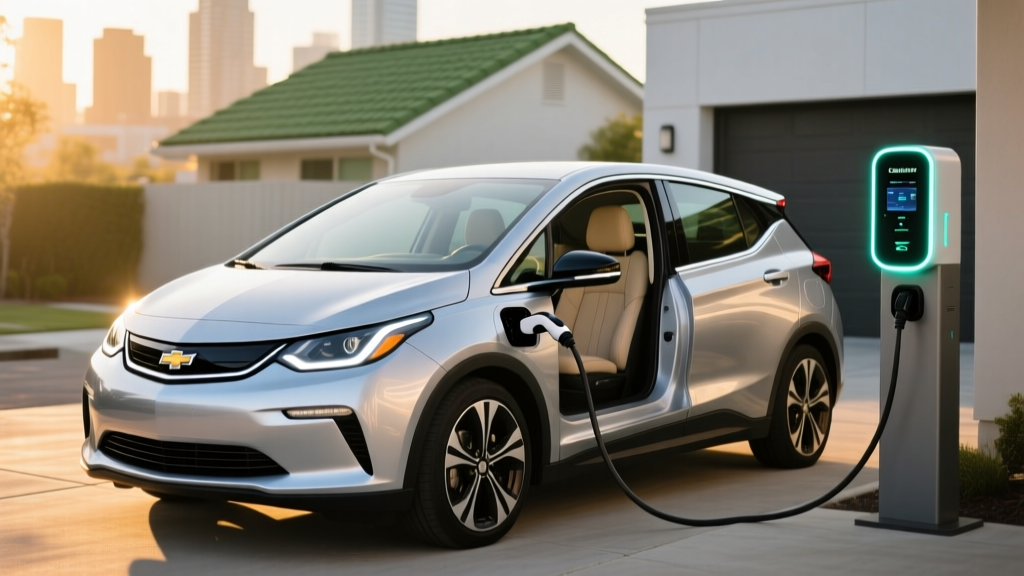
General Motors has scaled back its electric vehicle output targets for 2026, trimming planned production across the Chevrolet Equinox EV, Chevrolet Blazer EV, and Cadillac Lyriq while delaying or reducing volumes on several upcoming Ultium-based models. For buyers, this means longer wait times on popular trims, fewer dealer incentives, and a narrower selection of configurations — but it also signals that GM is prioritizing profitability over volume, which could stabilize residual values. If you're shopping a GM EV right now, the cut doesn't eliminate availability, but it does compress choice and potentially raise transaction prices by $1,000–$2,500 on high-demand trims compared to mid-2025 levels.
Why GM Pulled Back on EV Output
GM's decision to reduce EV production volumes stems from a convergence of market realities. Consumer adoption of battery-electric vehicles has grown, but not at the pace automakers projected in 2022–2023. Inventory of models like the Equinox EV and Blazer EV sat on dealer lots for 60–90 days in late 2025, compared to the industry target of 45 days. Simultaneously, federal policy uncertainty around the §30D clean vehicle credit has made buyers hesitant to commit to vehicles whose tax-credit eligibility could shift with battery-sourcing rule changes.
GM CEO Mary Barra confirmed that the company is recalibrating its Ultium platform rollout to match demand more precisely, shifting some factory capacity toward plug-in hybrid and range-extended EV architectures. This isn't a retreat from electrification — it's a course correction based on real sales data rather than aspirational forecasts.
Which GM EVs Are Affected — and Which Aren't
The production cuts are not uniform across GM's electric lineup. Here's what's changed for 2026 model-year availability:
| Model | EPA Range | Battery (kWh) | Peak DC Charge | 10–80% Time | Base MSRP | Production Status |
|---|---|---|---|---|---|---|
| Chevrolet Equinox EV 2LT | 319 mi | 85 kWh (NMC) | 150 kW | ~30 min | $33,600 | Reduced volume; longer lead times on AWD |
| Chevrolet Blazer EV RS | 324 mi | 102 kWh (NMC) | 190 kW | ~24 min | $50,100 | Trim consolidation; SS delayed |
| Cadillac Lyriq Tech | 314 mi | 102 kWh (NMC) | 190 kW | ~24 min | $58,590 | Volume trimmed ~15%; waitlists on Sport |
| GMC Sierra EV Denali | 390 mi (est.) | 200+ kWh (NMC) | 350 kW | ~22 min | $99,495 | Limited allocation; priority reservations |
| Chevrolet Silverado EV WT | 450 mi | 200+ kWh (NMC) | 350 kW | ~20 min | $57,900 | Fleet priority; retail availability constrained |
The Silverado EV Work Truck and Sierra EV Denali are seeing the tightest supply because GM is prioritizing fleet and commercial orders where margins are higher. Retail buyers wanting a Silverado EV 4WT or a Sierra EV AT4 (announced, preliminary specs) should expect 3–6 month wait times depending on region.
What This Means for Your Wallet
A production cut changes the cost equation for buyers in several concrete ways. When supply tightens, dealer discounts evaporate, and transaction prices creep toward MSRP — or above it, if packages are forced.
| Cost Factor | Pre-Cut (Mid-2025) | Post-Cut (2026) | Impact |
|---|---|---|---|
| Average dealer discount (Equinox EV) | $2,500–$4,000 | $500–$1,500 | +$2,000–$2,500 higher transaction price |
| Federal §30D credit eligibility | Equinox EV qualified for up to $7,500 | Subject to battery-sourcing rule updates; verify at point of sale | Uncertainty — confirm with dealer and IRS guidelines |
| Home Level 2 charger install | $800–$2,200 | $800–$2,200 (unchanged) | No change — budget for 240V/40A circuit |
| Annual charging cost (12,000 mi) | ~$540 (at $0.15/kWh) | ~$540 | No change |
| Annual fuel cost (gas equivalent, 25 MPG combined) | ~$1,680 (at $3.50/gal) | ~$1,680 | EV saves ~$1,140/year in energy |
| Insurance premium (avg. EV surcharge) | +8–15% vs gas equivalent | +8–15% | Budget $150–$300/year extra |
The energy-cost advantage of a GM EV over a comparable gas vehicle remains substantial. An Equinox EV consuming roughly 32 kWh/100 miles (about 105 MPGe combined per fueleconomy.gov) costs approximately $0.045/mile to fuel at national-average residential electricity rates. A gas-powered Equinox AWD at 26 MPG combined costs roughly $0.135/mile at $3.50/gallon. Over five years and 60,000 miles, that's a $5,400 energy savings — but only if you can charge at home.
EV vs Gas vs Hybrid: The GM Lineup in Context
If the production cut makes your preferred GM EV harder to get, you have alternatives within GM's own showroom and beyond. Here's how the math stacks up:
| Vehicle | Powertrain | MSRP | EPA Efficiency | 5-Yr Fuel/Energy Cost | 5-Yr Maint. Est. |
|---|---|---|---|---|---|
| Chevrolet Equinox EV 2LT | BEV | $33,600 | 105 MPGe (32 kWh/100mi) | ~$2,700 | ~$1,800 |
| Chevrolet Equinox AWD (gas) | ICE | $31,200 | 26 MPG combined | ~$8,400 | ~$3,200 |
| Toyota RAV4 Hybrid | HEV | $32,850 | 39 MPG combined | ~$5,600 | ~$2,800 |
| Chevrolet Blazer EV RS | BEV | $50,100 | 92 MPGe (37 kWh/100mi) | ~$3,100 | ~$2,000 |
| Toyota Highlander Hybrid | HEV | $42,820 | 35 MPG combined | ~$6,200 | ~$3,000 |
The Equinox EV's 5-year total energy and maintenance cost of roughly $4,500 crushes the gas Equinox's $11,600 — a $7,100 gap that more than offsets the EV's slightly higher sticker and insurance. The RAV4 Hybrid sits in between at $8,400, offering a compelling middle ground if home charging isn't available. The Blazer EV faces a tougher comparison: its higher price requires more years of fuel savings to break even against a midsize gas or hybrid SUV.
Real-World Ownership: What the Sticker Doesn't Tell You
Production cuts or not, the fundamentals of EV ownership remain the same. Here are the realities every first-time GM EV buyer should internalize:
Range in the Real World
The Equinox EV's EPA rating of 319 miles applies to mixed driving at moderate temperatures. Expect 250–270 miles on a sustained highway trip at 70–75 mph. In freezing weather (below 25°F), plan for 200–230 miles of usable range due to cabin heating demands and battery chemistry limitations. The Blazer EV and Lyriq, both using the larger 102 kWh Ultium pack, see similar proportional losses.
Charging Infrastructure Reality
GM EVs use the NACS (North American Charging Standard) connector starting with the 2025 model year, giving access to Tesla Supercharger stations via native plug — no adapter needed. This is a major advantage over CCS-equipped competitors. However, home Level 2 charging is the make-or-break factor. A 240V/48A home station (requiring a 60A circuit) will fully recharge an Equinox EV's 85 kWh battery in roughly 10 hours, or add about 35 miles of range per hour of charging. If you can't install Level 2 at home, public DC fast charging at $0.35–$0.50/kWh erases much of the per-mile cost advantage over gasoline.
The Charge Curve You Should Know
GM's Ultium batteries peak at their rated DC charge speed (150 kW for Equinox, 190 kW for Blazer/Lyriq) only between roughly 10–40% state of charge. Above 60%, the rate tapers significantly — expect 80 kW or less past 70% SoC. This means the advertised 10–80% time of 30 minutes (Equinox) or 24 minutes (Blazer/Lyriq) is accurate, but charging from 80–100% can add another 30–45 minutes. Plan road-trip stops accordingly: charge to 80% and move on.
Common Misconceptions About the GM Production Cut
| Myth | Fact |
|---|---|
| "GM is abandoning EVs." | GM is reducing volume targets, not canceling the Ultium platform. The company still plans over 1 million annual EV capacity by 2027, but is pacing investment to match actual demand. |
| "I won't be able to buy a GM EV." | All current-production models (Equinox EV, Blazer EV, Lyriq, Silverado EV) remain on sale. Specific trims and colors may have longer lead times, but vehicles are still being built and delivered. |
| "Production cuts mean the vehicles are defective." | Production adjustments are a business decision driven by demand forecasting, inventory levels, and margin optimization — not quality issues. The NHTSA has no open defect investigations specific to Ultium battery safety as of early 2026. |
| "I'll lose my tax credit if I order now." | The §30D credit eligibility depends on the vehicle's battery-sourcing compliance at the time of delivery, not order date. Verify eligibility at point of sale. Income caps ($150K single / $300K joint) and MSRP caps ($55K cars / $80K SUVs and trucks) still apply. |
| "GM EVs can't use Tesla Superchargers." | 2025+ GM EVs with native NACS ports can use Tesla Superchargers directly. Older 2024 models with CCS ports require a GM-approved adapter (included or available from dealers). |
Your Decision Framework: Should You Buy a GM EV Now?
Buy now if:
- You have confirmed home Level 2 charging access (or can install it for $800–$2,200)
- Your daily commute is under 80 miles round-trip, and you take fewer than six road trips over 300 miles per year
- The Equinox EV or Blazer EV fits your budget at MSRP (don't count on dealer discounts in a constrained-supply environment)
- You've verified §30D eligibility for your specific income level and the specific VIN with your dealer and tax professional
- You value NACS Supercharger access and don't want to rely on adapters
Consider a hybrid or wait if:
- You live in an apartment or lack access to any Level 2 charging (home or workplace)
- You regularly drive 200+ miles in cold weather (below 20°F) where range drops 30–40%
- Your preferred trim (e.g., Blazer EV SS, Sierra EV AT4) is delayed — a Toyota RAV4 Hybrid or Hyundai Tucson PHEV offers strong efficiency with no charging dependency
- You're in a region with electricity rates above $0.25/kWh and no time-of-use discounts, narrowing the fuel-cost gap
- You want to see if GM's announced plug-in hybrid or EREV (extended-range EV) models arrive in late 2026 with better fit for your driving pattern
Frequently Asked Questions
Will the GM EV production cut affect warranty coverage?
No. GM's EV battery warranty remains 8 years/100,000 miles with a minimum 70% capacity retention guarantee, regardless of production volume. The Ultium powertrain warranty is 5 years/60,000 miles. These are contractual obligations that don't change with factory output adjustments.
Are GM EVs still eligible for the $7,500 federal tax credit?
Eligibility varies by model and changes with battery-sourcing rules. The Equinox EV (base MSRP under $55K) has qualified for partial or full credit depending on the quarter's critical-mineral and battery-component sourcing certifications. Always check the IRS clean vehicle credit page and confirm with your dealer before signing. Buyer income caps ($150K single, $225K head of household, $300K joint) apply regardless of the vehicle.
Should I order a GM EV or buy from dealer stock?
In a constrained-production environment, ordering a custom configuration may take 3–5 months. Dealer stock is available immediately but may not match your preferred color or option package. If you need a vehicle within 60 days, shop dealer inventory and be flexible on trim. If you want a specific build, place an order now and lock in current pricing and credit eligibility.
How does the Equinox EV compare to a Tesla Model Y on charging speed?
The Model Y Long Range peaks at approximately 250 kW on V3 Superchargers, achieving 10–80% in roughly 15–18 minutes. The Equinox EV peaks at 150 kW with a 10–80% time of about 30 minutes. On a road trip, the Model Y charges noticeably faster. However, the Equinox EV's lower starting price ($33,600 vs ~$44,990 for Model Y) and potential §30D credit eligibility can offset the charging-speed disadvantage for buyers who don't road-trip frequently.
What happens to resale value if GM keeps cutting EV production?
Lower production volumes can actually support resale values by preventing the oversupply that drove steep depreciation on some 2023–2024 EVs. The risk to residual value comes more from rapid battery-technology improvements and competitive pricing from newer models than from production volume alone. Expect GM EVs to depreciate roughly 45–55% over five years — in line with the broader EV segment but steeper than comparable gas vehicles at 35–45%.