The Quick Verdict: Still the Default EV for a Reason
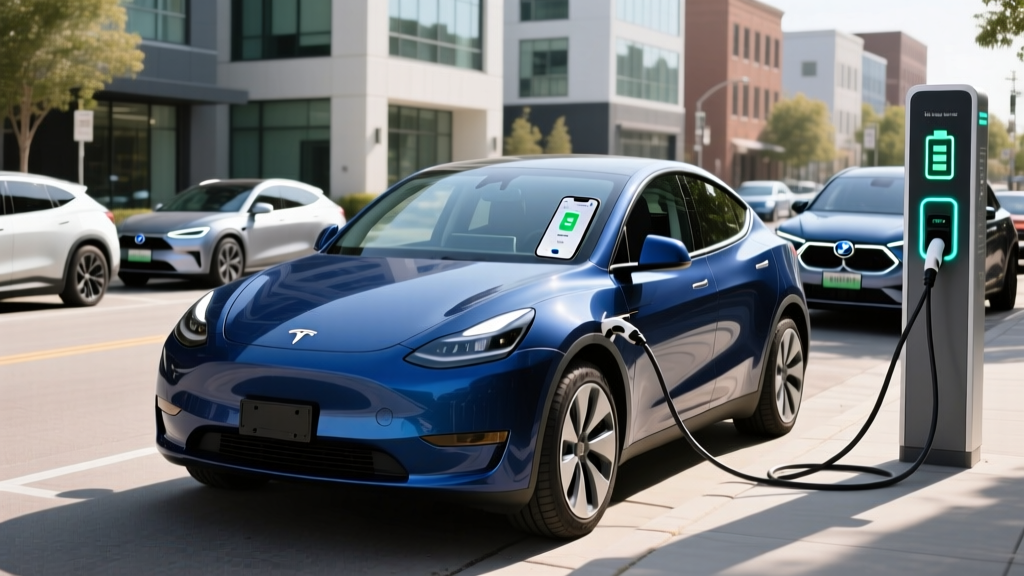
If you've spent any time browsing EV forums or watching YouTube reviews, you've likely encountered the phrase "why can't Tesla leave the village" — a tongue-in-cheek way of asking why Tesla continues to dominate EV sales despite a flood of competitors. The answer, in 2026, still largely comes down to the Tesla Model Y. It's the best-selling EV in the United States for the third consecutive year, and for buyers cross-shopping midsize electric SUVs, it remains the default comparison point.
That doesn't mean it's perfect. The Model Y's ride quality, aging interior design, and Elon Musk's polarizing public persona have given rivals real openings. But when you stack up range, charging infrastructure, efficiency, software, and total cost of ownership, the Model Y Juniper refresh (introduced for the 2025 model year and carried into 2026) keeps the competition at bay.
Here's the full data-driven breakdown.
Range, Battery, and Real-World Efficiency
| Spec | Long Range RWD | Long Range AWD | Performance AWD |
|---|---|---|---|
| EPA Range | 320 mi | 308 mi | 290 mi |
| Battery (usable) | 75 kWh (est.) | 75 kWh (est.) | 75 kWh (est.) |
| Chemistry | NMC (CATL/BYD supply) | NMC | NMC |
| MPGe (combined) | 123 MPGe | 119 MPGe | 114 MPGe |
| kWh/100 mi | 27 | 28 | 29 |
| Drivetrain | Rear-Wheel Drive | Dual-Motor AWD | Dual-Motor AWD |
| Horsepower | 295 hp | 384 hp | 456 hp |
| 0-60 mph | 6.5 sec | 4.8 sec | 3.5 sec |
Sources: fueleconomy.gov, Tesla spec sheets. Battery usable capacity is estimated based on teardown data; Tesla does not publish official kWh figures.
The EPA rates the Long Range RWD at 320 miles. In real-world highway driving at 70-75 mph, expect 260-285 miles before needing to stop. In cold weather (below 30°F), range drops an additional 15-25%, meaning a winter road trip could yield as little as 210-230 miles of practical range. The heat pump (standard on Juniper models) helps mitigate cabin heating losses but doesn't eliminate cold-weather degradation. City driving with regenerative braking recovers more energy, often matching or exceeding the EPA sticker.
Charging Speed: Supercharger Advantage Quantified
Charging speed is where Tesla still holds a tangible edge — not just in peak kW, but in network reliability. The 2026 Model Y supports up to 250 kW DC fast charging on V3 Superchargers (and up to 275 kW on the newer V4 Supercharger stalls rolling out through 2025-2026).
| Charge Level | Power / Rate | Speed (mi/hr added) | Notes |
|---|---|---|---|
| Level 1 (120V) | ~1.4 kW | ~4 mi/hr | Emergency/trickle only |
| Level 2 (240V, 48A) | 11.5 kW | ~37 mi/hr | Home Wall Connector; full charge in ~7 hr |
| Level 2 (240V, 32A) | 7.7 kW | ~25 mi/hr | Mobile Connector on NEMA 14-50 |
| DC Fast (V3 Supercharger) | Peak 250 kW | ~1,000 mi/hr (peak) | 10-80% in ~25 min |
| DC Fast (V4 Supercharger) | Peak 275 kW | ~1,100 mi/hr (peak) | 10-80% in ~22 min; limited availability |
| DC Fast (CCS adapter, 3rd-party) | Up to 150-175 kW (varies) | ~600-700 mi/hr (peak) | Electrify America, EVgo, etc. |
Charging curve reality: The 250 kW peak is not sustained. The Model Y's NMC battery charges at peak rate only between roughly 10-30% state of charge (SoC). Above 50%, the rate tapers to ~150 kW; above 80%, it drops below 60 kW. This is why Tesla's navigation system routes you to Superchargers and recommends charging to 80% — the last 20% takes nearly as long as the first 60%.
Preconditioning matters: If you navigate to a Supercharger using the built-in nav, the car preconditions the battery (heats it to optimal temperature) before you arrive. This can shave 5-8 minutes off your 10-80% time, especially in cold weather. Plug in at a Supercharger without preconditioning and your peak rate might only hit 150-175 kW initially.
Pricing, Trims, and Federal Tax Credit Eligibility
| Trim | Base MSRP | Est. As-Tested* | Federal §30D Credit | Effective Price |
|---|---|---|---|---|
| Long Range RWD | $44,990 | $46,500 | Up to $7,500 | ~$39,000 |
| Long Range AWD | $47,990 | $49,500 | Up to $7,500 | ~$42,000 |
| Performance AWD | $51,490 | $53,000 | Up to $7,500 | ~$45,500 |
*As-tested includes destination fee ($1,390) and typical add-ons. Excludes FSD, premium paint, or wheel upgrades.
- MSRP cap: SUVs must be ≤ $80,000 — all Model Y trims qualify.
- Buyer income cap: Modified AGI ≤ $150,000 (single) / $300,000 (joint). Exceed this and you get $0.
- Battery sourcing: Critical minerals and battery components must meet phased-in domestic-content thresholds. As of 2026, Tesla's supply chain (CATL LFP for Standard Range, domestic/Panasonic NMC for Long Range) largely qualifies, but always verify on the IRS Clean Vehicle Provisions page at purchase time — rules tighten annually.
- Point-of-sale transfer: You can transfer the credit to the dealer at purchase for an immediate price reduction, rather than waiting for a tax refund.
- Tax liability: You must have at least $7,500 in federal tax liability to claim the full amount.
Source: IRS.gov — Clean Vehicle Credits. Consult a tax professional for your specific situation.
Interior, Cargo, and Daily Usability
The Juniper refresh brought meaningful interior upgrades: ventilated front seats, ambient lighting, a rear-seat touchscreen, and improved sound insulation. But the Model Y's cabin remains minimalist to a fault — no physical stalks (turn signals are steering-wheel buttons), no instrument cluster, and all climate/media controls route through the 15.4-inch center display.
| Measurement | Value |
|---|---|
| Cargo (rear seats up) | 30.2 cu ft |
| Cargo (rear seats folded) | 72.1 cu ft |
| Front trunk (frunk) | 4.1 cu ft |
| Front headroom | 41.0 in |
| Rear headroom | 39.4 in |
| Rear legroom | 40.5 in |
| Seating capacity | 5 (7-seat option discontinued) |
| Towing capacity | 3,500 lbs (AWD/Performance) |
The 30.2 cu ft behind the second row is competitive with the Hyundai Ioniq 5 (27.2 cu ft) but trails the Ford Mustang Mach-E (29.7 cu ft) only slightly. The 72.1 cu ft with seats folded gives it genuine small-SUV cargo capability. The frunk is small but useful for charging cables or a laptop bag.
Driver Assistance: Autopilot and FSD Supervised
Tesla's Autopilot and Full Self-Driving (Supervised) are SAE Level 2 driver-assistance systems. The driver must remain fully attentive, keep hands on the wheel, and be prepared to take over at any moment. These are not self-driving systems. Only Level 4 services like Waymo operate without a human driver in geofenced areas.
Autopilot (standard): Includes adaptive cruise control, lane centering, automatic emergency braking, and blind-spot monitoring. It's competent for highway cruising but requires regular steering-wheel torque input to confirm engagement.
FSD Supervised ($8,000 option or $99/month): Adds automatic lane changes, on-ramp to off-ramp highway driving, traffic light and stop sign recognition, and city-street navigation. As of early 2026, FSD has improved substantially in urban environments but still makes unpredictable decisions at complex intersections, construction zones, and unprotected left turns. It's a compelling technology preview but not a replacement for an attentive driver.
Tesla's vision-only approach (no LiDAR, no radar on newer models) means performance degrades more than sensor-fused competitors in heavy rain, fog, and direct sun glare. NHTSA continues to monitor Tesla's Autopilot/FSD crash data through its Standing General Order on ADAS-related incidents.
Warranty, Ownership Costs, and Longevity
| Component | Coverage |
|---|---|
| Basic vehicle | 4 years / 50,000 miles |
| Battery & drive unit | 8 years / 120,000 miles (Long Range/Performance) |
| Battery capacity retention | ≥ 70% over warranty period |
| Roadside assistance | 4 years / 50,000 miles |
Tesla's 8-year/120,000-mile battery warranty with a 70% capacity retention guarantee is competitive with Hyundai/Kia (10-year/100,000-mile) and slightly better than Ford (8-year/100,000-mile). Real-world degradation data from fleet operators and owner surveys suggests NMC packs in the Model Y lose roughly 8-12% capacity over the first 100,000 miles — well within the warranty threshold.
5-year estimated cost of ownership: According to Edmunds and owner data, the Model Y Long Range AWD costs approximately $42,000-$46,000 over five years (including depreciation, electricity, insurance, maintenance, and repairs), which undercuts comparable gas-powered luxury SUVs by $8,000-$12,000. Insurance premiums, however, run 15-25% higher than segment average due to Tesla's repair costs and claims history.
Pros and Cons: The Honest Assessment
- Best-in-class Supercharger network (17,000+ US stalls, ~97% uptime)
- Class-leading efficiency (123 MPGe / 27 kWh/100 mi)
- Over-the-air updates add features post-purchase
- Strong resale value relative to other EVs
- 250-275 kW DC fast charging with preconditioning
- Spacious cargo area (72.1 cu ft max)
- Competitive pricing after §30D credit
- No physical turn-signal stalks (steering-wheel buttons)
- Ride quality firm on 20-inch wheels
- Panel gaps and paint quality still inconsistent
- FSD Supervised is expensive ($8,000) and not self-driving
- Vision-only ADAS struggles in bad weather
- Brand perception polarizing for some buyers
- No Apple CarPlay / Android Auto
Who Is the 2026 Model Y For?
- Choose the Model Y if: You want access to the Supercharger network, prioritize efficiency and range, and value OTA software updates. Best for tech-forward commuters and road-trippers who drive 200+ miles between stops.
- Choose the Hyundai Ioniq 5 instead if: You want a more comfortable ride, physical controls, 800V ultra-fast charging (10-80% in 18 min), and CarPlay support.
- Choose the Ford Mustang Mach-E if: You prefer a sportier driving feel, more traditional interior ergonomics, and Ford's BlueCruise hands-free highway driving.
- Choose a PHEV (Toyota RAV4 Prime, etc.) if: You lack reliable home charging and regularly drive in areas with sparse DC fast-charging infrastructure.
Frequently Asked Questions
What is the real-world range of the 2026 Tesla Model Y?
The EPA rates the Long Range RWD at 320 miles. Real-world highway driving at 70-75 mph typically yields 260-285 miles. In cold weather below 30°F, expect 210-230 miles. City driving with regen braking can match or exceed the EPA figure.
How fast does the Model Y charge at home and on the road?
At home on a Level 2 Tesla Wall Connector (48A/240V), you'll add about 37 miles of range per hour — a full charge takes roughly 7 hours. On a V3 Supercharger, 10-80% takes about 25 minutes (peak 250 kW). V4 Superchargers can reduce this to ~22 minutes.
How much does the 2026 Model Y cost after the federal tax credit?
The Long Range RWD starts at $44,990 MSRP. If you qualify for the full $7,500 §30D credit (income ≤ $150K single / $300K joint, meets battery sourcing requirements), the effective price drops to approximately $37,490 before destination and options.
Does the 2026 Model Y qualify for the $7,500 federal EV tax credit?
Yes — all Model Y trims fall under the $80,000 SUV MSRP cap. However, your personal eligibility depends on income limits and the battery sourcing requirements that tighten each year. Verify current eligibility at fueleconomy.gov and the IRS Clean Vehicle pages before purchasing.
Is the Model Y still worth buying vs. competitors in 2026?
It depends on your priorities. The Model Y wins on efficiency, Supercharger access, cargo space, and software. The Hyundai Ioniq 5 wins on ride comfort, 800V charging speed, and CarPlay. The Ford Mach-E wins on driving dynamics and BlueCruise. For most buyers who road-trip regularly and want a single-vehicle solution, the Model Y's ecosystem advantage remains decisive.
Why is it called 'why can't Tesla leave the village'?
It's an internet meme from EV communities riffing on Tesla's outsized market share — as if Tesla is so dominant in the EV "village" that competitors can't break through. In reality, competition from Hyundai, Kia, Ford, BMW, and Chinese OEMs is intensifying, but Tesla's combination of range, charging network, and pricing keeps the Model Y at the top of sales charts heading into 2026.