The Short Answer on GM's Electric Vehicle Strategy
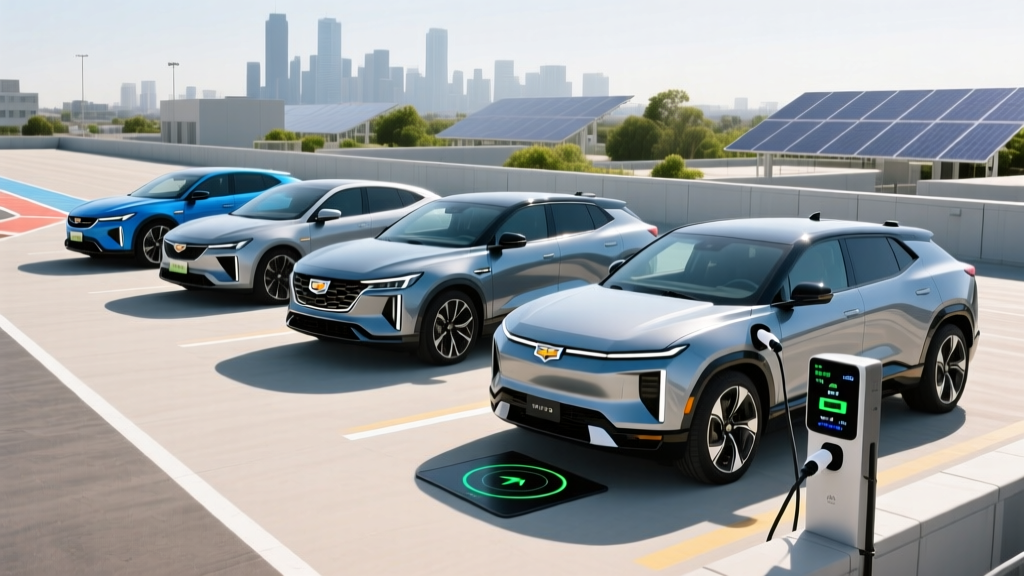
General Motors' electric vehicle strategy in 2026 centers on its Ultium battery platform, which underpins every new GM EV from the ~$28,000 Chevrolet Equinox EV to the ~$90,000+ Cadillac Escalade IQ. The company has committed to an all-electric passenger fleet by 2035, investing over $35 billion in EV and autonomous development. For buyers, this translates to a widening lineup with EPA ranges between 250 and 400+ miles, DC fast-charging speeds up to 350 kW on premium models, and broad eligibility for the federal §30D tax credit (up to $7,500, subject to income and MSRP caps). The practical question isn't whether GM is serious about EVs — it's whether a specific GM EV fits your driving pattern, charging access, and budget.
Understanding the Ultium Platform: GM's EV Foundation
Every new GM electric vehicle built from 2023 onward rides on the Ultium platform — a flexible skateboard architecture using large-format pouch cells arranged in modules. The platform supports battery packs from roughly 65 kWh to over 200 kWh, accommodating everything from compact crossovers to heavy-duty trucks. The chemistry is primarily NMC (nickel-manganese-cobalt), which prioritizes energy density for longer range, though GM has signaled interest in LFP (lithium iron phosphate) for entry-level models to reduce cost.
Ultium's defining feature is its wireless battery management system (wBMS), which reduces wiring harness weight by up to 90% within the pack and simplifies manufacturing. From a buyer's perspective, the key takeaway is platform consistency: whether you buy a Chevrolet Blazer EV or a Cadillac Lyriq, the underlying thermal management, charging architecture, and cell-level engineering share common DNA. This means software updates, battery diagnostics, and service procedures are increasingly standardized across the lineup.
| Model | EPA Range (mi) | Battery (kWh usable) | Peak DC Charge (kW) | 10–80% Time | 0–60 mph (sec) | Base MSRP |
|---|---|---|---|---|---|---|
| Chevrolet Equinox EV | 315 (FWD LT) | ~85 | 150 | ~32 min | ~8.0 | $33,600 |
| Chevrolet Blazer EV | 324 (RS AWD) | ~102 | 190 | ~28 min | ~6.0 | $44,600 |
| Cadillac Lyriq | 314 (AWD) | ~102 | 190 | ~28 min | ~5.0 | $58,590 |
| Cadillac Optiq | 303 (AWD) | ~100 | 190 | ~28 min | ~5.5 | $54,090 |
| GMC Sierra EV | 440 (Denali ED4) | ~200+ | 350 | ~22 min | ~4.5 | $99,495 |
| Silverado EV (4WT/RST) | 390–440 | ~200+ | 350 | ~22 min | ~4.5 (RST) | $55,000–$105,000 |
Source: fueleconomy.gov and GM manufacturer specifications. EPA range varies by trim and drivetrain. Real-world highway range typically 10–15% below EPA; cold-weather (below 30°F) can reduce range 20–30% without preconditioning.
GM EV Pricing and Federal Tax Credit Eligibility
GM's pricing strategy deliberately spans the market. The Equinox EV starts near $33,600, positioning it as one of the most affordable mainstream electric crossovers, while the Silverado EV and Sierra EV target truck buyers willing to pay premium prices for maximum range and capability.
§30D Federal Tax Credit — Current Rules (2025/2026)
- Credit amount: Up to $7,500 ($3,750 for battery components + $3,750 for critical minerals sourcing)
- Buyer income caps: AGI ≤ $150,000 (single), $225,000 (head of household), $300,000 (married filing jointly)
- MSRP caps: ≤ $80,000 for SUVs/pickups/vans; ≤ $55,000 for sedans
- Battery sourcing: Increasing percentages of critical minerals and battery components must be sourced from the US or FTA partners — this changes annually and affects which models/years qualify
- Point-of-sale transfer: Eligible buyers can apply the credit as an immediate down-payment reduction at the dealer
- Verification: Always confirm eligibility at fueleconomy.gov and consult a tax professional — sourcing rules shift and can disqualify specific build dates
As of early 2026, the Equinox EV and Blazer EV (under the $80,000 SUV cap) are strong candidates for the full or partial credit, depending on battery sourcing compliance for their specific build date. The Lyriq and Optiq also fall under the SUV MSRP cap. The Sierra EV Denali Edition 4 at ~$99,495 exceeds the cap and does not qualify. Always verify the exact VIN with your dealer before purchase.
Charging Infrastructure: What GM EV Owners Actually Experience
GM's charging strategy has two pillars: home charging convenience and public fast-charging access. The company made a pivotal decision in 2023 to adopt the NACS (North American Charging Standard) connector — the Tesla-designed plug — for all new EVs starting with 2025 models. This grants GM EVs direct access to Tesla's Supercharger network (over 25,000 stalls in North America) using an adapter for earlier CCS-equipped models, or natively on 2025+ vehicles.
| Level | Power (kW) | Connector | Miles Added/Hour | Typical Use |
|---|---|---|---|---|
| Level 1 (120V) | ~1.4 kW | Standard outlet | ~4–5 mi/hr | Emergency/overnight top-up |
| Level 2 (240V home) | 11.5–19.2 kW | NACS / J1772 adapter | ~35–58 mi/hr | Daily home charging |
| DC Fast Charge | 150–350 kW | NACS | ~500–1,500+ mi/hr (peak) | Road trips; 10–80% in 22–32 min |
Real-World Charging Curve Reality
A 350 kW peak charge rate on the Silverado/Sierra EV sounds extraordinary — and it is, for the first 10–15 minutes of a session. But charge curves taper significantly above 60–70% State of Charge (SoC). Expect the average charging rate from 10–80% to be closer to 180–220 kW sustained, not 350 kW continuous. The 150 kW peak on the Equinox EV similarly tapers, averaging roughly 100–120 kW over a full 10–80% session. This is normal physics, not a flaw — all EVs taper to protect battery health. Plan road-trip stops around 10–80% cycles, not 0–100%.
For home charging, most GM EVs come with a dual-level portable charge cord (120V/240V). Installing a dedicated 240V Level 2 home station (40–48 amp circuit) typically costs $500–$1,500 for the charger unit plus $800–$2,500 for professional electrical installation, depending on whether your panel needs an upgrade. A 200-amp service panel is usually sufficient; older homes with 100-amp panels may need a $2,000–$4,000 upgrade.
GM EVs vs. Gas and Hybrid Alternatives: The Cost Equation
The most common buyer question is whether a GM EV actually saves money compared to a gas or hybrid alternative. The answer depends on your driving volume, local electricity rates, and how long you keep the vehicle.
| Cost Factor | Equinox EV 2LT ($36,600) | Equinox Gas RS ($33,000) | RAV4 Hybrid XLE ($34,500) |
|---|---|---|---|
| Purchase Price | $36,600 | $33,000 | $34,500 |
| Est. Federal Credit | −$7,500 (if eligible) | $0 | $0 |
| Effective Purchase | $29,100 | $33,000 | $34,500 |
| Fuel/Energy (5 yr) | $4,500 ($0.13/kWh avg, home) | $12,750 ($3.40/gal, 26 MPG) | $6,375 ($3.40/gal, 40 MPG) |
| Maintenance (5 yr) | ~$1,500 | ~$4,000 | ~$3,500 |
| Insurance (5 yr est.) | ~$9,000 | ~$7,500 | ~$7,800 |
| 5-Year Total | ~$44,100 | ~$57,250 | ~$52,175 |
Assumptions: $0.13/kWh national average for home charging; public DC fast charging adds ~$0.30–0.48/kWh. Gas at $3.40/gallon. Insurance premiums for EVs run 15–25% higher on average (source: industry averages). Maintenance for EVs eliminates oil changes, spark plugs, and reduces brake wear via regenerative braking. Individual results vary by state, utility rate, and driving pattern. Check fueleconomy.gov for personalized calculations.
The Equinox EV wins the 5-year cost race primarily through the federal tax credit and fuel savings, even with higher insurance. Without the tax credit, the gap narrows significantly — making the Equinox Gas or a hybrid like the RAV4 Hybrid more competitive on pure economics. This is the critical nuance: tax credit eligibility is often the deciding financial factor, not the sticker price alone.
Real-World Ownership Considerations Before You Buy
Home Charging Access Is Non-Negotiable for Most Buyers
If you can install a Level 2 home charger, a GM EV integrates seamlessly into daily life — plug in at night, wake up to a full battery every morning, and rarely visit a public charger. If you live in an apartment, condo, or street-parking situation without charging access, daily EV ownership becomes substantially harder. Public DC fast charging works for road trips but is impractical (and expensive) as a daily routine at $0.30–$0.48/kWh. Be honest about your charging situation before committing.
Cold Climate Range Loss Is Real
GM's Ultium platform includes active thermal management with a heat pump on most models, which mitigates but does not eliminate cold-weather range loss. In sustained temperatures below 25°F, expect 20–30% range reduction compared to the EPA sticker. A Blazer EV rated at 324 miles may deliver 225–260 miles in January in Minnesota. Preconditioning the battery while plugged in (using the GM Energy app) recovers some of this loss by warming the pack before you drive.
The Super Cruise Factor
GM's Super Cruise — available on the Lyriq, Blazer EV, Silverado EV, and select Cadillac models — is one of the most capable SAE Level 2 driver-assistance systems on the market. It enables hands-free driving on over 750,000 miles of pre-mapped divided highways in the US and Canada, with driver monitoring via a steering-column camera.
Important: Super Cruise Is NOT Self-Driving
Super Cruise is an SAE Level 2 system. You must remain alert, keep your eyes on the road, and be prepared to take over immediately. It does not handle city streets, construction zones, or unmapped roads. Only Level 4 services like Waymo operate without a human driver — and those are limited to specific geofenced areas. Never treat any Level 2 system as autonomous.
Common Misconceptions About GM's EV Strategy
| Myth | Fact |
|---|---|
| "GM is abandoning EVs and going back to gas." | GM briefly delayed some EV production targets in late 2023–2024 to manage demand and profitability, but continues to invest in and expand its Ultium lineup. The Equinox EV, Blazer EV, and Silverado EV are all in production and selling. The company maintains its long-term electrification commitment. |
| "Ultium batteries will cost $20,000+ to replace." | GM provides an 8-year/100,000-mile battery warranty covering defects and capacity loss below 70% of original capacity (varies by model). While out-of-warranty replacement costs are not yet widely established for Ultium packs, industry trends for 85–100 kWh packs suggest $12,000–$18,000 if needed years from now. Degradation data so far shows typical loss of 5–10% over the first 100,000 miles. |
| "GM EVs can't use Tesla Superchargers." | 2025+ GM EVs are built with the NACS connector and can charge at Tesla Superchargers natively. 2024 and earlier GM EVs with CCS connectors can access Superchargers using a GM-approved adapter. This dramatically expands the available fast-charging network. |
| "All GM EVs qualify for the $7,500 tax credit." | Eligibility depends on MSRP caps ($80,000 SUVs, $55,000 sedans), buyer income limits, and battery sourcing requirements that change annually. Higher-trim models like the Sierra EV Denali exceed the MSRP cap. Always verify before purchasing. |
| "Electricity is always cheaper than gas." | Home charging at $0.13/kWh is typically 50–70% cheaper per mile than gas. But DC fast charging at $0.35–$0.48/kWh can approach or exceed the per-mile cost of a fuel-efficient hybrid. Your savings depend on how much you charge at home vs. publicly. |
Decision Framework: Which GM EV Fits Your Situation?
If X, Then Y — Choosing the Right GM EV
If you commute under 50 miles daily and have home charging: The Equinox EV (315 mi EPA) is the sweet spot — affordable after the tax credit, sufficient range for a full week of commuting, and manageable charging times. You'll rarely need public charging.
If you need more space and take regular road trips: The Blazer EV (324 mi EPA, 190 kW DC charging) or Cadillac Optiq (303 mi EPA) offers more cargo room and faster charging. Both work well for 300+ mile highway trips with one 20–25 minute stop.
If you want premium luxury with hands-free highway driving: The Cadillac Lyriq (314 mi AWD, available Super Cruise) delivers the most refined GM EV experience with strong highway comfort and NACS charging access.
If you need a truck for towing or work: The Silverado EV (up to 440 mi EPA, 350 kW charging) and Sierra EV offer class-leading range and available 10,000+ lb towing. But base prices climb quickly, and the largest battery packs push MSRP above the tax credit cap. Calculate whether the fuel savings offset the premium over a gas Silverado/Sierra.
If you lack home charging access: Reconsider whether an EV is practical right now. Daily reliance on public DC fast charging is expensive ($0.35–$0.48/kWh), time-consuming, and accelerates battery wear. A plug-in hybrid like the (now-discontinued) Chevrolet Volt or a conventional hybrid may be a better bridge until your charging situation improves.
If you live in a cold climate (sustained sub-25°F winters): Budget for 25–30% range loss and prioritize models with a heat pump (standard on most Ultium EVs). Preconditioning while plugged in is essential. The larger battery packs (Blazer EV, Lyriq) give more buffer in cold weather than the Equinox EV.
Battery Warranty and Long-Term Ownership
GM covers Ultium battery packs with an 8-year/100,000-mile limited warranty that guarantees the pack will retain at least 70% of its original capacity (specific thresholds vary by model — confirm in your owner's manual). This is competitive with industry standards and provides meaningful protection during the highest-depreciation ownership years.
For long-term owners planning to keep a GM EV beyond 100,000 miles, the key factors are charging habits and thermal management. Avoid routinely charging to 100% on NMC packs (80% daily is ideal; 100% for road trips is fine). Use DC fast charging when needed, but don't rely on it exclusively — Level 2 home charging is gentler on the cells. GM's active liquid thermal management system handles most temperature extremes automatically, but preconditioning in cold weather remains important for both range and charging speed.
The Ultium platform is still relatively new (first vehicles delivered in 2023), so multi-year degradation data is still accumulating. Early reports from Lyriq and Blazer EV owners show degradation in the 3–7% range over the first 30,000–50,000 miles, which is consistent with modern NMC packs. We'll have more definitive long-term data by 2027–2028.
Frequently Asked Questions
Does GM make its own EV batteries?
GM manufactures Ultium battery cells through Ultium Cells LLC, a joint venture with LG Energy Solution, at facilities in Ohio, Tennessee, and Michigan. This vertical integration gives GM more control over cell supply and cost compared to automakers that buy complete packs from third parties.
Can I charge a GM EV at any public charger?
2025+ GM EVs with the native NACS connector can charge at Tesla Superchargers, Electrify America (with adapter), and most other networks. Earlier CCS-equipped GM EVs (2022–2024 Lyriq, Blazer EV) can access Tesla Superchargers via a GM-approved adapter and continue to use CCS networks directly. The CHAdeMO standard is effectively obsolete for new vehicles.
Are GM EVs reliable compared to gas cars?
EVs have fewer moving parts than internal combustion vehicles (no transmission, no exhaust system, no oil changes), which reduces mechanical failure points. However, early Ultium vehicles experienced software glitches and some build-quality issues typical of new platforms. GM has issued multiple over-the-air updates to address these. Long-term reliability data is still being established — check NHTSA for recalls and IIHS for crash-test ratings on specific models.
What happens if GM's EV strategy changes or they cancel models?
GM is legally required to honor warranties and provide parts/service support regardless of strategic shifts. Even if a specific model is discontinued, the Ultium platform's shared components mean parts availability should remain strong across the lineup. The broader risk is resale value — if GM reduces EV production or market demand shifts, depreciation could accelerate compared to established gas models.
How does GM's EV strategy compare to Ford or Hyundai?
GM has the broadest Ultium-based lineup of any legacy American automaker, spanning affordable crossovers to luxury SUVs and full-size trucks. Ford focuses heavily on the Mustang Mach-E and F-150 Lightning with fewer models overall. Hyundai/Kia offers strong value with the Ioniq 5, Ioniq 6, and EV6 on their E-GMP platform, with notably fast 800V charging (10–80% in ~18 minutes). Each has trade-offs: GM offers the widest range of vehicle types; Hyundai/Kia currently leads in charging speed; Ford leads in electric truck availability and volume.