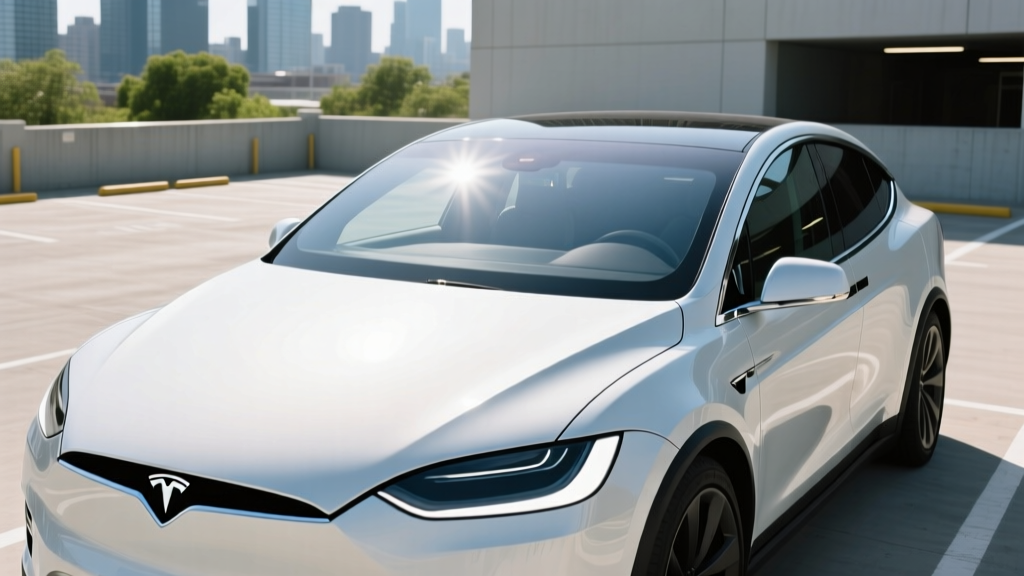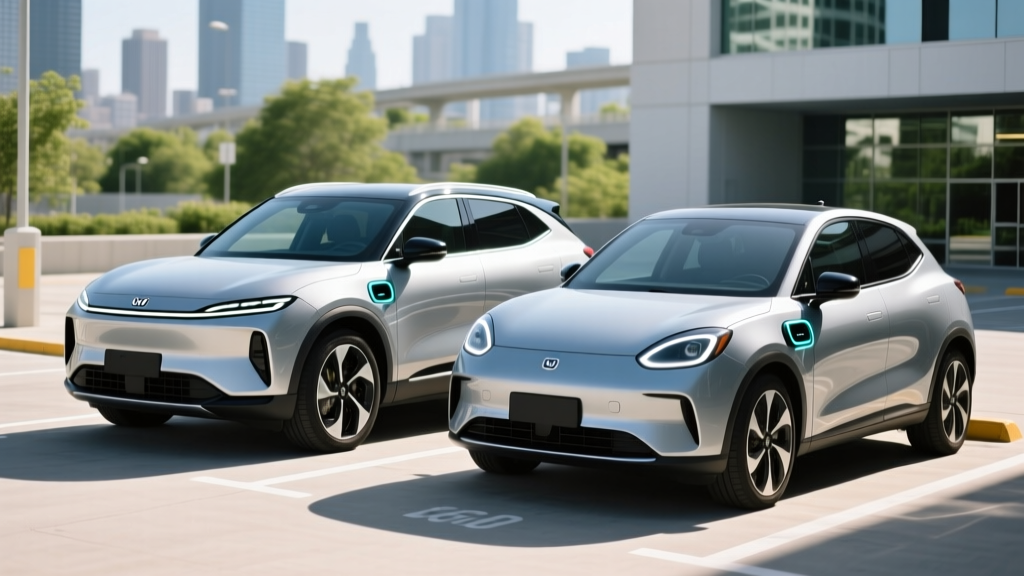
The GM Lease Loophole Is Closed — Here's What Changed
For most of 2023 and 2024, General Motors electric vehicles like the Chevrolet Equinox EV, Blazer EV, and Cadillac Lyriq were eligible for a $7,500 federal incentive — but only if you leased. The mechanism was the so-called "lease loophole," a provision under IRC §45W that classified leased EVs as commercial vehicles, bypassing the stringent battery-sourcing and critical-mineral requirements that disqualified most GM models from the standard §30D purchase credit. Automakers and dealers passed the $7,500 through as a lease capital-cost reduction, making a Blazer EV 2LT effectively $7,500 cheaper to lease than to buy.
That advantage is gone. As of January 1, 2025, the IRS closed the commercial clean vehicle credit pathway for consumer leases under revised guidance. The IRS §30D rules now apply uniformly whether you purchase or lease. This is the GM electric vehicle lease credit reversal that reshuffled the affordability math for the entire Ultium-based lineup heading into 2026.
If you're shopping a GM EV today, the credit isn't automatically off the table — but qualifying is harder than it was during the lease-loophole era. Below, we break down exactly what changed, whether you can still claim the credit, and what five years of real ownership actually costs.
What the Lease Credit Reversal Means for 2026 GM EV Buyers
Under the old lease structure, the lessor (the financing arm, typically GM Financial) claimed the §45W commercial credit and passed it to the consumer as a capitalized cost reduction. The buyer never needed to worry about income caps, MSRP caps, or battery mineral sourcing. It worked for the Cadillac Lyriq ($58,000+ MSRP), the Silverado EV, and every other GM EV regardless of price or buyer income.
Now, leasing a GM EV subjects you to the same §30D rules as purchasing:
- MSRP Caps: Vans, SUVs, and pickups must be under $80,000 MSRP. Sedans and other body styles must be under $55,000. This affects fully loaded Cadillac Lyriq and Silverado EV trims.
- Income Caps (Modified AGI): $300,000 joint / $225,000 head of household / $150,000 single filer. Applies to the tax year of delivery or the prior year — whichever is lower.
- Battery Sourcing: Applicable percentages of critical minerals must be sourced from the U.S. or free-trade-agreement partners, and battery components must be manufactured or assembled in North America. GM's Ultium cells (built in Ohio and Tennessee with LG Energy Solution) generally qualify, but specific trims and model years vary.
- Foreign Entity of Concern (FEOC) Exclusion: Battery components from FEOC entities (primarily Chinese supply chains) disqualify the vehicle entirely. Critical-mineral FEOC restrictions phase in further in 2025-2027.
- Point-of-Sale Transfer: You can transfer the credit to the dealer at purchase for an immediate price reduction — but you still must meet all income and sourcing requirements, and you'll need to file IRS Form 8936 at tax time to confirm.
- Lease Treatment: Under current guidance, the lessee may claim the §30D credit if the lease is structured as a "qualified clean vehicle" transaction and all requirements are met. The automatic commercial-vehicle pass-through no longer applies.
The practical result: a 2026 Equinox EV LT (starting around $33,000 MSRP) may still qualify for up to $7,500 if your income is below the cap and the battery meets sourcing thresholds. But a loaded 2026 Cadillac Lyriq Ultra Luxury (MSRP ~$73,000) clears the SUV cap but may lose eligibility depending on exact critical-mineral percentages for that production batch. Always verify on fueleconomy.gov before signing.
5-Year Total Cost of Ownership: A GM EV in Real Numbers
To understand whether a GM EV still makes financial sense without the automatic lease credit, we modeled a 2026 Chevrolet Equinox EV 3LT (FWD, 85 kWh usable battery, EPA 319 miles, $41,900 MSRP) against a comparable 2026 Chevrolet Equinox Gas AWD (1.5L turbo, EPA 28 MPG combined, ~$33,500 MSRP). We assumed 15,000 miles/year, 5 years, $0.14/kWh home charging, $3.50/gallon gas, and a blended insurance/depreciation model based on current market data.
| Cost Category | Equinox EV 3LT | Equinox Gas AWD |
|---|---|---|
| Purchase Price (MSRP) | $41,900 | $33,500 |
| Federal Tax Credit (§30D, if qualified) | –$7,500 | $0 |
| Effective Net Purchase | $34,400 | $33,500 |
| Fuel / Charging (75,000 mi) | $3,570 | $9,375 |
| Maintenance (5 yr) | $1,800 | $4,200 |
| Insurance (5 yr avg.) | $11,250 | $8,750 |
| Depreciation (est. 5 yr) | $18,500 | $14,200 |
| Total 5-Year Cost | $69,520 | $70,025 |
With the full $7,500 credit, the EV wins narrowly. Without it — which is the scenario many lessees now face post-reversal — the EV's 5-year cost jumps to approximately $77,020, putting it roughly $7,000 behind the gas model. This is the real financial impact of the GM electric vehicle lease credit reversal: the margin of victory for EV economics was often the credit itself.
Charging vs. Gas: The Per-Mile Math
The Equinox EV's efficiency is rated at approximately 3.0 miles/kWh (roughly 101 MPGe combined per EPA fueleconomy.gov). At $0.14/kWh (national residential average in early 2026), that works out to:
- Equinox EV (home Level 2, $0.14/kWh): $0.047/mile
- Equinox EV (DC fast charging, $0.40/kWh avg.): $0.133/mile
- Equinox Gas AWD (28 MPG, $3.50/gal): $0.125/mile
Home charging is decisively cheaper — about 62% less per mile than gasoline. But if you rely primarily on public DC fast charging (Electrify America, EVgo, or Tesla Superchargers open to NACS-equipped GM models), the cost per mile actually exceeds gas in many markets. This is the hidden variable in EV ownership economics: your charging mix determines whether you save or overspend on energy.
Over 75,000 miles at an 80/20 home-to-DCFC split (realistic for homeowners with Level 2), the Equinox EV costs roughly $4,200 in electricity. Apartment dwellers relying 100% on public charging could pay over $9,900 — more than the gas equivalent.
Maintenance Savings: Where EVs Quietly Win
EVs have far fewer wear items than internal-combustion vehicles. No engine oil, no transmission fluid, no spark plugs, no timing belts, no exhaust system. The Equinox EV's scheduled maintenance over five years typically includes cabin-air-filter replacement, tire rotation, brake-fluid checks, and windshield-washer fluid. That's it.
| Service Item | Equinox EV | Equinox Gas AWD |
|---|---|---|
| Oil Changes (synthetic, ~7 intervals) | $0 | $630 |
| Brake Pads & Rotors | $0 (regen extends life to 100k+ mi) | $850 |
| Transmission Fluid | $0 | $250 |
| Engine Air Filter | $0 | $180 |
| Coolant / Spark Plugs | $0 | $420 |
| Tire Rotation & Cabin Filter (both) | $600 | $600 |
| Tire Replacement (EV tires wear ~15% faster) | $1,200 | $900 |
| Total | $1,800 | $3,830 |
The net maintenance savings for the EV is approximately $2,000 over five years. Regenerative braking is the biggest factor — one-pedal driving means the friction brakes are rarely applied, and rotors often last the life of the vehicle. The offset is tire cost: EVs are heavier (the Equinox EV weighs ~4,700 lbs vs. ~3,500 lbs for the gas model) and deliver instant torque, which accelerates tread wear. Budget for one extra set of tires over five years.
Insurance: The Cost Nobody Talks About
EV insurance premiums are typically 15-25% higher than equivalent gas vehicles. For the Equinox EV, expect annual premiums around $2,250 (national average, clean record, 35-year-old driver) versus $1,750 for the gas Equinox. Over five years, that's an additional $2,500.
Why the premium? Three reasons:
- Higher repair costs: EV battery packs, power electronics, and specialized sensors are expensive to replace after a collision. Even minor rear-end damage can total a battery.
- Fewer qualified body shops: High-voltage safety certification limits the repair network, driving up labor rates.
- Higher vehicle values: Insurers base comprehensive and collision premiums on replacement cost, and EV MSRPs are generally higher.
Some insurers (Progressive, State Farm, Geico) now offer specific EV discounts or bundling incentives. It's worth shopping at least three quotes before delivery. If you're leasing, gap insurance is typically included, which partially offsets the premium difference.
Federal credits get the headlines, but state and utility incentives can add $1,000-$7,500 in additional savings depending on where you live. California's CVRP (now transitioning to point-of-sale rebates), Colorado's innovative EV tax credit (up to $5,000), New York's Drive Clean Rebate, and utility programs from Xcel Energy, PG&E, and ConEdison can stack on top of §30D. However, these programs have their own income caps, residency requirements, and funding pools that deplete unpredictably. Always check your state energy office and local utility before purchase — and confirm the incentive is still funded.
Depreciation and Resale Value: The GM EV Reality
EV depreciation has been steeper than gas-vehicle depreciation in recent years, driven by rapid price cuts (Tesla's 2023-2024 reductions reset the entire used-EV market), battery-health uncertainty among second buyers, and fast-moving technology that makes older models feel dated.
For GM's Ultium-based EVs specifically, the picture is mixed:
- Cadillac Lyriq: Holds value relatively well (~55-60% retention at 3 years) due to brand cachet and limited luxury-EV competition in its segment.
- Chevrolet Equinox EV / Blazer EV: Projected 45-50% retention at 3 years, below the gas Equinox (~55%) but improving as the Ultium platform matures and the NACS charging standard expands access to Tesla Superchargers.
- Silverado EV: Too early for robust used-market data; early lease returns in late 2026 will set the baseline.
Our 5-year depreciation estimate for the Equinox EV 3LT is $18,500 (approximately 44% retention), compared to $14,200 for the gas Equinox (58% retention). This $4,300 gap is the single largest cost disadvantage for the EV — and it persists regardless of tax-credit eligibility.
One mitigating factor: GM's 8-year/100,000-mile battery and powertrain warranty transfers to second owners, which provides some resale-value support. The battery must retain at least 60% of original capacity for a warranty claim, though real-world Ultium degradation data suggests most packs will retain 85-90% at 100,000 miles based on current telemetry.
The Bottom Line: When Does a GM EV Still Make Sense?
The GM electric vehicle lease credit reversal eliminated the easiest path to $7,500 in savings. But the underlying economics of EV ownership haven't changed — they've just become more dependent on your specific situation.
- You qualify for the full §30D credit (income under cap, MSRP under cap, battery sourcing confirmed on fueleconomy.gov)
- You can install a Level 2 home charger and will do 80%+ of your charging at home
- Your state or utility stacks additional rebates on top of the federal credit
- You plan to keep the vehicle 5+ years, spreading the depreciation hit over a longer ownership period
- Your income exceeds §30D caps ($150k single / $300k joint)
- You live in an apartment without charging access and would rely entirely on public DCFC
- You trade vehicles every 2-3 years (depreciation will dominate your cost)
- The specific GM model you want is not on the IRS qualified-vehicle list for your delivery date
The lease loophole was always a transitional artifact — a gap between policy intent and legislative language. Its closure doesn't make GM's EVs bad vehicles; the Equinox EV's 319-mile EPA range, 150 kW peak DC fast charging (10-80% in ~30 minutes), and Super Cruise availability remain genuinely competitive. What it does mean is that the math now requires a calculator instead of a headline. Run your own numbers, verify credit eligibility at the point of sale, and factor in your real charging situation before signing.
Frequently Asked Questions
Can I still get $7,500 off a GM EV lease in 2026?
Only if the leased vehicle meets all §30D requirements — MSRP caps, buyer income limits, and battery-sourcing rules. The automatic commercial-credit pass-through that previously applied to all leases has been eliminated. Verify eligibility on fueleconomy.gov and with your dealer before signing.
Does the GM electric vehicle lease credit reversal apply retroactively?
No. If you signed a lease and took delivery before the rule change took effect, your credit terms are locked in. The reversal applies to new transactions from the effective date forward.
Which 2026 GM EVs currently qualify for the federal tax credit?
The qualified-vehicle list changes as automakers adjust battery sourcing. As of early 2026, the Chevrolet Equinox EV (most trims) and certain Blazer EV configurations have appeared on the IRS qualified list, but eligibility can shift by production month. Always check the latest list on fueleconomy.gov and confirm with your dealer using the vehicle's specific VIN.
How much do I really save on fuel with a GM EV?
At $0.14/kWh (home charging) and 3.0 mi/kWh efficiency, you'll spend about $0.047/mile — roughly $3,500 over 75,000 miles. The gas Equinox at 28 MPG and $3.50/gal costs about $9,400 over the same distance. That's ~$5,900 in fuel savings, but only if you charge predominantly at home.
Are GM EVs more expensive to insure?
Yes, typically 15-25% higher premiums due to costly battery repairs, limited body-shop networks, and higher replacement values. Budget an extra $500/year compared to a gas equivalent, and shop multiple insurers for EV-specific discounts.
How well do GM Ultium EVs hold their value?
Depreciation is steeper than gas counterparts — expect 45-55% retention at 3 years depending on the model. The Lyriq holds value best; the Equinox EV and Blazer EV trail the gas versions by roughly 8-12 percentage points. GM's 8-year/100,000-mile battery warranty provides some support for second buyers.
What happens if I claim the credit but my income ends up over the cap?
If you transfer the credit to the dealer at point of sale but your modified AGI exceeds the cap for that tax year, you must repay the credit amount when you file your federal return. The IRS reconciles this via Form 8936. There is no penalty beyond repayment, but it can create an unexpected tax bill — so project your income carefully before transferring.