The Short Answer on GM's Electric Cars
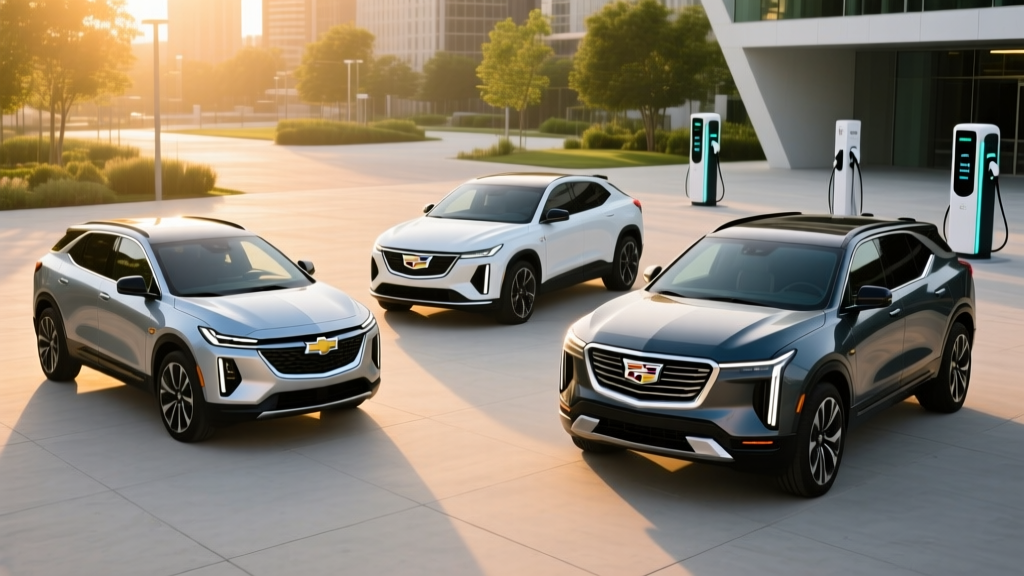
General Motors' 2026 electric vehicle lineup spans from the $33,600 Chevy Equinox EV (319 miles EPA range) to the $58,700+ Cadillac Lyriq (314 miles). Most GM EVs use the Ultium platform with NMC battery chemistry, support DC fast charging at 150–190 kW, and are eligible for the full $7,500 federal tax credit under current IRS §30D rules — provided you meet income caps and purchase through a point-of-sale transfer. If you want an affordable, long-range crossover, the Equinox EV is GM's strongest value play. If you need luxury or truck capability, the Lyriq and Silverado EV fill those roles, though real-world highway range and cold-weather performance require honest expectations.
GM's 2026 EV Lineup at a Glance
GM has consolidated its electric strategy around the Ultium battery platform, which underpins nearly every battery-electric vehicle (BEV) it sells. Here's how the current lineup stacks up on paper:
| Model | EPA Range | Battery (usable kWh) | Peak DC Charge kW | 10–80% Time | 0–60 mph | Base MSRP |
|---|---|---|---|---|---|---|
| Chevy Equinox EV | 319 mi (3LT FWD) | 85 kWh NMC | 150 kW | ~32 min | ~8.0 sec | $33,600 |
| Chevy Blazer EV | 324 mi (RS RWD) | 102 kWh NMC | 190 kW | ~28 min | ~6.5 sec | $44,600 |
| Cadillac Lyriq | 314 mi (RWD) | 102 kWh NMC | 190 kW | ~28 min | ~6.0 sec | $58,700 |
| Cadillac Optiq | 306 mi (est. AWD) | 85 kWh NMC | 150 kW | ~32 min | ~6.5 sec | $53,900 |
| Chevy Silverado EV | 440 mi (4WT Max Range) | 200+ kWh NMC | 350 kW | ~20 min | ~4.5 sec (RST) | $55,400 (WT) |
| GMC Sierra EV | 440 mi (Elevation Max Range) | 200+ kWh NMC | 350 kW | ~20 min | ~4.5 sec (AT4) | $62,900 |
Real-world caveat: EPA range is measured under ideal mixed-driving conditions. On sustained highway trips at 70+ mph, expect 10–15% less range. In freezing temperatures (below 32°F), range can drop 20–30% depending on cabin heating demands and whether the vehicle has a heat pump (most 2026 GM Ultium vehicles include one, which reduces but doesn't eliminate cold-weather loss).
Real-World Range Expectations
Chevy Equinox EV (319 mi EPA): Expect ~270–285 mi on a highway road trip in mild weather; ~220–240 mi in sub-freezing conditions.
Cadillac Lyriq (314 mi EPA): Expect ~265–280 mi highway; ~220–240 mi in cold weather.
Silverado EV 4WT (440 mi EPA): Expect ~370–390 mi highway unloaded; significantly less when towing (often 150–200 mi depending on trailer weight and speed).
How GM Electric Cars Compare to Gas and Hybrid Alternatives
The decision between a GM electric car, a traditional gas vehicle, or a hybrid isn't just about sticker price — it's about total cost of ownership, daily driving patterns, and fueling infrastructure.
| Factor | Chevy Equinox EV (2LT) | Chevy Equinox Gas (1.5T AWD) | Toyota RAV4 Hybrid |
|---|---|---|---|
| Base MSRP | $33,600 | $28,600 | $33,850 |
| After $7,500 Federal Credit | ~$26,100* | N/A | N/A |
| EPA Efficiency | 114 MPGe (29 kWh/100mi) | 28 MPG combined | 39 MPG combined |
| Fuel/Energy Cost per Year (15k mi) | ~$540 (home charging, $0.13/kWh) | ~$1,660 ($3.10/gal) | ~$1,192 ($3.10/gal) |
| Annual Maintenance (est.) | ~$300 | ~$650 | ~$550 |
| 5-Year Fuel + Maintenance | ~$4,200 | ~$11,550 | ~$8,710 |
| EPA Range / Tank Range | 319 mi | ~410 mi | ~500 mi |
*Tax credit eligibility depends on income caps ($150k single / $300k joint), MSRP limits, and battery sourcing. See IRS §30D rules. Point-of-sale transfer available at participating dealers.
The math is clear: if you qualify for the full federal credit and charge primarily at home, the Equinox EV undercuts its gas counterpart on purchase price and saves roughly $1,400–$1,700 per year in fuel and maintenance. Over five years, that's $7,000–$8,500 in operational savings. The hybrid sits in the middle — no charging infrastructure needed, but you still pay for gas.
Real Costs of Owning a GM Electric Car
Purchase price and fuel savings tell only part of the story. Here's a realistic breakdown of what owning a GM electric car actually costs over five years, using the Equinox EV as the baseline.
| Cost Category | 5-Year Total (Equinox EV) | 5-Year Total (Gas Equinox) |
|---|---|---|
| Purchase Price (after credit) | $26,100 | $28,600 |
| Home Charger Install (Level 2) | $1,200–$2,500 | $0 |
| Energy / Fuel | $2,700 | $8,300 |
| Maintenance | $1,500 | $3,250 |
| Insurance (avg. premium) | $7,500 | $6,250 |
| Depreciation (est. 5-yr) | $11,000 | $10,800 |
| Total 5-Year Cost | ~$50,000–$51,300 | ~$57,200 |
Key takeaways:
- Insurance is typically 15–25% higher for EVs. GM's Ultium vehicles are no exception — get quotes before buying.
- Home Level 2 charging installation costs $1,200–$2,500 for most homes with a 200-amp panel. If your panel needs upgrading to 200A, add $1,500–$3,000. Always get a quote from a licensed electrician before committing.
- Maintenance savings are real: no oil changes, no transmission fluid, no spark plugs. Brake pads last significantly longer due to regenerative braking. Expect tire replacements to come sooner — EVs are heavier and produce instant torque, which accelerates tire wear.
- Depreciation on EVs has been volatile. GM's Ultium vehicles are still relatively new to the used market, so long-term resale values are less established than, say, a Tesla Model Y. Plan for this uncertainty.
Charging a GM Electric Car: What You Need to Know
GM's 2026 EVs come equipped with the NACS (North American Charging Standard) connector natively — the same plug used by Tesla. This gives GM owners direct access to Tesla Supercharger stations (over 25,000 stalls in North America) without an adapter, a significant advantage over CCS-only vehicles.
| Level | Power (kW) | Speed (miles of range per hour) | Typical Use Case |
|---|---|---|---|
| Level 1 (120V outlet) | 1.2–1.4 kW | 3–5 mi/hr | Overnight top-up; emergency only |
| Level 2 (240V home) | 7.7–11.5 kW | 25–40 mi/hr | Daily home charging; full overnight charge |
| DC Fast (public) | 150–350 kW | 500–1,200 mi/hr (peak) | Road trips; 10–80% in 20–32 min |
Charging Curve Reality Check
Peak DC charge rates (150–190 kW for most GM crossovers) are not sustained across the entire session. The battery management system tapers charge speed as the battery fills to protect cell longevity. A "150 kW" charger might deliver 150 kW between 10–40% SoC, then drop to 80 kW by 60%, and 40 kW above 80%. This is why manufacturers quote 10–80% times — the last 20% takes nearly as long as the first 60%. Plan road-trip stops to charge to 80%, then move on.
Home charging is where 80–90% of EV charging happens for owners with garage or driveway access. A Level 2 home charger (like the ChargePoint Home Flex or Wallbox Pulsar Plus) installed on a 240V/48A circuit will fully recharge an Equinox EV's 85 kWh battery in roughly 9–10 hours — plug in at night, wake up full. If you lack home charging access (apartment, street parking), public charging becomes your primary source, and costs rise to $0.30–$0.50/kWh at most DC fast chargers, cutting your fuel savings significantly.
Federal Tax Credit Eligibility for GM EVs
GM's Ultium-based EVs currently qualify for the $7,500 federal tax credit under IRS §30D, but eligibility is not automatic. Here's the checklist:
- Income caps: Modified AGI must not exceed $150,000 (single), $225,000 (head of household), or $300,000 (married filing jointly)
- MSRP caps: Vans/pickups/SUVs must be under $80,000; sedans under $55,000 (all current GM EVs qualify under the SUV/truck classification)
- Battery sourcing: A percentage of critical minerals and battery components must be sourced from the US or free-trade-agreement countries — GM's Ultium batteries are manufactured in the US (Ohio and Tennessee plants), which currently satisfies this requirement
- Point-of-sale transfer: You can apply the $7,500 credit directly at the dealership, reducing your purchase price immediately rather than waiting to claim it on your tax return
- One credit per VIN, one per taxpayer per year
Rules change frequently. Always verify current eligibility on IRS.gov and confirm with your dealer and tax professional before signing paperwork.
GM EV Battery Warranty and Longevity
Every 2026 GM Ultium-based EV comes with an 8-year / 100,000-mile battery warranty that guarantees the pack will retain at least 70% of its original capacity. In practice, NMC chemistry in GM's liquid-cooled packs has shown modest degradation — industry data suggests most Ultium packs should retain 85–90% capacity after 5 years of normal use, assuming you avoid chronic 100% charges and frequent DC fast charging in extreme heat.
Battery replacement costs remain a concern for long-term ownership. A full Ultium pack replacement currently runs $15,000–$25,000 depending on the model, though individual module replacement is possible at lower cost. For context, most EV batteries outlast their vehicles — total failure before 150,000 miles is rare based on current fleet data.
Decision Framework: Which GM Electric Car Is Right for You?
Choose the Chevy Equinox EV if:
- You want the most affordable long-range EV in GM's lineup (~$26,100 after credit)
- Your daily commute is under 60 miles and you can charge at home
- You prioritize value over luxury or performance
Choose the Chevy Blazer EV if:
- You want more interior space and a sportier driving experience
- You're willing to pay $10,000+ more for 102 kWh of battery and 190 kW charging
- You need a midsize crossover with available AWD and ~280 mi real-world highway range
Choose the Cadillac Lyriq if:
- Luxury, ride quality, and premium materials matter to you
- You want Super Cruise (Level 2 hands-free highway driving) as standard
- You can budget $58,700+ and accept slightly higher insurance costs
Choose the Silverado EV or Sierra EV if:
- You need truck capability (towing up to 10,000+ lbs, bed utility)
- You want 440 miles of EPA range for unloaded highway driving
- You understand that towing will cut range by 50–60% and plan accordingly
Skip a GM EV for now if:
- You have no reliable access to home or workplace charging
- You regularly drive 400+ miles in a single day through charging-desert regions
- You live in extreme cold (consistently below 0°F) and need maximum range reliability — a PHEV may serve you better
Common Misconceptions About GM Electric Cars
| Myth | Fact |
|---|---|
| "GM EVs can't use Tesla Superchargers" | 2026 GM EVs have native NACS ports and access the full Supercharger network directly — no adapter needed. |
| "The battery will need replacing in 5 years" | NMC Ultium packs are liquid-cooled and warranted for 8 years/100,000 miles at 70%+ capacity. Data shows most packs retain 85–90% after 5 years. |
| "EVs are worse in cold weather" | Range drops 20–30% in freezing temps — a real limitation. But EVs start instantly in cold (no cranking), and preconditioning while plugged in mitigates most range loss. Heat pumps on 2026 models help significantly. |
| "Everyone gets the $7,500 tax credit" | Income caps, MSRP limits, and battery-sourcing rules all apply. High earners and those buying above MSRP caps won't qualify. Always verify on IRS.gov. |
| "Super Cruise means the car drives itself" | Super Cruise is an SAE Level 2 driver-assistance system. You must remain attentive, and the system monitors your eyes. It works only on mapped divided highways (~750,000+ miles of compatible roads). It does not handle construction zones, unmapped roads, or severe weather autonomously. |
SAE Automation Level: Level 2
GM Super Cruise and Tesla Autopilot/FSD are both SAE Level 2 systems — partial automation that requires continuous driver supervision. The driver is always responsible. Only Waymo-style robotaxis operating in geofenced areas qualify as Level 4 (high automation, no driver needed). Don't confuse marketing terms like "Super Cruise" with "self-driving."
Frequently Asked Questions
What is the cheapest GM electric car in 2026?
The Chevy Equinox EV starts at $33,600 (3LT FWD). After the $7,500 federal tax credit (if eligible), the effective price drops to roughly $26,100 — making it one of the most affordable 300+ mile EVs on the market. The base 2LT trim, when available, may start lower.
Do GM electric cars qualify for the full $7,500 tax credit?
Yes, GM's Ultium-based EVs currently qualify for the full credit because their batteries are manufactured domestically. However, buyer income caps ($150k single / $300k joint), MSRP limits, and point-of-sale transfer rules apply. Check IRS §30D guidelines for current rules.
Can I charge a GM EV at a Tesla Supercharger?
Yes. All 2026 GM EVs are built with the NACS connector natively, which is the same plug Tesla uses. You can pull up to any open Supercharger stall and plug in directly. GM's in-dash navigation and the myChevrolet/myCadillac apps can route you to Supercharger locations.
How long does it take to charge a GM EV at home?
On a Level 2 home charger (240V, 48A), expect a full charge in 8–12 hours depending on battery size. The Equinox EV (85 kWh) takes about 9–10 hours; the larger Blazer EV and Lyriq (102 kWh) take about 11–12 hours. This is designed for overnight charging — plug in when you get home, wake up with a full battery.
How much does it cost to charge a GM EV?
At home with an average US electricity rate of $0.13/kWh, fully charging an Equinox EV's 85 kWh battery costs roughly $11. That delivers ~285 real-world miles — about 3.9 cents per mile. Compare that to a gas Equinox at $3.10/gallon and 28 MPG: about 11 cents per mile. Public DC fast charging is more expensive ($0.30–$0.50/kWh), bringing costs closer to gas — which is why home charging is critical to EV economics.
Is the Chevy Bolt still available?
The original Chevy Bolt EV and Bolt EUV were discontinued after the 2023 model year. GM has announced a next-generation Bolt on the Ultium platform, but as of early 2026, it has not yet entered production. The Equinox EV effectively replaces it in GM's lineup as the entry-level electric offering.
How does GM's Super Cruise compare to Tesla Autopilot?
Both are SAE Level 2 systems requiring driver attention. Super Cruise uses a driver-facing camera for eye monitoring and operates on pre-mapped divided highways (~750,000+ miles). It's generally regarded as smoother and more predictable in its lane-keeping and speed management on compatible roads. Tesla Autopilot works on more road types but has drawn scrutiny from NHTSA for driver engagement gaps. Neither system is "self-driving" — you must remain ready to take over at all times.
Sources: EPA Fuel Economy, Chevrolet EV specifications, Cadillac EV lineup, IRS §30D Clean Vehicle Credits.