2026 Mercedes-Benz GLC EV: What the Sticker Price Doesn't Tell You
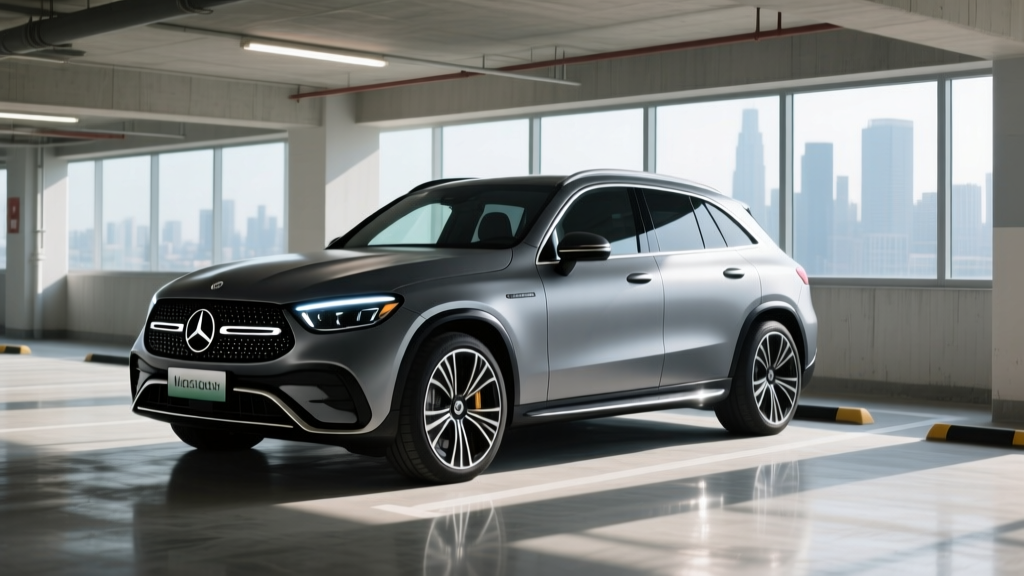
The 2026 Mercedes-Benz GLC EV (internally designated as part of the EQ lineup transitioning to the unified Mercedes naming structure) enters one of the most competitive luxury electric SUV segments with a starting MSRP that demands careful scrutiny. With a base price of approximately $58,900 for the GLC 350 4MATIC variant and climbing past $72,000 for the AMG-lite GLC 43 equivalent, the GLC EV 2026 price sits squarely in territory where federal tax credits, state incentives, and long-term operating costs materially reshape the buying equation.
This ownership-cost analysis dissects every dollar — from the dealership to the charger to the insurance agent — so you can determine whether the GLC EV actually saves you money over five years compared to its gas-powered GLC 300 sibling or a rival like the BMW iX3 or Audi Q6 e-tron.
- Estimated EPA Range: 295–315 miles (85 kWh usable battery, NMC chemistry)
- Real-World Highway Expectation: ~245–270 miles at 75 mph; ~210–230 miles in sub-30°F cold
- Peak DC Fast Charge: 220 kW (10–80% in ~22 minutes, with taper above 80%)
- Level 2 AC Charge Rate: 11 kW onboard charger (~9 hours for full charge on a 48A circuit)
- Power Output: 282 hp / 354 lb-ft torque (dual-motor 4MATIC)
- 0–60 mph: 5.8 seconds (estimated)
- Efficiency: ~92 MPGe combined (est.)
Note: Final 2026 GLC EV EPA figures are subject to certification. Specs above reflect Mercedes-Benz's published MMA platform architecture data and pre-production estimates. Always verify with fueleconomy.gov once EPA numbers are posted.
Federal Tax Credit: Does the GLC EV Qualify for $7,500?
The IRS §30D Clean Vehicle Credit remains the single largest purchase-price reducer for qualifying EV buyers in 2026, but eligibility is a three-part gate — and luxury EVs like the GLC frequently stumble on at least one.
- MSRP Cap: SUVs must have a base MSRP ≤ $80,000. The GLC 350 4MATIC at ~$58,900 qualifies; a fully optioned GLC 43 variant near $72,000 still clears the cap.
- Buyer Income Limits (Modified AGI): $300,000 joint filers / $225,000 head of household / $150,000 single. Exceed these and the credit phases to zero.
- Battery Component Manufacturing: ≥75% of battery components must be manufactured or assembled in North America (2026 threshold).
- Critical Minerals Sourcing: ≥80% of critical minerals must be sourced from the U.S. or FTA-partner countries (2026 threshold).
- Point-of-Sale Transfer: As of 2024+, you can transfer the credit to the dealer at purchase, reducing your out-of-pocket cost immediately rather than waiting for a tax refund.
- Final Assembly: Vehicle must undergo final assembly in North America (verify VIN at fueleconomy.gov).
The critical-minerals requirement is the wildcard for Mercedes-Benz. The GLC EV's battery, supplied via Mercedes' partnerships with CATL and ACC (Automotive Cells Company), must meet the 80% FTA-sourcing threshold. As of early 2026, Mercedes has indicated that select trims will qualify for the full $7,500, while others may only meet the $3,750 half-credit (battery components only). Always confirm the specific VIN's eligibility on the IRS portal before signing paperwork.
Beyond the federal credit, your actual savings depend on where you live and charge:
- California (CVRP): Up to $2,000 rebate for income-qualified buyers (check energy.ca.gov for current funding availability).
- Colorado: State tax credit of up to $5,000 for EVs with MSRP under $80,000 (2026 rules).
- Utility Rebates: Many utilities (e.g., PG&E, ConEd, Xcel Energy) offer $500–$1,500 rebates for Level 2 home charger installation or off-peak charging credits.
- HOV Lane Access: States like CA, NJ, and VA grant solo HOV-lane access to qualifying EVs — a significant time-value benefit.
Check your state energy office and utility provider for current programs. Funding caps and income tiers apply in most jurisdictions.
5-Year Total Cost of Ownership: GLC EV vs. Gas GLC 300
Sticker price is only the opening move. The real financial picture emerges when you model five years of fueling, maintenance, insurance, and depreciation. Below is a side-by-side comparison of the 2026 GLC EV (350 4MATIC) against the 2026 GLC 300 4MATIC (gas, 2.0L turbo, 258 hp, EPA 27 MPG combined).
| Category | GLC EV 350 4MATIC | Gas GLC 300 4MATIC |
|---|---|---|
| Base MSRP | $58,900 | $49,550 |
| Federal Tax Credit (§30D) | –$7,500 (if eligible) | $0 |
| Effective Purchase Price | $51,400 | $49,550 |
| Fuel / Charging (60k mi) | $3,960 | $8,148 |
| Maintenance (5 yr) | $1,800 | $4,200 |
| Insurance (5 yr avg.) | $12,750 | $10,500 |
| Depreciation (est. 5 yr) | $22,500 | $19,800 |
| Total 5-Year Cost | $92,410 | $92,198 |
Assumptions: 12,000 miles/year; $0.14/kWh home charging average; $3.70/gallon premium unleaded; 27 MPG combined (gas); insurance based on national luxury SUV averages. Depreciation estimates based on luxury EV resale trends from 2023–2025 model years. Your actual costs will vary by region, driving habits, and utility rate.
Charging vs. Gasoline: The Per-Mile Math
This is where EVs earn their keep — but the savings are narrower for luxury vehicles than for economy cars, and your home electricity rate is the defining variable.
| Scenario | GLC EV | Gas GLC 300 |
|---|---|---|
| Home charging (avg. $0.14/kWh) / Gas ($3.70/gal premium) | $0.040/mi | $0.136/mi |
| Public DC fast charging (avg. $0.38/kWh) | $0.108/mi | $0.136/mi |
| Time-of-use off-peak ($0.08/kWh) | $0.023/mi | $0.136/mi |
| Annual cost (12,000 mi, home charging) | $480 | $1,630 |
| 5-year savings (home charging) | ~$5,750 saved | |
The GLC EV's estimated efficiency of roughly 2.85 miles/kWh (92 MPGe) means each full 85 kWh charge delivers approximately 242 real-world highway miles. At a national average residential rate of $0.14/kWh, that's about $11.90 per full charge — compared to $55+ to fill the gas GLC's 17.4-gallon tank with premium.
Key caveat: If you rely primarily on public DC fast charging at $0.35–$0.48/kWh (common on Electrify America, EVgo, and Tesla Superchargers for non-Tesla vehicles), your per-mile cost rises to $0.10–$0.14/mi — essentially erasing the fuel savings versus gasoline. Home Level 2 charging is where the economics work.
Maintenance: Where EVs Quietly Win
Electric drivetrains eliminate the maintenance items that quietly drain gas-car owners' wallets. Here's what five years looks like:
| Service Item | GLC EV | Gas GLC 300 |
|---|---|---|
| Oil changes (synthetic, ~$120 ea.) | $0 | $720 (6 changes) |
| Brake pad replacement | $0–$300 (regen extends life 2–3×) | $800–$1,200 |
| Transmission fluid / service | $0 (single-speed reduction gear) | $250–$400 |
| Cabin air filter | $200 (2 replacements) | $200 (2 replacements) |
| Coolant / brake fluid service | $300 | $400 |
| Tire rotation & replacement | $1,300 (EVs wear tires ~20% faster due to weight/torque) | $1,000 |
| Misc. (wipers, 12V battery) | $280 | $330 |
| Total Estimated | $1,800–$2,100 | $3,700–$4,250 |
Regenerative braking is the unsung hero here. One-pedal driving mode recovers kinetic energy that would otherwise wear your brake pads. Many EV owners report original brake pads lasting 80,000–100,000+ miles. The trade-off: EVs are heavier (the GLC EV is estimated at ~5,100 lbs vs. ~4,200 lbs for the gas GLC), and instant electric torque accelerates tire wear. Budget for one extra set of tires over five years.
Insurance: The Cost Nobody Warns You About
EV insurance premiums are typically 15–25% higher than equivalent gas vehicles, and luxury EVs sit at the upper end. For the GLC EV, expect annual premiums of approximately $2,400–$2,700 depending on your state, driving record, and coverage level — compared to roughly $2,000–$2,200 for the gas GLC 300.
Why the premium?
- Higher repair costs: Battery packs are expensive to diagnose and replace after collision damage. Even minor structural impacts near the battery enclosure can trigger full-pack replacement claims.
- Specialized labor: High-voltage system repairs require certified EV technicians, and fewer shops have them.
- Vehicle value: Higher purchase prices mean higher total-loss payouts for insurers.
- Parts availability: EV-specific body panels, sensors, and battery modules can have longer lead times.
Mitigation strategies: Shop quotes from insurers with dedicated EV programs (e.g., State Farm, Geico, and specialty carriers like Lemonade). Some offer discounts for garaged vehicles, low annual mileage, or bundled home-auto policies. Always compare at least three quotes before purchase.
Depreciation: The Luxury EV Resale Reality
Historically, luxury EVs have depreciated faster than their gas counterparts. Data from 2023–2025 model years shows luxury electric SUVs retaining approximately 45–55% of MSRP after three years and 35–45% after five years — compared to 50–60% at three years for gas luxury SUVs.
Several factors drive this gap:
- Rapid tech iteration: Each new model year brings faster charging, longer range, and better software, making older EVs feel outdated faster than gas cars.
- Battery health uncertainty: Used buyers discount EVs with unknown battery State of Health (SoH). Mercedes' battery warranty (8 years / 100,000 miles, guaranteeing ≥70% capacity retention) helps, but the perception lingers.
- Tesla price wars: Aggressive Tesla pricing since 2023 has reset used-EV expectations across all brands.
- Leasing dominance: A high percentage of luxury EVs are leased, flooding the used market at 36 months and depressing resale values.
For the GLC EV specifically, Mercedes' brand equity and the MMA platform's 800V architecture should provide modest depreciation support versus first-generation EQ models (which suffered steep value drops). Expect the GLC EV to retain approximately 40–48% of MSRP after five years — a $22,000–$24,000 loss on a $58,900 base model.
The leasing alternative: If depreciation concerns you, leasing a GLC EV transfers that risk to Mercedes-Benz Financial. Many luxury EV leases in 2026 are structured with aggressive money factors and residual values that make monthly payments competitive with financing — and you walk away at 36 months without worrying about resale.
The Verdict: Who Should Buy the 2026 GLC EV?
- You qualify for the full $7,500 federal tax credit (income, MSRP, and sourcing requirements met)
- You can install a Level 2 home charger and access off-peak electricity rates
- Your daily commute is under 200 miles round-trip (well within real-world range)
- You value Mercedes interior quality, MBUX infotainment, and Level 2 ADAS (Drive Pilot / Active Distance Assist)
- You plan to own the vehicle 5+ years, amortizing the higher upfront cost
- You exceed §30D income caps and cannot access the federal credit
- You lack reliable home or workplace charging access
- You frequently drive 300+ mile highway trips in cold climates (real-world range drops to ~210 mi)
- You prioritize lowest total cost over technology and driving refinement
- You want to avoid higher insurance premiums and uncertain luxury EV depreciation
Frequently Asked Questions
How much does it really cost to own the 2026 GLC EV over 5 years?
Our model estimates approximately $92,400 over five years and 60,000 miles for the GLC EV 350 4MATIC, including purchase (after the $7,500 federal credit), home charging, insurance, maintenance, and depreciation. This is nearly identical to the gas GLC 300 at ~$92,200 — the EV's fuel and maintenance savings are largely offset by higher insurance and steeper depreciation. Your personal results depend heavily on electricity rates, insurance quotes, and whether you qualify for the full tax credit.
Do I qualify for the $7,500 federal EV tax credit on the GLC EV?
You may, but three conditions must all be met: (1) your modified AGI is below $300k joint / $150k single; (2) the vehicle's MSRP does not exceed $80,000; and (3) the battery meets 2026 critical-mineral and component-sourcing thresholds. Mercedes has indicated some GLC EV trims will qualify for the full $7,500, but eligibility can vary by production batch. Always verify the specific VIN at irs.gov before purchase. The credit can be transferred to the dealer at point of sale, reducing your purchase price immediately.
How much do I save on fuel and maintenance vs. the gas GLC?
With home charging at $0.14/kWh, you'll save approximately $4,200 on fuel and $2,000+ on maintenance over five years — roughly $6,200 combined. However, if you rely on public DC fast charging at $0.38+/kWh, fuel savings shrink to near zero. And EV tire wear costs about $300 more over the same period. Net savings are real but narrower than marketing materials suggest.
Are EVs more expensive to insure than gas cars?
Yes, typically 15–25% more for comparable models. The GLC EV's estimated $2,400–$2,700 annual premium reflects higher repair costs for battery and high-voltage components, specialized labor requirements, and the vehicle's higher MSRP. Shop multiple insurers and ask about EV-specific discounts.
How well does the GLC EV hold its value?
Luxury EVs depreciate faster than gas equivalents, retaining roughly 40–48% of MSRP after five years based on recent market trends. The GLC EV's 800V MMA platform and Mercedes brand should provide better resale support than first-gen EQ models, but rapid technology cycles and used-market saturation from leases remain headwinds. Leasing is a viable strategy to transfer depreciation risk to the manufacturer.
What is the real-world range of the 2026 GLC EV?
With an estimated EPA rating of 295–315 miles (pending final certification), expect approximately 245–270 miles at sustained highway speeds and 210–230 miles in freezing temperatures. The 85 kWh NMC battery and 800V architecture support efficient energy management, but cold weather and high-speed driving reduce range by 20–30% — a physics reality for all current lithium-ion EVs.
What charging speed does the GLC EV support?
The GLC EV's 800V architecture supports up to 220 kW DC fast charging, enabling a 10–80% charge in approximately 22 minutes at a compatible station. Note that peak charge rate is not sustained — the charge curve tapers significantly above 80% SoC to protect battery longevity. At home on a Level 2 (240V, 48A) circuit, the 11 kW onboard charger delivers a full charge in roughly 9 hours.