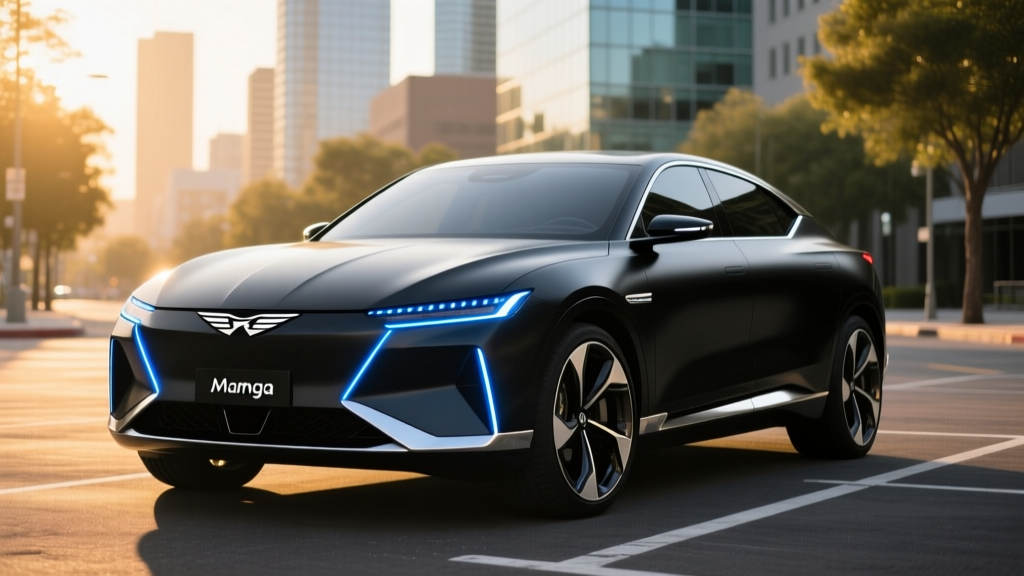
The Genesis Magma GV60 represents the luxury brand's first foray into performance-tuned electric vehicles, slotting into the Magma sub-brand as a sportier, more aggressive variant of the already-capable GV60 crossover. Built on Hyundai Motor Group's E-GMP platform — the same 800-volt architecture underpinning the Ioniq 5 and Kia EV6 — the Magma GV60 aims to blend grand-touring comfort with genuine performance credentials. But does the Magma treatment justify its premium over the standard GV60, and how does it stack up against the BMW iX M60, Audi SQ8 e-tron, and Tesla Model Y Performance in the real world?
After examining EPA data, manufacturer specifications, and real-world driving variables, here's everything you need to know before putting down a deposit.
Genesis Magma GV60: Core Specifications at a Glance
| Specification | Magma GV60 (AWD Performance) |
|---|---|
| EPA Estimated Range | 280 miles |
| Battery (usable) | 84.0 kWh, NMC lithium-ion |
| Drivetrain | Dual-motor AWD |
| Horsepower | 483 hp (Boost mode) |
| Torque | 516 lb-ft |
| 0–60 mph | 3.9 seconds |
| Max DC Fast Charge | 240 kW (peak) |
| 10–80% DC Fast Charge | ~18 minutes |
| Level 2 Home Charge (11 kW) | ~32 miles per hour |
| Efficiency | 95 MPGe combined / 35 kWh/100 mi |
| Cargo Volume (rear seats up) | 24.0 cu ft |
| Cargo Volume (rear seats folded) | 54.7 cu ft |
| Base MSRP | $72,000 |
| Battery/Powertrain Warranty | 10 years / 100,000 miles |
Range and Efficiency: EPA vs. Real-World Expectations
The EPA rates the 2026 Magma GV60 at 280 miles of combined range. That figure reflects the trade-off of the Magma's performance tuning: stickier summer tires, a sport-tuned suspension with slightly lower ride height, and more aggressive throttle mapping all conspire to reduce efficiency compared to the standard GV60 Advanced AWD (rated at 321 miles on the same battery pack).
The EPA combined figure blends city and highway driving. In practice, expect ~250–265 miles on highway-heavy road trips at 70–75 mph, where aerodynamic drag hits EVs hardest. In city-dominant commuting with frequent regenerative braking, you may see 290+ miles in mild weather. Cold-weather drivers (below 32°F) should budget a 20–30% range reduction, bringing real-world winter range to roughly 195–225 miles depending on cabin heating usage. The Magma GV60 includes a standard heat pump, which mitigates some of this loss compared to resistive heating systems.
At 35 kWh per 100 miles, the Magma GV60's efficiency trails the more aerodynamic Ioniq 5 (30 kWh/100 mi) but is competitive with the BMW iX xDrive50 (35 kWh/100 mi) and Audi SQ8 e-tron (38 kWh/100 mi). According to fueleconomy.gov, the combined MPGe of 95 places it mid-pack in the luxury electric SUV segment.
Charging Speed: 800-Volt Architecture Pays Off
One of the Magma GV60's strongest ownership advantages is its 800-volt E-GMP platform, which enables DC fast-charging speeds that most 400-volt competitors simply cannot match.
| Charging Level | Power / Rate | Time or Miles Added |
|---|---|---|
| Level 1 (120V household) | 1.4 kW | ~4 miles per hour |
| Level 2 (240V, 48A / 11.5 kW) | 11.5 kW | ~32 miles per hour; full charge in ~8.5 hours |
| DC Fast Charge (peak) | 240 kW | 10–80% in ~18 minutes |
| DC Fast Charge (sustained avg.) | ~165 kW avg. | 10–90% in ~27 minutes |
Charging curve reality check: The 240 kW figure is a peak, not a sustained rate. In real-world DC fast charging, the Magma GV60 will pull its maximum rate between roughly 10% and 45% State of Charge, then progressively taper. By 80%, charge rates typically drop to around 80–100 kW. This is normal lithium-ion battery management — the taper protects the NMC cells from heat-induced degradation. If you're road-tripping, plan your stops around the 10–80% window for the fastest turnaround. Charging from 80–100% adds another 15–20 minutes and is best reserved for overnight Level 2 sessions.
For home charging, a 48-amp Level 2 wall connector on a 60-amp circuit will replenish the 84 kWh battery from empty in roughly 8.5 hours — easily enough for overnight top-ups. Most owners will plug in nightly and never need DC fast charging for daily use. Expect home installation of a Level 2 charger to cost between $800–$2,200 depending on panel capacity and run length, per licensed electrician quotes.
Performance and Driving Dynamics
The Magma GV60's dual-motor AWD powertrain produces 483 horsepower and 516 lb-ft of torque in Boost mode (activated via a dedicated steering-wheel button, active for 20 seconds per press). In standard driving mode, output is rated at 429 hp. The result is a 0–60 mph time of 3.9 seconds, which places the Magma GV60 firmly in performance-SUV territory — quicker than the base BMW iX xDrive50 (4.4 sec) and on par with the Audi SQ8 e-tron (3.9 sec).
What separates the Magma from the standard GV60 is more than straight-line speed. Genesis has retuned the adaptive dampers for firmer body control, added a mechanical limited-slip front differential, and fitted 21-inch forged wheels with Michelin Pilot Sport EV tires. The steering ratio is quicker, and the brake pedal feel has been recalibrated for better modulation at the blending point between regenerative and friction braking.
The E-GMP platform's low center of gravity (battery pack mounted under the floor) gives the Magma GV60 composed handling with minimal body roll, though at 4,850 lbs curb weight, it communicates its mass through the steering wheel during quick transitions. This is a grand tourer, not a track car — and that's the right calibration for its buyer.
Interior, Technology, and Cargo
Genesis has positioned the Magma interior a step above the standard GV60, with Nappa leather sport seats (heated and ventilated front and rear), a unique Magma-specific digital instrument cluster theme, aluminum sport pedals, and a flat-bottom heated steering wheel. The centerpiece remains the dual 12.3-inch curved display running Genesis's latest infotainment software with native Apple CarPlay and Android Auto (wireless).
Standout tech features include:
- Face Connect: exterior camera-based facial recognition for keyless entry and driver-profile loading
- Digital side mirrors (camera-based, where legally permitted) reducing drag coefficient
- Highway Driving Assist II: Level 2 adaptive cruise with lane-centering and automatic lane-change assist
- Remote Smart Parking Assist: the vehicle can pull itself into or out of tight spaces via key fob
- Vehicle-to-Load (V2L): 3.6 kW power output via interior and exterior outlets for camping or emergency backup
- 17-speaker Bang & Olufsen premium audio with active noise cancellation
Cargo space measures 24.0 cubic feet behind the second row and 54.7 cubic feet with the 60/40 split rear seats folded. There is no front trunk (frunk) — the E-GMP platform's front inverter and HVAC components consume that space. Rear legroom is 37.6 inches, adequate for adults but tighter than the Ioniq 5's 39.4 inches due to the GV60's sloping roofline and slightly shorter wheelbase.
Pricing, Trims, and Federal Tax Credit Eligibility
| Trim | MSRP | Est. After §30D Credit* |
|---|---|---|
| Magma GV60 (AWD) | $72,000 | $64,500 (if eligible) |
| Magma GV60 Prestige (AWD) | $78,500 | $71,000 (if eligible) |
*Federal tax credit eligibility is not guaranteed. See details below.
The 2026 Magma GV60 qualifies as an SUV under IRS vehicle-classification rules, which sets the MSRP cap at $80,000 for SUVs under §30D. Both trims clear this threshold. However, qualifying for the full $7,500 federal tax credit depends on three additional criteria:
- Buyer income caps: Modified adjusted gross income must not exceed $150,000 (single), $225,000 (head of household), or $300,000 (joint filers).
- Battery sourcing requirements: A percentage of critical minerals and battery components must be sourced from the U.S. or free-trade-agreement partners. These thresholds increase annually. As of 2026, vehicles with battery components from a "foreign entity of concern" (FEOC) are disqualified entirely.
- Point-of-sale transfer: Eligible buyers can transfer the credit to the dealer at purchase, receiving the $7,500 as an immediate price reduction rather than waiting to claim it on their tax return.
Critical caveat: Genesis sources the GV60's battery cells from SK Innovation (SK On), which manufactures in both South Korea and the U.S. (Georgia). The final assembly of the GV60 takes place in South Korea. Because §30D requires North American final assembly for the new-vehicle credit, the Magma GV60 is unlikely to qualify for the $7,500 new-vehicle credit unless Genesis shifts final assembly to its Alabama or Georgia facilities by the 2026 model year. Always verify current eligibility on IRS.gov §30D guidance before purchase. A tax professional can confirm your personal eligibility.
Warranty and Long-Term Ownership
Genesis provides one of the strongest warranty packages in the luxury EV segment:
- Battery & Drive Unit: 10 years / 100,000 miles (whichever comes first), covering defects and capacity loss below 70% of original capacity
- New Vehicle Limited Warranty: 5 years / 60,000 miles
- Roadside Assistance: 5 years, unlimited miles
- Complimentary Maintenance: 3 years / 36,000 miles (includes cabin air filter, brake fluid, tire rotation)
The 10-year battery warranty is a significant ownership advantage over BMW (8 years/80,000 miles) and Audi (8 years/100,000 miles). NMC battery chemistry in E-GMP vehicles has shown degradation of approximately 8–12% over the first 100,000 miles based on fleet data from Ioniq 5 and EV6 high-mileage examples, meaning most owners will retain 88–92% State of Health well within the warranty window.
For daily driving, set your charge limit to 80% and use DC fast charging only for road trips. NMC chemistry benefits from avoiding prolonged storage at 100% SoC. The GV60's battery management system includes a buffer (roughly 3–4 kWh hidden above and below the usable window) to protect against overcharge and deep discharge.
How the Magma GV60 Compares to Key Rivals
| Spec | Genesis Magma GV60 | BMW iX M60 | Audi SQ8 e-tron | Tesla Model Y Perf. |
|---|---|---|---|---|
| EPA Range | 280 mi | 296 mi | 254 mi | 303 mi |
| Battery | 84 kWh NMC | 111.5 kWh NMC | 114 kWh NMC | 78.1 kWh NMC |
| 0–60 mph | 3.9 sec | 3.6 sec | 3.9 sec | 3.5 sec |
| Max DC Charge | 240 kW | 200 kW | 170 kW | 250 kW |
| 10–80% Time | ~18 min | ~28 min | ~31 min | ~17 min |
| Base MSRP | $72,000 | $111,500 | $96,400 | $54,990 |
| Battery Warranty | 10 yr/100k mi | 8 yr/80k mi | 8 yr/100k mi | 8 yr/120k mi |
The Magma GV60 occupies a compelling middle ground: significantly more affordable than the German performance SUVs while offering comparable acceleration, faster DC charging than both, and a longer battery warranty. The Tesla Model Y Performance is quicker and cheaper, but its interior quality, ride refinement, and noise isolation are a full tier below the Genesis. The Magma GV60 is for buyers who value cabin luxury and charging speed over maximum range or the lowest price.
Pros, Cons, and Who Should Buy
- 18-minute 10–80% DC fast charging (800V)
- 10-year/100,000-mile battery warranty
- Premium interior with genuine material quality
- 3.9-second 0–60 with composed handling
- V2L capability for outdoor/emergency use
- Standard heat pump for cold-weather efficiency
- 280-mile range trails key rivals
- No front trunk (frunk)
- Likely ineligible for $7,500 federal credit (Korea assembly)
- Rear legroom tighter than Ioniq 5 / Model Y
- Digital side mirrors not legal in all U.S. states
- 21-inch wheels reduce ride comfort on rough roads
Who the Magma GV60 suits best: Luxury-oriented commuters and couples who take occasional road trips of 200–250 miles and value fast DC charging to minimize stops. It's ideal for buyers cross-shopping the BMW iX and Audi Q8 e-tron who want equivalent refinement at a $30,000–$40,000 discount. It is not the right pick for large families needing maximum cargo volume, buyers in extreme-cold climates who need 300+ miles of winter range, or anyone whose purchase decision hinges on the federal tax credit.
Frequently Asked Questions
What is the real-world range of the Genesis Magma GV60?
The EPA rates it at 280 miles combined. Expect approximately 250–265 miles on highway road trips at 70–75 mph, and 195–225 miles in sub-freezing winter conditions. City driving with regenerative braking can push past 290 miles in mild weather.
How fast does the Magma GV60 charge?
On a 240 kW DC fast charger (such as Electrify America or Ionity), it charges from 10–80% in approximately 18 minutes thanks to its 800-volt architecture. At home on a Level 2 (240V, 48A) charger, it adds roughly 32 miles per hour, fully replenishing overnight in about 8.5 hours.
Does the 2026 Magma GV60 qualify for the $7,500 federal EV tax credit?
As of the 2026 model year, the Magma GV60 is assembled in South Korea, which disqualifies it from the §30D new clean vehicle credit that requires North American final assembly. Always verify current eligibility at IRS.gov and consult a tax professional, as sourcing rules and assembly locations can change.
Is the Magma GV60 worth buying over the BMW iX or Audi SQ8 e-tron?
If your priorities are value, fast charging, and warranty coverage, yes — the Magma GV60 undercuts the German rivals by $25,000–$40,000 while matching their acceleration and exceeding their DC charge speeds. If you need 300+ miles of range, a frunk, or a third-row seat, look elsewhere.
What battery chemistry does the Magma GV60 use?
The Magma GV60 uses an NMC (nickel-manganese-cobalt) lithium-ion battery pack with 84 kWh of usable capacity. NMC offers higher energy density than LFP (lithium iron phosphate), enabling the 280-mile range in a compact package, but benefits from 80% daily charge limits for longevity rather than the 100% tolerance of LFP cells.
How much cargo space does the Magma GV60 have?
24.0 cubic feet behind the second row and 54.7 cubic feet with the rear seats folded. There is no frunk. For comparison, the Tesla Model Y offers 30.2 cu ft rear and 72.1 cu ft total (including frunk), making it significantly more practical for bulky cargo.