Genesis GV90 Electric SUV: Quick Buyer Answer
The Genesis GV90 is a luxury three-row electric SUV expected to arrive for the 2026 model year with an estimated EPA range of 300–350 miles, an 800V electrical architecture supporting peak DC fast charging above 250 kW, and a starting MSRP near $80,000. It competes directly with the BMW iX, Mercedes EQS SUV, and Tesla Model X. Federal §30D tax credit eligibility remains uncertain due to battery-sourcing and MSRP-cap rules — the $80,000+ price tag likely exceeds the IRS SUV cap of $80,000 for most trims, meaning only the base configuration may qualify. Buyers should plan for home Level 2 charging at roughly $0.12–$0.18 per kWh (vs. $3.50/gal gas equivalent) and budget $1,200–$2,500 for home charger installation.
What We Know About the Genesis GV90 Electric SUV
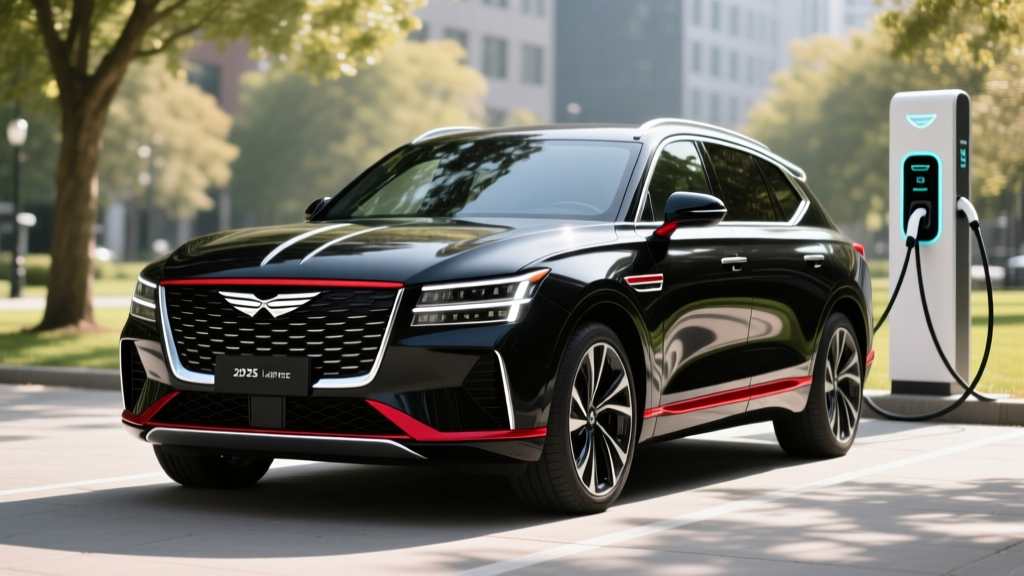
Hyundai Motor Group confirmed the Genesis GV90 as part of its next-generation luxury EV lineup, riding on the eM (Electric Modular) platform — a dedicated skateboard architecture distinct from the E-GMP underpinning the GV60 and Electrified G80. This is not a converted gas vehicle; it is engineered from the ground up as a battery-electric flagship.
Based on preliminary specifications and Hyundai Motor Group's platform disclosures, here is what buyers can expect:
| Specification | Estimated Value |
|---|---|
| Battery Capacity | ~110 kWh usable (NMC chemistry expected) |
| EPA Range (est.) | 300–350 miles (varies by trim/drivetrain) |
| Peak DC Charge Rate | 270–350 kW (800V architecture) |
| 10–80% DC Charge Time | ~18–22 minutes (optimal conditions) |
| Level 2 Charge Rate | 11 kW onboard charger (standard) |
| 0–60 mph | ~4.5–5.5 seconds (dual-motor AWD) |
| Horsepower | ~450–550 hp (AWD dual-motor) |
| Starting MSRP (est.) | ~$80,000–$100,000+ |
| Battery Warranty | 10 years / 100,000 miles (expected, per Genesis precedent) |
Real-World Range: What to Actually Expect
The EPA sticker is a starting point, not a guarantee. For a large luxury SUV with an estimated 300–350 mile EPA rating, real-world results will depend heavily on how and where you drive.
EPA vs. Real-World Range Reconciliation
| EPA Estimated Range | 300–350 miles |
| Highway (70–80 mph) | ~240–290 miles (15–20% reduction) |
| Cold Weather (below 30°F) | ~210–270 miles (20–30% reduction) |
| Combined Real-World (temperate) | ~270–320 miles |
A large, heavy SUV with a high frontal area will consume more energy at highway speeds than a sedan like the Electrified G80. Cold weather impacts are real: lithium-ion batteries lose efficiency below freezing, and cabin heating draws significant power even with a heat pump (which Genesis is expected to include). If your daily commute is under 60 miles round-trip and you can charge at home, range becomes a non-issue for most days. Road trips require planning around DC fast-charger availability — and the 800V architecture means the GV90 will charge faster than most 400V competitors when paired with a capable 350 kW station.
Charging Speeds and Home Setup Costs
Understanding the difference between kW (kilowatts — the rate of power delivery, like water flow from a hose) and kWh (kilowatt-hours — total energy stored, like the size of the tank) is essential. The GV90's battery stores roughly 110 kWh of energy. A 350 kW DC fast charger can theoretically deliver energy at that rate, but real-world charging follows a curve — peak speed is only sustained between roughly 10–50% State of Charge (SoC), then tapers to protect the battery.
| Level | Power (kW) | Miles Added Per Hour | Best For |
|---|---|---|---|
| Level 1 (120V outlet) | ~1.4 kW | ~3–5 miles/hr | Overnight trickle, emergencies |
| Level 2 (240V home) | 7.7–11 kW | ~25–38 miles/hr | Daily home charging, full overnight refill |
| DC Fast Charge | 50–350 kW | ~150–600+ miles/hr | Road trips, 10–80% in ~18–22 min |
Home Level 2 Installation: What It Actually Costs
Most GV90 buyers will want a dedicated Level 2 home charger. Budget for the following:
| Component | Cost Range |
|---|---|
| Level 2 EVSE hardware (48A, hardwired) | $500–$800 |
| Electrician labor (standard install, panel nearby) | $500–$1,200 |
| Electrical panel upgrade (if 200A service needed) | $1,500–$3,500 |
| Permits and inspection | $100–$300 |
| Total (typical, no panel upgrade) | $1,200–$2,500 |
| Total (with panel upgrade) | $2,800–$5,000 |
Always hire a licensed electrician to evaluate your panel capacity. A 48-amp charger requires a 60-amp dedicated circuit. If your home has older 100-amp service, an upgrade to 200 amps is likely needed — factor this into your purchase budget before the car arrives.
Genesis GV90 vs. Gas SUV: Cost of Ownership
The GV90 will compete against luxury three-row gas SUVs like the BMW X7, Mercedes GLS, and Genesis's own GV80. Here is how the economics stack up over five years, assuming 15,000 miles/year driven:
| Cost Category | Genesis GV90 (EV est.) | Gas Luxury SUV (est.) |
|---|---|---|
| Purchase Price (base MSRP) | $80,000 | $78,000 |
| Federal Tax Credit (§30D) | $0–$7,500* | $0 |
| Fuel/Energy (5 yrs, 75K mi) | $4,500–$6,000** | $12,000–$15,000 |
| Maintenance (5 yrs) | $1,500–$2,500 | $4,000–$6,000 |
| Insurance (5 yrs, est.) | $12,000–$16,000 | $10,000–$14,000 |
| Home Charger Install | $1,200–$2,500 | $0 |
| 5-Year Total (approx.) | $93,000–$113,500 | $104,000–$113,000 |
* §30D credit eligibility depends on MSRP caps ($80,000 for SUVs/vans), buyer income limits ($300K MFJ / $150K single), and battery critical-mineral sourcing. Only the base GV90 trim may qualify. Verify at irs.gov.
** Assumes $0.14/kWh average home electricity; DC fast charging on road trips at $0.35–$0.50/kWh. Gas at $3.50/gal, 18 MPG combined.
The EV wins on fuel and maintenance — no oil changes, fewer brake replacements due to regenerative braking, no transmission fluid. But insurance tends to run 15–25% higher on luxury EVs due to repair cost data. The tax credit, if available, can tip the scales meaningfully.
Tax Credit Eligibility: The $80,000 Problem
Under current IRS §30D rules, the federal clean vehicle credit offers up to $7,500 — but SUVs, vans, and pickups face an $80,000 MSRP cap. The Genesis GV90's estimated starting price sits right at this threshold. Higher trims (which Genesis typically loads with premium features) will almost certainly exceed the cap and be ineligible.
§30D Federal Tax Credit Eligibility Checklist
- MSRP Cap: Vehicle must be ≤ $80,000 (SUVs/vans/pickups) — only base GV90 trims likely qualify
- Buyer Income Limit: Modified AGI ≤ $300,000 (married filing jointly) / $225,000 (head of household) / $150,000 (single)
- Battery Sourcing: Critical minerals and battery components must meet phased-in domestic/free-trade-partner sourcing percentages (increases annually through 2030)
- Final Assembly: Vehicle must be assembled in North America — confirm GV90 production location at time of purchase
- Point-of-Sale Transfer: Eligible buyers can transfer the credit to the dealer for an immediate price reduction at purchase
Rules are subject to legislative change. Consult a tax professional and check irs.gov before relying on credit availability.
Myths vs. Facts for First-Time Luxury EV Buyers
| Myth | Fact |
|---|---|
| "EV batteries need replacing every 5 years" | Modern NMC batteries are warrantied for 10 years/100,000 miles at ≥70% capacity retention. Industry data shows average degradation of 1–2% per year — most batteries outlast the vehicle. |
| "I can't take road trips" | With 300+ miles of range and 18-minute 10–80% DC fast charging, a 600-mile trip requires one ~25-minute stop. Electrify America, Tesla Supercharger (via NACS adapter or native port), and Ionity networks cover major US highways. |
| "Charging at home is expensive to install" | A standard Level 2 install without panel upgrade averages $1,200–$2,500 — a one-time cost that pays back within 1–2 years of fuel savings vs. premium gasoline. |
| "EVs don't work in cold climates" | Range drops 20–30% in sub-freezing temps, but preconditioning (warming the battery while plugged in) mitigates charging-speed loss. Norway — one of the coldest countries in Europe — has the highest per-capita EV adoption in the world. |
| "The GV90 is self-driving" | Genesis Highway Driving Assist and any advanced driver-assist features will be SAE Level 2 — meaning the driver must remain fully engaged with hands on or near the wheel and eyes on the road at all times. No production consumer vehicle is self-driving. |
Decision Framework: Is the Genesis GV90 Right for You?
Choose the Genesis GV90 If:
- You need three rows and want a luxury electric SUV with distinctive design
- You have (or can install) Level 2 home charging — this is non-negotiable for convenient daily ownership
- You value ultra-fast 800V DC charging for road trips (18–22 min stops vs. 30–45 min on 400V competitors)
- Your household income is under the §30D cap and you can secure the base trim under $80K MSRP
- You want Genesis's dealer experience, complimentary maintenance program, and 10-year warranty coverage
Look Elsewhere If:
- You live in an apartment or condo without charging access and cannot install a home charger — public-only charging is expensive and inconvenient for daily use
- You regularly tow heavy loads over 5,000 lbs — EV range drops significantly under tow (40–50% reduction is common)
- You want the lowest possible purchase price — the Rivian R1S and Tesla Model X may offer similar utility at lower entry points
- You drive in extreme cold (below 0°F regularly) and lack a garage — range loss and charging slowdowns compound in these conditions
Genesis GV90 vs. Key Competitors
| Spec | Genesis GV90 (est.) | Tesla Model X | BMW iX | Rivian R1S |
|---|---|---|---|---|
| EPA Range | 300–350 mi | 311–348 mi | 307–324 mi | 321–410 mi |
| Battery (kWh usable) | ~110 | ~100 | ~105 | 95–149 |
| Peak DC Charge (kW) | 270–350 | 250 | 200 | 200–220 |
| Three Rows? | Yes | Yes (optional) | No (2-row) | Yes |
| Starting MSRP | ~$80,000 | ~$81,630 | ~$87,250 | ~$79,900 |
| Architecture | 800V | 400V | 400V | 400V/900V* |
* Rivian's Max pack uses a higher-voltage architecture. Specs reflect latest available model-year data. Verify at manufacturer sites.
The GV90's 800V architecture is its strongest technical differentiator — only the Hyundai Ioniq 9 and Kia EV9 (corporate siblings) and the Porsche/Audi e-tron GT family match this charging speed in the current market. Against the Model X, the GV90 trades Tesla's Supercharger network exclusivity for Genesis's luxury dealership experience and interior quality. Against the Rivian R1S, it sacrifices some off-road capability and maximum battery size options for a more traditional luxury approach.
Frequently Asked Questions
When will the Genesis GV90 go on sale?
Genesis has confirmed the GV90 as part of its electrified lineup, with an expected on-sale date in late 2025 or during the 2026 model year. Final timing depends on production readiness at Hyundai Motor Group's facilities. Watch for official pricing and spec releases 3–6 months before deliveries begin.
Will the Genesis GV90 qualify for the $7,500 federal tax credit?
It depends on the trim. The §30D credit caps SUV MSRP at $80,000. If the base GV90 starts at or just below this threshold, only the entry-level configuration is likely eligible — and only if battery sourcing requirements and buyer income limits are met. Higher trims will exceed the cap. Check the IRS's qualified vehicle list once the GV90 is certified.
Do I need to upgrade my electrical panel for a home charger?
Possibly. A 48-amp Level 2 charger needs a 60-amp dedicated circuit. Homes with 100-amp service will almost certainly need a panel upgrade to 200 amps ($1,500–$3,500). Homes with existing 200-amp service usually have sufficient headroom. A licensed electrician must perform a load calculation before installation.
How does the GV90 compare to the Electrified GV70?
The Electrified GV70 is a converted gas platform — a GV70 with batteries adapted into it. The GV90 uses the dedicated eM skateboard platform, which allows a larger, flatter battery pack, more interior space, better weight distribution, and 800V charging. Expect meaningfully better range, charging speed, and interior volume in the GV90.
What happens to the battery after 10 years?
Based on industry-wide data from Recurrent and other battery-health aggregators, modern NMC lithium-ion packs lose approximately 1–2% capacity per year under normal use. After 10 years, expect roughly 80–90% of original capacity — well above the warranty threshold of 70%. Battery replacement is rarely needed and costs $15,000–$25,000 if it ever becomes necessary, though this figure is expected to decline as battery manufacturing scales.
Can I charge the GV90 at Tesla Superchargers?
This depends on the connector Genesis adopts for the North American market. Hyundai Motor Group has announced NACS (Tesla's North American Charging Standard) adoption for future models. If the GV90 ships with a native NACS port, it will access Tesla Superchargers directly. If it ships with CCS1, a NACS adapter will be needed. Confirm the connector at time of purchase.