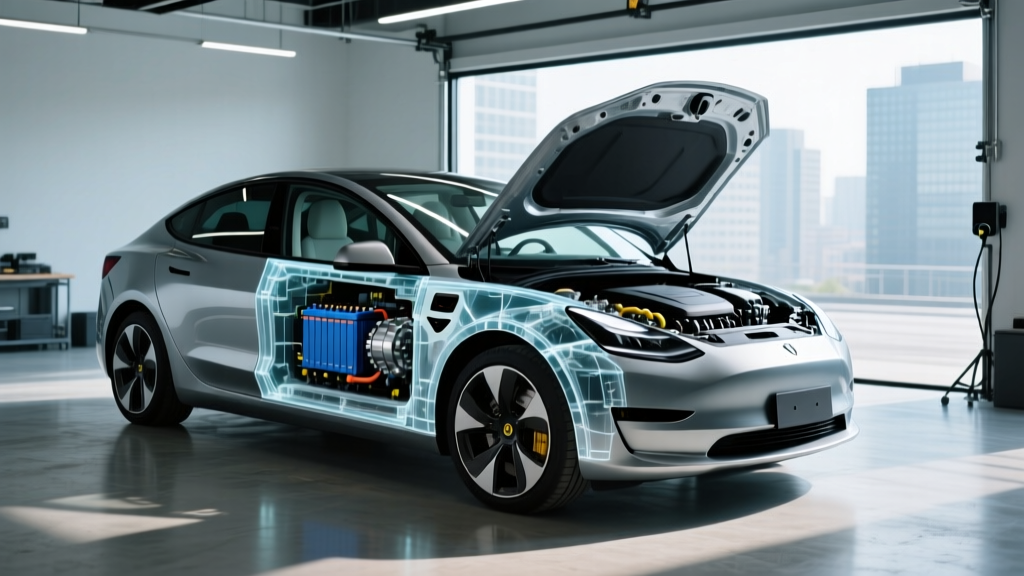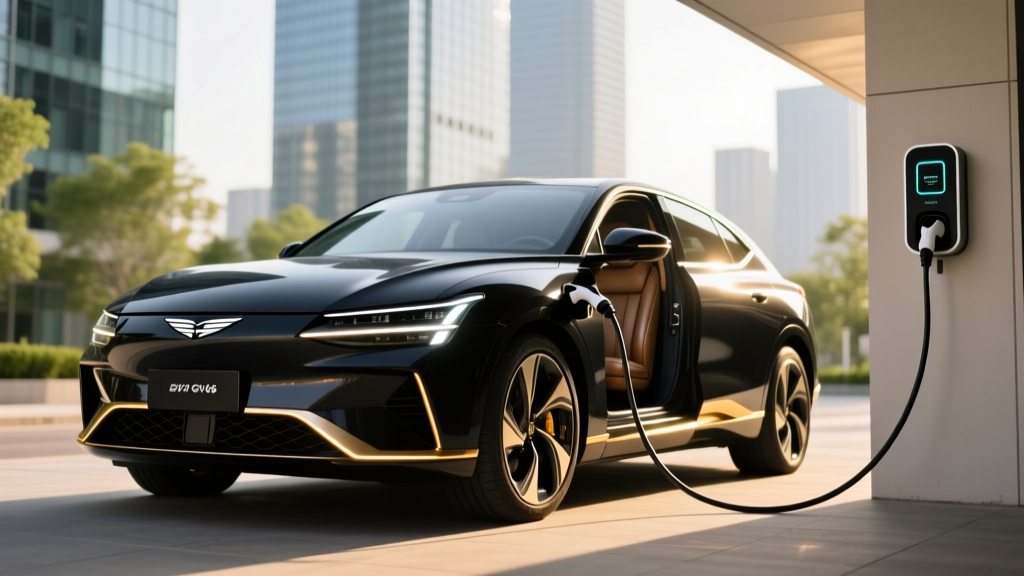
The Genesis GV60 electric vehicle occupies a rare position in the luxury EV market: it pairs the 800-volt E-GMP architecture shared with the Hyundai Ioniq 5 and Kia EV6 with a cabin and ride quality that punch well above its price class. For 2026, the GV60 continues to offer blistering DC fast-charging speeds, a well-appointed interior, and Genesis's industry-leading warranty — but real-world range and federal tax credit eligibility require careful attention before you sign.
Below, we break down every number that matters — EPA range versus what you'll actually see on a highway road trip, the charging curve reality at public DC fast chargers, exact pricing by trim, and whether the GV60 still qualifies for the §30D federal credit under current IRS rules.
Genesis GV60 Quick Specs at a Glance
| Specification | Standard Range AWD | Advanced AWD | Performance AWD |
|---|---|---|---|
| EPA Range | 248 mi | 248 mi | 235 mi |
| Battery (usable) | 77.4 kWh (NMC) | 77.4 kWh (NMC) | 77.4 kWh (NMC) |
| Horsepower | 314 hp | 314 hp | 429 hp (Boost: 483 hp) |
| 0–60 mph | 5.3 sec | 5.3 sec | 3.9 sec |
| Drivetrain | Dual-motor AWD | Dual-motor AWD | Dual-motor AWD |
| Max DC Charge Rate | ~240 kW (peak) | ~240 kW (peak) | ~240 kW (peak) |
| 10–80% DC Time | ~18 min | ~18 min | ~18 min |
| Level 2 Rate (kW) | 10.9 kW | 10.9 kW | 10.9 kW |
| MPGe (combined) | 95 MPGe | 95 MPGe | 90 MPGe |
| Base MSRP | $53,350 | $60,350 | $66,350 |
| Battery Warranty | 10 yr / 100,000 mi | ||
Source: EPA / fueleconomy.gov; Genesis USA 2026 model-year specifications. Pricing excludes destination charge.
Real-World Range: What the EPA Sticker Doesn't Tell You
Real-World Expectation: ~210–230 mi on mixed highway driving at 70 mph; ~170–195 mi in sustained sub-30°F winter conditions; ~240–255 mi in city-heavy commuting with regen.
The Genesis GV60 electric vehicle uses the same 77.4 kWh (usable) nickel-manganese-cobalt (NMC) battery pack found in the Ioniq 5 and EV6. On the EPA cycle, the Advanced trim returns 248 miles — a respectable figure, but one that deserves context.
In our experience and consistent with third-party highway testing, sustained 70–75 mph driving reduces range by roughly 10–15% below the EPA sticker. Expect 210–230 miles on a full charge during a road trip. Cold weather hits NMC chemistry harder: at temperatures below freezing, range loss of 20–30% is typical, even with the GV60's standard heat pump and battery preconditioning system. If you live in the upper Midwest or Northeast and commute in winter, plan for 170–195 miles of usable range on the coldest days.
City driving with frequent regenerative braking opportunities pushes efficiency closer to — or even slightly above — the EPA number. The GV60's one-pedal driving mode (i-Pedal) is among the smoothest in the segment, making stop-and-go traffic genuinely efficient.
Efficiency lands at 95 MPGe combined (Advanced) and 90 MPGe (Performance), translating to roughly 35–37 kWh per 100 miles. That's competitive with the BMW iX xDrive50 but trails the lighter Tesla Model Y Long Range (approximately 30 kWh/100 mi).
Charging Speed: The 800V Advantage in Practice
This is where the GV60's E-GMP platform earns its keep. The 800-volt architecture enables peak DC fast-charging rates around 240 kW at compatible 350 kW chargers — and critically, the GV60 sustains high charge rates through a broad portion of the curve.
| Charging Level | Power | Speed / Time | Typical Use Case |
|---|---|---|---|
| Level 1 (120V household) | ~1.4 kW | ~4 mi/hr | Emergency / trickle |
| Level 2 (240V home) | 10.9 kW | ~33 mi/hr; full charge in ~7.5 hr | Overnight home charging |
| DC Fast (50 kW) | 50 kW | ~110 mi in 30 min | Older public chargers |
| DC Fast (150 kW) | 150 kW | 10–80% in ~25 min | Electrify America / EVgo standard |
| DC Fast (350 kW) | ~240 kW peak | 10–80% in ~18 min | EA / Ionity ultra-fast stations |
Charging curve reality: The GV60 peaks near 240 kW between roughly 10–45% state of charge, then tapers to approximately 150 kW through 65%, and drops further to under 80 kW above 80%. That 18-minute 10–80% time assumes a 350 kW-class charger with battery preconditioning active. On a 150 kW station — still the majority of U.S. public infrastructure — expect closer to 25 minutes for the same window.
One practical note: the GV60 uses the CCS1 connector. Genesis has not yet transitioned to the Tesla NACS standard on the GV60, though adapters are expected as the industry migrates. For now, Electrify America, EVgo, and ChargePoint CCS stations are your primary fast-charging network. The GV60 also supports Plug & Charge at Electrify America stations, eliminating the need to open an app at compatible stalls.
For home Level 2 charging, the onboard 10.9 kW charger is slightly below the Tesla Model Y's 11.5 kW but adequate for overnight replenishment. A full charge from near-empty takes about 7.5 hours — you'll wake up to a full battery every morning with a standard 48-amp Level 2 wallbox on a 60-amp circuit.
Performance and Driving Dynamics
Every 2026 GV60 sold in the U.S. comes with dual-motor all-wheel drive. The Standard Range and Advanced trims produce 314 horsepower and 446 lb-ft of torque, hitting 60 mph in a brisk 5.3 seconds. The Performance trim bumps output to 429 hp (483 hp in 20-second Boost mode) and slashes the 0–60 time to 3.9 seconds — firmly in sports-sedan territory for a 4,700-pound crossover.
Ride quality is where the GV60 separates itself from its Hyundai-Kia platform siblings. The suspension tuning is noticeably more compliant, with a focus on isolation over sportiness. Road noise is well-suppressed, and the cabin remains quiet even at highway speeds. The Performance trim includes an electronic limited-slip differential and adaptive dampers that add composure on twisty roads, but this is fundamentally a luxury cruiser, not a track car.
The GV60's 3,548-pound towing capacity (when properly equipped) is adequate for a small utility trailer or a pair of dirt bikes, but it falls well short of the Rivian R1S or even the Ford Mustang Mach-E's capabilities. This is not a tow-heavy vehicle.
Interior, Tech, and Standout Features
The GV60's cabin is genuinely premium — a step above the Ioniq 5 and arguably on par with the Audi Q4 e-tron and BMW iX in material quality. Highlights include:
- Crystal Sphere shifter: A rotating glass orb on the center console that flips to reveal the rotary gear selector when the vehicle starts. Gimmicky? Perhaps. But it's a memorable differentiator.
- Dual 12.3-inch displays: A curved panoramic layout merging the instrument cluster and infotainment screen, running Genesis's latest software with wireless Apple CarPlay and Android Auto.
- Digital side mirrors (optional): Camera-based mirrors that reduce drag and improve visibility in rain, though some drivers find the screen placement requires an adjustment period.
- Face Connect: Facial recognition via a B-pillar camera lets you unlock and start the vehicle without a key — useful for joggers or beachgoers who don't want to carry a fob.
- Highway Driving Assist 2 (HDA2): Genesis's Level 2 driver-assistance suite includes adaptive cruise with stop-and-go, lane-centering, and lane-change assist. It's competent but requires hands-on-wheel engagement — this is not a hands-free system like GM's Super Cruise or Ford's BlueCruise.
Cargo space measures 24.0 cubic feet behind the rear seats and 54.7 cubic feet with the 60/40 split rear seats folded. There is no front trunk (frunk), a missed opportunity given the E-GMP platform's packaging flexibility. Rear legroom is generous at 39.5 inches, though the sloping roofline limits headroom for taller passengers compared to the boxier Ioniq 5.
Pricing, Trims, and Federal Tax Credit Eligibility
| Trim | Base MSRP | Est. As-Tested | §30D Credit Eligibility |
|---|---|---|---|
| Standard Range AWD | $53,350 | $55,000–$57,000 | Not eligible (see below) |
| Advanced AWD | $60,350 | $63,000–$66,000 | Not eligible (see below) |
| Performance AWD | $66,350 | $69,000–$72,000 | Not eligible (see below) |
Does the Genesis GV60 electric vehicle qualify for the federal EV tax credit? As of 2026, the answer is almost certainly no, for two compounding reasons:
- MSRP cap: Under IRS §30D rules, SUVs must have an MSRP at or below $80,000 to qualify. While the GV60 clears this threshold, the next disqualifier is more restrictive.
- Battery sourcing requirements: The §30D credit requires that a specified percentage of critical minerals and battery components be sourced from the U.S. or free-trade-agreement partners. The GV60's battery is manufactured in South Korea by SK On, and its critical-mineral supply chain has not met the escalating thresholds set for 2025 and beyond. This effectively disqualifies most Hyundai-Kia-Genesis EVs from the new-vehicle credit.
- Income caps: Even if the GV60 qualified on sourcing, buyers must fall under modified AGI limits ($150,000 single / $300,000 joint) to claim the credit.
For the most current eligibility determination, always check the IRS Clean Vehicle Credits page and the fueleconomy.gov tax credit lookup tool before purchasing. Rules and eligible-vehicle lists are updated periodically.
Used GV60 opportunity: If you find a qualifying pre-owned GV60 (model year 2022 or later, purchased from a dealer for $25,000 or more), the §25E used clean vehicle credit may offer up to $4,000 or 30% of the sale price (whichever is less), subject to income caps. This is a more realistic path to federal incentives on this vehicle.
Ownership Costs and Warranty
Genesis provides one of the strongest warranty packages in the luxury segment:
- Basic warranty: 5 years / 60,000 miles
- Powertrain warranty: 10 years / 100,000 miles
- Battery warranty: 10 years / 100,000 miles (capacity retention threshold: 70%)
- Complimentary maintenance: 3 years / 36,000 miles (includes scheduled service)
- Complimentary valet service: 3 years — Genesis picks up your car for service and leaves a loaner
The 10-year battery warranty with a 70% capacity-retention floor is standard for the Hyundai-Kia-Genesis family and aligns with industry norms. NMC chemistry in the E-GMP platform has demonstrated relatively mild degradation in real-world fleets — typically 5–8% loss over the first 100,000 miles based on data from Ioniq 5 high-mileage drivers. The GV60's thermal management system, including a heat pump and battery preconditioning, should support similar longevity.
Insurance costs for the GV60 tend to run 10–20% higher than a comparably priced gas luxury SUV, consistent with the luxury EV segment. Expect annual premiums in the $2,200–$3,000 range depending on your state, driving record, and coverage levels.
Genesis GV60 vs. the Competition
The GV60 competes in a crowded field. Here's how it stacks up on the metrics that matter:
- vs. Tesla Model Y Long Range: The Model Y offers more range (320+ mi EPA), access to the Supercharger network, and a lower starting price — but its interior quality and ride comfort don't match the GV60. If luxury and build quality are priorities, the Genesis wins; if range and charging infrastructure are paramount, Tesla still leads.
- vs. BMW iX xDrive50: The iX offers more range (300+ mi), a larger cabin, and similar luxury, but starts over $20,000 higher. The GV60 is the value play in the luxury EV SUV space.
- vs. Hyundai Ioniq 5: Same platform, same battery, similar range. The Ioniq 5 costs $10,000–$15,000 less and offers a frunk, but the cabin materials and ride refinement are a clear step down from the Genesis.
- vs. Cadillac Lyriq: The Lyriq is larger, offers more range (307 mi), and has a similarly luxurious interior. It also starts higher (~$58,000). If you need more cargo space and highway range, the Lyriq edges ahead; for a tighter, more urban-friendly package, the GV60 fits better.
Look elsewhere if: You need 300+ miles of range for frequent long-distance travel, require NACS/Supercharger access, need a frunk or maximum cargo space, or want to claim the $7,500 federal tax credit on a new purchase.
Pros and Cons
Pros
- Ultra-fast 800V DC charging: 10–80% in ~18 min at 350 kW stations
- Genuinely premium interior with unique Crystal Sphere shifter
- Class-leading 10-year/100,000-mi battery and powertrain warranty
- Complimentary maintenance and valet service for 3 years
- Compliant ride quality and excellent cabin noise isolation
- Performance trim hits 60 mph in 3.9 seconds
- Face Connect keyless entry and Digital Side Mirrors are distinctive
Cons
- 248-mile EPA range trails key rivals (Model Y, Lyriq, iX)
- Does not qualify for the $7,500 federal new-vehicle tax credit
- No front trunk (frunk) — wasted E-GMP packaging potential
- CCS1 connector only; no native NACS/Supercharger access
- Highway Driving Assist 2 is competent but not hands-free
- Sloping roofline cuts rear headroom and limits cargo versatility
- Insurance costs run 10–20% above gas luxury SUVs
Frequently Asked Questions
What is the real-world range of the Genesis GV60 electric vehicle?
The EPA rates the GV60 Advanced AWD at 248 miles. In real-world mixed highway driving at 70 mph, expect 210–230 miles. In cold weather below 30°F, plan for 170–195 miles. City commuting with regenerative braking can push range to 240–255 miles.
How fast does the GV60 charge at home and on the road?
At home on a Level 2 (240V) charger, the GV60 charges at 10.9 kW, adding roughly 33 miles per hour and fully replenishing in about 7.5 hours. On a 350 kW DC fast charger, it peaks at approximately 240 kW and charges from 10–80% in around 18 minutes. On a 150 kW charger, the same window takes about 25 minutes.
Does the 2026 Genesis GV60 qualify for the federal EV tax credit?
No. The GV60's battery does not meet the critical-mineral and battery-component sourcing requirements under IRS §30D for the 2025+ tax years. Additionally, buyers should verify current rules at IRS.gov, as eligibility lists are updated periodically. A used GV60 may qualify for the §25E used-vehicle credit of up to $4,000.
How much does the Genesis GV60 cost after incentives?
The 2026 GV60 starts at $53,350 for the Standard Range AWD trim, with the Advanced AWD at $60,350 and the Performance AWD at $66,350 (before destination). With no federal new-vehicle credit available, your out-of-pocket cost will be close to MSRP minus any applicable state or utility rebates. Check your state's clean vehicle incentive program — some states offer $2,000–$5,000 in additional rebates that stack regardless of federal credit eligibility.
Is the Genesis GV60 worth buying over a Tesla Model Y or BMW iX?
It depends on your priorities. The GV60 offers superior interior quality, a longer warranty, and faster DC charging than most rivals. However, the Model Y provides significantly more range and Supercharger access, while the BMW iX offers more interior space and range at a higher price. If luxury, warranty, and charging speed matter more than maximum range, the GV60 is a compelling choice.
What battery chemistry does the GV60 use, and how long will it last?
The GV60 uses a 77.4 kWh (usable) NMC (nickel-manganese-cobalt) lithium-ion battery manufactured by SK On. NMC offers higher energy density than LFP but is more sensitive to extreme temperatures and benefits from avoiding prolonged 100% state of charge. Genesis warranties the battery for 10 years or 100,000 miles with a 70% capacity-retention floor. Real-world data from the E-GMP platform suggests 5–8% degradation over the first 100,000 miles with normal use.
Does the GV60 have a frunk (front trunk)?
No. Despite the E-GMP platform's skateboard architecture, Genesis did not equip the GV60 with a front trunk. All cargo space is in the rear: 24.0 cubic feet behind the rear seats and 54.7 cubic feet with seats folded.
For the latest Genesis GV60 specifications, visit the official Genesis USA page. Always verify tax credit eligibility at IRS.gov and check real-world efficiency data at fueleconomy.gov before purchasing.