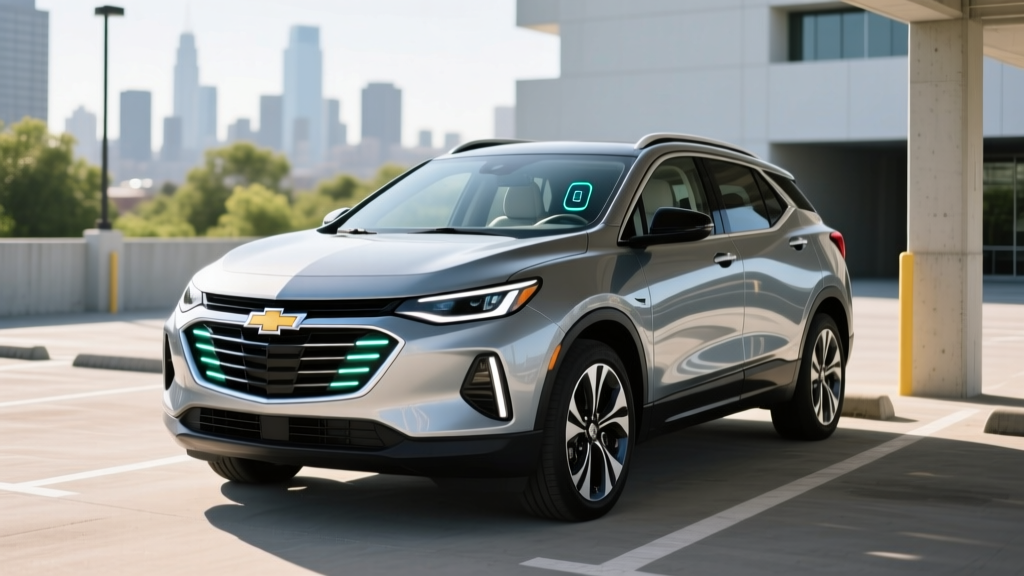
Search forums or dealer inventories long enough and you'll find the phrase everywhere: Equinox EV $10,000 discount. It sounds too good to be true on a compact electric crossover that starts under $35,000 — and the reality is more nuanced than a single headline number. Some buyers are stacking federal tax credits, state rebates, and aggressive dealer discounts to approach that figure; others are finding the math doesn't work in their state or income bracket. This review dissects exactly what the 2026 Chevrolet Equinox EV costs after every available incentive, what you actually get for the money, and whether this is the value champion of the compact EV segment or just clever marketing arithmetic.
Where the "$10,000 Discount" Claim Comes From
The viral "$10,000 off" figure isn't a single coupon — it's a composite of several savings layers that can stack under the right conditions:
- Federal §30D tax credit: Up to $7,500, now transferable at the point of sale as an instant rebate under current IRS rules
- State and utility rebates: California's CVRP, Colorado's state credit, or utility-company incentives that range from $1,000 to $4,000 depending on jurisdiction
- Dealer markdowns: As Equinox EV inventory built through late 2025 and into 2026, some dealers have discounted $1,500–$3,000 off MSRP to move stock
- Cheap electricity vs. gas: Five-year fuel savings of $4,000–$6,000, sometimes folded into "total savings" marketing
Stack a $7,500 federal credit, a $2,000 state rebate, and a $1,500 dealer discount and you're looking at $11,000 off. But each layer has eligibility gates that eliminate a significant portion of buyers. Let's look at the vehicle itself before we audit the math.
2026 Equinox EV: Specs, Range, and Efficiency at a Glance
| Spec | LT (FWD) | RS / Launch (AWD) |
|---|---|---|
| EPA Range | 319 mi | 285 mi |
| Usable Battery | 85 kWh (Ultium, NMC) | |
| Horsepower | 213 hp | 288 hp |
| 0–60 mph | ~8.0 sec | ~6.3 sec |
| Max DC Fast Charge | 150 kW peak | |
| 10–80% DC Time | ~30 min | |
| Level 2 (240V / 48A) | 11.5 kW (~34 mi/hr) | |
| MPGe (combined) | 114 MPGe | 103 MPGe |
| Cargo Volume | 26.4 cu ft (rear seats up) / 57.2 cu ft (folded) | |
| Rear Legroom | 38.0 in | |
| Base MSRP | $33,600 | $43,900 |
| Battery / Powertrain Warranty | 8 yr / 100,000 mi | |
Charging Speed: Adequate, Not Class-Leading
The Equinox EV's 150 kW peak DC fast-charge rate is the most common criticism leveled against it — and fairly so. Rivals like the Hyundai Ioniq 5 and Kia EV6 accept 235–240 kW on 800-volt architectures, enabling 10–80% charges in roughly 18 minutes. The Equinox EV needs about 30 minutes for the same window, with a pronounced taper above 80% SoC that extends a 10–90% session past 50 minutes.
| Charging Level | Power | Miles Added per Hour | Typical Use Case |
|---|---|---|---|
| Level 1 (120V) | 1.4 kW | ~4 mi/hr | Emergency / overnight trickle |
| Level 2 (240V, 48A) | 11.5 kW | ~34 mi/hr | Home / workplace daily charging |
| DC Fast Charge | 150 kW peak | ~170 mi in 30 min | Road trips, 10–80% in ~30 min |
Home charging is the real success story: 11.5 kW on a 48-amp Level 2 circuit replenishes the full 85 kWh pack in roughly 8 hours, meaning any overnight session tops you up completely. If your daily commute is under 60 miles round-trip, you'll rarely visit a public charger. For installation budgeting, expect $800–$2,200 for a quality hardwired Level 2 unit plus electrician labor, assuming your panel has capacity — a 200-amp service upgrade can add $1,500–$3,500.
How the $10,000 Savings Stack Actually Works
Let's audit a realistic purchase scenario for the most popular configuration: the 2026 Equinox EV LT FWD at $33,600 MSRP.
| Line Item | Amount | Eligibility Notes |
|---|---|---|
| Base MSRP | $33,600 | — |
| Federal §30D Credit (point-of-sale) | –$7,500 | Income ≤ $150K single / $300K joint; MSRP under $55K cap; battery sourcing compliant |
| State Rebate (example: Colorado) | –$2,500 | Varies by state; some have income caps |
| Dealer Discount (negotiated) | –$1,500 | Market-dependent; more likely on in-stock units |
| Effective Price | $22,100 | Before destination, taxes, registration |
That's a $11,500 reduction — exceeding the headline number. But here's the catch: the federal credit requires modified adjusted gross income under the IRS caps (IRS §30D rules), the battery must meet critical-mineral and component-sourcing thresholds that shift annually, and the Equinox EV's eligibility has been confirmed for 2026 but should be verified on fueleconomy.gov at the time of purchase. State rebates are highly jurisdictional — buyers in states without EV incentives will see the stack shrink to $9,000 or less.
For the higher-trim RS AWD at $43,900 MSRP, the math still works under the $55,000 SUV cap for §30D, but dealer discounts tend to be smaller on loaded trims, and state rebates sometimes phase out above $45,000. Expect effective savings of $7,500–$9,500 on the RS.
Driving, Tech, and Livability
The Equinox EV rides on GM's BEV3 platform with a relatively low center of gravity, and the FWD LT's 213 hp is adequate for merging and city driving if not thrilling. The AWD RS's 288 hp and 6.3-second 0–60 time are genuinely quick for the segment, though the ride quality favors comfort over sportiness — soft damping absorbs potholes but allows noticeable body roll in corners.
Inside, the 17.7-inch diagonal infotainment screen dominates the dash and runs Google Built-in with native Google Maps, Assistant, and Play Store apps. Wireless Apple CarPlay and Android Auto are standard. The driver-facing 11-inch digital cluster is clear but less configurable than some rivals. Super Cruise — GM's hands-off, eyes-on SAE Level 2 driver-assist — is available on higher trims and is one of the best highway companions on the market, but it remains a supervised system requiring driver attention, not autonomous driving.
Cargo space (26.4 cu ft behind the rear seats) trails the Hyundai Ioniq 5 (27.2 cu ft) slightly but beats the Nissan Ariya (22.8 cu ft). Rear legroom at 38.0 inches is generous for adults. One notable omission: there is no front trunk (frunk), which costs you 1–2 cu ft of secure storage that several competitors offer.
How It Stacks Up Against Competitors
The Equinox EV's closest rivals are the Hyundai Ioniq 5, Kia EV6, Nissan Ariya, and Ford Mustang Mach-E. Here's how the value proposition compares:
- vs. Ioniq 5 / EV6: The Koreans charge faster (235 kW, 10–80% in ~18 min) and offer V2L capability, but their base MSRPs start $8,000–$10,000 higher. After credits, the Equinox EV undercuts them significantly.
- vs. Nissan Ariya: Similar price bracket, but the Ariya offers less range (304 mi max) and slower DC charging (130 kW). Equinox wins on efficiency.
- vs. Mustang Mach-E: The Mach-E is sportier to drive and has a larger charging network advantage via Ford's early NACS adoption, but its base price is substantially higher.
Pros
- Best-in-class effective price after tax credits
- 319-mile EPA range is outstanding for the price
- Spacious rear seat and solid cargo volume
- Large, responsive 17.7-inch infotainment display
- Available Super Cruise (Level 2) highway assist
- 8-year / 100,000-mile battery warranty
Cons
- 150 kW peak DC charging lags 800V rivals
- No front trunk (frunk)
- Base trims lack heat pump, hurting cold-weather range
- FWD LT acceleration is merely adequate (8.0 sec 0–60)
- Build-quality inconsistency on early-production units
- CCS1 connector; NACS adapter required for Superchargers
Who Should Buy the Equinox EV — And Who Shouldn't
The Equinox EV is the right pick if you're a budget-conscious commuter or small family prioritizing low effective cost, long EPA range, and daily-drivable comfort. It excels as a home-charged daily driver where DC fast-charge speed is irrelevant. If you live in a state with strong rebates and meet the federal income caps, the effective price is genuinely hard to beat.
Look elsewhere if you take frequent road trips (the 150 kW charging curve adds real time on multi-state drives), need a frunk for gear, or live in consistently cold climates where the lack of a standard heat pump will cost you 20%+ range in winter. In those cases, the Ioniq 5 or a heat-pump-equipped rival is worth the premium.
Frequently Asked Questions
Does the 2026 Equinox EV qualify for the full $7,500 federal tax credit?
Yes, as of current 2026 IRS guidance, the Equinox EV qualifies for the full $7,500 §30D credit when purchased new, provided the buyer meets income caps ($150,000 single / $300,000 joint MAGI), the vehicle MSRP stays under the $55,000 SUV threshold, and the battery meets critical-mineral and component-sourcing requirements. The credit can be transferred at the point of sale as an instant price reduction. Verify eligibility at purchase on IRS.gov and fueleconomy.gov, as sourcing rules can shift mid-year.
What is the real-world highway range of the Equinox EV?
The FWD LT's 319-mile EPA figure translates to roughly 260–280 miles at sustained 75-mph highway speeds in 60–80°F weather. Cold weather (below 30°F) drops that to approximately 220–240 miles due to battery resistance and cabin heating load. The AWD RS delivers around 235–250 miles highway in mild conditions.
Is the Equinox EV a good road-trip car?
It's acceptable but not excellent. The 319-mile range means fewer stops than most rivals, but the 150 kW peak DC charging rate (with taper above 80%) means each stop takes ~30 minutes for a 10–80% session — about 12 minutes longer than an Ioniq 5. For 1–2 road trips per year, it's fine; for weekly long-distance driving, consider a faster-charging alternative.
Can I charge the Equinox EV at Tesla Superchargers?
The Equinox EV uses a CCS1 connector natively. Chevrolet offers a GM-approved NACS adapter that enables access to Tesla's Supercharger network (V3 and V4 stalls with CCS support). Confirm adapter availability and any bundled inclusion with your dealer at purchase.
How long will the Equinox EV battery last?
GM warranties the Ultium battery for 8 years or 100,000 miles against defects and excessive capacity loss (typically below 60–70% State of Health, per warranty terms). Real-world NMC degradation data from GM's Bolt EV fleet suggests 8–12% capacity loss over 100,000 miles under normal use. Replacement cost for an 85 kWh pack, should it be needed out of warranty, is currently estimated at $12,000–$18,000 including labor, though prices are expected to decline through 2030.
Is the "$10,000 discount" actually achievable?
For qualified buyers in incentive-rich states who negotiate a dealer discount, yes — $10,000–$12,000 in combined savings is realistic on the LT FWD. Buyers without state rebates, or those above the federal income cap, should expect $7,500–$9,000 in total savings. Always confirm credit eligibility at the point of sale with your dealer's F&I department.