The Quick Verdict
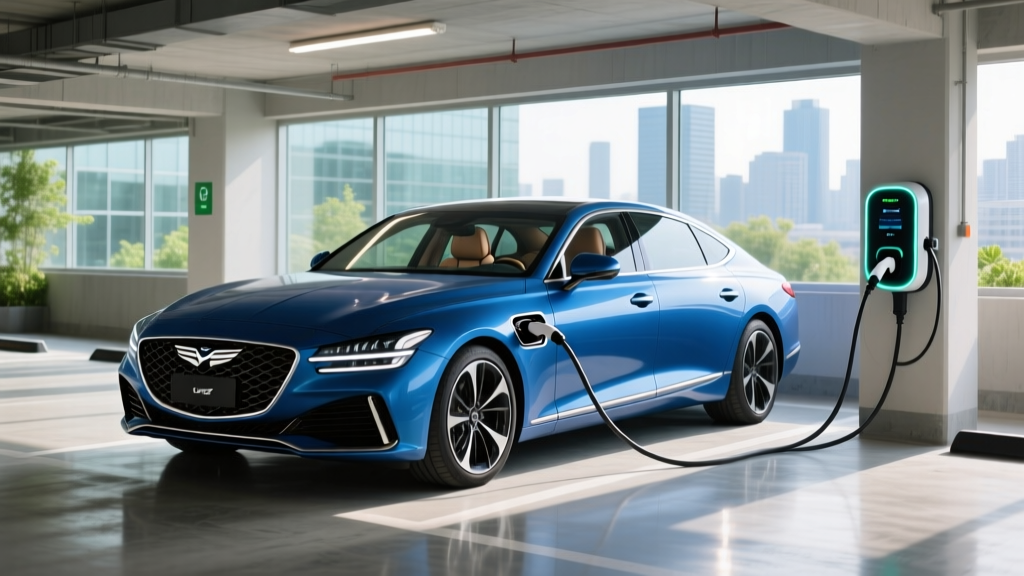
The Genesis G80 Electrified is a luxury EV sedan that pairs a 282-mile EPA range with an 87.2 kWh battery, 365 hp dual-motor AWD, and peak 350 kW DC fast charging (10–80% in roughly 22 minutes). Starting at $79,845 for the Advanced trim, it undercuts the Mercedes EQE and BMW i5 on price while offering a more traditional luxury sedan feel. Real-world highway range lands closer to 235–250 miles, and cold-weather driving can reduce that further by 15–25%. It qualifies for the $7,500 federal tax credit under current §30D rules, but only if you meet income caps and the vehicle's battery-sourcing requirements hold for your model year. It's best for luxury buyers who want a quiet, composed EV sedan and have access to home Level 2 charging.
Genesis G80 Electrified: Core Specs at a Glance
| Spec | Value |
|---|---|
| EPA Range | 282 miles |
| Battery Capacity | 87.2 kWh (usable), NMC chemistry |
| Drivetrain | Dual-motor AWD, 365 hp / 516 lb-ft torque |
| 0–60 mph | 4.9 seconds |
| DC Fast Charge (peak) | Up to 350 kW (10–80% ~22 min on 350 kW station) |
| Level 2 Charge Rate | 10.9 kW (full charge ~9 hours) |
| EPA Efficiency | 94 MPGe combined (35 kWh/100 mi) |
| Starting MSRP | $79,845 (Advanced) / $88,295 (Prestige) |
| Federal Tax Credit (§30D) | Up to $7,500 (subject to income + sourcing rules) |
| Battery Warranty | 10 years / 100,000 miles |
| Vehicle Warranty | 5 years / 60,000 miles |
Real-World Range Expectations
EPA Sticker: 282 miles
Highway driving (70–75 mph, moderate temps): Expect 235–250 miles. The G80 Electrified's aerodynamic drag and 4,700+ lb curb weight take a toll at sustained highway speeds.
Cold weather (below 32°F): Plan for 195–225 miles depending on cabin heat use and whether you precondition. The heat pump helps, but NMC batteries lose efficiency in deep cold.
Mixed city/suburban: 260–275 miles is realistic thanks to regenerative braking recapturing energy in stop-and-go traffic.
Charging: What You Need to Know Before You Buy
The G80 Electrified uses a CCS1 connector for DC fast charging and a J1772 inlet for Level 2. Genesis equips it with an 800V electrical architecture, which means it can accept up to 350 kW at compatible Electrify America or Ionity stations. Here's the reality of what that translates to:
| Charging Level | Power | Miles Added per Hour | Typical Use Case |
|---|---|---|---|
| Level 1 (120V household) | ~1.4 kW | ~4 mi/hr | Emergency top-off only |
| Level 2 (240V home/public) | 10.9 kW | ~31 mi/hr | Overnight home charging, workplace |
| DC Fast (50 kW station) | 50 kW | ~140 mi/hr | Older public chargers |
| DC Fast (150 kW station) | 150 kW | ~300+ mi/hr | Common highway chargers |
| DC Fast (350 kW station) | Up to 350 kW peak | ~450+ mi/hr (peak) | Fastest available public chargers |
Charging curve reality: The 350 kW peak only sustains from roughly 10% to 40% State of Charge (SoC). After that, the rate tapers — dropping to ~150 kW by 60% and ~80 kW above 80%. A 10–80% session on a 350 kW charger takes about 22 minutes, but on a 150 kW unit, expect 32–38 minutes. Always precondition the battery via the infotainment system before arriving at a DC fast charger; cold batteries charge dramatically slower.
Home charging cost: A Level 2 home charger installation (40-amp circuit, 240V) typically costs $800–$2,000 including equipment and electrician labor. If your panel needs a 200-amp upgrade, add $1,500–$3,000. At the U.S. average electricity rate of $0.16/kWh, a full 87.2 kWh charge costs roughly $13.95 — yielding 282 EPA miles for about $0.05 per mile.
Genesis G80 Electrified vs. Gas G80: The Cost Breakdown
The gas-powered Genesis G80 2.5T AWD starts around $58,000 and returns an EPA 25 MPG combined. Here's how five years of ownership stacks up at 15,000 miles per year (75,000 miles total), assuming $0.16/kWh home electricity and $3.60/gallon premium fuel:
| Cost Factor | G80 Electrified (EV) | G80 2.5T AWD (Gas) |
|---|---|---|
| Base MSRP | $79,845 | $58,000 |
| Federal Tax Credit (§30D) | –$7,500 (if eligible) | $0 |
| Effective Purchase Price | $72,345 | $58,000 |
| Fuel/Energy (75,000 mi) | $3,750 (home charging) | $10,800 (premium gas) |
| Maintenance (5 yr est.) | ~$1,200 | ~$3,800 |
| Insurance (5 yr est.) | ~$12,500 | ~$10,500 |
| 5-Year Total (excl. depreciation) | ~$89,795 | ~$83,100 |
Key takeaways:
- The EV saves roughly $7,050 in fuel over five years and $2,600 in maintenance (no oil changes, fewer brake replacements due to regenerative braking).
- Insurance runs ~$2,000 higher over five years for the Electrified — EV premiums are typically 15–20% higher due to repair cost structures.
- Even with the $7,500 tax credit, the EV costs roughly $6,700 more over five years before factoring in depreciation. The G80 Electrified's depreciation curve is steeper than the gas G80's, though luxury EV resale values are stabilizing.
- Break-even on fuel savings alone takes roughly 10–11 years at these rates. The financial case works best if you have cheap solar electricity, drive more than 15,000 miles/year, or live in a state with additional EV rebates.
For the most current federal credit eligibility, consult the IRS qualified vehicles list, which updates periodically based on battery sourcing compliance.
Who Should Buy the G80 Electrified — and Who Shouldn't
Decision Framework
Choose the G80 Electrified if:
- You have access to Level 2 home charging (garage or dedicated parking spot with 240V).
- Your daily commute is under 120 miles round-trip, and road trips are occasional (2–3 per year).
- You value a whisper-quiet ride, composed handling, and Genesis's 10-year powertrain warranty.
- You want a luxury EV sedan under $90K that doesn't look like a tech pod — the G80 Electrified is visually nearly identical to the gas model.
- You qualify for the §30D credit based on your AGI (≤$150K single / ≤$300K joint) and the vehicle meets battery-sourcing requirements.
Look elsewhere if:
- You rely exclusively on public charging — public infrastructure reliability remains inconsistent, and the G80 Electrified's CCS connector means no Tesla Supercharger access without an adapter (and adapter support varies).
- You frequently drive 300+ mile stretches in cold climates. The real-world winter range of ~200 miles means mandatory charging stops on longer routes.
- You need maximum rear-seat or cargo space — the battery placement slightly reduces trunk volume (10.6 cu ft vs. 13.1 cu ft in the gas G80).
- You prioritize cutting-edge EV tech platforms. The Lucid Air or BMW i5 offer more advanced energy management and, in some cases, longer range at comparable pricing.
Common Misconceptions About the G80 Electrified
| Myth | Fact |
|---|---|
| "It gets 282 miles no matter how I drive." | EPA estimates assume mixed driving at moderate temps. Sustained 75-mph highway driving yields ~235–250 miles. Sub-zero temps can drop range to ~200 miles. Source: fueleconomy.gov EV range guide. |
| "I can charge at any Tesla Supercharger." | The G80 Electrified uses CCS1. Tesla's NACS Supercharger network has begun opening to non-Tesla EVs via built-in adapters or Magic Dock, but availability is limited to specific stations. Plan routes around Electrify America, EVgo, or ChargePoint DC fast chargers. |
| "The battery will need replacing in 5 years." | NMC batteries in modern EVs with active thermal management typically degrade 8–12% over 100,000 miles. Genesis warranties the battery for 10 years/100,000 miles against dropping below 70% capacity. Replacement, if ever needed out of warranty, runs $15,000–$22,000. |
| "I'll save thousands every year vs. gas." | Fuel savings are real (~$1,400/year at 15K miles) but are partially offset by higher insurance premiums (~$400/year more) and potentially higher registration fees in some states. Net annual savings: roughly $800–$1,000 for most owners. |
| "Level 1 (wall outlet) charging is fine for daily use." | Level 1 adds ~4 miles per hour — about 48 miles overnight. If your daily driving exceeds 40 miles, Level 1 won't keep up. Budget $800–$2,000 for a proper Level 2 installation. |
Ownership Practicalities: What First-Time EV Buyers Must Plan For
Home charging is non-negotiable for luxury EV ownership. Relying solely on public charging transforms a serene luxury sedan experience into a logistical chore. Before purchasing, confirm:
- Electrical panel capacity: A Level 2 charger requires a 40- or 50-amp dedicated circuit. Most modern homes with 200-amp panels can accommodate this. Older homes with 100-amp service may need a panel upgrade ($1,500–$3,000).
- Parking proximity: The charger should be within 15–18 feet of where the car parks (cable length). Condo/HOA residents should check DOE home charging guidelines and local right-to-charge laws.
- Utility rates and time-of-use plans: Charging during off-peak hours (typically 10 PM–6 AM) can cut electricity costs to $0.08–$0.10/kWh, reducing a full charge to ~$7–$9.
Maintenance differences: The G80 Electrified eliminates oil changes, spark plugs, transmission fluid, and most brake wear (regen braking handles ~80% of deceleration). Expect to replace cabin air filters ($50–$80), wiper blades, and tires (EV-specific tires wear 15–20% faster due to instant torque and vehicle weight). Budget ~$200–$300/year for maintenance.
Tire note: The G80 Electrified ships with Pirelli P Zero EV-specific tires. Replacement runs $280–$350 per tire. Factor in a full set (~$1,200–$1,400) at roughly 30,000–40,000 miles.
Tax Credit Eligibility: The Fine Print
§30D Federal EV Tax Credit Requirements (Current Year)
- Buyer income cap: Adjusted gross income ≤$150,000 (single) / ≤$225,000 (head of household) / ≤$300,000 (married filing jointly).
- Vehicle MSRP cap: Sedans must be ≤$55,000; SUVs/pickups/vans ≤$80,000. The G80 Electrified is classified as a sedan — and its MSRP exceeds $55,000, which may disqualify it depending on IRS classification for the current model year. Verify on the IRS qualified vehicle list.
- Battery sourcing: A percentage of critical minerals and battery components must be sourced from the U.S. or free-trade-agreement countries. These thresholds increase annually.
- Point-of-sale transfer: You can elect to transfer the credit to the dealer at purchase, reducing the sale price directly rather than waiting for a tax refund.
- Assembly: Vehicle must undergo final assembly in North America. The G80 Electrified is assembled in South Korea, which may disqualify it from the new-vehicle §30D credit. Confirm current status with your dealer and a tax professional.
Critical note: Because the G80 Electrified is assembled in Ulsan, South Korea, it likely does not qualify for the new-vehicle §30D credit under current final-assembly rules. However, it may qualify as a used EV under the §25E credit (up to $4,000 or 30% of sale price, whichever is less) if purchased from a dealer with a sale price under $25,000 — though that threshold is unlikely for this model in the near term. Consult a tax professional before making purchase decisions based on credit eligibility.
Frequently Asked Questions
Is the Genesis G80 Electrified a good EV for road trips?
It's adequate but not class-leading. With a real-world highway range of 235–250 miles and 22-minute DC fast-charge stops (on 350 kW chargers), you'll stop every 3–3.5 hours on long drives. The Electrify America network covers major interstate corridors, but charger reliability remains a variable. Plan routes using A Better Routeplanner or the Genesis Connected Services app. For frequent 400+ mile road-trippers, the Lucid Air (400+ mi EPA) or a PHEV may be a better fit.
How does the G80 Electrified compare to the BMW i5 and Mercedes EQE?
The G80 Electrified ($79,845) sits between the BMW i5 eDrive40 ($67,795, 295-mi range) and the Mercedes EQE 350+ ($75,050, 305-mi range) in price. The BMW and Mercedes both offer longer EPA range, but the Genesis counters with a longer battery warranty (10 yr vs. 8 yr), more standard features, and a more conventional luxury sedan interior. The i5 and EQE are built on dedicated EV platforms, which gives them packaging advantages (more interior volume, better efficiency). The G80 Electrified shares its platform with the gas G80, which means some compromises in trunk space and weight distribution.
What happens if the battery degrades?
Genesis warranties the high-voltage battery for 10 years or 100,000 miles, covering capacity loss below 70%. Based on industry data from similar NMC packs with active liquid thermal management, expect roughly 8–12% degradation at 100,000 miles — meaning you'd retain roughly 245–255 miles of the original 282 EPA range. If the battery falls below 70% within warranty, Genesis will repair or replace modules as needed at no cost.
Can I charge the G80 Electrified at Tesla Superchargers?
Not natively. The G80 Electrified uses a CCS1 connector. Tesla has begun opening select Superchargers to non-Tesla EVs through the Magic Dock (a built-in CCS adapter at the stall) or through Tesla's NACS adapter program, but this is station-specific and still rolling out. For reliable DC fast charging, rely on Electrify America, EVgo, and ChargePoint networks, which the G80 Electrified supports natively.
What does it cost to insure the G80 Electrified?
Expect annual premiums of $2,200–$3,200 depending on your state, driving record, and coverage level. That's roughly 15–20% higher than the gas G80 2.5T. EV insurance costs more because of higher repair costs (specialized parts, battery safety protocols) and higher vehicle values. Shop quotes from GEICO, Progressive, State Farm, and EV-specialty insurers like Lemonade or Root before purchasing.