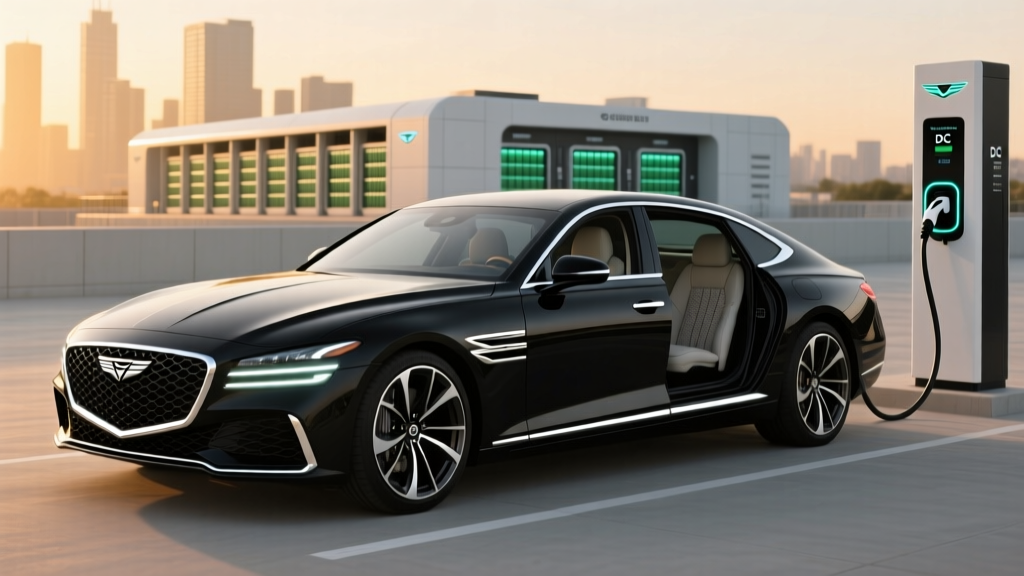
The Genesis Electrified G80 occupies a rare niche: a midsize luxury electric sedan that prioritizes serene isolation and build quality over 0-60 bragging rights. Built on the same platform as the gasoline G80 rather than a dedicated EV architecture, it carries compromises in packaging and efficiency — but delivers a ride-and-refinement experience that rivals the Mercedes EQE and BMW i5 at a slightly lower entry price. For 2026, Genesis continues the model with minor trim and technology updates. Here's every number that matters before you sign a lease or purchase agreement.
Quick Verdict: Who the Electrified G80 Is For
The Electrified G80 is best suited for luxury-sedan loyalists who want a whisper-quiet daily driver with premium materials, strong highway comfort, and acceptable (not class-leading) range. It's a strong commuter and executive car. It is not the right pick if you prioritize maximum range, the fastest DC charging, or cutting-edge EV-native packaging. Buyers cross-shopping the Mercedes EQE, BMW i5, and Tesla Model S will find the G80 trades some efficiency for tangible interior quality and Genesis's generous warranty.
Range, Efficiency, and Real-World Expectations
The EPA rates the 2026 Electrified G80 at 282 miles of combined range on a full charge, with a combined efficiency of 91 MPGe (approximately 36 kWh per 100 miles). Those numbers trail the EQE 350+ (308 mi EPA) and the BMW i5 eDrive40 (295 mi EPA), reflecting the sedan's converted-platform weight and less aerodynamically optimized underbody.
EPA Sticker: 282 miles combined.
Highway (70-75 mph, mild weather): Expect 240–260 miles. The G80's tall sedan profile and ~5,000-lb curb weight hurt efficiency at sustained speeds.
City / suburban mixed driving: Closer to the EPA figure, often 270–285 miles thanks to regenerative braking.
Cold weather (below 32°F): Plan on a 20–30% reduction — roughly 195–225 miles — even with the standard heat pump. Preconditioning while plugged in helps significantly.
Source: fueleconomy.gov
If your daily round-trip commute is under 80 miles and you have reliable home charging, the 282-mile rating is more than adequate. Road-trippers covering 300+ miles between charging stops will need to plan strategically.
Battery Chemistry, Capacity, and Warranty
The Electrified G80 uses an 87.2 kWh lithium-ion battery pack (usable capacity approximately 84 kWh) with NMC (nickel-manganese-cobalt) chemistry. NMC cells offer higher energy density than LFP, which matters here because the sedan's architecture leaves limited space for cells. The trade-off is that NMC batteries benefit from avoiding prolonged 100% storage — daily charging to 80% is recommended for longevity, with 100% reserved for long trips.
| Spec | Value |
|---|---|
| EPA Range | 282 miles (combined) |
| Battery (usable) | 87.2 kWh, NMC chemistry |
| Efficiency | 91 MPGe / 36 kWh/100 mi |
| Drivetrain | Dual-motor AWD |
| Horsepower | 365 hp / 516 lb-ft torque |
| 0–60 mph | 4.9 seconds |
| Max DC Fast Charge | ~175 kW (peak) |
| 10–80% DC Charge | ~22 minutes (ideal conditions) |
| Level 2 Home Charge Rate | 10.9 kW (AC) |
| Base MSRP (Advanced) | $80,300 |
| Battery Warranty | 10 yr / 100,000 mi |
Genesis backs the battery and electric powertrain for 10 years or 100,000 miles, with a capacity-retention threshold of 70%. The limited vehicle warranty is 5 years/60,000 miles. This is one of the strongest luxury-EV warranties on the market and a meaningful differentiator versus the 4-year/50,000-mile coverage from Mercedes and BMW.
Charging Speeds: DC Fast, Level 2, and Level 1
The Electrified G80's 400-volt architecture (versus the 800V systems in the Ioniq 5 and Porsche Taycan) limits peak DC charging to roughly 175 kW. That's acceptable but not class-leading — the EQE and i5 both peak around 200–205 kW, and Hyundai/Kia E-GMP vehicles hit 240+ kW.
| Level | Power | Charge Time | Miles Added/Hour |
|---|---|---|---|
| Level 1 (120V household) | ~1.4 kW | 60+ hours (0–100%) | ~4 mi/hr |
| Level 2 (240V, 48A) | 10.9 kW | ~8.5 hours (0–100%) | ~30 mi/hr |
| DC Fast Charge | Peak ~175 kW | 10–80% in ~22 min | Up to ~210 mi in 30 min |
Charging-curve reality: The 175 kW peak is only sustained between roughly 10% and 40% state of charge. Above 60%, the rate tapers to ~90 kW, and above 80% it drops sharply to protect the NMC cells. A 10–90% charge will take closer to 40 minutes. On a 300-mile road trip, plan one 20-minute stop to reach 80% rather than waiting for a full fill.
At home on a 10.9 kW Level 2 charger (48-amp circuit, 60-amp breaker), you'll recover roughly 30 miles of range per hour, easily replenishing a day's driving overnight. Most Electrified G80 owners will rarely need public charging.
Performance, Ride, and Drivetrain
Two electric motors (one per axle) deliver standard all-wheel drive with 365 horsepower and 516 lb-ft of torque. The 0–60 mph time of 4.9 seconds is brisk but not exotic — the Tesla Model S Long Range demolishes it at 3.1 seconds, and the BMW i5 M60 does it in 3.7. Genesis has clearly tuned the G80 for composure rather than aggression.
Where the Electrified G80 earns its luxury badge is ride quality. The multi-link suspension with electronically controlled dampers soaks up highway expansion joints with a hushed, heavy-car authority that the sportier i5 can't quite match. Cabin noise isolation is exceptional, aided by active noise cancellation and laminated glass. The steering is light and numb — a drawback for enthusiasts but fine for its intended executive-transport role.
Interior, Cargo, and Technology
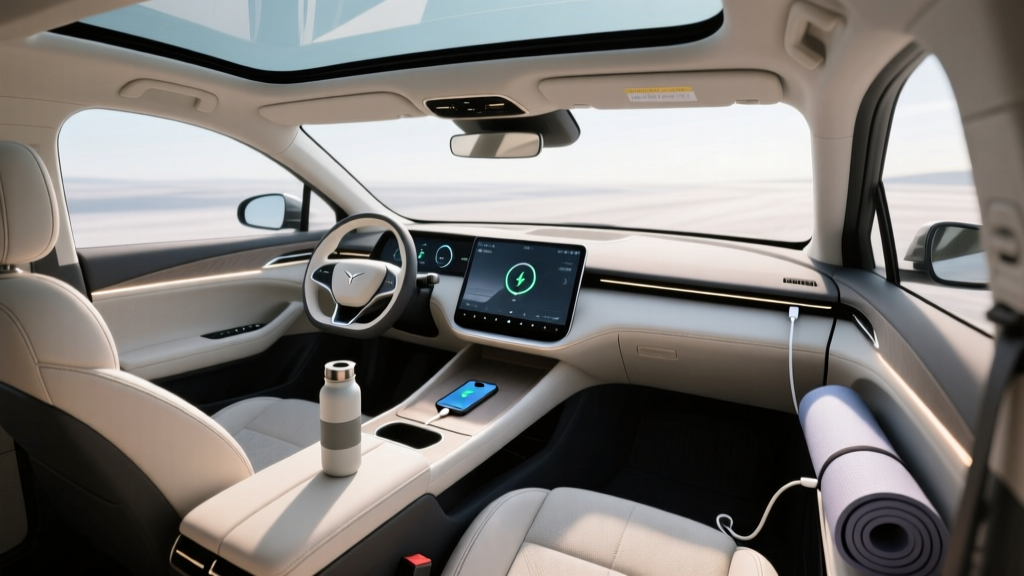
Genesis's interior execution is a highlight. Nappa leather, real wood and aluminum trim, a 12.3-inch digital cluster, and a 14.5-inch widescreen infotainment display are standard. The available Ergo motion driver's seat with massage is worth the upgrade. Rear-seat legroom is generous at 38.7 inches, though the transmission-tunnel hump inherited from the gas G80's platform compromises the middle seat — something EV-native rivals avoid.
Cargo volume: 13.1 cubic feet in the trunk. There is no front trunk (frunk), another converted-platform penalty. The EQE offers 15 cu ft and the Model S 26 cu ft of combined cargo, so if you routinely haul bulky items, the G80 is less practical.
Driver assistance: Highway Driving Assist II (SAE Level 2) includes adaptive cruise with lane-centering, automatic lane changes when the turn signal is tapped, and navigation-based speed adjustment. It is a competent hands-on system, but it is not a hands-free Level 3 or Level 4 system like GM's Super Cruise or Ford's BlueCruise. The driver must remain engaged at all times.
Pricing, Trims, and Federal Tax Credit Eligibility
The 2026 Electrified G80 is offered in a single well-equipped Advanced trim starting at an MSRP of approximately $80,300 (including destination). The available Prestige package adds roughly $6,000 for Nappa leather upgrades, rear-seat entertainment, and premium audio, pushing as-tested prices toward $87,000.
| MSRP Cap (sedans) | $55,000 — Electrified G80 does NOT qualify |
| Buyer Income Cap (MFJ) | $300,000 AGI |
| Buyer Income Cap (single) | $150,000 AGI |
| Battery Mineral Sourcing | Must meet escalating annual thresholds |
| Point-of-Sale Transfer | Available for qualifying vehicles |
Because the Electrified G80's MSRP far exceeds the $55,000 sedan cap, it does not qualify for the $7,500 federal §30D new-vehicle credit. Some state-level incentives (California, Colorado, Massachusetts, and others) may still apply — check your state's energy office and consult a tax professional. Source: IRS.gov §30D.
This is the single biggest financial drawback. Competitors priced below $55,000 (Tesla Model 3 Long Range, Hyundai Ioniq 6, select Chevy Equinox EV trims) can capture the full credit, widening the effective price gap significantly.
Pros and Cons at a Glance
- Exceptional ride comfort and cabin quietness
- Standard AWD and 365 hp across all trims
- 10-year/100,000-mile battery warranty
- Premium interior materials rivaling S-Class-level sedans
- Generous rear-seat legroom
- No federal tax credit (MSRP above $55K sedan cap)
- Converted platform: no frunk, rear floor hump, less cargo
- 282-mile EPA range trails EQE, i5, and Model S
- 400V architecture limits DC charging to ~175 kW peak
- Heavy (~5,000 lbs) — impacts efficiency and tire wear
Competition: Is It Worth Buying vs Rivals?
Three rivals define the cross-shop:
- Mercedes-Benz EQE 350+: 308-mile EPA range, EV-native platform, more cargo, similar luxury. Slightly pricier but more efficient.
- BMW i5 eDrive40: 295-mile EPA range, sharper driving dynamics, hands-free highway option (Level 2). RWD only on base.
- Tesla Model S Long Range: 402-mile EPA range, Supercharger network, dominant performance. Interior quality and service consistency remain weaker than Genesis.
The Electrified G80 wins on perceived interior quality per dollar and warranty coverage. It loses on range, charging speed, and EV-native packaging. If refinement and long-term warranty peace of mind matter more than maximizing range, the G80 is a strong pick. If you road-trip often or want the latest EV tech, the i5 or EQE is the better fit.
Frequently Asked Questions
What is the real-world range of the Genesis Electrified G80?
EPA-rated at 282 miles combined. Expect 240–260 miles on the highway at 70+ mph in mild weather, 270–285 miles in city driving, and 195–225 miles in sustained sub-freezing temperatures. Preconditioning the battery while plugged in recovers some cold-weather loss.
How fast does the Electrified G80 charge at home and on the road?
On DC fast chargers it peaks around 175 kW, with a 10–80% charge in about 22 minutes under ideal conditions (tapering significantly above 80%). On a 10.9 kW home Level 2 charger, it adds roughly 30 miles of range per hour, fully recharging overnight in about 8.5 hours.
Does the Electrified G80 qualify for the federal EV tax credit?
No. The §30D new-vehicle credit caps sedan MSRPs at $55,000. The Electrified G80 starts above $80,000, making it ineligible regardless of buyer income or battery sourcing. State incentives may still apply — verify with your state energy office and a tax professional.
How much does it cost after incentives?
Without the federal credit, expect to pay the full $80,300 base MSRP (plus destination and options), though state rebates, utility charger incentives, and negotiated dealer discounts can reduce the effective cost. A fully loaded Prestige model approaches $87,000 before any incentives.
Is the Electrified G80 worth buying over the EQE or i5?
It is worth serious consideration if you value ride comfort, interior materials, and Genesis's 10-year warranty above maximum range and charging speed. Buyers who road-trip frequently or want the latest EV-native architecture will be better served by the EQE or i5.
What's the biggest drawback of the Electrified G80?
Its converted gasoline-car platform. That means no front trunk, a rear-floor hump, less cargo space, and a heavier, less aerodynamically efficient package than EV-native rivals. Combined with the loss of the federal tax credit, it's the most expensive way to get 282 miles of range in the luxury segment.
What driver-assist features does it include?
Highway Driving Assist II (SAE Level 2) is standard, combining adaptive cruise control with lane-centering and automatic lane changes. It requires the driver to remain engaged — it is not a self-driving or hands-off system.
Sources consulted: EPA fueleconomy.gov, Genesis USA, IRS §30D, IIHS.