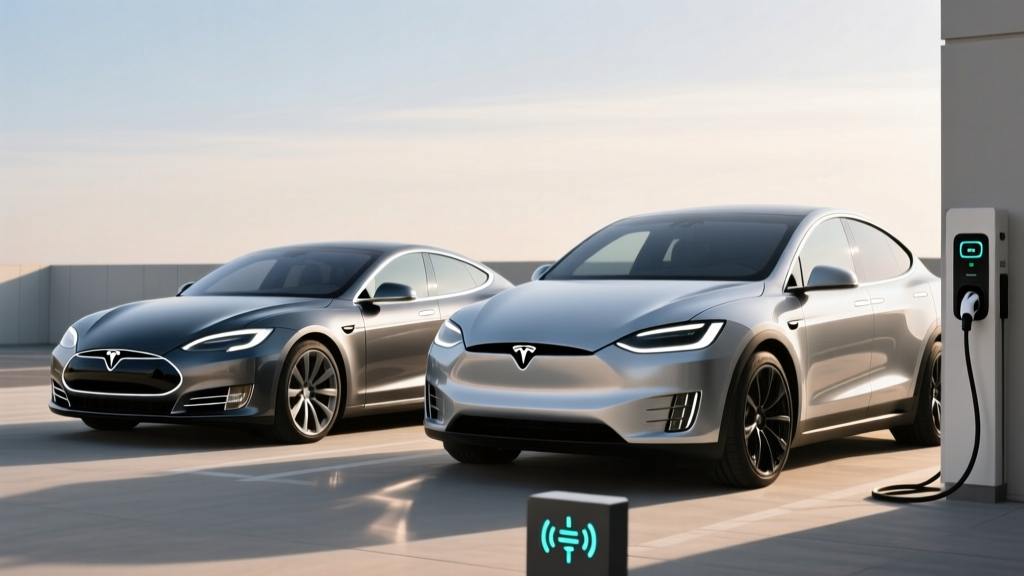
Tesla's flagship sedan and SUV have been on sale for years, but the 2026 Model S and Model X remain the benchmark for long-range electric performance. Both ride on the same platform, share battery architecture, and tap into Tesla's Supercharger network — yet they serve distinctly different buyers. Below, we break down every spec that matters: real-world range, charging curves, interior space, pricing, and whether either qualifies for the federal EV tax credit under current IRS §30D rules.
Quick Verdict: Model S vs Model X at a Glance
Choose the Model S if…
You prioritize maximum range (up to 402 mi EPA), lower pricing, and sedan handling. The Long Range AWD is the efficiency king of Tesla's lineup and the better road-trip machine when cargo demands are modest.
Choose the Model X if…
You need three-row seating for up to seven, falcon-wing rear doors for tight parking access, and up to 5,000 lb towing. You'll sacrifice ~40 miles of EPA range and pay a ~$15,000 premium over the sedan.
| Spec | Model S Long Range | Model S Plaid | Model X Long Range | Model X Plaid |
|---|---|---|---|---|
| EPA Range | 402 mi | 359 mi | 348 mi | 326 mi |
| Battery (usable) | ~95 kWh (NMC) | ~95 kWh (NMC) | ~95 kWh (NMC) | ~95 kWh (NMC) |
| Drivetrain | Dual-Motor AWD | Tri-Motor AWD | Dual-Motor AWD | Tri-Motor AWD |
| Horsepower | 670 hp | 1,020 hp | 670 hp | 1,020 hp |
| 0–60 mph | 3.1 s | 1.99 s | 3.8 s | 2.5 s |
| Peak DC Fast Charge | 250 kW | 250 kW | 250 kW | 250 kW |
| 10–80% DCFC Time | ~27 min | ~27 min | ~30 min | ~30 min |
| Level 2 Rate (48A) | 11.5 kW / ~38 mi/hr | 11.5 kW / ~38 mi/hr | 11.5 kW / ~30 mi/hr | 11.5 kW / ~30 mi/hr |
| MPGe (combined) | 120 MPGe | 116 MPGe | 109 MPGe | 105 MPGe |
| Efficiency | 28 kWh/100 mi | 29 kWh/100 mi | 31 kWh/100 mi | 32 kWh/100 mi |
| Cargo (behind 2nd row) | 28 cu ft (frunk+rear) | 28 cu ft | 88 cu ft (frunk+rear) | 88 cu ft |
| Seating | 5 | 5 | 5, 6, or 7 | 5, 6, or 7 |
| Towing Capacity | — | — | 5,000 lb | 5,000 lb |
| Base MSRP | $74,990 | $89,990 | $79,990 | $94,990 |
Source: Tesla Model S specs, Tesla Model X specs, fueleconomy.gov. Pricing excludes destination; specs reflect current 2026 model year.
Range and Efficiency: EPA Sticker vs the Real World
Real-World Range Expectations
Model S Long Range (402 mi EPA): Expect ~340–360 mi on a mixed highway/city drive at 70 mph in mild weather. In sustained sub-30°F winter conditions, plan for 280–310 mi — a ~25–30% reduction typical of NMC chemistry without a heat-pump penalty (Tesla's heat pump helps, but cold still affects the pack).
Model X Long Range (348 mi EPA): Highway cruising yields ~290–310 mi in fair weather. Cold-weather highway driving drops this to roughly 240–260 mi. The taller, heavier SUV body costs efficiency at speed.
Plaid trims (359 mi / 326 mi EPA): Tri-motor power draw and stickier tires reduce efficiency. Plan for ~290 mi (Model S Plaid) and ~270 mi (Model X Plaid) in real-world mixed driving.
Tesla's tri-motor Plaid powertrain delivers extraordinary acceleration, but the energy cost is measurable. The Long Range dual-motor setup is the efficiency play. According to fueleconomy.gov, the Model S Long Rate achieves 120 MPGe combined (28 kWh/100 mi) — competitive with the Lucid Air Pure and well ahead of the Mercedes EQS sedan in efficiency.
One nuance many owners discover: Tesla's displayed "rated range" tracks closer to EPA than most brands, but sustained 80+ mph driving will still consume 10–15% more energy than the sticker suggests. If your typical road trip involves mountain passes or high-speed interstates, budget conservatively and plan charging stops at ~250 mi intervals for comfort.
Charging Speed: DC Fast, Level 2, and the Supercharger Advantage
| Charging Level | Power / Rate | Miles Added per Hour | Notes |
|---|---|---|---|
| Level 1 (120V / 12A) | ~1.4 kW | ~4 mi/hr | Emergency/trickle only |
| Level 2 (240V / 48A) | 11.5 kW | ~30–38 mi/hr | Full charge overnight (8–10 hr) |
| DC Fast Charge (peak) | 250 kW | ~750+ mi/hr equivalent | 10–80% in ~27–30 min |
| Tesla Supercharger V4 | Up to 250 kW | — | NACS native; no adapter needed |
Both the Model S and Model X peak at 250 kW on DC fast charging. In real-world testing, the charge curve is strong from 10–50% SoC (sustaining ~220–240 kW), then tapers progressively. From 50–80%, expect the rate to drop to 120–80 kW. This means the second half of the 10–80% session takes noticeably longer than the first.
At a 250 kW V3 or V4 Supercharger, a 10–80% session takes roughly 27 minutes for the Model S and 30 minutes for the Model X (the SUV's slightly higher consumption and thermal management load add a few minutes). Above 80%, charging slows dramatically to protect battery health — a universal EV behavior, not unique to Tesla.
For home charging, both vehicles accept up to 11.5 kW on Level 2 (48 amps on a 60-amp circuit). This translates to roughly 38 miles of range per hour for the Model S and 30 miles per hour for the Model X. A full overnight charge from 10% takes about 8–10 hours. Tesla's Wall Connector is the recommended home unit, but any J1772-to-NACS adapter or NACS-native Level 2 station will work.
Performance: Dual-Motor Long Range vs Tri-Motor Plaid
The Long Range dual-motor AWD setup in both vehicles produces 670 horsepower. That's enough for a 3.1-second 0–60 mph run in the Model S and 3.8 seconds in the heavier Model X. For context, that matches or beats most V8 sports sedans from the gas era.
The Plaid tri-motor AWD powertrain is in a different category entirely: 1,020 horsepower, with the Model S Plaid hitting 60 mph in 1.99 seconds (with rollout subtracted, per Tesla's methodology) and the Model X Plaid in 2.5 seconds. The Plaid's third motor on the rear axle enables torque vectoring and staggering launch control, though it does cost ~40–50 miles of EPA range and adds weight.
Both vehicles feature adaptive air suspension, which adjusts ride height based on speed and terrain. The Model S benefits from a lower center of gravity for sharper cornering; the Model X offers more ground clearance adjustability for light trail use or steep driveways.
Interior, Cargo, and Technology
The shared interior architecture centers on a 17-inch landscape touchscreen, a 12.3-inch instrument cluster, and a rear 8-inch touchscreen for passengers. Tesla removed the stalk-mounted turn signals and gear selector in favor of steering-wheel touch buttons and screen-based shifting — a polarizing design choice that takes adaptation.
Model S cargo: 28 cubic feet total (rear trunk + front trunk/frunk). The sedan's trunk is deep but the opening is narrow compared to a hatchback. Adequate for two large suitcases and a few bags, but not for furniture or large gear.
Model X cargo: Up to 88 cubic feet with the second row folded (in five-seat config). The falcon-wing rear doors open vertically, providing exceptional access to the second and optional third rows in tight parking spaces. The Model X can seat five, six (captain's chairs), or seven passengers, though the third row is best suited for children on longer trips.
Tech highlights:
- Tesla Autopilot (standard) — SAE Level 2 driver assistance with adaptive cruise and lane centering
- Full Self-Driving (Supervised) — optional at ~$8,000; still Level 2, requires active driver engagement
- Over-the-air updates that add features post-purchase
- Sentry Mode dashcam recording, Dog Mode climate control, and built-in streaming
- 22-speaker audio system (among the best in any vehicle at this price)
Driver-Assist Clarification
Tesla Autopilot and Full Self-Driving (Supervised) are SAE Level 2 systems. They assist with steering, acceleration, and braking but require the driver to remain fully attentive, hands on or near the wheel, at all times. They are not autonomous. True driverless operation (Level 4) is currently limited to geofenced robotaxi services like Waymo in select cities.
Pricing, Trims, and Federal Tax Credit Eligibility
| Trim | Base MSRP | Est. As-Tested* | §30D Federal Credit |
|---|---|---|---|
| Model S Long Range | $74,990 | $77,490–$82,000 | Not eligible (MSRP cap) |
| Model S Plaid | $89,990 | $93,000–$98,000 | Not eligible (MSRP cap) |
| Model X Long Range | $79,990 | $83,000–$88,000 | Not eligible (MSRP cap) |
| Model X Plaid | $94,990 | $98,000–$105,000 | Not eligible (MSRP cap) |
*As-tested includes destination fee ($1,990), common options (paint, wheels, FSD). Prices subject to change.
Federal §30D Tax Credit: Why Neither Qualifies
Under current IRS §30D rules, new clean vehicle credits are subject to:
- MSRP cap: Sedans must be ≤$55,000; SUVs/pickups/vans ≤$80,000. The Model S exceeds the sedan cap on all trims. The Model X Long Range ($79,990) sits just under the SUV cap, but the critical-mineral and battery-component sourcing requirements further restrict eligibility.
- Buyer income cap: AGI ≤$150K (single), ≤$300K (joint).
- Battery sourcing: Required percentages of critical minerals and battery components must be sourced from the U.S. or FTA partners. Tesla's supply chain sourcing varies by production batch.
- Point-of-sale transfer: If eligible, the credit can be applied at purchase rather than claimed at tax time.
Bottom line: Neither the Model S nor the Model X currently qualifies for the $7,500 federal credit. Consult a tax professional and check the latest DOE/IRS eligible vehicle list before purchasing, as sourcing rules update periodically.
State and local incentives may still apply — California, Colorado, and several other states offer additional rebates that can offset $1,000–$5,000 depending on income and residency. Always verify with your state energy office.
Warranty and Long-Term Ownership
Tesla's warranty coverage for both vehicles:
- Basic vehicle: 4 years / 50,000 miles
- Battery & drive unit: 8 years / 150,000 miles (Long Range) or 8 years / 150,000 miles (Plaid), with minimum 70% capacity retention
- Corrosion: 12 years, no mileage limit
The 150,000-mile battery warranty is competitive with BMW and Mercedes but falls short of Hyundai/Kia's 10-year/100,000-mile coverage on a time basis. Tesla's NMC battery packs in the S and X have shown ~88% capacity retention at 200,000 miles in fleet data, though individual results vary based on charging habits, climate, and Supercharger frequency.
Ownership cost considerations:
- Insurance premiums run 15–25% higher than comparable gas sedans/SUVs (IIHS data)
- Tire replacement costs are elevated due to weight and performance-spec rubber ($1,200–$2,000 per set)
- No oil changes, spark plugs, or transmission fluid — brake pad life is extended by regenerative braking
- Home Level 2 charger installation typically costs $800–$2,000 depending on panel capacity
Pros — Model S & Model X
- Class-leading EPA range (402 mi on Model S LR)
- Supercharger network access — most reliable DCFC ecosystem in the U.S.
- Exceptional performance across all trims
- OTA updates continuously add features
- Model X offers unique falcon-wing doors and 3-row seating
- Strong over-the-air software and app integration
Cons — Model S & Model X
- Neither qualifies for the $7,500 federal tax credit
- 250 kW peak DCFC is slower than 800V rivals (Hyundai Ioniq 5 at 350 kW, Lucid at 300+ kW)
- Yoke steering and stalkless controls polarize owners
- Panel gaps and paint quality remain inconsistent per owner reports
- No Apple CarPlay or Android Auto
- Service center wait times can be long in some metro areas
Competitor Check: Model S vs Model X vs the Field
| Vehicle | EPA Range | Peak DCFC | 0–60 | Base MSRP | §30D Credit |
|---|---|---|---|---|---|
| Tesla Model S LR | 402 mi | 250 kW | 3.1 s | $74,990 | No |
| Lucid Air Pure | 419 mi | 300+ kW | 3.8 s | $69,900 | No (MSRP) |
| BMW i7 xDrive50 | 318 mi | 195 kW | 4.5 s | $105,700 | No (MSRP) |
| Mercedes EQS 450+ | 390 mi | 200 kW | 5.9 s | $104,400 | No (MSRP) |
| Tesla Model X LR | 348 mi | 250 kW | 3.8 s | $79,990 | No |
| BMW iX xDrive50 | 324 mi | 195 kW | 4.4 s | $87,250 | No (MSRP) |
| Rivian R1S (Dual) | 352 mi | 200 kW | 4.5 s | $75,900 | Possible† |
†Rivian R1S eligibility depends on trim MSRP (≤$80K SUV cap), buyer income, and battery sourcing. Verify per IRS guidance.
The Lucid Air Pure undercuts the Model S on price and beats it on range, but its service footprint and charging-network access don't match Tesla's. The Model X's closest rival is the Rivian R1S, which offers superior off-road capability and a more conventional interior but trails on charging speed and software polish. If you value the Supercharger network and software ecosystem, Tesla still holds an edge; if you want traditional luxury materials or a more compliant ride, BMW and Mercedes deliver — at higher prices.
Who Should Buy the Model S or Model X?
The Right Buyer Profile
Model S Long Range is ideal for: High-mileage commuters (50+ mi/day), frequent road-trippers who value Supercharger reliability, tech-forward buyers who prioritize software and OTA updates, and performance enthusiasts who want supercar acceleration in a practical sedan.
Model X Long Range is ideal for: Families needing three-row seating without stepping into a minivan, buyers who tow trailers or boats (5,000 lb capacity), urban parents who value the falcon-wing doors for car-seat loading in tight spaces, and those who want SUV ride height with EV running costs.
Look elsewhere if: You need the federal tax credit (consider the Tesla Model Y, Hyundai Ioniq 5, or Rivian R1S), you want Apple CarPlay, you prefer traditional luxury materials, or you live far from a Tesla service center.
Frequently Asked Questions
What is the real-world range of the Tesla Model S?
The Model S Long Range carries a 402-mile EPA rating. In mixed highway/city driving at moderate speeds, expect 340–360 miles. Cold weather (below 30°F) and sustained highway speeds above 75 mph reduce this to roughly 280–310 miles. The Plaid trim delivers about 290 miles in mixed real-world use.
How fast do the Model S and Model X charge?
Both peak at 250 kW on DC fast chargers, achieving a 10–80% charge in approximately 27 minutes (Model S) or 30 minutes (Model X). At home on a 48-amp Level 2 charger (11.5 kW), the Model S gains ~38 miles of range per hour and the Model X gains ~30 miles per hour. A full overnight charge from near-empty takes 8–10 hours.
Does the Tesla Model S or Model X qualify for the $7,500 federal tax credit?
Currently, no. The Model S exceeds the $55,000 MSRP cap for sedans on every trim. The Model X Long Range at $79,990 sits within the $80,000 SUV cap, but battery-sourcing and critical-mineral requirements under IRS §30D currently disqualify it. Always verify the latest eligible vehicle list before purchasing, as rules update periodically.
Is the Model S or Model X worth buying over competitors?
If you prioritize Supercharger network access, software integration, range, and acceleration, the Tesla flagships remain compelling. The Lucid Air beats the Model S on efficiency and range; the Rivian R1S beats the Model X on off-road utility. For traditional luxury, the BMW i7 and Mercedes EQS offer superior interior materials — at significantly higher prices and without Supercharger access (though BMW and Mercedes now have NACS adapters for Supercharger use).
What are the biggest pros and cons?
Pros: best-in-class range (Model S), Supercharger network, exceptional acceleration, continuous OTA updates, Model X falcon-wing doors and 3-row seating. Cons: no federal tax credit, 250 kW DCFC is slower than 800V competitors, polarizing yoke/stalkless controls, no Apple CarPlay, inconsistent panel gaps, and elevated insurance costs.
How long will the battery last?
Tesla warranties the battery and drive unit for 8 years / 150,000 miles with a minimum 70% capacity retention threshold. Fleet data suggests ~88% retention at 200,000 miles for NMC packs. To maximize longevity, avoid frequent 100% charges (set daily limit to 80–90%) and minimize repeated DC fast charging to 100%. Battery replacement out of warranty is estimated at $15,000–$22,000 depending on pack and labor.