Quick Answer: Is a Genesis Electric Vehicle Right for You?
Genesis currently sells three fully electric models in the U.S.: the GV60 (compact luxury crossover, EPA range up to 280 miles, starting ~$53,350), the Electrified GV70 (midsize luxury SUV, EPA range up to 236 miles, starting ~$67,450), and the Electrified G80 (full-size luxury sedan, EPA range up to 282 miles, starting ~$80,300). All three use an 800V architecture capable of DC fast charging at up to 240 kW (10–80% in roughly 18 minutes under ideal conditions). None currently qualify for the full $7,500 federal §30D tax credit due to battery-sourcing requirements, though state incentives and lease-based commercial credit pass-throughs may apply. These vehicles target buyers who want luxury-car refinement, rapid charging, and premium interiors — not maximum range-per-dollar.
The 2026 Genesis EV Lineup at a Glance
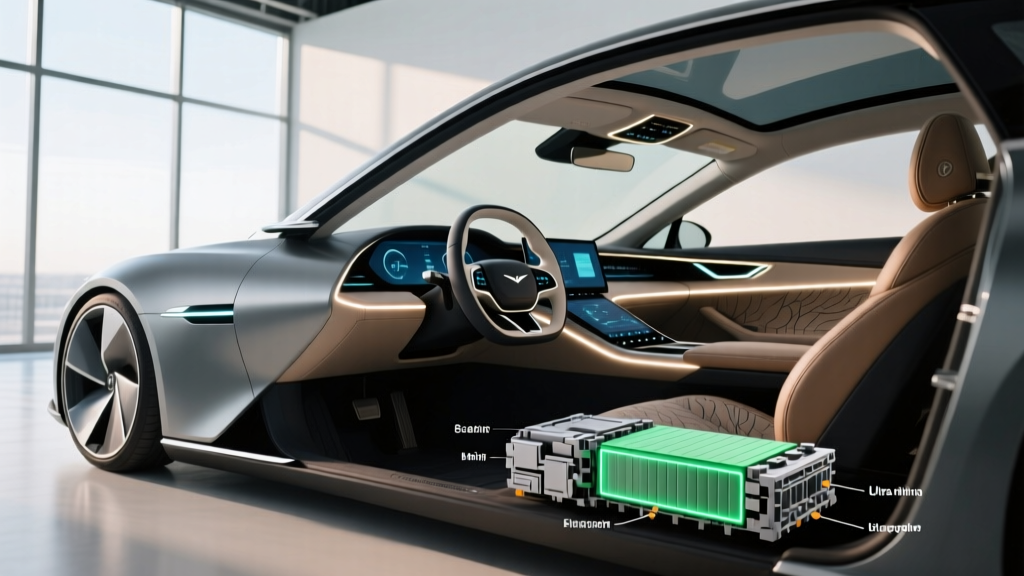
Genesis has committed to full electrification by 2030, and its current battery-electric portfolio covers three distinct body styles. Each shares Hyundai Motor Group's E-GMP or modified platform architecture with 800V electrical systems — the same underpinnings found in the Ioniq 5 and EV6, but wrapped in significantly more luxurious packaging.
| Spec | GV60 | Electrified GV70 | Electrified G80 |
|---|---|---|---|
| Body Style | Compact Crossover | Midsize SUV | Full-Size Sedan |
| Battery (usable) | 74.0 kWh (NMC) | 74.0 kWh (NMC) | 87.2 kWh (NMC) |
| EPA Range (max trim) | 280 mi | 236 mi | 282 mi |
| Real-World Range Expectation | ~230–260 mi | ~190–220 mi | ~235–265 mi |
| MPGe (combined) | 95 MPGe | 87 MPGe | 91 MPGe |
| Peak DC Charge Rate | 240 kW | 240 kW | 240 kW |
| 10–80% DCFC Time | ~18 min | ~18 min | ~22 min |
| Level 2 Charge Rate | 10.9 kW | 10.9 kW | 10.9 kW |
| Horsepower (AWD) | 314–429 hp | 429 hp | 365 hp |
| 0–60 mph | 3.9–5.8 sec | 4.2 sec | 4.9 sec |
| Starting MSRP | $53,350 | $67,450 | $80,300 |
| Battery Warranty | 10 yr / 100,000 mi | 10 yr / 100,000 mi | 10 yr / 100,000 mi |
Sources: fueleconomy.gov, Genesis USA press specifications.
Real-World Range vs. EPA Sticker
EPA range figures assume a mix of city and highway driving at moderate temperatures. In our experience and consistent with independent testing, expect the following reductions:
- Sustained highway driving (70–80 mph): Subtract 10–15% from EPA range.
- Cold weather (below 32°F): Subtract 20–30% depending on cabin heating demand. Genesis models use a heat pump on higher trims, which mitigates but does not eliminate cold-weather losses.
- DC fast charging taper: The 240 kW peak rate applies only at low state-of-charge with battery preconditioning active. Above 80% SoC, charging slows dramatically to protect the NMC cells — expect the final 20% to add 15–25 additional minutes.
Genesis EV vs. Gas and Hybrid Alternatives: Cost Comparison
The most common question from luxury-car shoppers: does going electric with Genesis actually save money versus a gas-powered equivalent? The answer depends heavily on your driving patterns, electricity rates, and how long you plan to own the vehicle.
| Cost Category | GV60 Advanced (EV) | Genesis GV70 2.5T (Gas) |
|---|---|---|
| Base MSRP | $61,350 | $49,700 |
| Federal Tax Credit (§30D) | $0–$7,500* | $0 |
| Effective Purchase Price | $53,850–$61,350 | $49,700 |
| Fuel/Energy (5 yr, 75k mi) | $3,750–$6,000** | $10,500–$12,750*** |
| Maintenance (5 yr) | $1,200–$1,800 | $3,000–$4,500 |
| Insurance (5 yr avg) | $9,000–$12,000 | $7,500–$10,000 |
| Estimated Depreciation (5 yr) | $22,000–$27,000 | $18,000–$22,000 |
| 5-Year Total (approx.) | $89,800–$108,150 | $88,700–$108,950 |
* Federal §30D credit eligibility depends on battery sourcing, buyer income caps ($150k single / $300k joint), and MSRP caps ($80k for SUVs, $55k for sedans). Verify current rules at irs.gov. Some buyers may access the credit via lease structures under §45W commercial clean vehicle credit passed through by the dealer.
** Assumes $0.12–$0.18/kWh home charging; public DCFC costs more (~$0.30–$0.48/kWh).
*** Assumes $3.50–$4.25/gal premium fuel at 22 MPG combined.
The takeaway: at the 5-year mark, a Genesis electric vehicle and its gas counterpart reach near cost-parity. The EV pulls ahead in years 6–10 as fuel and maintenance savings compound while the gas vehicle requires more frequent service. However, the EV's steeper depreciation — driven by rapid EV market evolution and battery-aging perception — can erase gains if you sell early.
Charging a Genesis EV: Home Setup and Public Networks
Every Genesis EV comes with a CCS1 charge port (though Genesis has announced future models will adopt NACS for Tesla Supercharger access). The 800V architecture is the standout feature — it allows charging speeds that most competitors at this price point cannot match.
| Level | Power | Miles Added per Hour | Typical Use Case |
|---|---|---|---|
| Level 1 (120V) | 1.4 kW | ~4–5 mi/hr | Emergency / overnight trickle |
| Level 2 (240V) | 10.9 kW | ~32–38 mi/hr | Home daily charging |
| DC Fast Charge | Up to 240 kW | ~180+ mi in 18 min | Road trips (10–80%) |
Home Charging Installation Costs
Most Genesis EV owners will want a Level 2 home charger. Here is a realistic cost breakdown:
| Item | Low Estimate | High Estimate |
|---|---|---|
| Level 2 EVSE (40–48A hardwired) | $400 | $750 |
| Electrician labor (240V/50A circuit) | $600 | $1,500 |
| Panel upgrade (if needed, 200A service) | $0 | $3,000 |
| Permit and inspection | $50 | $250 |
| Total | $1,050 | $5,500 |
If your electrical panel is near the garage and has spare capacity, expect to pay around $1,200–$2,000 total. If you need a 200-amp panel upgrade, costs can reach $4,000–$5,500. Always get a licensed electrician's assessment before purchasing equipment.
Public Charging Access
Genesis EVs use the CCS1 connector, giving access to Electrify America, EVgo, ChargePoint, and most non-Tesla DC fast-charging networks. Electrify America offers the broadest 350 kW-capable network in the U.S., and the Genesis 800V system can actually leverage those high-power stalls effectively — unlike many 400V competitors that peak well below the station's capability.
Genesis has announced that future models will transition to the NACS connector, enabling native Tesla Supercharger access. Current owners may eventually receive adapter solutions, but as of early 2026, CCS1 remains the standard on all在售 Genesis EVs.
Federal Tax Credit and Incentive Reality for Genesis EVs
This is where Genesis buyers need careful expectations management. The §30D New Clean Vehicle Credit offers up to $7,500, but eligibility hinges on three criteria that have narrowed significantly since the Inflation Reduction Act:
- MSRP Cap: Sedans (G80) must be under $55,000 — the Electrified G80 does not qualify. SUVs (GV60, GV70) must be under $80,000 — base GV60 trims may qualify, but GV70 pricing is close to the cap.
- Buyer Income Cap: AGI must not exceed $150,000 (single) or $300,000 (joint).
- Battery Sourcing: Critical minerals and battery components must meet escalating domestic-content thresholds. As of 2026, most Hyundai Motor Group vehicles assembled in Korea (including all current Genesis EVs) fail the battery-component requirement, reducing the credit to $0 or $3,750.
Lease workaround: Vehicles leased (not purchased) may qualify for the $7,500 §45W commercial clean vehicle credit, which the leasing company can pass through as a capitalized-cost reduction. Many Genesis dealers advertise lease deals reflecting this pass-through. Verify the lease terms explicitly — not all dealers apply it.
State incentives vary widely. California's CVRP, Colorado's state credit, and various utility rebates can add $1,500–$7,500 depending on your location. Check your state energy office and local utility for current programs.
Common Misconceptions About Genesis Electric Vehicles
| Myth | Fact |
|---|---|
| "The battery will need replacing in 5 years." | Genesis warranties the battery for 10 years/100,000 miles with a capacity-retention threshold (typically 70%). NMC degradation data from E-GMP platforms shows ~8–12% loss over 100,000 miles in moderate climates. Full replacement (if ever needed) costs $12,000–$18,000 out of warranty. |
| "240 kW charging means 240 kW the whole session." | Peak 240 kW occurs only between ~10–40% SoC with preconditioning active. Average power across a 10–80% session is closer to 150–170 kW. This is still excellent, but the charge curve tapers significantly above 55% SoC. |
| "I can charge at any Tesla Supercharger." | Current Genesis EVs use CCS1 and cannot natively access Tesla Superchargers. An adapter or future NACS port transition is expected, but confirm compatibility before relying on Supercharger routes. |
| "EVs cost more to insure — always." | Genesis EV insurance premiums run 10–25% higher than gas equivalents due to repair costs and battery replacement risk, but shopping multiple carriers (especially those with EV-specific programs) can narrow the gap significantly. |
| "Genesis EVs are just rebadged Hyundais." | While sharing E-GMP architecture with the Ioniq 5, Genesis models feature distinct suspension tuning, sound insulation, interior materials, and standard features. The driving experience is noticeably more refined, justifying the price premium for luxury-oriented buyers. |
Decision Framework: Which Genesis EV (or Alternative) Fits You?
Choose the GV60 if:
- You want the most affordable entry into the Genesis EV lineup (~$53,350 base).
- Your daily commute is under 60 miles round-trip and you have home Level 2 charging.
- You value a distinctive, modern crossover design over traditional SUV proportions.
- You want the best chance at partial federal tax credit eligibility (under $80k MSRP cap for SUVs).
Choose the Electrified GV70 if:
- You need midsize SUV cargo space (28.4 cu ft behind rear seats) and family seating.
- You accept the shorter EPA range (236 mi) as a trade-off for SUV utility.
- You primarily drive in moderate climates where cold-weather range loss is less severe.
- Your budget comfortably exceeds $67,000 and you don't depend on the federal credit.
Choose the Electrified G80 if:
- You prefer a traditional luxury sedan with executive-level rear-seat comfort.
- You want the longest range in the Genesis lineup (282 mi EPA).
- Price sensitivity is low — the G80 starts above $80,000 and does not qualify for §30D.
- You value ride quality and cabin quietness over sporty handling dynamics.
Look elsewhere if:
- Maximum range-per-dollar is your priority (consider Hyundai Ioniq 6, Tesla Model 3, or Chevrolet Equinox EV).
- You need 300+ miles of real-world range without frequent charging stops.
- You lack access to home charging and your area has limited public DCFC infrastructure.
- You want native Tesla Supercharger access today without adapters.
What First-Time Genesis EV Buyers Should Know
Preconditioning Is Essential for Fast Charging
The 800V system's 240 kW peak rate requires the battery to be within an optimal temperature window. Use the Genesis navigation-based preconditioning feature — when you set a DC fast charger as your destination, the car warms or cools the battery en route. Without preconditioning, expect peak rates closer to 150–180 kW, adding several minutes to your stop.
Regenerative Braking Customization
Genesis offers multiple regen levels, selectable via steering-wheel paddles. Level 3 (maximum regen) enables near one-pedal driving in city traffic but does not always bring the car to a complete stop — keep your foot ready. Level 0 provides a coasting feel familiar to gas-car drivers transitioning to EVs.
Over-the-Air Updates and Feature Evolution
Genesis supports OTA software updates for powertrain calibration, infotainment, and ADAS features. However, Genesis's ADAS suite (Highway Driving Assist) remains an SAE Level 2 system — it assists with steering and speed on divided highways but requires continuous driver attention and hands-on-wheel input. It is not autonomous driving.
ADAS Level Clarification: Genesis Highway Driving Assist is SAE Level 2 — a driver-assistance system, not self-driving. You must remain alert, keep hands on the wheel, and be prepared to take over at any moment. Only Level 4 robotaxi services (Waymo, Zoox) operate without a human driver.
Frequently Asked Questions
Does any Genesis electric vehicle qualify for the $7,500 federal tax credit?
As of 2026, most Genesis EVs do not qualify for the full §30D purchase credit because they are manufactured in South Korea and do not meet the battery-component sourcing requirements. However, leasing a Genesis EV may unlock the $7,500 commercial credit (§45W) passed through by the lessor. Always confirm with your dealer and consult a tax professional. Current rules are published at irs.gov.
How long does it take to charge a Genesis GV60 at home?
Using a Level 2 home charger (10.9 kW), a fully depleted 74.0 kWh battery requires approximately 7–8 hours for a complete charge. In practice, most owners charge from 20–80% daily, which takes roughly 4 hours — easily accomplished overnight.
Is the Electrified GV70 range sufficient for road trips?
The GV70's 236-mile EPA range drops to approximately 190–210 miles on highway road trips at 70+ mph. With DC fast charging adding ~150 miles in 15 minutes, road trips are practical but require more frequent stops than a 300+ mile EV. Plan routes around Electrify America or other CCS-compatible networks using the Genesis in-dash route planner.
What happens if the battery degrades significantly?
Genesis's 10-year/100,000-mile battery warranty covers capacity loss below a defined threshold (typically 70% of original capacity). Independent data from E-GMP platform vehicles shows average degradation of 8–12% after 100,000 miles — well within the warranty margin. If replacement is needed outside warranty, expect $12,000–$18,000 for the battery pack.
Can I tow with a Genesis electric vehicle?
The Electrified GV70 is rated for up to 3,500 lbs of towing capacity. The GV60 is rated for approximately 2,000 lbs. Keep in mind that towing reduces range by 30–50% depending on trailer weight and aerodynamics — plan charging stops accordingly.
How does Genesis EV reliability compare to competitors?
Genesis as a brand consistently ranks near the top of J.D. Power and Consumer Reports reliability surveys. The E-GMP platform has proven robust across Hyundai, Kia, and Genesis applications. The main ownership risk is not mechanical failure but rather depreciation driven by rapid EV market evolution and potential battery-sourcing credit changes.
For the latest Genesis EV specifications, visit the official Genesis USA website. Safety ratings are available at NHTSA and IIHS.