Quick Answer: Which Genesis Models Are Electric?
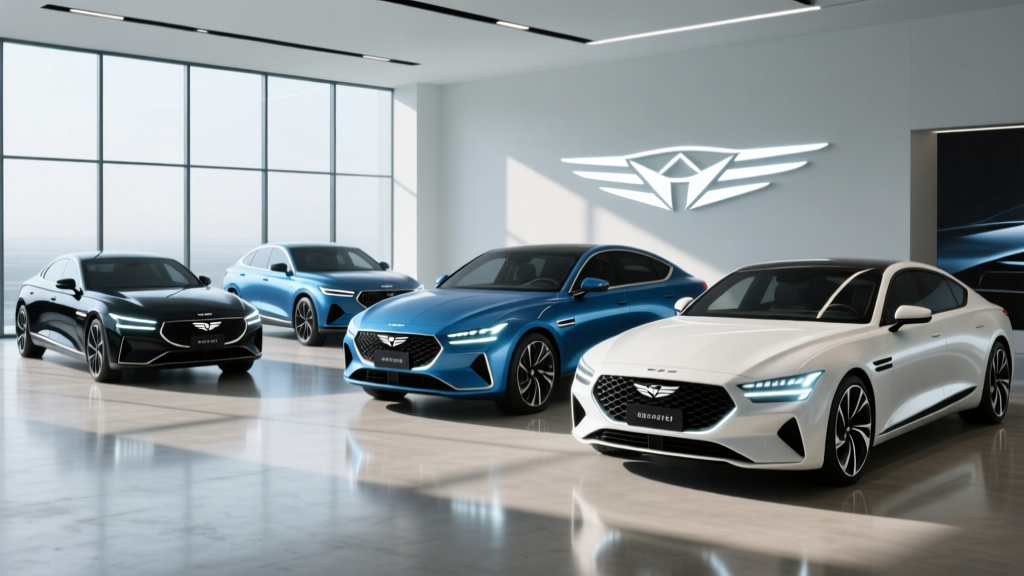
As of the 2026 model year, Genesis offers three fully electric vehicles (BEVs) in the U.S. market:
- Genesis GV60 — Compact luxury crossover SUV. EPA range up to 289 miles. Starting MSRP ~$53,350.
- Genesis Electrified G80 — Full-size luxury sedan. EPA range up to 282 miles. Starting MSRP ~$80,000.
- Genesis Electrified GV70 — Compact luxury SUV. EPA range up to 236 miles. Starting MSRP ~$67,000.
Genesis also offers the conventional (gas) GV70, GV80, G70, and G90, plus hybrid variants in some markets—but only the three models above are battery-electric. A fourth EV, the Genesis GV80 EV, has been announced but is not yet on sale in the U.S.
The 2026 Genesis Electric Lineup, By the Numbers
Genesis has taken a measured approach to electrification, adapting existing platforms rather than launching dedicated EV architectures (though the upcoming Neolun concept previews a ground-up EV platform). Here's how the three current models stack up on the specs that matter most to buyers:
| Spec | GV60 (Advanced) | Electrified G80 | Electrified GV70 |
|---|---|---|---|
| Body Style | Compact Crossover SUV | Full-Size Sedan | Compact SUV |
| EPA Range | 289 mi (RWD) / 248 mi (AWD) | 282 mi | 236 mi |
| Battery (usable) | 77.4 kWh (NMC) | 87.2 kWh (NMC) | 77.4 kWh (NMC) |
| Drivetrain | RWD or AWD | AWD | AWD |
| Horsepower | 225 hp (RWD) / 314 hp (AWD) | 365 hp | 429 hp |
| 0-60 mph | 7.3s (RWD) / 5.3s (AWD) | 4.9s | 4.2s |
| Max DC Fast Charge | ~240 kW (peak) | ~350 kW (peak) | ~240 kW (peak) |
| 10-80% DCFC Time | ~18 min (ideal) | ~22 min (ideal) | ~18 min (ideal) |
| Level 2 (AC) Rate | 10.9 kW | 10.9 kW | 10.9 kW |
| MPGe (combined) | 95 MPGe (AWD) | 88 MPGe | 87 MPGe |
| Base MSRP | ~$53,350 | ~$80,000 | ~$67,000 |
| Battery Warranty | 10 yr / 100,000 mi | 10 yr / 100,000 mi | 10 yr / 100,000 mi |
Real-World Range vs. EPA Sticker
The EPA numbers above assume mixed driving at moderate temperatures. In real-world highway driving at 70+ mph, expect roughly 10-15% less range than the sticker. In sub-freezing winter conditions, plan for 20-30% range reduction due to battery heating demands and cabin climate use. The GV60 AWD's 248-mile EPA rating, for example, may deliver closer to 210 miles on a cold highway road trip. The Electrified GV70's 236-mile EPA figure can dip below 180 miles in harsh winter conditions. If your commute or road trips regularly push these boundaries, preconditioning the battery (via the Genesis app or navigation-routed charging) is essential to preserve range and optimize DC fast-charge speeds.
Genesis EVs vs. Gas Equivalents: What's the Real Cost Difference?
The most common question from luxury-car shoppers considering a Genesis EV is whether the math works against a gas-powered GV70 or G80. Let's compare the Electrified GV70 against the gas GV70 2.5T over five years of ownership, assuming 12,000 miles per year.
| Cost Factor (5 yr / 60k mi) | Electrified GV70 (AWD) | Gas GV70 2.5T (AWD) |
|---|---|---|
| Base MSRP | $67,000 | $50,000 |
| Fuel / Electricity (est.) | $3,200 (home L2 at $0.14/kWh) | $9,600 (premium at $4.00/gal, 24 MPG) |
| Maintenance (est.) | $1,200 | $3,500 |
| Federal Tax Credit (§30D) | $0–$7,500 (see caveats below) | $0 |
| Insurance (est. avg/yr) | $2,400/yr ($12,000 total) | $2,000/yr ($10,000 total) |
| 5-Year Total (before credit) | ~$83,400 | ~$73,100 |
| 5-Year Total (with $7,500 credit) | ~$75,900 | ~$73,100 |
Key takeaway: The Electrified GV70 saves roughly $6,400 in fuel and maintenance over five years, but the $17,000 MSRP premium means it takes more than the ownership period to break even without the federal tax credit. If you qualify for the full §30D credit and charge primarily at home, the gap narrows to about $2,800. The GV60, starting lower, offers a more favorable cost equation for many buyers.
Federal Tax Credit: Do Genesis EVs Qualify for §30D?
This is where Genesis buyers need to pay close attention. Under the current IRS §30D rules, the federal clean vehicle credit offers up to $7,500, but eligibility depends on several factors:
- MSRP Cap: SUVs (GV60, Electrified GV70) must have an MSRP under $80,000. Sedans (Electrified G80) must be under $55,000 — meaning the Electrified G80 at ~$80,000 does not qualify.
- Buyer Income Limits: Modified AGI must not exceed $150,000 (single), $225,000 (head of household), or $300,000 (joint).
- Battery Sourcing: The $7,500 credit is split into two halves — $3,750 for critical-mineral sourcing and $3,750 for battery-component assembly. Genesis uses Hyundai Motor Group's supply chain, and qualifying amounts vary by model year and production batch. Some Genesis EVs have qualified for $3,750 rather than the full $7,500.
- Point-of-Sale Transfer: You can transfer the credit to the dealer at purchase, reducing your out-of-pocket cost immediately rather than waiting for tax filing.
Bottom line: The GV60 and Electrified GV70 may qualify for partial or full credit depending on your income and the specific vehicle's battery sourcing. The Electrified G80 is excluded by the sedan MSRP cap. Always verify eligibility on the fueleconomy.gov tax credit lookup and consult a tax professional before relying on credit assumptions.
Charging at Home and on the Road
Genesis EVs use the CCS1 connector for DC fast charging and the J1772 connector for Level 2 AC charging. (Genesis has not yet transitioned to the NACS/Tesla connector, though Hyundai Motor Group has announced future NACS adoption.)
| Charging Level | Power | Miles Added per Hour | Typical Use |
|---|---|---|---|
| Level 1 (120V) | ~1.4 kW | ~4-5 mi/hr | Emergency / overnight trickle |
| Level 2 (240V, 48A) | 10.9 kW | ~30-35 mi/hr | Home daily charging |
| DC Fast Charge | Up to 240-350 kW | ~500-900 mi/hr (peak) | Road trips, 10-80% in 18-22 min |
Home charging reality: A Level 2 home charger (like a ChargePoint Home Flex or Emporia Level 2) is strongly recommended. Expect to pay $800-$1,500 for the charger hardware and $500-$2,000 for electrician installation, depending on whether your electrical panel needs an upgrade (200A service is ideal). A full overnight charge on Level 2 replenishes the GV60's 77.4 kWh battery in about 7-8 hours.
Public charging caveat: Genesis does not operate its own charging network. You'll rely on Electrify America, EVgo, ChargePoint, and others. While the GV60 and Electrified GV70's ~240 kW peak rate is competitive, real-world DC fast charging rarely sustains peak rates. Expect the charge curve to taper significantly above 80% State of Charge — that 10-80% time of ~18 minutes assumes ideal battery preconditioning and a capable 350 kW station. On a typical 150 kW charger, plan for 25-30 minutes for the same 10-80% session.
Common Misconceptions About Genesis EVs
| Myth | Fact |
|---|---|
| "Genesis EVs are just rebadged Hyundais." | While they share the E-GMP platform with Hyundai Ioniq 5 and Kia EV6, Genesis uses distinct tuning, interior materials, sound insulation, and suspension geometry. The driving experience and cabin quality are a clear step up. |
| "The Electrified G80 has 400+ miles of range." | The EPA rates it at 282 miles. Some international (WLTP) figures are higher, but the U.S. EPA standard is more conservative and realistic for American driving conditions. |
| "All Genesis EVs get the $7,500 tax credit." | The Electrified G80 exceeds the $55,000 sedan MSRP cap and is ineligible. The GV60 and Electrified GV70 may qualify partially or fully depending on battery sourcing and buyer income. |
| "Genesis EVs can use Tesla Superchargers." | As of 2026, Genesis models use CCS1. Without a NACS adapter (and confirmed network access agreement), they cannot use Tesla Superchargers natively. |
| "EV batteries need replacing every few years." | Genesis covers the battery for 10 years/100,000 miles. NMC degradation data from Hyundai Motor Group shows approximately 85-90% capacity retention after 100,000 miles under normal use. |
Decision Framework: Which Genesis EV Is Right for You?
Choose the Genesis GV60 if:
- You want the most affordable entry into a Genesis EV (~$53,350 base).
- Your daily driving is under 200 miles and you can charge at home.
- You prefer a compact crossover footprint for urban and suburban use.
- The RWD variant's 289-mile EPA range fits your needs (best range in the lineup).
Choose the Electrified GV70 if:
- You want SUV practicality with serious performance (429 hp, 4.2s 0-60).
- You're cross-shopping the gas GV70 and want to eliminate fuel costs.
- You can tolerate the 236-mile EPA range (plan road trips around charging stops).
- You value the familiar GV70 styling with an electric powertrain.
Choose the Electrified G80 if:
- You want a full-size luxury electric sedan (competes with BMW i7, Mercedes EQS).
- Budget is less of a concern (~$80,000+ and no federal tax credit).
- You prioritize cabin quietness, ride comfort, and rear-seat space over range efficiency.
- Most of your driving is within 220 miles round-trip with home charging.
Wait if:
- You need three-row seating — the upcoming GV80 EV or the gas GV80 is a better fit.
- You want NACS/Supercharger access without adapters — Genesis may adopt NACS in future model years.
- You regularly drive 300+ miles in cold weather without reliable DCFC access along your route.
First-Time Genesis EV Buyer: What to Know Before You Sign
Genesis offers a strong ownership experience — complimentary maintenance for 3 years/36,000 miles, valet service, and a generous 10-year/100,000-mile powertrain and battery warranty. But there are practical realities to prepare for:
- Home charging is critical. If you can't install a Level 2 charger at home or don't have reliable workplace charging, an EV's convenience advantage erodes quickly. Budget $1,500-$3,500 for a quality home charging setup.
- Insurance costs are higher. Luxury EVs carry premiums 15-25% above their gas counterparts. Get quotes before committing.
- Depreciation is a wildcard. Luxury EVs have seen steeper depreciation than gas equivalents in recent years. Lease deals on Genesis EVs can mitigate this risk — check for subsidized lease offers from Genesis.
- Preconditioning matters. Use the Genesis Connected Services app to precondition the battery before DC fast charging, especially in cold weather. This warms the battery to optimal temperature and significantly improves charge speed.
- CCS charging infrastructure is improving but uneven. Electrify America stations are the most common CCS option, but reliability varies. Apps like PlugShare and A Better Routeplanner are essential for trip planning.
Frequently Asked Questions
Is the Genesis GV70 available as an electric vehicle?
Yes. The Electrified GV70 is the fully electric version of the GV70 compact SUV. It uses a 77.4 kWh NMC battery, produces 429 hp, and has an EPA-estimated range of 236 miles. It is distinct from the gas-powered GV70 2.5T and 3.5T models.
Will Genesis make a GV80 electric?
Genesis has announced plans for an electrified GV80, but as of early 2026 it is not yet on sale in the U.S. market. If you need three rows today, the gas GV80 remains the only option.
Do Genesis EVs use Tesla's NACS charging connector?
Not as of the 2026 model year. Genesis EVs use the CCS1 connector. Hyundai Motor Group has signaled a future transition to NACS, but current owners will likely need an adapter (once officially supported) to access Tesla Superchargers.
How long do Genesis EV batteries last?
Genesis warranties its EV batteries for 10 years or 100,000 miles against defects and excessive capacity loss (typically below 70% state of health). Based on data from Hyundai Motor Group's E-GMP platform, most owners see 85-90% capacity retention at 100,000 miles under normal charging habits — avoiding frequent 100% charges and excessive DC fast charging extends longevity.
What is the cheapest electric Genesis?
The Genesis GV60, starting at approximately $53,350 for the Standard RWD trim. It also offers the longest EPA range in the lineup at 289 miles (RWD). The AWD Performance trim starts around $60,350 and drops range to approximately 248 miles.
How does Genesis compare to other luxury EV brands?
Genesis competes with BMW (iX, i4), Mercedes-Benz (EQE, EQS SUV), Audi (Q4 e-tron, e-tron GT), and Cadillac (Lyriq). Genesis's advantage is value — more standard features, complimentary maintenance, and a strong warranty at a lower entry price. Its weakness is range efficiency (the Electrified GV70's 87 MPGe trails rivals) and the lack of a dedicated EV platform (current models share architecture with gas vehicles, limiting interior packaging efficiency).