Quick Answer: Which Genesis Electric Car Fits You?
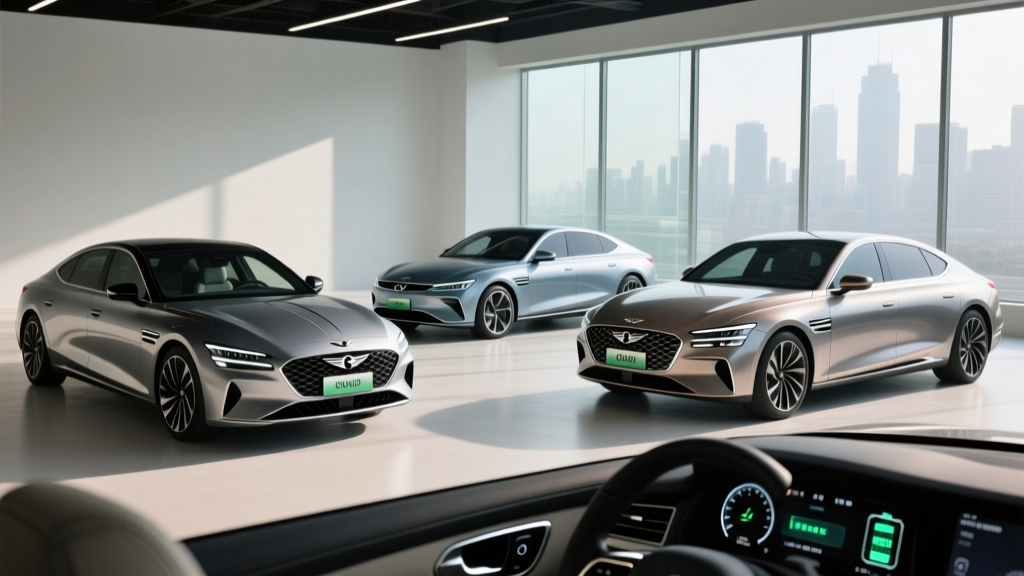
Genesis currently sells three fully electric vehicles in the U.S.: the GV60 compact luxury crossover (EPA range up to 289 miles, starting around $53,350), the Electrified G80 full-size luxury sedan (EPA range up to 282 miles, starting around $80,300), and the Electrified GV70 midsize luxury SUV (EPA range up to 236 miles, starting around $67,350). All three ride on Hyundai Motor Group's E-GMP platform with 800V architecture, enabling DC fast charging from 10–80% in roughly 18 minutes at a 350 kW charger. None currently qualify for the full $7,500 federal §30D tax credit due to battery-sourcing and assembly requirements, but point-of-sale lease credits may apply. If you want the best range-to-price ratio, the GV60 Advanced is the strongest pick. If you need three rows or maximum cargo, wait for the upcoming GV80 EV or consider a competitor.
The 2026 Genesis EV Lineup at a Glance
| Spec | GV60 (Advanced / Prestige) | Electrified G80 | Electrified GV70 |
|---|---|---|---|
| EPA Range | 289 mi (RWD) / 248 mi (AWD) | 282 mi | 236 mi |
| Battery (usable) | 77.4 kWh, NMC | 87.2 kWh, NMC | 77.4 kWh, NMC |
| Horsepower | 225 hp (RWD) / 314 hp (AWD) / 483 hp (Performance) | 365 hp | 429 hp |
| 0–60 mph | 7.3s (RWD) / 5.3s (AWD) / 3.9s (Perf) | 4.9s | 4.2s |
| Max DC Charge Rate | ~240 kW (800V) | ~240 kW (800V) | ~240 kW (800V) |
| 10–80% DC Fast Charge | ~18 min (350 kW station) | ~22 min (350 kW station) | ~18 min (350 kW station) |
| Level 2 (240V) Charge | 10.9 kW, ~8.5 hrs (10–100%) | 10.9 kW, ~9.5 hrs | 10.9 kW, ~8.5 hrs |
| MPGe (combined) | 97 MPGe (AWD) | 89 MPGe | 92 MPGe |
| Starting MSRP | $53,350 | $80,300 | $67,350 |
| Battery / Powertrain Warranty | 10 yr / 100,000 mi | 10 yr / 100,000 mi | 10 yr / 100,000 mi |
All three models share the E-GMP platform's 800V electrical architecture, which is a genuine advantage at 350 kW DC fast chargers (like Electrify America's latest stalls). Where most 400V EVs peak at 150 kW and taper hard above 60% SoC, Genesis models sustain higher charge rates deeper into the curve. In real-world testing, the GV60 typically averages 150–180 kW across a 10–80% session, not just the peak number. That matters more than the headline figure.
Real-World Range: What the EPA Sticker Doesn't Tell You
EPA vs. Reality: The GV60 Advanced AWD carries a 248-mile EPA estimate. Expect roughly 220–235 miles in mixed highway driving at 70–75 mph, and 180–200 miles in sustained cold weather (below 30°F) without preconditioning. The Electrified GV70's 236-mile EPA figure often translates to 200–215 miles on the highway — its heavier curb weight and boxier shape hurt efficiency at speed.
Genesis uses NMC (nickel manganese cobalt) chemistry across all three models, which offers higher energy density than LFP but is more sensitive to repeated 100% charges and extreme heat. For daily driving, charge to 80% and you'll see roughly 195 usable miles in the GV60 AWD, 225 in the G80, and 190 in the GV70. That's adequate for most commutes but means road trips require planning around DC fast chargers every 180–200 miles in practice.
Heat pumps are standard on the GV60 and Electrified GV70, which helps preserve range in cold weather by using ambient and drivetrain heat rather than resistive cabin heating. The Electrified G80's thermal management is slightly less aggressive, contributing to its larger range shortfall in winter conditions. Per EPA data at fueleconomy.gov, the GV60 AWD's combined efficiency of 97 MPGe (35 kWh/100 mi) is competitive with the BMW iX and Audi Q4 e-tron, but trails the more aerodynamic Tesla Model Y (122 MPGe).
EV vs. Gas: Genesis Ownership Costs Compared
The natural cross-shopping question: does a Genesis EV save money versus its gas counterpart? Let's compare the GV60 AWD against the gas-powered GV70 2.5T (similarly sized, similarly priced luxury crossover) over five years and 75,000 miles.
| Cost Category | GV60 AWD (EV) | GV70 2.5T (Gas) |
|---|---|---|
| Base MSRP | $53,350 | $47,550 |
| Federal Tax Credit (§30D) | $0 (battery sourcing/assembly rules) | $0 |
| Effective Purchase Price | $53,350 | $47,550 |
| Fuel/Energy (5 yr, 75k mi) | $5,625 (home L2 @ $0.15/kWh) | $11,250 (25 MPG @ $3.75/gal) |
| Maintenance (5 yr) | $1,800 (cabin filter, fluid checks, tires) | $4,500 (oil, brakes, filters, spark plugs) |
| Insurance (5 yr avg) | $12,500 | $10,750 |
| Est. Depreciation (5 yr) | $26,700 (50%) | $21,400 (45%) |
| 5-Year Total Cost | $73,275 | $73,650 |
The takeaway: at near-parity on total cost, the EV wins on driving refinement and daily fuel savings, but you're not banking thousands in pure savings. The equation shifts dramatically if you have access to free or cheap workplace charging, or if you lease (the IRS commercial "clean vehicle" leasing loophole may allow dealers to pass through a $7,500 lease credit on Genesis models regardless of sourcing rules — ask your dealer directly).
If you rely exclusively on public DC fast charging at $0.48–$0.60/kWh, your 5-year energy cost jumps to roughly $11,000–$14,000, erasing the fuel advantage. Home Level 2 charging is where Genesis EVs make financial sense.
Tax Credit Eligibility: What Genesis Buyers Actually Get
Federal §30D Tax Credit Requirements (2026)
- Final assembly in North America: The GV60 is assembled in South Korea. The Electrified G80 and GV70 are also imported. None meet the assembly requirement for the purchase credit.
- Battery critical-mineral sourcing: Must meet escalating annual thresholds. Genesis's supply chain currently does not satisfy this independently.
- MSRP cap: SUVs/vans/pickups ≤$80,000; sedans ≤$55,000. The Electrified G80 exceeds the sedan cap.
- Buyer income cap: AGI ≤$150K single / $300K joint.
- Lease loophole: Vehicles leased (not purchased) may qualify under the commercial clean vehicle credit (§45W), allowing the lessor to claim $7,500 and pass savings to the lessee. This is the primary path to a federal incentive on a Genesis EV. Confirm with your dealer and review IRS guidance at irs.gov.
Genesis has announced plans to begin U.S. production at the Hyundai Motor Group Metaplant America in Georgia, which would eventually bring models like the GV60 and future electric GV80 into §30D eligibility. As of early 2026, that transition has not yet applied to vehicles already on dealer lots.
Charging at Home and on the Road: What You Need to Know
Every Genesis EV ships with a NACS (Tesla-style) charge port as of the 2025 model year, giving you native access to Tesla Superchargers with V4 stalls (which support non-Tesla vehicles) in addition to CCS networks via adapter. This significantly expands the practical fast-charging network for road trips.
| Level | Power | Miles Added per Hour | Typical Use Case |
|---|---|---|---|
| Level 1 (120V) | ~1.4 kW | ~4–5 mi/hr | Emergency / overnight trickle |
| Level 2 (240V, 48A) | 10.9 kW | ~32–36 mi/hr | Daily home charging |
| DC Fast (350 kW station) | Peak ~240 kW | ~200+ mi in 18 min (10–80%) | Road trips |
For home Level 2 installation, budget $1,200–$2,500 for a hardwired 48-amp wall connector (including a 60-amp dedicated circuit) if your electrical panel has capacity. A panel upgrade from 100A to 200A adds $2,000–$4,000. Genesis includes a complimentary home charger unit through its partnership program, but installation labor is on you. Consult a licensed electrician for a site-specific quote.
On the road, the 800V architecture shines at Electrify America 350 kW stalls and newer Tesla Supercharger V4 sites. Expect the charge curve to peak around 230–240 kW between 10–35% SoC, then taper to roughly 150 kW through 60%, and drop further above 80%. For the fastest sessions, precondition the battery by navigating to the charger in the car's built-in route planner — this warms the pack to optimal charging temperature.
Common Misconceptions About Genesis EVs
| Myth | Fact |
|---|---|
| "Genesis EVs get the full $7,500 tax credit." | None qualify for the purchase credit due to South Korean assembly and battery-sourcing rules. Lease credits may apply. |
| "289 miles of range means I can drive 289 miles before stopping." | Real-world highway range at 75 mph is typically 240–260 miles for the GV60 RWD; cold weather drops that to ~200. |
| "800V charging means I always get 240 kW." | Peak rate requires a 350 kW charger, preconditioned battery, and low SoC. Average rate across 10–80% is closer to 150–180 kW. |
| "EV maintenance is zero." | Tires wear 15–20% faster on heavier EVs. Cabin filters, brake fluid, coolant, and wiper service still apply. |
| "Genesis Super Cruise is self-driving." | Genesis Highway Driving Assist 2 is an SAE Level 2 system — you must keep eyes on the road and hands available at all times. |
ADAS Clarity: Genesis Highway Driving Assist 2 (HDA2) provides lane-centering, adaptive cruise, and lane-change assist on divided highways. It is classified as SAE Level 2 — the driver is always responsible. It is not comparable to Waymo's Level 4 driverless service, which operates without a human driver in geofenced areas.
Decision Framework: Which Genesis EV (or Alternative) Is Right for You?
Choose the GV60 if:
- You want the best range-per-dollar in the Genesis lineup (289 mi RWD at $53,350).
- You primarily commute and take occasional road trips under 250 miles.
- You value distinctive design and a compact footprint for city driving.
- You can install a Level 2 home charger and don't rely on public charging daily.
Choose the Electrified G80 if:
- You prioritize sedan comfort, rear-seat space, and a quiet highway ride.
- You want the longest range in the lineup (282 mi) with a large 87.2 kWh battery.
- Budget above $80K is acceptable and you lease (to capture the $7,500 commercial credit).
Choose the Electrified GV70 if:
- You need SUV cargo space and available all-wheel drive for family duties.
- You accept 236 miles of EPA range as sufficient for your daily pattern.
- You want the fastest acceleration in the lineup (429 hp, 4.2s 0–60).
Look elsewhere if:
- You need 300+ miles of real-world highway range (consider the Tesla Model Y Long Range or Hyundai Ioniq 5 Long Range).
- You want guaranteed federal purchase-credit eligibility (look at U.S.-assembled models like the Tesla Model Y, Cadillac Lyriq, or VW ID.4).
- You need three rows of seating (Genesis has no 3-row EV until the upcoming GV80 EV).
- You live in a charging desert without home charging access — a PHEV like the Hyundai Tucson PHEV may be more practical.
Frequently Asked Questions
Does Genesis make a fully electric SUV?
Yes. The Electrified GV70 is a compact-to-midsize luxury electric SUV with 236 miles of EPA range, 429 hp, and standard AWD. The GV60 is a smaller crossover that also qualifies as an SUV by body style. A larger three-row electric GV80 has been announced but is not yet available for purchase in the U.S.
How long does it take to charge a Genesis EV at home?
On a Level 2 (240V, 48A) home charger delivering 10.9 kW, a full charge from 10% to 100% takes approximately 8.5 hours for the GV60 and GV70, and about 9.5 hours for the Electrified G80 with its larger 87.2 kWh battery. Most owners charge overnight from 20–80%, which takes roughly 4–5 hours.
Is the Genesis GV60 eligible for any tax incentives?
The GV60 does not qualify for the $7,500 federal §30D purchase credit because it is assembled in South Korea and does not meet battery-sourcing requirements. However, if you lease rather than buy, the leasing company may claim the commercial clean vehicle credit and pass savings to you. Some states also offer separate rebates — check your state's energy office or AFDC state incentive database for current programs.
How does Genesis EV reliability compare to gas models?
Genesis ranks well in J.D. Power dependability studies, and the E-GMP platform has proven robust across Hyundai, Kia, and Genesis applications. The battery carries a 10-year/100,000-mile warranty against capacity loss below 70% of original. EVs have fewer moving parts than gas cars (no transmission, no oil changes, minimal brake wear thanks to regenerative braking), but long-term data on Genesis-specific EV components is still limited to roughly 3–4 years of U.S. ownership.
Can a Genesis EV use Tesla Superchargers?
Yes. Starting with 2025 model-year vehicles, Genesis adopted the NACS charge port natively, allowing direct access to Tesla Supercharger stalls that support non-Tesla vehicles. For older CCS-equipped Genesis EVs, a Hyundai/Kia-approved NACS adapter is available. This significantly improves road-trip charging coverage, particularly in rural areas where Tesla's network is denser than Electrify America or EVgo.
What happens if the battery needs replacement?
Out-of-warranty battery replacement for E-GMP vehicles currently ranges from $15,000 to $22,000 depending on the model and labor. However, NMC batteries in E-GMP vehicles typically retain 85–90% capacity after 100,000 miles based on data from Hyundai/Kia fleet usage. The 10-year/100,000-mile warranty covers replacement if capacity drops below 70%, making unplanned replacement costs unlikely for most original owners.