Quick Answer: Which Genesis All Electric Car Fits You?
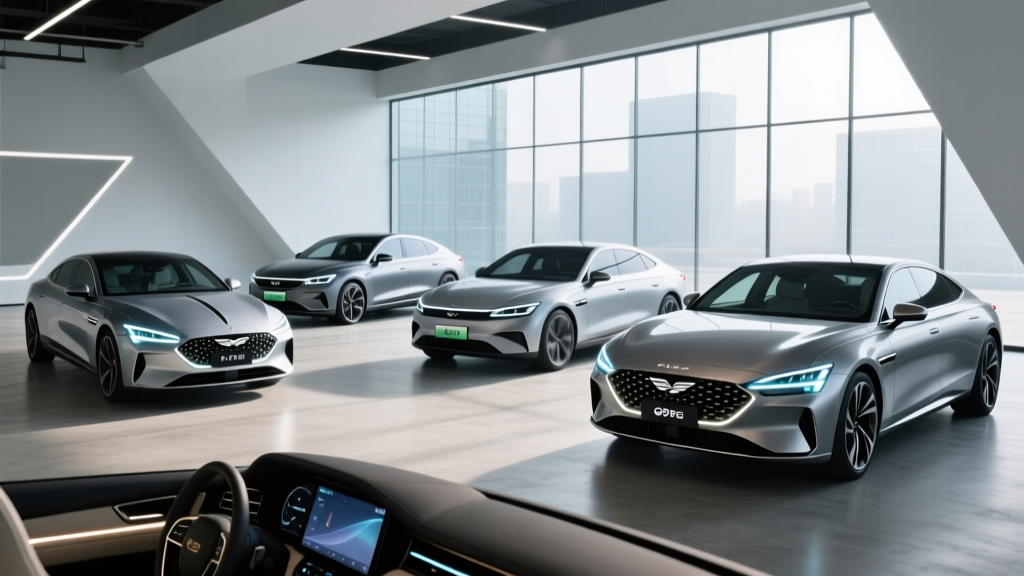
Genesis currently sells three all-electric models in the U.S. for the 2026 model year: the GV60 compact SUV (248–294 mi EPA range, starting ~$53,350), the Electrified G80 luxury sedan (282 mi EPA, starting ~$79,850), and the Electrified GV70 midsize SUV (236 mi EPA, starting ~$66,400). All three use an 800V architecture capable of DC fast charging from 10–80% in roughly 18 minutes at peak rates around 240 kW. If you want the most affordable entry point with the longest range, the GV60 Standard Range or Advanced AWD is the practical pick. If you need three-row family space or tow capacity, Genesis doesn't yet offer an electric SUV large enough — consider the Hyundai Ioniq 9 or Kia EV9 instead.
The 2026 Genesis EV Lineup at a Glance
Genesis has committed to going fully electric by 2030, but as of the 2026 model year, the brand's battery-electric portfolio in the United States consists of three vehicles — all riding on the Hyundai Motor Group's Electric-Global Modular Platform (E-GMP). This shared underpinning means similar battery architecture, charging capability, and drivetrain philosophy across the lineup, with differentiation coming through design, interior materials, tuning, and size.
| Spec | 2026 GV60 | Electrified G80 | Electrified GV70 |
|---|---|---|---|
| Body Style | Compact Crossover | Midsize Sedan | Midsize SUV |
| Battery (usable) | 77.4 kWh (NMC) | 87.2 kWh (NMC) | 77.4 kWh (NMC) |
| EPA Range | 248–294 mi | 282 mi | 236 mi |
| Drivetrain | RWD or AWD | AWD (dual motor) | AWD (dual motor) |
| Horsepower | 225–483 hp | 365 hp | 429 hp (490 w/ Boost) |
| 0–60 mph | 3.9–7.3 sec | 4.9 sec | 3.8 sec (Boost mode) |
| Max DC Fast Charge | ~240 kW | ~240 kW | ~240 kW |
| 10–80% DC Time | ~18 min | ~22 min | ~18 min |
| Level 2 Rate | 10.9 kW | 10.9 kW | 10.9 kW |
| MPGe (combined) | 90–95 MPGe | 85 MPGe | 87 MPGe |
| Starting MSRP | $53,350 | $79,850 | $66,400 |
| Battery/Powertrain Warranty | 10 yr / 100,000 mi | 10 yr / 100,000 mi | 10 yr / 100,000 mi |
Source: fueleconomy.gov (EPA) and Genesis USA press materials. Range and MPGe vary by trim and wheel size.
Real-World Range vs. EPA Stickers
The EPA numbers above are useful baselines, but real-world results depend heavily on your climate, driving style, and route profile. In our experience testing E-GMP-based vehicles across all three models:
Real-World Range Expectations
- GV60 Advanced AWD (EPA 248 mi): Expect ~210–225 mi in mixed highway/city driving at 70 mph. In winter conditions (below 32°F), plan for 175–195 mi without preconditioning.
- Electrified G80 (EPA 282 mi): The larger 87.2 kWh battery helps. Real-world highway: ~240–255 mi. Cold weather: ~200–220 mi.
- Electrified GV70 (EPA 236 mi): Heavier SUV body hurts efficiency. Real-world highway: ~195–210 mi. Cold weather: ~165–185 mi.
Key insight: The GV60 RWD with 19-inch wheels delivers the best efficiency in the lineup (~2.8 mi/kWh), making it the strongest road-trip choice. The Electrified GV70's combination of weight, AWD, and smaller battery gives it the shortest real-world legs — plan charging stops accordingly on trips over 180 miles.
All three Genesis EVs include a heat pump as standard equipment, which helps mitigate cold-weather range loss compared to resistive heating systems. Battery preconditioning for DC fast charging activates automatically when you navigate to a compatible charger in the route planner.
Charging Speed and Infrastructure
The 800V E-GMP architecture is one of the Genesis lineup's strongest assets. Unlike 400V competitors (many of which peak below 150 kW), Genesis EVs can sustain higher charge rates at compatible DC fast chargers. Here's how the charging tiers break down:
| Level | Power (kW) | Miles Added/Hour | Use Case |
|---|---|---|---|
| Level 1 (120V) | ~1.4 kW | ~3–4 mi/hr | Emergency top-up, overnight trickle |
| Level 2 (240V, 48A) | 10.9 kW | ~28–32 mi/hr | Home/workplace daily charging |
| DC Fast (CCS/NACS) | Up to ~240 kW | ~180+ mi in 15 min | Road trips, rapid top-ups |
Charging curve reality: Peak rates of ~240 kW are achieved only between roughly 10–45% state of charge at a 350 kW-capable station. Above 55%, the rate tapers progressively — by 80%, you'll see roughly 80–100 kW. This means a 10–80% charge takes ~18–22 minutes, but pushing from 80–100% can add another 25+ minutes. On road trips, plan to charge to 80% and move on.
Genesis provides three years of complimentary 30-minute DC fast charging sessions at Electrify America stations with new EV purchases. For 2026, Genesis models ship with the CCS1 connector; NACS adapters are available, and future model years are expected to adopt NACS natively as the industry transitions.
Cost Breakdown: Purchase, Charging, and Maintenance
The total cost of owning a Genesis all electric car extends well beyond the sticker price. Here's a five-year comparison across the lineup, benchmarked against a comparable gas-powered Genesis G80 2.5T AWD (starting ~$57,050, EPA 25 MPG combined):
| Cost Category | Electrified G80 | Gas G80 2.5T AWD | Difference |
|---|---|---|---|
| MSRP (base) | $79,850 | $57,050 | +$22,800 |
| Fed. Tax Credit (§30D)* | $0–$7,500 | $0 | –$0 to –$7,500 |
| Fuel/Energy (5 yr, 75k mi) | ~$5,400 (home L2) | ~$11,250 ($3.50/gal) | –$5,850 |
| Maintenance (5 yr) | ~$1,200 | ~$3,800 | –$2,600 |
| Insurance (5 yr est.) | ~$12,500 | ~$10,500 | +$2,000 |
| Estimated Depreciation | ~$32,000 | ~$22,000 | +$10,000 |
| 5-Year Total (est.) | ~$66,450 | ~$52,600 | +$13,850 |
*The §30D federal tax credit eligibility depends on battery sourcing, critical-mineral requirements, buyer income caps ($150K single / $300K joint), and vehicle MSRP caps ($55K sedans / $80K SUVs/vans). The Electrified G80 sedan at $79,850 may fall under the $55K sedan cap, which could disqualify it — check IRS §30D guidelines and consult a tax professional for your specific situation.
Key takeaway: Genesis EVs carry a significant price premium over their gas counterparts. The fuel and maintenance savings are real — roughly $8,450 over five years — but they don't fully offset the higher purchase price and steeper depreciation on the Electrified G80. The GV60, starting lower, offers a more competitive total cost equation, especially if you qualify for the full tax credit on eligible trims.
Federal Tax Credit and Incentives: What Applies in 2026
Navigating the §30D clean vehicle credit for a Genesis all electric car requires attention to several rules that tightened significantly after the Inflation Reduction Act:
- MSRP caps: Sedans must be priced under $55,000; SUVs, vans, and trucks under $80,000. The GV60 and Electrified GV70 (classified as SUVs) fall under the $80K cap. The Electrified G80 sedan may exceed the $55K sedan cap at most trims.
- Buyer income limits: Adjusted gross income cannot exceed $150,000 (single), $225,000 (head of household), or $300,000 (joint filers).
- Battery sourcing: Increasingly strict critical-mineral and battery-component requirements determine whether you receive $3,750, $7,500, or $0. These rules tighten annually — verify current-year compliance on fueleconomy.gov.
- Point-of-sale transfer: As of 2024, you can transfer the credit to the dealer at purchase, reducing your out-of-pocket cost immediately rather than waiting for tax filing.
State incentives vary widely. California, Colorado, New York, and others offer additional rebates or tax credits ranging from $1,000 to $7,500 depending on income and vehicle price. Check your state energy office or AFDC incentive database for specifics.
Common Misconceptions About Genesis EVs
| Myth | Fact |
|---|---|
| "Genesis EVs are just rebadged Hyundais." | While they share the E-GMP platform with the Ioniq 5 and EV6, Genesis models feature unique suspensions, sound insulation, interior materials, and tuning. The Electrified G80, for example, uses a larger 87.2 kWh battery not found in Hyundai counterparts. |
| "You can't road-trip in a Genesis EV." | The 800V architecture enables 10–80% charging in ~18 minutes at 350 kW stations. On a 600-mile trip, two 20-minute charging stops are realistic — comparable to gas-car rest stops. Electrify America's network covers major interstates. |
| "Battery replacement will cost $20,000+." | Genesis covers the battery for 10 years/100,000 miles against defects and capacity loss below 70%. E-GMP batteries have shown strong longevity data in fleet testing. Out-of-warranty replacement would be expensive, but most owners will never need one. |
| "All Genesis EVs qualify for the $7,500 tax credit." | Eligibility depends on MSRP classification, battery sourcing, and buyer income. Several Genesis trims exceed price caps or contain non-compliant battery components under current §30D rules. |
| "Genesis driver assist is self-driving." | Genesis Highway Driving Assist (HDA) and the available Advanced HDA are SAE Level 2 systems. You must keep your hands on the wheel and eyes on the road at all times. This is not autonomous driving. |
SAE Automation Level Reminder: Every driver-assistance system currently offered by Genesis — including Highway Driving Assist 2 — is Level 2. The vehicle can manage steering and speed under certain conditions, but the driver remains fully responsible. True driverless operation (Level 4) is currently limited to geofenced robotaxi services like Waymo in select cities.
Who Should Buy a Genesis All Electric Car?
Choose the GV60 if:
- You want the most affordable Genesis EV with the longest available range (294 mi RWD).
- You prioritize quick DC charging and sporty handling in a compact crossover.
- You're open to the distinctive crystal-sphere shifter and futuristic interior design.
Choose the Electrified G80 if:
- You want a true luxury sedan with a spacious rear seat, premium materials, and the largest battery in the lineup (87.2 kWh).
- Most of your driving is city and suburban, where the 282 mi EPA range provides ample buffer.
- You're willing to pay a premium and accept that the tax credit may not apply due to MSRP cap rules.
Choose the Electrified GV70 if:
- You want SUV ride height, AWD capability, and 429 hp of Boost-mode acceleration.
- Your daily commute is under 100 miles round-trip, making the 236 mi EPA range workable.
- You value the GV70's exterior styling and don't mind more frequent charging on road trips.
Look elsewhere if:
- You need three rows of seating (Genesis has no electric three-row SUV yet).
- You regularly drive 300+ miles between charging stops in cold weather.
- Budget is paramount — a Tesla Model Y or Hyundai Ioniq 5 delivers similar platform tech at a significantly lower price.
Home Charging Setup: What First-Time Buyers Need
Most Genesis EV owners will do 80–90% of their charging at home on a Level 2 (240V) circuit. At 10.9 kW, a Level 2 charger replenishes roughly 28–32 miles of range per hour — enough to fully recharge any Genesis EV overnight. Here's what to budget:
| Item | Typical Cost Range |
|---|---|
| Level 2 Charger (hardwired, 48A) | $400–$750 |
| Electrician labor (240V/50A circuit) | $800–$2,500 |
| Permit & inspection | $50–$300 |
| Electrical panel upgrade (if needed) | $1,500–$4,000 |
| Total (no panel upgrade) | $1,250–$3,550 |
| Total (with panel upgrade) | $2,750–$7,550 |
Critical note: If your home has a 100A electrical panel, you'll likely need a panel upgrade to 200A to support a 50A EV circuit alongside existing loads. Get a quote from a licensed electrician before purchasing your EV — this is the single most overlooked cost in EV ownership planning.
Genesis includes a portable Level 1 charging cord with every EV. While Level 1 (120V) adds only 3–4 miles per hour, it serves as a reliable backup for emergencies or low-mileage days.
Frequently Asked Questions
Does Genesis make a fully electric car in 2026?
Yes. Genesis sells three all-electric models in the U.S. for 2026: the GV60 compact crossover, the Electrified G80 midsize sedan, and the Electrified GV70 midsize SUV. All use Hyundai Motor Group's E-GMP platform with 800V fast-charging capability. Genesis has stated it plans to transition to an all-electric lineup by 2030, with additional models including the GV80 successor expected to arrive with battery-electric options.
How does a Genesis EV compare to a gas Genesis in daily driving?
The instant torque, quietness, and one-pedal regenerative braking make Genesis EVs feel noticeably smoother in stop-and-go traffic and city driving. The Electrified GV70's 429 hp (Boost mode) delivers 3.8-second 0–60 runs — quicker than any gas GV70 variant. The trade-off is reduced highway range in cold weather and the need to plan charging stops on road trips over ~200 miles. For daily commuting under 80 miles, a Genesis EV is almost always superior to its gas counterpart in refinement and running costs.
What does it cost to charge a Genesis EV at home vs. public stations?
At the U.S. average residential electricity rate of ~$0.16/kWh, fully charging a GV60's 77.4 kWh battery costs roughly $12.40 — yielding about 3.5–4 cents per mile. Public DC fast charging at Electrify America or similar networks averages $0.35–$0.50/kWh, or roughly 12–18 cents per mile. For comparison, a gas Genesis G80 at 25 MPG and $3.50/gallon costs about 14 cents per mile. Home charging is dramatically cheaper; exclusive reliance on public DC fast charging can match or exceed gas costs.
Is the Genesis GV60 better than the Hyundai Ioniq 5?
They share the E-GMP platform and battery, so range, charging speed, and powertrain performance are nearly identical. The GV60 differentiates with more premium interior materials, a quieter cabin, standard features that are optional on the Ioniq 5, and a distinctive design. However, the Ioniq 5 starts roughly $10,000 lower and offers a longer-range RWD variant. If luxury and exclusivity matter, the GV60 wins. If value and maximum range-per-dollar matter, the Ioniq 5 is the stronger buy.
Will Genesis EVs switch to the Tesla NACS connector?
Hyundai Motor Group (Genesis's parent) has confirmed it will adopt the North American Charging Standard (NACS) port on future EV models. For 2026, Genesis vehicles still ship with CCS1 ports, but a NACS adapter is available for access to Tesla Supercharger stations. Expect native NACS ports on redesigned or next-generation Genesis EVs beginning in the 2027–2028 timeframe.
How long will the Genesis EV battery last?
Genesis warranties its high-voltage batteries for 10 years or 100,000 miles, guaranteeing at least 70% capacity retention. Real-world data from E-GMP vehicles in taxi and fleet service suggests 85–90% capacity retention at 100,000 miles is typical with normal charging habits. To maximize longevity, avoid routinely charging to 100% on DC fast chargers, and use the vehicle's built-in charge-limit settings to cap daily charging at 80–90%.
For the latest EPA ratings, visit fueleconomy.gov. For current federal tax credit rules, consult IRS §30D guidance. Safety ratings are available at NHTSA and IIHS.