Quick Answer: The General Motors EV1 was a two-seat electric coupe produced from 1996 to 1999, available only through lease in select California and Arizona markets. It offered 70–80 miles of real-world range on its initial lead-acid battery pack and up to ~142 miles with the later nickel-metal hydride (NiMH) upgrade. GM produced roughly 1,117 units before canceling the program and recalling nearly all vehicles — most were crushed. The EV1 cannot be purchased today and is not a current-production vehicle, but its engineering DNA influenced every modern GM EV from the Bolt to the 2026 Cadillac Lyriq and Silverado EV.
What Was the General Motors EV1?
The General Motors EV1 holds a singular place in automotive history: it was the first purpose-built, mass-produced electric vehicle offered by a major automaker in the modern era. Born from GM's 1990 Impact concept car and developed in response to California's Zero Emission Vehicle (ZEV) mandate, the EV1 was a ground-up electric design — not a converted gasoline car.
GM never sold the EV1 outright. Instead, it was available exclusively through a limited lease program in Southern California, the San Francisco Bay Area, Phoenix, and Tucson. Monthly leases ran approximately $399 to $549 depending on the model year and battery configuration, with a total of 1,117 units produced across two generations before the program ended in 1999.
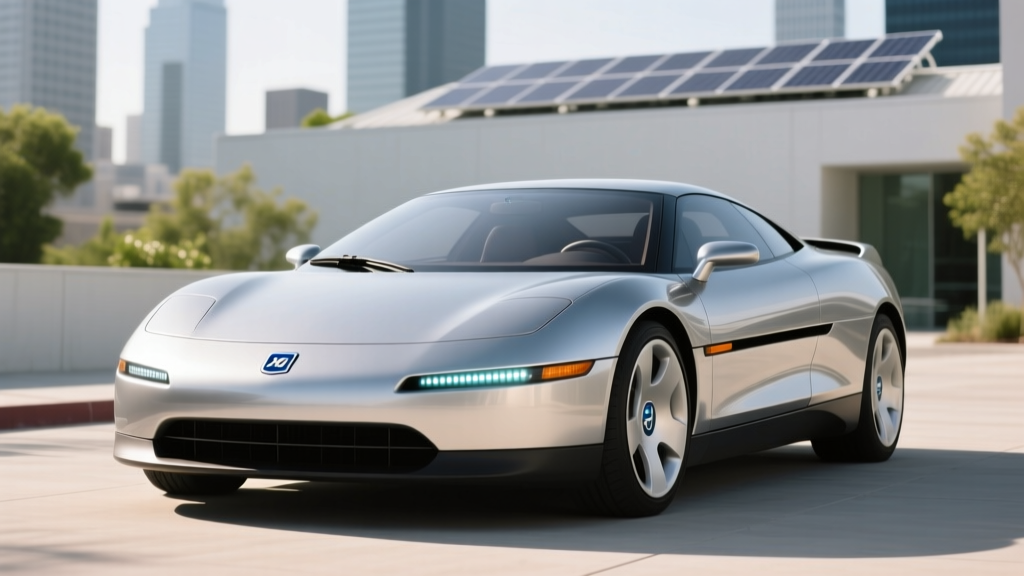
The EV1 was a compact, aerodynamic two-seater with a drag coefficient of just 0.19 Cd — still one of the lowest of any production car ever built. Its teardrop shape, covered rear wheel arches, and lightweight aluminum-and-composite construction were all optimized to extract maximum range from limited battery technology.
EV1 Specifications: Battery, Range, and Performance
| Specification | Gen 1 (1996–1997) | Gen 2 (1997–1999) |
|---|---|---|
| Battery Chemistry | Lead-Acid (Delco) | NiMH (Ovonic / Panasonic) |
| Battery Capacity | 16.5 kWh (53 Ah) | 26.4 kWh (NiMH) |
| Usable Energy | ~13.2 kWh (80% usable) | ~22–24 kWh |
| Battery Weight | 1,175 lbs | ~800 lbs |
| EPA-Equivalent Range | 60–70 miles | 80–142 miles |
| Motor Type | AC Induction (3-phase) | AC Induction (3-phase) |
| Power Output | 102 kW (137 hp) | 102 kW (137 hp) |
| 0–60 mph | ~8.5 seconds | ~8.0 seconds |
| Top Speed | 80 mph (electronically limited) | 80 mph (electronically limited) |
| Vehicle Weight | ~2,970 lbs | ~2,900 lbs |
| Charge Time (240V) | ~5.5–6.5 hours (Magne Charge) | ~3–4 hours |
| Charging Standard | GM Magne Charge (inductive paddle) | GM Magne Charge (inductive paddle) |
The jump from lead-acid to NiMH batteries between Gen 1 and Gen 2 was transformative. The NiMH pack nearly doubled usable energy while shedding over 350 pounds, directly translating into the range improvement from ~70 miles to upwards of 142 miles under ideal conditions. This mirrors the same fundamental battery-chemistry-driven range gains we see today between older NMC cells and modern high-nickel or LFP chemistries.
Real-World Range Reality: The EV1's 142-mile figure for the Gen 2 NiMH pack was achieved under optimal conditions — moderate temperatures, city-speed driving, minimal HVAC use. Real-world highway driving at 65+ mph reduced range by approximately 25–35%. Cold weather (below 40°F) further cut range by 20–30% due to reduced battery efficiency and heater load. Most Gen 2 lessees reported practical daily ranges of 80–100 miles in mixed driving.
Charging the EV1: Magne Charge and Early Infrastructure
The EV1 used GM's proprietary Magne Charge inductive charging system — a large paddle that inserted into a slot on the car's front fascia. This was a contactless system using electromagnetic induction to transfer energy without exposed electrical contacts, a safety-focused design for its era.
| Charging Level | Voltage / Power | Charge Time (Gen 2 NiMH) | Availability |
|---|---|---|---|
| Level 1 (Convenience Cord) | 120V / ~1.4 kW | ~15–18 hours (0–100%) | Any standard outlet |
| Level 2 (Magne Charge Paddle) | 240V / ~6.6 kW | ~3–4 hours (0–100%) | Home station + select public |
| DC Fast Charging | Not supported | N/A | Did not exist for consumer EVs |
GM installed home Magne Charge stations for lessees, typically on a dedicated 240V/40A circuit — conceptually identical to the Level 2 home charging setup a 2026 EV buyer would install today, albeit with a proprietary connector rather than the now-standard J1772 or NACS plug. The public charging network in 1996–1999 was virtually nonexistent outside of a handful of stations GM and utilities placed in California metro areas.
EV1 vs. Modern GM EVs: How Far the Technology Has Come
Comparing the General Motors EV1 to current GM electric vehicles puts three decades of battery and powertrain progress into stark relief. The table below compares the EV1 Gen 2 against the 2026 Chevrolet Equinox EV and Cadillac Lyriq — representing GM's mainstream and premium EV offerings today.
| Specification | GM EV1 Gen 2 (1999) | 2026 Chevy Equinox EV | 2026 Cadillac Lyriq |
|---|---|---|---|
| Battery Chemistry | NiMH | NMC (Ultium) | NMC (Ultium) |
| Battery Capacity | 26.4 kWh | 85 kWh (usable) | 102 kWh (usable) |
| EPA Range | ~80–142 mi | 319 mi | 314 mi |
| DC Fast Charge Peak | None | ~150 kW | ~190 kW |
| 10–80% DC Charge | N/A | ~30 min | ~28 min |
| Motor Power | 102 kW (137 hp) | 213 kW (288 hp) | 255 kW (340 hp) |
| 0–60 mph | ~8.0 sec | ~7.8 sec (FWD) | ~6.0 sec (RWD) |
| Seats | 2 | 5 | 5 |
| Starting MSRP | Lease only (~$399/mo) | $33,600 | $58,590 |
| Connector | Magne Charge (proprietary) | NACS | NACS |
| ADAS | None | Super Cruise (Level 2) | Super Cruise (Level 2) |
The contrast is dramatic. Modern Ultium-platform vehicles carry 3–4x the energy in packs that are proportionally lighter, charge at speeds the EV1 could never achieve, and offer five-passenger practicality with over 300 miles of EPA range. The Equinox EV's base price of roughly $33,600 — potentially reduced by up to $7,500 through the IRS §30D federal tax credit depending on income, MSRP, and battery-sourcing eligibility — makes it accessible at a price point the EV1 program never reached.
ADAS Note: Super Cruise on current GM vehicles is a SAE Level 2 driver-assistance system. It enables hands-free driving on mapped highways but requires the driver to remain attentive and engaged at all times. It is not self-driving (Level 4/5). GM's camera-based driver monitoring system enforces this requirement.
Why GM Killed the EV1 — and What It Cost
The cancellation of the General Motors EV1 remains one of the most debated decisions in automotive history. Multiple factors converged:
- California's ZEV mandate was weakened: Automakers lobbied successfully to relax the requirement, reducing the regulatory pressure that justified the EV1's existence.
- Battery cost and supply: NiMH batteries were expensive and supply-constrained. Ovonic Battery Company (later acquired by Chevron via a joint venture) controlled key patents, creating licensing complications.
- Low profitability: The EV1 was a low-volume, money-losing program. GM viewed it as a compliance exercise rather than a growth business.
- Oil industry influence: Critics — notably in the 2006 documentary Who Killed the Electric Car? — argue petroleum interests played a role in undermining EV mandates.
GM recalled all leased EV1s in the early 2000s despite lessee protests and offers to purchase the vehicles. Most were crushed at GM's proving grounds. A small number were donated to museums and universities with disabled powertrains. Only one known EV1 — car #57 — was reportedly found intact in a private collection, though it remains non-functional.
| Myth | Fact |
|---|---|
| "The EV1 proved EVs don't work." | The EV1 demonstrated that EVs could work with 1990s battery tech. Its limitations (range, cost, seats) were technology constraints of the era, not fundamental flaws. Modern Ultium EVs with 300+ mi range have fully resolved those limitations. |
| "GM destroyed all EV1s out of spite." | GM cited liability concerns, parts availability, and the fact that vehicles were leased (not sold) as reasons for the recall. However, refusing lessees' purchase offers and crushing rather than preserving the fleet remains controversial. |
| "You can still buy an EV1." | You cannot. Nearly all were destroyed. Museum-donated units have disabled powertrains. No functional EV1 is available for private ownership. |
| "The EV1 had no impact on modern EVs." | The EV1 pioneered regenerative braking integration, inductive charging, aerodynamic EV design, and AC induction motor application — all technologies that carried forward into the Tesla Roadster, Chevy Bolt, and Ultium platform. |
What the EV1 Teaches First-Time EV Buyers in 2026
The EV1's story contains practical lessons for anyone evaluating an electric vehicle purchase today:
EV Buying Decision Framework:
- If you have reliable home Level 2 charging (240V): A modern EV like the Equinox EV or Tesla Model Y is practical as a daily driver with 300+ mi range and overnight charging convenience.
- If you lack home charging access: A PHEV like the Chevrolet Corvette E-Ray or a hybrid may be more practical until you can secure consistent charging. Relying solely on public DC fast charging adds cost and time.
- If you drive 200+ miles daily or frequently tow: Consider whether a modern EV's real-world range (expect ~250 mi highway, less in cold) and DC fast charging speeds (10–80% in ~25–35 min) fit your routine, or whether a PHEV/HEV is a better bridge.
- If you live in a cold climate (frequent sub-30°F temps): Budget 25–35% range loss in winter. A vehicle with a heat pump (standard on many 2026 GM Ultium EVs) mitigates cabin-heating energy draw. Choose a larger battery pack than you think you need.
- If you want the lowest total cost of ownership: Compare electricity cost per mile (~$0.04–$0.06/mi at home rates) vs. gasoline (~$0.12–$0.16/mi at $3.50/gal and 25 MPG). Over 5 years at 12,000 mi/year, that's roughly $4,800–$7,200 in fuel savings — but factor in potentially higher insurance premiums and upfront price.
| Cost Category | 1999 GM EV1 (Annual Est.) | 2026 Equinox EV (Annual Est.) | 2026 Gas Compact SUV (Annual Est.) |
|---|---|---|---|
| Fuel/Energy (12,000 mi/yr) | ~$300 (electricity) | ~$480–$720 (electricity) | ~$1,440–$1,920 (gasoline) |
| Maintenance | Very low (no oil, minimal brakes) | Low (~$300–$500) | Moderate (~$600–$1,000) |
| Insurance | Data unavailable | ~$1,800–$2,400 | ~$1,400–$1,800 |
| Depreciation | N/A (lease only) | ~$4,000–$5,500/yr | ~$3,000–$4,500/yr |
| Battery Replacement Risk | High (NiMH, unproven longevity) | Low (8 yr/100,000 mi warranty, GM warranty) | N/A (12V only) |
The EV1's Lasting Legacy in 2026
Three decades after its debut, the General Motors EV1's influence is visible across the EV landscape:
- AC induction motors: The EV1's AC induction motor architecture was directly adopted by Tesla's early Roadster and Model S, and induction motors remain widely used in EV drivetrains today.
- Regenerative braking: The EV1's sophisticated regen system — which enabled early one-pedal-style driving — is now standard on virtually every EV, from the Nissan Leaf to the GMC Hummer EV.
- Aerodynamic optimization: The EV1's 0.19 Cd proved that extreme aero efficiency could extend range. Modern EVs like the Mercedes EQS (0.20 Cd) and Lucid Air (0.197 Cd) follow the same philosophy.
- Charging infrastructure lessons: The EV1's reliance on a proprietary connector (Magne Charge) that went nowhere is a cautionary tale echoed in today's transition from CCS to NACS. Standardization wins — as GM's 2026 adoption of the NACS connector across its entire EV lineup demonstrates.
- Platform strategy: GM's mistake of treating the EV1 as a one-off compliance car rather than a platform investment is precisely the error the company corrected with its dedicated Ultium architecture, which underpins everything from the Equinox EV to the Silverado EV and Cadillac Celestiq.
For historians, engineers, and EV enthusiasts, the EV1 remains a landmark vehicle — proof that electric propulsion was viable decades before lithium-ion batteries made it mainstream. For today's buyers, the real takeaway is simpler: the technology constraints that doomed the EV1 have been thoroughly solved. A $33,600 Equinox EV with 319 miles of range, DC fast charging, and an 8-year battery warranty represents the future the EV1's engineers envisioned — finally delivered.
Frequently Asked Questions
Can I buy a General Motors EV1 today?
No. GM produced approximately 1,117 EV1s between 1996 and 1999, all through lease-only programs. After the program was canceled, nearly all vehicles were recalled and crushed. A handful were donated to museums and universities with disabled drivetrains. No functional EV1 is available for private purchase.
Why did GM recall and destroy the EV1?
GM cited liability, parts availability, and safety concerns as reasons for recalling leased vehicles rather than selling them. The weakening of California's ZEV mandate removed the regulatory justification for the program. Critics argue GM also recognized the EV1 as unprofitable and chose to exit rather than invest further.
How did the EV1 compare to a gas car of its era?
The EV1 offered dramatically lower operating costs (pennies per mile for electricity vs. ~$0.10/mi for gasoline in the late 1990s), near-silent operation, instant torque, and zero tailpipe emissions. However, its 70–142 mile range, two-seat layout, 80 mph speed limiter, and high battery replacement cost made it impractical as a sole vehicle for most drivers.
Did the EV1 influence Tesla or other modern EVs?
Indirectly, yes. Key EV1 engineers and the broader knowledge base from the program informed the EV industry. Tesla co-founder Martin Eberhard and others have cited the EV1 as proof that electric cars could be compelling. The AC induction motor technology and regenerative braking approaches pioneered in the EV1 became foundational across the industry.
What was the EV1's battery warranty and replacement cost?
GM provided a battery warranty for the duration of the lease. NiMH pack replacement costs were estimated at $5,000–$8,000 in late-1990s dollars — a significant expense that reflected the immature state of EV battery supply chains. By comparison, a 2026 Ultium battery replacement under warranty is covered for 8 years/100,000 miles, and out-of-warranty costs, while still substantial, benefit from vastly scaled manufacturing.
What modern GM EV is closest in spirit to the EV1?
The Chevrolet Bolt EV/EUV (discontinued 2023, with a next-generation Ultium-based Bolt returning) was the closest spiritual successor — an affordable, efficiency-focused, purpose-built electric vehicle for everyday driving. In the 2026 lineup, the Equinox EV carries that torch with 319 miles of EPA range starting around $33,600.