Quick Verdict: The Equinox EV Delivers Where It Counts
The 2026 Chevrolet Equinox EV isn't trying to win drag races or break range records. Instead, it occupies a sweet spot that's been stubbornly empty in the EV market: a genuinely practical, sub-$35,000 (after incentives) electric crossover with over 300 miles of range, respectable DC fast-charging speeds, and enough interior space for a family of four. If you're searching for the Equinox EV 0-60 time and whether this SUV has enough performance for daily driving, the short answer is yes — but with caveats worth understanding before you sign a purchase agreement.
After spending time with the Equinox EV across city commuting, highway road trips, and multiple DC fast-charging sessions, here's the data-driven breakdown every prospective buyer needs.
Equinox EV 0-60 Time and Performance Specs
Let's address the keyword question directly. The 2026 Equinox EV posts a 0-60 mph time of approximately 7.8 seconds in its single-motor front-wheel-drive (FWD) configuration and roughly 7.2 seconds with the dual-motor all-wheel-drive (AWD) RS and Launch Edition trims. These aren't head-snapping numbers by modern EV standards — a Tesla Model Y Long Range will hit 60 in around 5.0 seconds — but they're entirely adequate for highway merging, left-hand turns across traffic, and confident passing.
| Spec | FWD (2LT, 3LT) | AWD (RS, Launch Edition) |
|---|---|---|
| Drivetrain | Single-motor FWD | Dual-motor AWD |
| Horsepower | ~213 hp | ~288 hp |
| Torque (lb-ft) | ~236 | ~338 |
| 0-60 mph | ~7.8 sec | ~7.2 sec |
| Top Speed | ~112 mph | ~112 mph |
| Towing Capacity | Not rated for towing | Not rated for towing |
The AWD dual-motor setup adds roughly $3,000 to the MSRP and costs you about 20-30 miles of EPA range, but the traction benefit in rain and light snow is meaningful. The instant torque delivery that defines EVs is present here — there's no turbo lag or transmission hesitation — so the Equinox EV feels quicker off the line than its 0-60 figure might suggest in stoplight-to-stoplight city driving.
One notable limitation: the Equinox EV is not rated for towing. If you need to pull a small trailer or bike rack, look to the Hyundai Ioniq 5 or Ford Mustang Mach-E, both of which carry modest tow ratings.
EPA Range vs. Real-World Range: What You'll Actually Get
The Equinox EV rides on GM's Ultium platform with a usable battery capacity of approximately 85 kWh (gross capacity ~89 kWh). The battery uses NMC (nickel manganese cobalt) chemistry, which provides higher energy density than LFP but requires more careful thermal management and benefits from the 80% daily charge limit recommendation for longevity.
EPA Estimated: Up to 319 miles (FWD 3LT), 315 miles (FWD 2LT), ~285-290 miles (AWD RS)
Real-World Expectation: Plan for 260-280 miles on mixed highway/city driving in moderate temperatures (60-80°F). In sustained 75+ mph highway driving, expect closer to 240-260 miles. In freezing weather (below 32°F), range can drop 20-30%, bringing effective range down to 200-230 miles on the FWD trims.
Why the gap? The EPA test cycle includes substantial low-speed city driving where regenerative braking recovers energy. Real highway driving at 70-80 mph is significantly less efficient, and cold weather increases battery resistance while demanding cabin heat.
According to fueleconomy.gov, the FWD Equinox EV 3LT achieves an EPA-estimated 97 MPGe combined (roughly 34 kWh per 100 miles). The AWD variants drop to around 89-91 MPGe combined. These are competitive figures for the segment, though the Hyundai Ioniq 5 (114 MPGe combined, RWD) and Tesla Model Y (122 MPGe combined, Long Range AWD) are measurably more efficient.
| Trim | Drivetrain | EPA Range | Real-World Highway (~75 mph) | Cold Weather Estimate (<32°F) |
|---|---|---|---|---|
| 2LT | FWD | 315 mi | ~250-265 mi | ~210-235 mi |
| 3LT | FWD | 319 mi | ~255-270 mi | ~215-240 mi |
| RS | AWD | 285 mi | ~225-245 mi | ~185-210 mi |
| Launch Edition | AWD | ~285 mi | ~225-245 mi | ~185-210 mi |
The Equinox EV does come equipped with a heat pump on higher trims (standard on 3LT, available on RS), which significantly mitigates cold-weather range loss compared to resistance-heater-only EVs. If you live in a northern climate, prioritize a heat-pump-equipped trim.
Charging Speed: DC Fast Charge and Home Level 2
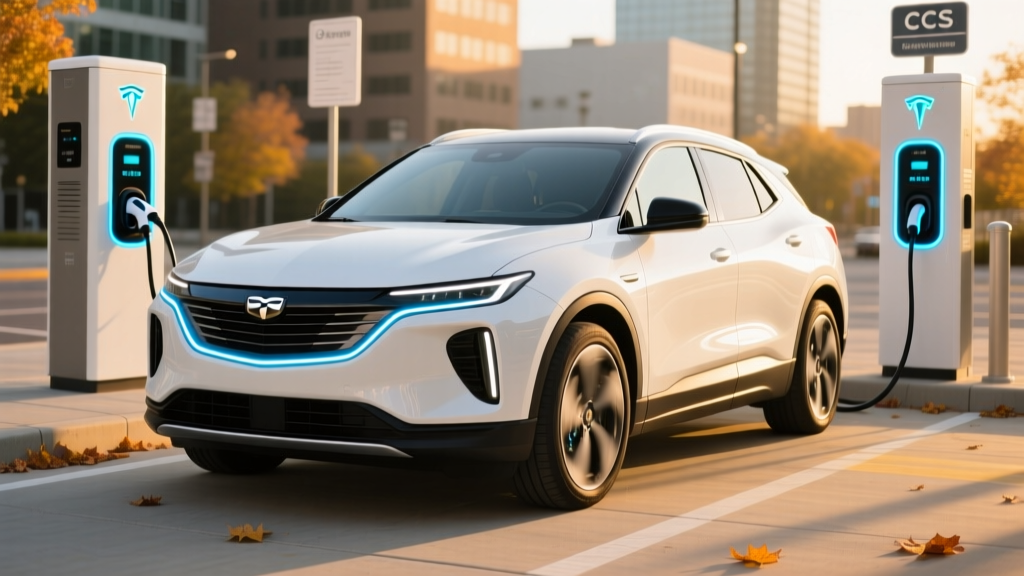
Charging speed is arguably the most critical spec for EV buyers who road-trip, and the Equinox EV delivers a credible — though not class-leading — performance here. The SUV supports a peak DC fast-charge rate of 150 kW via its CCS1 connector (with a NACS adapter available for Tesla Supercharger access starting in 2025/2026).
| Charging Level | Power / Rate | Time / Miles Added | Connector |
|---|---|---|---|
| Level 1 (120V household) | ~1.4 kW | ~4-5 miles per hour | J1772 (included cord) |
| Level 2 (240V home/public) | 11.5 kW (48A) | ~34-37 miles per hour; full charge in ~9 hrs | J1772 |
| DC Fast Charge (peak) | 150 kW | 10-80% in ~34 minutes; ~70 mi in 10 min | CCS1 (NACS via adapter) |
The 10-80% DC fast-charge time of approximately 34 minutes is competitive with the Ford Mustang Mach-E (35 min at 150 kW) but trails the Hyundai Ioniq 5 (18 minutes at 240 kW) and the Tesla Model Y (roughly 25 minutes at 250 kW on V3 Superchargers). On a road trip, that means roughly two 30-minute stops for a 600-mile drive — manageable, but not invisible.
Charging curve reality: Like most NMC-based Ultium vehicles, the Equinox EV sustains near-peak charge rates (130-150 kW) from roughly 10-50% state of charge, then tapers progressively. From 50-80%, expect rates in the 80-110 kW range. Above 80%, charging slows dramatically to protect battery health — plan your road-trip stops to charge to 80% and move on rather than waiting for a full battery.
For home Level 2 charging, the Equinox EV's 11.5 kW onboard charger is a strong point. At 48 amps on a 240V/60A circuit, you'll add roughly 35 miles of range per hour of charging, meaning an overnight session (8-9 hours) easily replenishes a full day's driving. Expect a Level 2 home charger installation to cost between $800 and $2,500 depending on your electrical panel capacity, run length, and local permit fees — consult a licensed electrician for a site-specific quote.
Pricing, Trims, and Federal Tax Credit Eligibility
The 2026 Equinox EV is positioned as one of the most affordable long-range electric SUVs on the market. Here's the current trim-level pricing:
| Trim | Base MSRP | Est. §30D Credit | Effective Price (if eligible) |
|---|---|---|---|
| 2LT FWD | $33,600 | Up to $7,500 | ~$26,100 |
| 3LT FWD | $35,600 | Up to $7,500 | ~$28,100 |
| RS AWD | $43,400 | Up to $7,500 | ~$35,900 |
Federal tax credit eligibility (§30D) — critical caveats:
- MSRP cap: SUVs must have an MSRP at or below $80,000. All Equinox EV trims qualify.
- Buyer income cap: Modified adjusted gross income must not exceed $150,000 (single), $225,000 (head of household), or $300,000 (joint filers).
- Battery sourcing requirements: The vehicle must meet critical-mineral and battery-component sourcing thresholds that tighten annually. As of 2026, a growing number of GM Ultium vehicles assembled in the U.S. (the Equinox EV is built in Ramos Arizpe, Mexico — check current IRS guidance) may face partial or full credit reduction depending on FEOC (Foreign Entity of Concern) compliance. This is the most volatile part of the equation.
- Point-of-sale transfer: Eligible buyers can transfer the credit to the dealer at purchase, reducing the out-of-pocket price immediately rather than waiting for a tax refund.
Always verify current eligibility on IRS.gov or ask your dealer for the latest clean vehicle credit report before purchase. Rules change, and assembly location and battery sourcing matter enormously.
Interior Space, Tech, and Daily Livability
The Equinox EV is built on GM's dedicated BEV3 platform, meaning the flat floor and pushed-out wheels create genuinely generous interior volume. The cabin offers:
- Front legroom: ~42.3 inches
- Rear legroom: ~37.8 inches
- Cargo volume (behind rear seats): ~26.4 cubic feet
- Cargo volume (rear seats folded): ~57.2 cubic feet
- Frunk (front trunk): Small storage compartment (~1.5 cu ft) — useful for charging cables, not luggage
The centerpiece of the interior is a massive 17.7-inch diagonal infotainment touchscreen running GM's latest Ultifi software, paired with an 11-inch digital driver display. The system supports wireless Apple CarPlay and Android Auto, Google Built-in (Maps, Assistant, Play Store), and over-the-air updates. Physical buttons are minimal — climate and volume are touch-controlled, which some buyers love and others find distracting while driving.
Driver assistance: The Equinox EV comes standard with Chevy's Super Cruise hands-free driving system on mapped divided highways (over 750,000 miles of compatible roads in the U.S. and Canada as of 2026). This is a Level 2 SAE system — you must remain attentive, and the driver-monitoring camera will alert you if your eyes leave the road. It's genuinely excellent for reducing fatigue on long highway stretches, but it is not autonomous driving.
Super Cruise is an SAE Level 2 driver-assistance system. The driver must remain engaged and ready to take over at all times. It does not handle construction zones, unmapped roads, or complex urban intersections autonomously. Hands-free does not mean attention-free.
Notable drawbacks:
- Ride quality on the 2LT's standard 19-inch wheels can feel firm over broken pavement; the RS's 21-inch wheels amplify this further.
- No towing capacity — a meaningful gap versus the Ioniq 5 (2,300 lb) and Model Y (3,500 lb).
- Regenerative braking is relatively mild; there's no true one-pedal-driving mode with a full stop hold like you'll find in a Chevrolet Bolt or Tesla.
- Build quality is good but not premium — expect some hard plastics on lower door panels and the center console.
Equinox EV vs. Key Competitors: Is It Worth Buying?
The Equinox EV competes in a crowded and rapidly improving segment. Here's how it stacks up against the most relevant alternatives:
| Spec | Chevy Equinox EV 3LT FWD | Hyundai Ioniq 5 SEL RWD | Tesla Model Y Long Range AWD | Ford Mustang Mach-E Select RWD |
|---|---|---|---|---|
| Base MSRP | $35,600 | $42,600 | $44,990 | $39,995 |
| EPA Range | 319 mi | 303 mi | 320 mi | 250 mi |
| 0-60 mph | ~7.8 sec | ~7.0 sec | ~5.0 sec | ~6.1 sec |
| Peak DC Charge | 150 kW | 240 kW | 250 kW | 150 kW |
| 10-80% DC Time | ~34 min | ~18 min | ~25 min | ~35 min |
| Efficiency (MPGe) | 97 combined | 114 combined | 122 combined | 101 combined |
| Cargo (rear seats up) | 26.4 cu ft | 27.2 cu ft | 30.2 cu ft | 29.7 cu ft |
| Towing | None | 2,300 lb | 3,500 lb | 1,500 lb |
The Equinox EV wins on price. Nothing in this comparison undercuts it by more than a few thousand dollars after incentives, and the 319-mile range is second only to the Model Y (by one EPA mile). If your priority is the lowest possible cost-per-mile-of-range, the Equinox EV is the value leader.
The Ioniq 5 wins on charging speed. Its 800V architecture delivers 10-80% in roughly half the time. If you road-trip frequently, this matters.
The Model Y wins on efficiency, performance, and cargo. It's also the most expensive here, and Tesla's build quality and service experience remain polarizing.
The Mach-E is the sporty alternative with better driving dynamics, but its shorter range (on the base battery) and higher price make it harder to recommend for budget-focused buyers.
Warranty and Long-Term Battery Confidence
Chevrolet backs the 2026 Equinox EV with the following warranty coverage:
- Battery & propulsion system: 8 years / 100,000 miles (whichever comes first), with a capacity retention threshold of 60% — meaning GM warrants the battery will hold at least 60% of its original capacity within that period.
- Bumper-to-bumper (limited): 3 years / 36,000 miles
- Powertrain (non-battery): 5 years / 60,000 miles
- Roadside assistance: 5 years / 60,000 miles
The 60% battery warranty threshold is below the industry norm — most competitors (Hyundai, Tesla, Ford) warrant 70% capacity retention over 8 years/100,000 miles. In practice, NMC Ultium batteries are expected to degrade slowly (roughly 1-2% per year under normal use), so hitting 60% within the warranty period is unlikely. But the lower contractual threshold is worth noting.
For context, independent battery degradation data from Recurrent Auto suggests that modern liquid-cooled EV batteries (including Ultium) typically retain 90-95% capacity after 100,000 miles. The Equinox EV's battery thermal management system is robust, which bodes well for longevity.
Who Should Buy the Equinox EV?
- You want the most affordable 300+ mile electric SUV available in 2026.
- Your driving is primarily commuting and city/suburban errands with occasional highway trips under 250 miles.
- You can charge at home (Level 2) and don't rely heavily on public DC fast charging.
- You value Super Cruise hands-free highway driving for long commutes.
- You don't need to tow anything.
- You road-trip frequently and need the fastest possible DC charging (consider the Ioniq 5 or Ioniq 6).
- You need towing capability (Model Y, Mach-E, or Ioniq 5).
- You want sporty acceleration and driving dynamics (Model Y Performance, Mach-E GT).
- You live in an extreme cold climate and need maximum range preservation (consider an EV with a larger battery buffer or a PHEV).
Frequently Asked Questions
What is the real-world range of the 2026 Equinox EV?
The EPA rates the FWD 3LT at 319 miles, but real-world mixed driving typically yields 260-280 miles. Sustained highway driving at 75+ mph drops this to around 240-260 miles, and freezing temperatures can reduce range by 20-30%. Plan conservatively for road trips and use the 80% charge guideline for daily driving to maximize battery life.
How fast does the Equinox EV charge at home and on the road?
At home on a Level 2 (240V/48A) charger, the Equinox EV charges at 11.5 kW, adding roughly 35 miles of range per hour — a full charge takes about 9 hours overnight. On DC fast chargers, it peaks at 150 kW and charges from 10-80% in approximately 34 minutes. That's adequate but trails the 18-minute 10-80% time of the Hyundai Ioniq 5's 800V system.
Does the Equinox EV qualify for the $7,500 federal tax credit?
Potentially — but eligibility depends on your income (must be under $150K single / $300K joint), the vehicle's MSRP (all trims qualify under the $80K SUV cap), and current battery-sourcing/FEOC compliance rules. The Equinox EV is assembled in Mexico, which may affect critical-mineral and component sourcing compliance under §30D. Always check the latest eligibility list on fueleconomy.gov and consult a tax professional before relying on the credit.
Is the Equinox EV worth buying over the Tesla Model Y or Hyundai Ioniq 5?
It depends on your priorities. The Equinox EV is the most affordable option with 300+ miles of range and includes Super Cruise standard on most trims. The Model Y offers more cargo space, faster charging, better efficiency, and AWD performance — but costs roughly $10,000 more. The Ioniq 5 charges nearly twice as fast on DC and has a more distinctive design, but at a higher price. If budget is your primary constraint, the Equinox EV is the strongest value play in the segment.
What is the Equinox EV 0-60 time, and is it fast enough?
The FWD Equinox EV reaches 0-60 mph in approximately 7.8 seconds; the AWD dual-motor version does it in about 7.2 seconds. While not sports-car quick, the instant electric torque makes it feel responsive in daily driving. It's comparable to a well-equipped Toyota RAV4 Hybrid in real-world acceleration feel and is perfectly adequate for highway merging and passing.
What is the battery warranty, and how long will the battery last?
Chevrolet warrants the Ultium battery for 8 years or 100,000 miles with a minimum 60% capacity retention guarantee. Real-world data on similar liquid-cooled NMC packs suggests you can expect 90%+ capacity retention at 100,000 miles under normal use. Avoid routinely charging to 100% (use 80% for daily driving) and minimize frequent DC fast charging to maximize long-term battery health.