Quick Answer: The General Motors EV1 electric car was a two-seat, lead-acid (later NiMH) battery EV leased from 1996–1999 with 60–90 miles of range. GM recalled and crushed most units by 2003. You cannot buy one today. But the EV1's engineering — and its failure — directly shaped every modern GM EV, from the 2026 Equinox EV (319-mile EPA range, ~$35,000) to the Silverado EV. If you're researching the EV1 because you're considering a GM electric vehicle today, the real decision is between current Ultium-platform models and competing EVs, not a vintage collectible.
Searches for the "General Motors EV1 electric car" have surged among EV shoppers trying to understand where electric vehicles came from — and whether GM's EV track record is trustworthy. As someone who has owned and reviewed multiple generations of GM electrified vehicles, I'll walk you through exactly what the EV1 was, what it cost, why it died, and what its legacy means for your 2026 EV purchase decision.
The General Motors EV1 Electric Car: Exact Specs and History
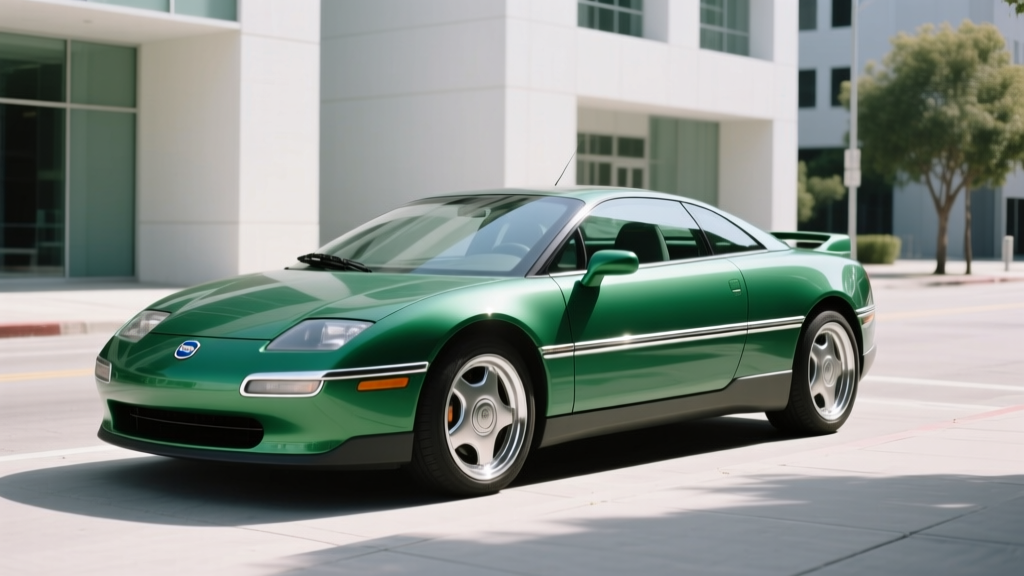
Launched in December 1996 as a 1997 model-year vehicle, the GM EV1 was available only through limited lease programs in California and Arizona. It was never sold outright — a decision that would later fuel conspiracy theories and the documentary Who Killed the Electric Car?
| Specification | Gen 1 (1997) | Gen 2 (1999) |
|---|---|---|
| Battery Chemistry | Lead-Acid (Delphi) | NiMH (Ovonic) |
| Battery Capacity | 16.5 kWh (usable ~13.5 kWh) | 26.4 kWh (usable ~22 kWh) |
| EPA-Equivalent Range | ~60 miles | ~80–90 miles (some drivers reported 100+) |
| Motor Output | 102 kW (137 hp) | 102 kW (137 hp) |
| 0–60 mph | ~8.0 seconds | ~8.0 seconds |
| Top Speed | 80 mph (electronically limited) | 80 mph (electronically limited) |
| Onboard Charger | 6.6 kW (Magne Charge inductive paddle) | 6.6 kW (Magne Charge inductive paddle) |
| Charge Time (0–100%) | ~5–8 hours (Level 2 equivalent) | ~5–8 hours (Level 2 equivalent) |
| Curb Weight | ~2,970 lbs | ~3,068 lbs |
| Lease Price | $399–$549/month | $399–$549/month |
| Units Produced | 1,117 total (Gen 1 + Gen 2) | |
For context, the EV1's Gen 2 NiMH pack delivered roughly the same usable energy as a 2026 Chevrolet Bolt EV's smallest battery module — but weighed nearly three times as much per kWh. Lead-acid chemistry in Gen 1 suffered severe range degradation in cold weather, losing 30–40% of its already-limited range below 40°F, a problem modern thermal management systems have largely solved.
The EV1 used an inductive charging paddle (Magne Charge, SAE J1773) rather than the conductive connectors we use today. GM later adopted the standard J1772 conductive connector, and by 2026, GM's entire EV lineup uses the NACS (North American Charging Standard) connector, granting access to Tesla Supercharger networks.
Why GM Killed the EV1: Ownership Costs and Market Reality
GM recalled all 1,117 EV1s between 2002 and 2003, refusing lease renewals and crushing most vehicles. Only a handful survive in museums. The reasons were economic and strategic, not purely technical:
- Battery replacement cost: The NiMH pack cost roughly $30,000+ to replace — more than the car's residual value. Modern NMC and LFP packs have dropped to ~$130–$150/kWh at the cell level.
- Low volume, high support cost: Maintaining specialized service infrastructure for 1,117 vehicles across two states was unsustainable.
- Regulatory shift: California's ZEV mandate was weakened in 2003, removing the regulatory pressure that created the EV1 market.
- Oil prices: Gasoline averaged $1.50/gallon in 2002–2003. The economic case for EVs collapsed without fuel-cost urgency.
The lesson for 2026 buyers: EV viability depends on the intersection of battery economics, charging infrastructure, and fuel prices — not just technology. Today, with gasoline averaging $3.50–$4.50/gallon depending on region and the federal §30D tax credit offering up to $7,500 (subject to MSRP caps, buyer income limits, and battery-sourcing requirements), the math has flipped entirely.
EV1 vs. 2026 GM EVs: What Changed in 30 Years
If you're researching the EV1 because you're evaluating GM as an EV manufacturer, here's how their current lineup compares to that pioneering vehicle:
| Metric | GM EV1 (1999 Gen 2) | 2026 Chevy Equinox EV 3RS | 2026 Cadillac Lyriq | 2026 Chevy Silverado EV 4WT |
|---|---|---|---|---|
| EPA Range | ~80–90 mi | 319 mi | 314 mi | 440 mi (Max Range pack) |
| Battery (usable) | ~22 kWh NiMH | ~85 kWh NMC (Ultium) | ~102 kWh NMC (Ultium) | ~200 kWh NMC (Ultium) |
| DC Fast Charge (peak) | None (AC only) | 150 kW (10–80% ~25 min) | 190 kW (10–80% ~22 min) | 350 kW (10–80% ~20 min) |
| Horsepower | 137 hp | 288 hp | 340 hp (RWD) / 500 hp (AWD) | 510 hp (4WT) |
| 0–60 mph | ~8.0 sec | ~7.5 sec | ~6.0 sec (RWD) | ~4.5 sec (4WT) |
| Starting MSRP | Lease only | ~$43,900 | ~$58,590 | ~$62,300 |
| Connector | Magne Charge (inductive) | NACS | NACS | NACS |
| Battery Warranty | N/A (leased) | 8 yr / 100,000 mi | 8 yr / 100,000 mi | 8 yr / 100,000 mi |
The jump from 22 kWh to 200 kWh usable capacity, from zero DC fast charging to 350 kW peak, and from a lease-only two-seater to a full-size truck with 440 miles of range represents the most dramatic vehicle-technology shift since the Model T. The Ultium platform's modular battery architecture — using pouch cells in horizontal and vertical orientations — gives GM flexibility the EV1's monolithic pack never had.
Real Costs: What a 2026 GM EV Actually Costs to Own
The EV1's $399–$549/month lease in 1996–1999 is roughly equivalent to $800–$1,100/month in 2026 dollars. Here's what current GM EV ownership looks like by comparison, using the popular Equinox EV as a baseline:
| Cost Category | 2026 Chevy Equinox EV 3RS | 2026 Gas Compact SUV (30 MPG avg) |
|---|---|---|
| Purchase Price (MSRP) | $43,900 | $33,000 |
| Federal Tax Credit (§30D, if eligible) | –$7,500 (point-of-sale) | $0 |
| Effective Purchase Price | $36,400 | $33,000 |
| Fuel/Energy (15,000 mi/yr × 5 yr) | ~$4,125 (home charging at $0.14/kWh) | ~$13,125 ($3.50/gal, 30 MPG) |
| Maintenance (5 yr) | ~$1,800 (no oil, fewer brake jobs) | ~$4,500 |
| Insurance (avg, 5 yr) | ~$11,500 | ~$9,500 |
| Estimated Depreciation (5 yr) | ~$16,000 | ~$14,000 |
| Total 5-Year Cost | ~$70,325 | ~$74,125 |
Key takeaways:
- The EV breaks even or saves money over 5 years primarily through fuel and maintenance savings — but only if you qualify for the full §30D credit and charge predominantly at home.
- EV insurance premiums run 15–25% higher on average due to repair costs and battery replacement risk. Get quotes before buying.
- Home charging at $0.14/kWh yields ~$0.055/mile. Public DC fast charging at $0.35–$0.50/kWh pushes costs to $0.12–$0.18/mile — still below gasoline but eroding the advantage.
- Depreciation on EVs remains higher than comparable gas vehicles, though this gap has narrowed significantly since 2023.
The §30D credit has strict eligibility rules for 2026: vehicle MSRP must be ≤$55,000 for sedans/wagons or ≤$80,000 for SUVs/trucks/vans; buyer AGI must be ≤$150,000 (single) or ≤$300,000 (joint); and the battery must meet critical-mineral and component-sourcing thresholds that tighten annually. Always verify current eligibility on IRS.gov before purchase — and consult a tax professional for your specific situation.
Common EV1 Myths — and What They Mean for Today's Buyers
| Myth | Fact |
|---|---|
| "GM proved EVs don't work." | The EV1 worked — lessees loved it. It died because of battery cost ($30K+ replacement), low volume, cheap gas, and weakened regulations. None of those conditions exist in 2026. |
| "EV batteries need replacing every few years." | Modern NMC and LFP packs are warrantied for 8 years/100,000 miles at ≥70% capacity retention. Real-world data shows most packs retain 85–92% capacity at 100K miles. The EV1's lead-acid pack degraded far faster. |
| "You can't road-trip in an EV." | The EV1's 80-mile range made road trips impractical. A 2026 Silverado EV with 440 miles of range and 350 kW DC fast charging adds ~200 miles in 12 minutes. The EPA's fueleconomy.gov lists verified ranges for all current models. |
| "GM can't be trusted with EVs." | GM has invested $35 billion+ in EV and autonomous development through 2025 and now offers 10+ Ultium-platform models. The EV1 was an R&D program; the current lineup is a production commitment. |
| "EVs are worse in cold weather." | All batteries lose range in cold — the EV1 lost 30–40%. Modern EVs with heat pumps and battery preconditioning lose 15–25%. Plan for it; it's manageable. |
Decision Framework: Should You Buy a 2026 GM EV?
Use this if-then framework to decide:
Choose a GM Ultium-platform EV if:
- You want NACS connector access to the Tesla Supercharger network (17,000+ stations) without an adapter
- You need a truck (Silverado EV) or a large SUV (Tahoe EV upcoming) with genuine towing capacity
- You value the 8-year/100,000-mile battery warranty and GM's nationwide dealer service network
- You qualify for the §30D credit, bringing effective pricing close to gas-vehicle equivalents
- You have home Level 2 charging access (a 240V/48A circuit adds ~25–30 miles of range per hour of charging)
Look at competitors instead if:
- You need a compact EV under $35K — the Hyundai Kona Electric or the next-gen Bolt (announced, expected 2026–2027) may offer better value
- You want the most mature ADAS — Tesla's FSD (Supervised) and GM's Super Cruise are both SAE Level 2 (driver must remain engaged), but Super Cruise is limited to ~750,000 mapped miles of compatible highways
- You live in an apartment without charging access and your area lacks reliable public DC fast charging — consider a PHEV like the Toyota RAV4 Prime (42 miles electric-only, 38 MPG combined on gas) as a bridge
- Cold-weather range loss is critical — LFP chemistry (used in some Tesla and Ford models) retains capacity well in cold, though GM's Ultium NMC packs with heat pumps perform adequately
Do NOT let the EV1's history deter you if:
- Your concern is battery longevity — Ultium packs are fundamentally different from 1990s NiMH
- Your concern is GM's commitment — they've staked their corporate strategy on electrification
- Your concern is range — 300+ miles EPA is standard across the lineup, with real-world highway expectations of 250–280 miles at 70 mph
What First-Time EV Buyers Should Know (That the EV1 Era Couldn't Teach)
If the EV1's story brought you here, you're likely early in your EV research. These are the ownership realities that matter in 2026:
Home charging is the foundation. A Level 2 home charger (240V, 40–48A, ~9.6–11.5 kW) costs $500–$1,200 for equipment plus $800–$2,500 for electrician installation, depending on panel capacity and conduit run length. If your home has a 200A panel with spare capacity, installation is straightforward. A 100A panel may require a $2,000–$4,000 upgrade. Get a quote from a licensed electrician before purchasing an EV.
kW vs. kWh — know the difference. kW (kilowatts) measures power — how fast energy flows. kWh (kilowatt-hours) measures energy — how much the battery holds. A 150 kW charger delivering power to an 85 kWh battery is like a fire hose filling a 85-gallon tank. Peak kW only applies at low state of charge; charging slows significantly above 80% to protect battery health (the "charge curve taper"). A "150 kW" charger averages ~80–100 kW over a 10–80% session.
Real-world range is less than the EPA sticker. Expect 85–90% of EPA range in mixed driving, 75–80% at sustained 75+ mph highway speeds, and 65–80% in freezing temperatures (depending on heat pump availability). A 319-mile Equinox EV realistically delivers ~250 miles on a cold-weather highway trip.
Public charging reliability varies. Tesla Superchargers maintain ~97% uptime. Non-Tesla networks (Electrify America, EVgo, ChargePoint) have improved but still experience 10–20% downtime at some stations. Plan backup charging stops on road trips.
Insurance costs more. Budget 15–25% higher premiums vs. an equivalent gas vehicle. Shop quotes from EV-friendly insurers before committing.
Frequently Asked Questions
Can I buy a GM EV1 today?
No. GM recalled and destroyed nearly all 1,117 EV1s produced. A small number exist in museums (Petersen Automotive Museum, Smithsonian) and a few were donated to universities with disabled powertrains. None are street-legal or available for private ownership. If you want a vintage EV experience, the closest purchasable equivalent is a 2012–2015 Tesla Roadster or an early Tesla Model S, though these carry significant battery-replacement risk.
Was the GM EV1 truly the first modern electric car?
It was the first mass-produced, purpose-built EV from a major automaker in the modern era. Earlier EVs like the 1970s CitiCar and various conversions existed, but the EV1 was the first with a dedicated platform, aerodynamic design (Cd 0.19), regenerative braking, and an inductive charging system. It directly influenced the Tesla Roadster (2008), Nissan Leaf (2010), and Chevy Volt (2011).
How does GM's current EV reliability compare to the EV1 era?
GM's Ultium-platform vehicles have faced some software and build-quality issues in early production years (2023–2024 Blazer EV and Silverado EV recalls for software glitches), but the underlying battery and powertrain technology is fundamentally robust. The EV1's problems were primarily battery chemistry limitations and low-volume support economics — neither applies to today's scaled production. Check NHTSA.gov for current recall status on any model you're considering.
What's the best GM EV to buy in 2026?
For most buyers, the 2026 Chevy Equinox EV 3RS offers the best value: 319 miles EPA range, 288 hp, NACS connector, and ~$43,900 MSRP (~$36,400 after the §30D credit if eligible). For truck buyers, the Silverado EV 4WT provides 440 miles and genuine work capability. For luxury, the Cadillac Lyriq delivers 314 miles and premium build quality at ~$58,590. The best choice depends on your driving patterns, charging access, and whether you qualify for federal and state incentives.
How does the EV1's range compare to today's cheapest EVs?
The EV1's best-case ~90-mile range is less than one-third of the most affordable 2026 EVs. The Nissan Leaf S (starting ~$29,000) offers 149 miles EPA; the Chevy Bolt EV successor (when available) is expected at 250+ miles. Even PHEVs like the Toyota Prius Prime deliver 44 miles of electric-only range before the gas engine engages — half the EV1's total, but with unlimited gas range beyond that.
The General Motors EV1 electric car was ahead of its time — and its time wasn't ready. Battery chemistry, charging infrastructure, fuel prices, and manufacturing scale hadn't converged to make it viable. Three decades later, those variables have all shifted. If you're shopping for an EV today and the EV1's story raised doubts about GM's EV commitment, the data tells a different story: $35 billion invested, 10+ production models, NACS adoption, and an 8-year battery warranty. The EV1 wasn't a failure of vision — it was a failure of timing. Your timing, in 2026, is considerably better.