The Quick Answer: Is a General Motors Electric Vehicle Right for You?
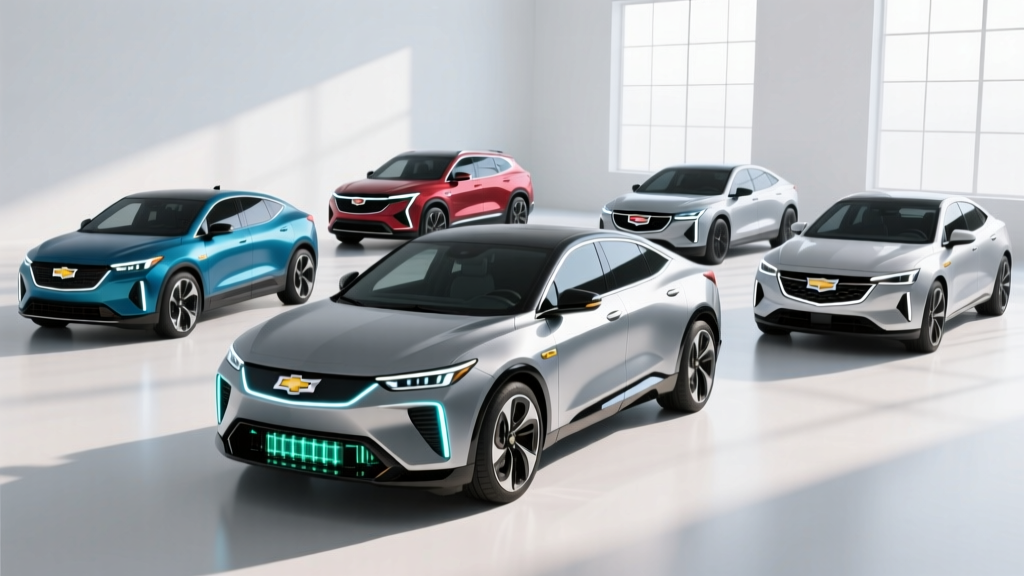
General Motors currently sells five mass-market EVs built on its Ultium battery platform: the Chevrolet Equinox EV, Blazer EV, Silverado EV, GMC Sierra EV, and Cadillac LYRIQ (plus the Cadillac OPTIQ and Celestiq for luxury buyers). Prices range from roughly $33,600 (Equinox EV) to over $130,000 (Celestiq). EPA-estimated range spans 236 to 440 miles depending on model and trim. Most GM EVs qualify for the full or partial $7,500 federal tax credit under IRS §30D, though income caps, MSRP caps, and battery-sourcing requirements apply. If you have Level 2 home charging access, drive fewer than 300 miles daily, and live in a moderate climate, a GM Ultium EV is a strong, cost-competitive choice versus gas. If you rely exclusively on public DC fast charging or regularly tow heavy loads in freezing weather, carefully evaluate the real-world range and charging logistics before committing.
What Is a General Motors Electric Vehicle? The Ultium Platform Explained
Since 2022, GM has consolidated its EV engineering under the Ultium platform — a modular skateboard architecture using large-format pouch cells in a nickel-manganese-cobalt (NMC) chemistry. Unlike some competitors that use lithium iron phosphate (LFP) batteries in base trims, GM has stuck with NMC across the lineup for higher energy density. Battery pack sizes vary from roughly 85 kWh usable (Equinox EV) to over 200 kWh (Silverado EV Max Range).
Key Ultium platform features:
- 800-volt architecture on Silverado EV, Sierra EV, and Cadillac LYRIQ — enabling faster DC charging
- 400-volt architecture on Equinox EV and Blazer EV — cost-optimized but with slower peak charge rates
- Wireless battery management system (wBMS) reducing wiring complexity and weight
- Standard NACS port on all 2025+ GM EVs, giving native access to Tesla Supercharger stations without an adapter
- 8-year/100,000-mile battery warranty covering defects and excessive capacity loss
The transition to the North American Charging Standard (NACS) connector is a significant practical advantage. As of 2026, GM EVs can plug directly into Tesla Superchargers (over 28,000 stalls in North America), Electrify America, and other networks that have adopted NACS — eliminating the CCS adapter hassle that plagued early adopters.
2026 GM Electric Vehicle Lineup: Range, Pricing, and Specs
Here is the current GM EV lineup with manufacturer-confirmed and EPA-published specifications. Note that real-world range varies significantly with temperature, speed, and terrain.
| Model | Base MSRP | EPA Range | Battery (kWh usable) | Peak DC Charge (kW) | 10-80% DC Time | 0-60 mph | Horsepower |
|---|---|---|---|---|---|---|---|
| Chevy Equinox EV (LT) | $33,600 | 319 mi | 85 kWh (NMC) | 150 kW | ~30 min | 7.6 sec | 213 hp |
| Chevy Blazer EV (2LT) | $44,600 | 279 mi | 102 kWh (NMC) | 190 kW | ~28 min | 6.2 sec | 288 hp |
| Chevy Silverado EV (LT) | $57,900 | 390 mi | 200 kWh (NMC) | 350 kW | ~20 min | 5.5 sec | 510 hp |
| GMC Sierra EV (Elevation) | $59,900 | 390 mi | 200 kWh (NMC) | 350 kW | ~20 min | 5.5 sec | 510 hp |
| Cadillac LYRIQ (Luxury) | $58,590 | 314 mi | 102 kWh (NMC) | 190 kW | ~28 min | 6.0 sec | 340 hp |
| Cadillac OPTIQ | $53,900 | 300 mi (est.) | 100 kWh (NMC) | 190 kW | ~27 min | 5.5 sec | 415 hp |
Real-World Range Reality Check
EPA range estimates are measured under controlled laboratory conditions. In real-world ownership, expect the following adjustments:
- Highway driving at 75 mph: Subtract 10-15% from EPA (e.g., Equinox EV 319 EPA → ~270-285 mi highway)
- Cold weather (below 32°F): Subtract 20-35% depending on cabin heating use and preconditioning
- Towing (Silverado/Sierra EV): Expect a 40-60% range reduction when towing near max capacity — a 390-mi truck may deliver 160-220 mi under load
- Combined highway + cold: Worst-case scenario — plan for up to 50% less than sticker range on winter road trips
GM's Ultium packs include a thermal management system with battery preconditioning. Using navigation to route to a DC fast charger will warm the battery for optimal charge acceptance — always enable this before arriving at a charger.
GM EV vs. Gas: The Real Cost of Ownership
Upfront, GM EVs carry a price premium over comparable gas models, but the gap narrows with federal tax credits and lower operating costs. Here's a five-year total cost of ownership comparison between the Chevrolet Equinox EV (base LT) and the gasoline Chevrolet Equinox (base LS).
| Cost Category | Equinox EV ($33,600 MSRP) | Gas Equinox ($28,600 MSRP) |
|---|---|---|
| Purchase price (after §30D credit) | $26,100* | $28,600 |
| Fuel/energy (5 yr, 15K mi/yr) | $4,200 (home L2 @ $0.14/kWh) | $9,750 (28 MPG avg @ $3.25/gal) |
| Maintenance (5 yr) | $1,800 (tires, cabin filter, wipers) | $4,500 (oil, filters, brakes, plugs) |
| Insurance (5 yr avg) | $9,500 | $7,800 |
| Estimated depreciation | $11,000 | $12,500 |
| 5-Year Total Cost | $52,600 | $63,150 |
*Assumes full $7,500 §30D credit eligibility. Actual credit depends on income, battery sourcing, and MSRP caps per IRS §30D rules. Consult a tax professional.
The Equinox EV costs roughly $10,500 less over five years in this scenario, driven primarily by fuel and maintenance savings. However, insurance premiums for GM EVs run 15-25% higher than gas equivalents — a real cost that many buyers overlook. Get quotes from your insurer before purchasing.
Federal Tax Credit: Which GM EVs Qualify in 2026?
The federal clean vehicle credit under IRS §30D offers up to $7,500 for qualifying new EVs, and as of 2024, the credit can be transferred to the dealer as a point-of-sale discount. However, eligibility is complex:
- Income caps: Modified AGI must not exceed $150,000 (single), $225,000 (head of household), or $300,000 (joint)
- MSRP caps: Vans/SUVs/pickups must have MSRP ≤ $80,000; sedans ≤ $55,000
- Battery sourcing: Critical minerals and battery components must meet escalating domestic-content thresholds (phasing in through 2026-2027)
- Assembly: Vehicle must undergo final assembly in North America
- Point-of-sale transfer: Buyers can elect to transfer the credit to the dealer for an immediate price reduction
As of early 2026, GM has confirmed that the Equinox EV, Blazer EV, Silverado EV, and Cadillac LYRIQ are assembled in the U.S. and meet North American final assembly requirements. Battery-sourcing compliance varies by build date and cell supplier — always verify current eligibility on fueleconomy.gov before purchasing, as the qualified-vehicle list updates frequently.
Charging a GM EV: Home Setup, Public Networks, and What to Expect
Charging logistics are the single biggest ownership variable. Here's what charging looks like at each level for a GM Ultium EV:
| Charging Level | Power | Speed (miles added/hour) | Use Case |
|---|---|---|---|
| Level 1 (120V outlet) | 1.4 kW | 3-5 mi/hr | Overnight top-off; not practical for daily full charges |
| Level 2 (240V home) | 7.7-19.2 kW | 25-52 mi/hr | Primary daily charging; full charge overnight |
| DC Fast Charge | 150-350 kW | 500-1,200 mi/hr (peak) | Road trips; 10-80% in 20-30 minutes |
Home Charging Installation Costs
Most GM EV owners will want a Level 2 home charger. Here's a realistic cost breakdown for a 48-amp (11.5 kW) hardwired station:
| Item | Typical Cost Range |
|---|---|
| Level 2 charger hardware (Emporia, ChargePoint, Wallbox) | $350 - $700 |
| Electrician labor (240V/50A circuit run) | $800 - $2,500 |
| Electrical permit and inspection | $50 - $200 |
| Panel upgrade (if needed for 200A service) | $1,500 - $4,000 |
| Total (no panel upgrade) | $1,200 - $3,400 |
| Total (with panel upgrade) | $2,700 - $7,400 |
Critical note: The Equinox EV and Blazer EV use a 400-volt architecture with an onboard charger limited to 11.5 kW AC. The Silverado EV, Sierra EV, and Cadillac LYRIQ support up to 19.2 kW AC on 800V — meaning faster Level 2 home charging if your home circuit supports it. Always have a licensed electrician evaluate your panel capacity before choosing a charger.
Public Charging: The NACS Advantage
GM's switch to NACS gives owners native access to the Tesla Supercharger network — widely regarded as the most reliable public DC fast-charging network in the U.S. with high uptime and consistent plug-and-charge functionality. Combined with Electrify America, EVgo, and ChargePoint stations that have added NACS connectors, GM EV owners have more DC fast-charging options than CCS-only competitors.
Common Misconceptions About GM Electric Vehicles
| Myth | Fact |
|---|---|
| "GM EV batteries won't last and cost $20K to replace" | GM's Ultium battery warranty covers 8 years/100,000 miles against defects and excessive degradation. Independent data from early Ultium vehicles shows less than 5% capacity loss at 50,000 miles. Full pack replacement cost is estimated at $15,000-$25,000, but catastrophic failure is rare under warranty. |
| "You can't take a GM EV on a road trip" | The Silverado EV's 390-mi EPA range and 350 kW peak charging (10-80% in ~20 min) make long-distance travel practical. With NACS Supercharger access, route planning is comparable to other mainstream EVs. |
| "All GM EVs get the $7,500 tax credit" | Credit eligibility depends on your income, the vehicle's MSRP, and battery-sourcing compliance. Not all buyers or all trims qualify. Always verify on fueleconomy.gov and consult a tax professional. |
| "Super Cruise means the car drives itself" | GM's Super Cruise is an SAE Level 2 driver-assistance system. It handles steering, acceleration, and braking on mapped divided highways, but the driver must remain attentive. An infrared camera monitors driver gaze. It is not autonomous driving — you are legally responsible at all times. |
| "EVs are worse in cold weather" | Range does drop 20-35% in freezing temperatures due to battery chemistry and cabin heating demands. However, preconditioning the battery and cabin while plugged in mitigates much of this loss. Cold-weather EV owners report satisfaction when they adapt routines. |
Decision Framework: Which GM EV Should You Buy?
Choose the Equinox EV if:
- You want the most affordable entry into the GM EV lineup ($33,600 before credits)
- Your daily commute is under 60 miles round-trip
- You prioritize value and practicality over performance
- You want a compact crossover for urban/suburban use
Choose the Blazer EV if:
- You want a midsize SUV with more power (288 hp) and cargo space
- You need AWD availability for snow or rough conditions
- Budget allows $44,600+ and you want sportier styling
Choose the Silverado EV or Sierra EV if:
- You need truck capability: up to 10,000 lbs towing (with max trailering package)
- You want class-leading EV range (390 mi EPA) for long work commutes
- You need V2L (Vehicle-to-Load) capability for job-site power or camping
- You can accommodate the $58K+ starting price and potential insurance premium
Choose the Cadillac LYRIQ or OPTIQ if:
- You want luxury materials, a 33-inch LED display, and premium ride quality
- 800V architecture and 19.2 kW AC charging matter for your home setup
- MSRP is within the $80,000 SUV cap for §30D tax credit eligibility
Do NOT buy a GM EV if:
- You have no access to home or workplace Level 2 charging AND live in a charging desert
- You regularly drive 400+ miles per day in freezing weather with no time for charge stops
- Your income exceeds §30D caps and the full MSRP makes the math unfavorable vs. a hybrid
Frequently Asked Questions
How does a GM EV compare to a Toyota or Honda hybrid?
A Toyota RAV4 Hybrid gets ~40 MPG combined at ~$32,000. An Equinox EV costs similar after the tax credit but eliminates fuel costs entirely. If you drive 15,000 miles/year, the EV saves roughly $1,100/year in fuel. Over 5 years, that's $5,500. Hybrids win if you lack home charging or drive extreme distances where EV charging stops add too much time.
What happens if my Ultium battery degrades?
GM warranties the battery for 8 years/100,000 miles. The warranty covers capacity loss below a defined threshold (typically 60-70% of original capacity, varying by model). Real-world data from early Ultium vehicles suggests 2-4% annual degradation under normal use — meaning a 319-mi Equinox EV would still deliver roughly 280-300 mi after 5 years.
Can I use a Tesla Supercharger with my GM EV?
Yes. All 2025+ GM EVs come with a native NACS port and are approved for Tesla Supercharger use. Simply plug in and the vehicle communicates with the station automatically. No adapter is needed. This gives GM owners access to the largest and most reliable DC fast-charging network in North America.
Is GM's Super Cruise self-driving?
No. Super Cruise is an SAE Level 2 hands-free driver-assistance system. It operates on over 750,000 miles of mapped divided highways in the U.S. and Canada. It controls steering, speed, and braking, but you must remain alert — the system uses an infrared driver-monitoring camera and will disengage if you look away for too long. Only Level 4 systems like Waymo's robotaxi service operate without a human driver.
What is the real-world charging cost for a GM EV?
At the U.S. average residential electricity rate of ~$0.16/kWh, fully charging an 85 kWh Equinox EV battery from empty costs about $13.60 for 319 miles of range — roughly $0.043 per mile. Compare that to a 28 MPG gas vehicle at $3.25/gallon: $0.116 per mile. Home charging saves about $0.07 per mile. Public DC fast charging costs more — typically $0.30-$0.50/kWh — so road-trip fueling costs are closer to gas.