The Short Answer on General Motor Electric Cars
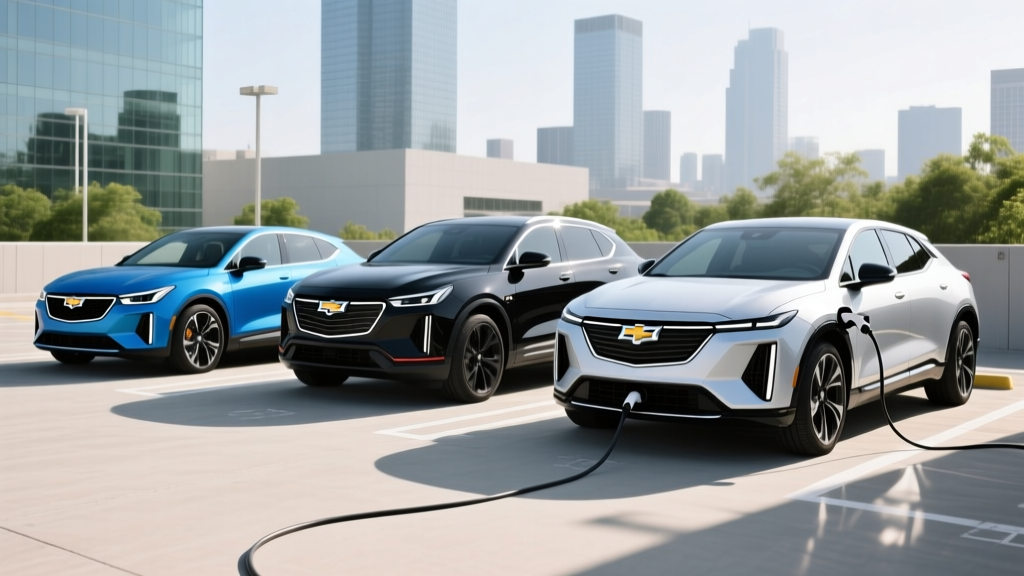
General Motors currently sells seven mainstream EV models across Chevrolet, Cadillac, GMC, and Buick for the 2026 model year, ranging from the $33,000 Chevrolet Equinox EV (319 miles EPA) to the $170,000+ GMC Hummer EV (314 miles EPA). All ride on GM's Ultium battery platform using NMC chemistry, support peak DC fast charging between 150–350 kW depending on the model, and most qualify for the federal §30D tax credit (up to $7,500, subject to income, MSRP caps, and battery-sourcing rules). If you want an affordable daily commuter, the Equinox EV 3LT at ~$33,000 before incentives is the strongest value. If you need towing and payload, the Silverado EV or Sierra EV are the picks — but expect to pay $60,000+.
GM's Full 2026 EV Lineup at a Glance
GM has built its entire electric portfolio on the Ultium platform — a modular battery architecture using pouch-format NMC (nickel manganese cobalt) cells in various pack sizes. Here's every model currently on sale with the numbers that matter:
| Model | EPA Range | Battery (kWh usable) | Peak DC Charge (kW) | 10–80% Time | 0–60 mph | Base MSRP |
|---|---|---|---|---|---|---|
| Chevrolet Equinox EV | 319 mi | 85 kWh | 150 kW | ~32 min | 7.8 sec | $33,000 |
| Chevrolet Blazer EV | 324 mi | 102 kWh | 190 kW | ~28 min | 6.2 sec | $44,000 |
| Chevrolet Silverado EV | 440 mi (Max Range) | 200+ kWh | 350 kW | ~20 min | 4.5 sec (4WT) | $60,900 |
| Cadillac Lyriq | 314 mi | 102 kWh | 190 kW | ~28 min | 6.0 sec (AWD) | $58,590 |
| Cadillac Optiq | 300 mi (est.) | 85 kWh | 150 kW | ~32 min | ~6.5 sec | $49,990 |
| GMC Sierra EV | 440 mi (Max Range) | 200+ kWh | 350 kW | ~20 min | 4.5 sec (Denali) | $62,000 |
| GMC Hummer EV | 314 mi (SUV) | 212 kWh | 350 kW | ~22 min | 3.0 sec (Edition 1) | $104,500 |
Sources: EPA Fuel Economy, Chevrolet EV, Cadillac EV. Real-world highway range typically runs 10–15% below EPA; cold-weather range loss of 20–30% is common below freezing.
Real-World Range: What the EPA Sticker Doesn't Tell You
The EPA combined-cycle range figure assumes a mix of city and highway driving at moderate temperatures. In practice, your mileage will vary based on three factors every buyer should understand:
Highway driving: At sustained 70–80 mph, aerodynamic drag dominates. Expect the Equinox EV's 319-mile EPA rating to deliver roughly 265–285 miles on a flat interstate in 70°F weather. The Blazer EV's 324-mile sticker translates to about 275–295 real highway miles.
Cold weather: NMC batteries lose efficiency in freezing temperatures because the chemistry slows ion transfer and the cabin heater draws significant power. GM's Ultium platform includes a heat pump on most 2026 models (standard on Lyriq, Equinox EV, Blazer EV), which recovers waste heat from the battery and motors rather than relying solely on resistive heating. Even with a heat pump, expect 20–30% range reduction at 20°F. The Equinox EV drops to roughly 220–255 miles in deep cold; the Silverado EV 4WT Max Range still manages ~330 miles.
Charging curve taper: GM's peak DC charge rates (150–350 kW) are achieved only between roughly 10–40% state of charge. Above 60%, the charge rate tapers significantly to protect the NMC cells. A Silverado EV hitting 350 kW at 20% SoC may be pulling only 80 kW by the time it reaches 85%. This is why we quote 10–80% times — the final 20% is painfully slow on all Ultium vehicles.
Real-World Range Reality Check
Equinox EV 3LT: EPA 319 mi → expect ~270 mi highway, ~230 mi in 20°F cold
Blazer EV RS AWD: EPA 324 mi → expect ~280 mi highway, ~240 mi in 20°F cold
Silverado EV 4WT Max Range: EPA 440 mi → expect ~375 mi highway, ~330 mi in 20°F cold
Cadillac Lyriq AWD: EPA 314 mi → expect ~265 mi highway, ~225 mi in 20°F cold
EV vs. Gas: What Does Ownership Actually Cost?
The strongest argument for GM's electric cars isn't environmental — it's the total cost of ownership over five years. Let's compare the Chevrolet Equinox EV 3LT ($33,000) against its gas sibling, the Chevrolet Equinox LT AWD (~$30,400) over 5 years / 75,000 miles.
| Cost Category | Equinox EV 3LT | Equinox LT AWD (Gas) |
|---|---|---|
| Purchase Price | $33,000 | $30,400 |
| Federal Tax Credit (§30D) | −$7,500 (if eligible) | $0 |
| Effective Purchase | $25,500 | $30,400 |
| Energy Cost (75K mi) | $4,875 (home L2 @ $0.13/kWh) | $9,375 (28 MPG @ $3.50/gal) |
| Maintenance (5 yr) | ~$1,200 | ~$3,800 |
| Insurance (5 yr est.) | ~$9,500 | ~$7,800 |
| 5-Year Total Cost | ~$41,075 | ~$51,375 |
EV energy cost assumes 3.0 mi/kWh efficiency and 100% home Level 2 charging at the US average $0.13/kWh. Public DC fast charging at $0.35–$0.50/kWh would raise the EV's energy cost to $7,000–$10,000. Insurance premiums on EVs typically run 15–25% higher due to battery replacement costs in collision claims. Tax credit eligibility per IRS §30D rules depends on buyer income (≤$150K single / ≤$300K joint), MSRP caps ($55K for cars, $80K for SUVs/trucks), and battery component/mineral sourcing requirements.
Charging GM's Electric Cars: Home and Public
Every 2026 GM EV ships with the NACS (North American Charging Standard) connector, which is now the dominant plug in North America. This means native access to the Tesla Supercharger network (20,000+ stalls) without an adapter — a massive advantage over older CCS-equipped vehicles.
| Charging Level | Power | Miles Added Per Hour | Typical Use Case |
|---|---|---|---|
| Level 1 (120V) | 1.4–1.9 kW | 4–6 mi/hr | Emergency / overnight trickle |
| Level 2 (240V, 48A) | 11.5 kW | 34–40 mi/hr | Home / workplace daily charging |
| DC Fast (150 kW peak) | 150 kW | ~200 mi in 20 min (Equinox) | Road trips |
| DC Fast (350 kW peak) | 350 kW | ~250 mi in 15 min (Silverado) | Road trips (requires capable station) |
Home Charging Setup Costs
Most GM EV owners will want a Level 2 home charger on a 240V circuit. Here's what to budget:
| Item | Cost Range |
|---|---|
| Level 2 Charger (48A, hardwired) | $400–$700 |
| Electrician: 50A circuit install | $500–$2,000 |
| Permit & inspection | $50–$200 |
| Electrical panel upgrade (if needed) | $1,500–$4,000 |
| Total (no panel upgrade) | $950–$2,900 |
| Total (with panel upgrade) | $2,450–$6,900 |
Always get a licensed electrician to assess your panel capacity before purchasing equipment. A 200-amp service panel with available slots can usually support a 50A circuit. Older 100-amp panels often require an upgrade.
Public Charging Realities
GM's switch to NACS means you can pull into any Tesla Supercharger V3 or V4 stall and plug in directly. However, not all Supercharger stalls deliver the same power — V3 stalls peak at 250 kW, while V4 stalls support up to 350 kW. The Silverado EV and Hummer EV's 800V architecture can exploit V4 stalls, but the Equinox EV and Blazer EV (400V architecture) will cap at their onboard maximum regardless of stall capability.
For non-Tesla networks (Electrify America, EVgo, ChargePoint), you'll need a NACS-to-CCS adapter if the station only offers CCS connectors. GM includes or offers these adapters with most 2026 models, but confirm at purchase.
Tax Credits, Incentives, and the Fine Print
The federal §30D New Clean Vehicle Credit offers up to $7,500 for qualifying new EVs, but eligibility is a three-part test that trips up many buyers:
- Buyer income cap: Modified AGI ≤ $150,000 (single) or ≤ $300,000 (married filing jointly)
- MSRP cap: ≤ $55,000 for sedans/wagons; ≤ $80,000 for SUVs and pickup trucks
- Battery sourcing: Increasingly strict percentages of battery components and critical minerals must be sourced from the US or free-trade-agreement countries — this requirement tightens each year and can disqualify specific trims mid-year
- Point-of-sale transfer: As of 2024+, you can transfer the credit to the dealer at purchase, reducing your out-of-pocket cost immediately rather than waiting to claim it on your tax return
As of 2026, the Equinox EV, Blazer EV, and Lyriq generally qualify for the full credit — but always verify current eligibility on the fueleconomy.gov tax credit lookup before signing paperwork, as sourcing-rule changes can shift eligibility quarterly. The Silverado EV and Sierra EV, priced above $80,000 in most trims, exceed the MSRP cap and do not qualify for the new-vehicle credit.
Common Misconceptions About GM Electric Cars
| Myth | Fact |
|---|---|
| "GM's EV batteries need replacing after 8 years" | GM covers Ultium batteries with an 8-year/100,000-mile warranty guaranteeing at least 70% capacity retention. Real-world degradation for NMC packs with active thermal management typically runs 1.5–2.5% per year. At that rate, expect ~85–90% capacity at 8 years. |
| "You can't take an EV on a road trip" | The Silverado EV Max Range does 440 EPA miles. The Equinox EV does 319. With NACS access to 20,000+ Tesla Superchargers, a 30-minute stop every 250 miles is the practical rhythm — comparable to gas-car rest stops. |
| "EVs are worse in winter" | Range drops 20–30% in freezing temps — that's real. But EVs start instantly in cold (no cranking), the heat pump warms the cabin using battery waste heat, and you can precondition the cabin while plugged in at home, leaving every morning with a warm car and full charge. |
| "Super Cruise drives itself" | GM's Super Cruise is an SAE Level 2 system — hands-free on mapped divided highways, but the driver must remain attentive (monitored by a driver-facing camera). It is not autonomous. You are legally and practically responsible for the vehicle at all times. |
| "All GM EVs qualify for $7,500 tax credit" | Only models meeting the MSRP cap, buyer income cap, and battery-sourcing requirements qualify. The Silverado EV and Hummer EV exceed the MSRP cap in most trims. Always check IRS.gov before purchasing. |
Decision Framework: Which GM Electric Car Is Right for You?
Choose the Chevrolet Equinox EV if:
- You want the most affordable long-range GM EV (319 mi from $33K)
- Your commute is under 100 miles round-trip with occasional longer trips
- You qualify for the §30D credit (MSRP is well under the $55K car cap)
- You prioritize efficiency and low running costs over performance
Choose the Chevrolet Blazer EV if:
- You need a midsize SUV with more cargo space and an aggressive design
- You want optional AWD with stronger acceleration (SS trim: 557 HP, 0–60 in ~4 sec)
- You're cross-shopping the Tesla Model Y and Hyundai Ioniq 5
Choose the Silverado EV or Sierra EV if:
- You need a full-size truck with 10,000+ lb towing capacity
- You want maximum range (440 mi) and the 800V architecture for 350 kW charging
- You can absorb the $60K+ price and understand the §30D MSRP cap likely excludes you from the federal credit
Choose the Cadillac Lyriq or Optiq if:
- You want luxury finishes, a premium audio system, and Super Cruise standard
- You're cross-shopping the BMW iX, Genesis Electrified GV70, or Tesla Model X
- You value ride comfort and cabin quietness over sporty handling
Choose the GMC Hummer EV if:
- Budget is flexible ($104K+) and you want a statement vehicle
- You want 1,000 HP (Edition 1), Watts to Freedom launch mode, and off-road capability
- Efficiency is not a priority (the Hummer EV is among the least efficient EVs per mile)
What First-Time GM EV Buyers Must Know
If you've never owned an electric vehicle, here are the practical realities that don't appear in the brochure:
Home charging is non-negotiable for most owners. If you can't install a Level 2 charger at home (apartment, street parking, HOA restrictions), daily EV ownership becomes significantly harder. Public DC fast charging costs 3–4× more per mile than home charging and adds 20–40 minutes to your routine several times a week. Before buying, confirm you can install a 240V/50A circuit where you park.
kW vs. kWh — know the difference. kW (kilowatts) measures power — how fast you're charging or how hard the motor is working. kWh (kilowatt-hours) measures energy — the size of the battery tank. A 102 kWh battery charged at 190 kW fills at roughly 190 kW × hours = kWh added. This distinction matters when comparing vehicles and chargers.
Preconditioning matters. GM's Ultium battery performs best when warm. Use the MyChevrolet, MyCadillac, or MyGMC app to precondition the battery while still plugged in at home — this brings the pack to optimal temperature before you leave, preserving range and enabling faster DC charging if you hit a fast charger en route. Cold-soaked batteries charge dramatically slower at DC fast stations.
Insurance costs more. EV insurance premiums run 15–25% higher than comparable gas vehicles, primarily because battery pack replacement after a collision can total a vehicle that would otherwise be repairable. Shop quotes before purchasing — the savings on fuel and maintenance can be partly offset by higher premiums.
Regenerative braking changes how you drive. All GM EVs offer adjustable regen, including one-pedal driving mode that brings the car to a stop without touching the brake pedal. Most owners adapt within a week and prefer it, but it's a learning curve. Brake pads, as a result, last well beyond 100,000 miles.
Do General Motor electric cars use Tesla's Supercharger network?
Yes. All 2026 GM EVs are equipped with the NACS connector and have native access to Tesla's Supercharger network (20,000+ stalls across North America) without an adapter. This is one of GM's biggest competitive advantages — Superchargers are widely regarded as the most reliable public charging network.
What is the battery warranty on GM's Ultium EVs?
GM provides an 8-year / 100,000-mile battery warranty that guarantees the pack will retain at least 70% of its original capacity. If degradation exceeds 30% within that window, GM will repair or replace the battery at no cost.
Is Super Cruise actually self-driving?
No. Super Cruise is an SAE Level 2 driver-assistance system. It provides hands-free steering, acceleration, and braking on pre-mapped divided highways, but the driver must remain attentive and ready to take over at any moment. A driver-facing infrared camera monitors your eyes. If you look away for too long, the system escalates warnings and eventually disengages. You are always legally responsible for the vehicle.
How much does it cost to charge a GM EV at home vs. gas?
At the US average electricity rate of $0.13/kWh, fully charging the Equinox EV's 85 kWh battery costs about $11.05 for 319 miles of range — roughly $0.035 per mile. A gas Equinox at 28 MPG with $3.50/gallon fuel costs $0.125 per mile. That's a 72% reduction in energy cost per mile when charging at home. Public DC fast charging at $0.40/kWh narrows the gap to about $0.11/mile — still cheaper than gas but no longer a dramatic savings.
Can I tow with a GM electric truck?
Yes. The Silverado EV 4WT is rated for up to 10,000 lbs of towing (12,000 lbs on the Max Range trim with the available tow package). However, towing at capacity reduces range by 40–50%. A Silverado EV rated at 440 miles will realistically deliver 220–260 miles while towing a heavy trailer at highway speeds. Plan charging stops accordingly.
What happens if the battery fails out of warranty?
Out-of-warranty Ultium battery replacement is estimated at $12,000–$20,000 depending on pack size, based on current GM service data and independent shop reports. However, NMC batteries with active liquid thermal management rarely fail catastrophically — gradual degradation to 75–85% capacity over 10–15 years is the more common scenario, which still leaves the vehicle usable for daily driving.