The Short Answer
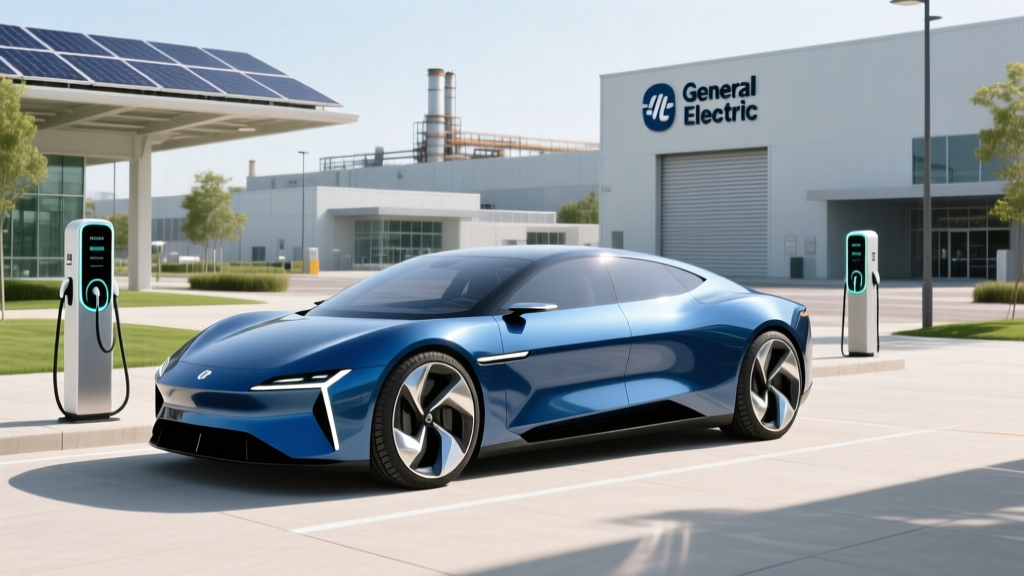
General Electric (GE) has been restructuring its manufacturing footprint — closing or converting legacy industrial plants as it spins off divisions like GE Vernova (energy) and GE Aerospace. For EV buyers, this matters indirectly: GE's pivot toward electrification infrastructure, grid components, and aviation means supplier ecosystems are shifting, not shrinking. EV production itself is not slowing — in fact, former GE-adjacent industrial sites are increasingly being repurposed for battery and powertrain manufacturing. The practical takeaway for 2026 EV shoppers: vehicle availability remains strong, pricing is stabilizing post-incentive, and the supply chain for EV components is maturing even as legacy industrial plants close.
Why General Electric Closing Plants Matters to EV Buyers
When headlines announce "General Electric closing plants," the immediate assumption is that EV production or component supply is at risk. That's largely a misread. GE's plant closures over the past several years have targeted legacy gas turbine lines, incandescent lighting factories, and older appliance facilities — not EV-adjacent supply chains.
What's actually happening is an industrial pivot:
- GE Vernova (spun off in 2024) now focuses on grid infrastructure, wind turbines, and electrification software — all of which support EV charging networks.
- GE Aerospace continues advanced manufacturing with no plant-closure trend.
- Legacy facilities in places like Schenectady, NY, and Salem, VA, have been partially repurposed or sold to companies entering the battery and EV component space.
For the EV buyer, the real question isn't whether GE's closures hurt EV supply — it's whether the broader industrial transition affects vehicle pricing, charging infrastructure buildout, and long-term parts availability. Let's break that down with real numbers.
EV Ownership Costs in 2026: The Real Math
Regardless of industrial headlines, the core EV buying decision comes down to total cost of ownership. Here's a concrete comparison using a popular 2026 model — the Hyundai Ioniq 5 SEL (RWD) — against a comparable gas vehicle, the Honda CR-V EX (AWD, gas).
| Category | Ioniq 5 SEL (EV) | CR-V EX (Gas) |
|---|---|---|
| Base MSRP | $45,500 | $36,400 |
| Federal Tax Credit (§30D) | -$7,500 (if eligible) | $0 |
| Effective Purchase Price | $38,000 | $36,400 |
| 5-Year Fuel/Energy Cost | $3,450 (home L2 @ $0.14/kWh) | $10,125 ($3.38/gal, 28 MPG combined) |
| 5-Year Maintenance | $1,200 | $3,800 |
| 5-Year Insurance (avg.) | $9,500 | $7,600 |
| Estimated Depreciation | $16,200 | $14,800 |
| Total 5-Year Cost | $68,350 | $72,725 |
Sources: fueleconomy.gov, IRS §30D guidelines via irs.gov, AAA Your Driving Costs 2025. Energy costs assume 80% home Level 2 charging at $0.14/kWh national average; 20% DC fast charging at $0.38/kWh. Gas costs at $3.38/gal EIA average.
The Ioniq 5 wins on operating costs by roughly $4,375 over five years, primarily from fuel and maintenance savings. However, higher insurance premiums (a persistent EV reality — average 20-25% higher than comparable gas vehicles) and steeper depreciation partially offset the gains. If you don't qualify for the full §30D credit due to income caps ($150K single / $300K joint AGI) or battery sourcing rules, the math tightens considerably.
EV vs. Gas vs. Hybrid: Which Powertrain Fits Your Life?
Plant closures and supply-chain reshuffling don't change the fundamental powertrain decision. Here's how the three options stack up for 2026 buyers:
| Metric | BEV (e.g., Ioniq 5) | PHEV (e.g., RAV4 Prime) | Gas (e.g., CR-V) |
|---|---|---|---|
| EPA Range / MPGe | 303 mi / 114 MPGe | 42 mi electric + 38 MPG gas | 28 MPG combined |
| Fuel Cost per Mile | $0.046 | $0.052 (blended) | $0.135 |
| Home Charging Needed? | Strongly recommended | Recommended for EV range | N/A |
| Cold Weather Range Loss | 20-35% (no heat pump penalty w/ Ioniq 5) | Minimal (gas backup) | None |
| Maintenance (5-yr) | ~$1,200 | ~$2,800 | ~$3,800 |
| Tax Credit Eligible | Up to $7,500 (§30D) | Up to $7,500 (§30D) | No |
Range and MPGe data from fueleconomy.gov. Cold-weather estimates based on AAA and Recurrent cold-climate testing.
Real-World Ownership: What First-Time EV Buyers Must Know
Industrial macro-trends aside, the day-to-day EV ownership experience in 2026 is defined by a few concrete factors:
Home Charging Access Is Non-Negotiable for Most
Approximately 70-80% of EV charging happens at home. If you can install a Level 2 charger (240V, 32-48 amps), expect to add 25-37 miles of range per hour of charging — enough to fully replenish a 77.4 kWh battery (Ioniq 5) overnight in about 6-7 hours. Installation costs range from $500 (simple outlet near panel) to $3,500+ (panel upgrade from 100A to 200A service, long conduit runs).
DC Fast Charging: Peak kW ≠ Sustained kW
The Ioniq 5's 800V architecture supports a peak charge rate of 238 kW, delivering a 10-80% charge in approximately 18 minutes at a compatible 350 kW station. However, that peak rate only holds from roughly 10-55% State of Charge (SoC). Above 55%, the charge curve tapers significantly — you might see 120 kW at 60% SoC and 50 kW at 75% SoC. This is normal battery physics, not a defect, but it means real-world charging stops take 22-28 minutes for 10-80%, not the advertised 18.
Cold Weather Cuts Range — Plan Accordingly
The Ioniq 5's EPA-estimated 303 miles drops to roughly 210-245 miles in sustained sub-freezing temperatures (below 32°F). The heat pump (standard on 2025+ Ioniq 5 trims) helps mitigate cabin-heating energy draw, but battery chemistry inherently slows in cold conditions. Preconditioning the battery while plugged in — a feature accessible through the Hyundai app — recovers some of that lost range by warming the pack before you drive.
Common EV Misconceptions — Fact-Checked
| Myth | Fact |
|---|---|
| "Plant closures mean EVs will be harder to find." | EV production capacity is expanding. Legacy plant closures (GE and others) are being offset by new battery gigafactories and converted assembly plants. U.S. EV model availability has grown from ~60 models in 2023 to over 95 in 2026. |
| "EV batteries need replacing every 5 years." | Modern NMC and LFP batteries retain 85-92% capacity after 100,000 miles. Hyundai warrants the Ioniq 5 battery at 10 years / 100,000 miles with a 70% capacity retention threshold. Full replacement (rare) costs $8,000-$14,000. |
| "The $7,500 tax credit applies to everyone." | §30D has income caps ($150K single, $300K joint), MSRP caps ($55K cars, $80K SUVs/trucks), and critical-mineral/battery-sourcing requirements that disqualify some trims. Check IRS guidelines and verify at the point of sale. |
| "Public charging is unreliable everywhere." | Network reliability varies sharply. Tesla Superchargers consistently achieve 99%+ uptime. Electrify America and EVgo have improved but still average 85-92% uptime in independent surveys. Always have a backup station identified on road trips. |
| "EVs are always cheaper to own." | Not universally. High annual mileage (15K+) and home charging access favor EVs. Low mileage (under 8K/year), apartment living without charging, or premium insurance markets can make a hybrid the better financial choice. |
Decision Framework: Should You Buy an EV in 2026?
Use This If-Then Guide
- IF you have home charging access (garage/driveway with 240V outlet or panel capacity) AND drive 12,000+ miles/year → BEV is likely your best value. Fuel and maintenance savings compound with mileage.
- IF you live in an apartment without charging AND your commute is under 30 miles → Consider a PHEV (Toyota RAV4 Prime, Hyundai Tucson PHEV). You get 35-42 miles of electric range for daily driving with gas backup for longer trips.
- IF you regularly drive in sub-zero temperatures AND lack reliable DC fast charging along your routes → A PHEV or efficient hybrid avoids cold-weather range anxiety without sacrificing efficiency.
- IF you qualify for the full §30D credit AND your target vehicle meets MSRP/sourcing requirements → The effective price drop of $7,500 makes most BEVs competitive with gas equivalents at the point of sale (dealer can apply credit as a down-payment reduction).
- IF your household income exceeds §30D caps AND you drive under 10,000 miles/year → A hybrid (HEV) may deliver better total economics without the upfront premium or charging dependency.
What Industrial Shifts Mean for Your EV's Long-Term Support
The broader story behind "General Electric closing plants" is one of industrial realignment, not retreat from electrification. Here's what matters for long-term ownership confidence:
- Parts availability: EV drivetrains have far fewer moving parts than ICE vehicles (no transmission, no exhaust system, no timing belt). Plant closures affecting legacy components don't impact EV service parts, which are largely sourced from dedicated EV supply chains.
- Charging infrastructure: GE Vernova's grid technology division is actively supporting utility-scale EV charging deployments. The national charging network continues expanding — the U.S. surpassed 200,000 public charging ports in late 2025, per the DOE.
- Battery recycling: Companies like Redwood Materials and Li-Cycle are scaling domestic recycling capacity, reducing long-term dependency on raw-material imports and stabilizing replacement battery costs.
- Warranty protection: Federal law mandates a minimum 8-year/100,000-mile battery warranty for EVs. Most manufacturers exceed this. Even if a parent company restructures, warranty obligations transfer to successor entities.
Frequently Asked Questions
Are General Electric plant closures causing EV shortages?
No. GE's closures target legacy industrial lines (turbines, lighting, older appliances), not EV component manufacturing. EV supply chains operate through separate Tier 1 and Tier 2 suppliers, and domestic battery production capacity has expanded significantly through 2025-2026 via new gigafactories in Georgia, Tennessee, Michigan, and Nevada.
Should I wait to buy an EV until the supply chain stabilizes?
As of 2026, the EV supply chain has largely stabilized post-pandemic. Inventory levels for mainstream models (Ioniq 5, Tesla Model Y, Ford Mustang Mach-E, Chevrolet Equinox EV) are at healthy levels, and dealer markups have largely disappeared. Waiting is unlikely to yield significantly better pricing — and you may lose a model year of tax-credit eligibility if sourcing rules tighten further.
What's the cheapest way to charge an EV at home?
A standard 120V Level 1 outlet adds roughly 3-5 miles of range per hour — adequate if you drive under 30 miles daily and can charge overnight (12+ hours). For faster home charging, a Level 2 (240V) station adds 25-37 miles/hour. Equipment costs $300-$700; professional installation runs $500-$2,500 depending on your electrical panel's capacity and distance from the panel to the charging location.
Do EVs cost more to insure?
Yes, typically 20-25% more than comparable gas vehicles, per industry data. Higher repair costs (specialized labor, battery-pack proximity to collision zones) and higher replacement values drive premiums. Shop quotes from Geico, Progressive, and State Farm before purchasing — the spread can be $400-$900/year depending on your state, driving record, and model.
Can I still get the $7,500 federal tax credit in 2026?
The §30D credit remains available, but eligibility is stricter than in prior years. You must meet income thresholds (modified AGI ≤ $150K single / $300K joint), the vehicle must be under MSRP caps ($55K sedans, $80K SUVs/pickups), and the battery must meet critical-mineral and component-sourcing requirements that have tightened annually since 2024. The credit can now be transferred to the dealer at point of sale, reducing your down payment directly. Verify eligibility at irs.gov before committing.