The Short Answer: Tesla Does Not Make a Gas-Powered Car
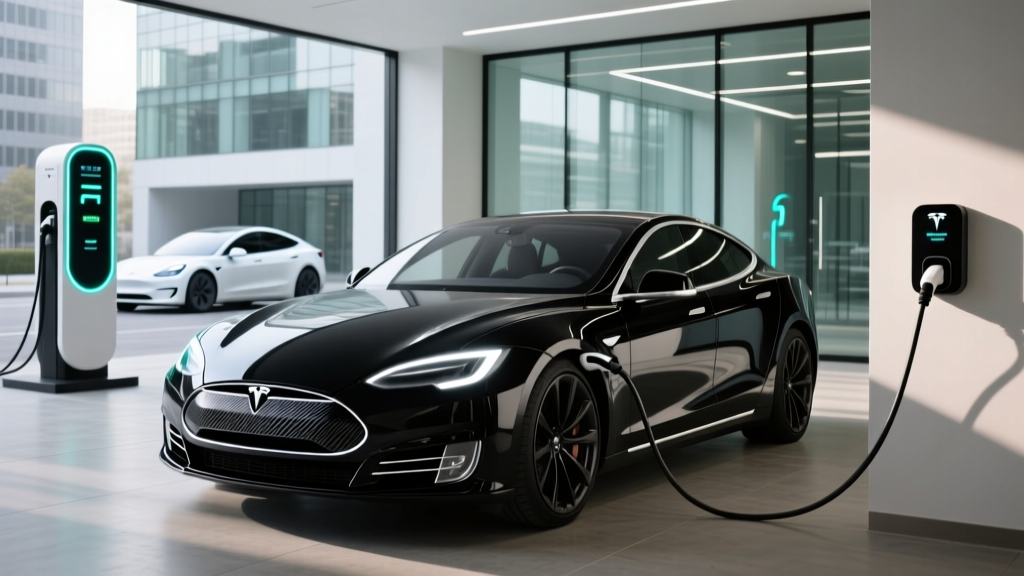
If you've been searching for a "gas powered Tesla," you're not alone — it's a surprisingly common query from shoppers who love Tesla's tech, Supercharger network, and minimalist design but aren't quite ready to commit to a fully electric powertrain. The reality is straightforward: Tesla has never produced a gasoline vehicle, a hybrid, or a plug-in hybrid. Every Tesla model — the Model 3, Model Y, Model S, Model X, and the Cybertruck — is a battery-electric vehicle (BEV) with zero onboard internal combustion.
There is no Tesla with a gas tank, no range-extender engine, and no hybrid variant in Tesla's current or announced lineup. Tesla's corporate strategy since its 2003 founding has been exclusively focused on pure battery-electric propulsion, and that hasn't changed as of the 2026 model year.
But that doesn't mean your underlying concern — range anxiety, charging access, road-trip flexibility — isn't valid. Let's unpack why the "gas Tesla" myth persists, what Tesla actually offers to address range concerns, and which plug-in hybrids from other automakers might give you the Tesla-adjacent experience with a gas backup.
Why Do People Search for a Gas-Powered Tesla?
The search for a gasoline Tesla usually stems from one of three scenarios:
- Range anxiety on road trips. You love the Model Y's tech and Supercharger network but worry about stretches of rural interstate where chargers are sparse. A gas backup would feel like insurance.
- Apartment living or limited home charging. Without a garage or dedicated Level 2 outlet, owning a pure EV feels risky. A hybrid would let you gas up when you can't charge.
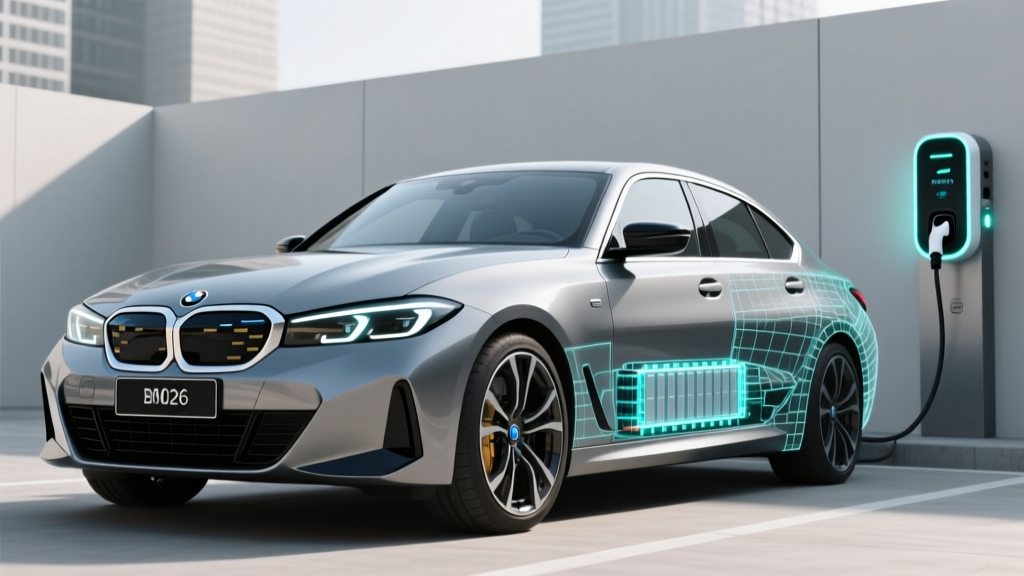
- Confusion with other brands. Some shoppers conflate Tesla with EV startups or legacy automakers that do offer range-extended EVs (EREVs) or PHEVs, like the BMW i3 REx (discontinued) or the upcoming Ram 1500 REV with range extender.
There's also persistent internet misinformation. Clickbait articles and AI-generated content farms periodically publish fictional "Tesla hybrid" or "Tesla gas generator" stories. None of these are real. Tesla CEO Elon Musk has publicly dismissed hybrid technology as a "fool's errand" and a transitional compromise that adds mechanical complexity without long-term value.
What Tesla Actually Offers Instead: Real-World Range and Supercharger Access
Rather than adding a gas engine, Tesla has invested in three things that address the same underlying concerns: larger battery packs, faster charging architecture, and the most robust DC fast-charging network in North America.
2026 Tesla Lineup: Range and Efficiency at a Glance
| Model (2026) | Trim | EPA Range | Battery (kWh usable) | Chemistry | MPGe (combined) | 0-60 mph | Drivetrain |
|---|---|---|---|---|---|---|---|
| Model 3 | Long Range AWD | 363 mi | ~79 kWh | NMC | 132 MPGe | 4.2 sec | Dual-motor AWD |
| Model 3 | RWD (Standard) | 272 mi | ~57.5 kWh | LFP | 132 MPGe | 5.8 sec | RWD |
| Model Y | Long Range AWD | 320 mi | ~78.1 kWh | NMC | 122 MPGe | 4.8 sec | Dual-motor AWD |
| Model S | Long Range | 402 mi | ~100 kWh | NMC | 120 MPGe | 3.1 sec | Dual-motor AWD |
| Model X | Long Range | 335 mi | ~100 kWh | NMC | 105 MPGe | 3.8 sec | Dual-motor AWD |
| Cybertruck | AWD | 340 mi | ~123 kWh | NMC (4680 cells) | 76 MPGe | 4.1 sec | Tri-motor AWD |
Sources: fueleconomy.gov, Tesla official specifications. Real-world results may vary based on temperature, terrain, speed, and tire condition.
EPA estimates are measured under controlled laboratory conditions. In our experience and consistent third-party highway testing:
- Highway driving at 70-80 mph: Expect 80-88% of EPA range. A Model 3 Long Range (EPA 363 mi) delivers roughly 290-320 real highway miles.
- Cold weather (below 32°F / 0°C): Range drops 20-35% depending on cabin heating demand. LFP-equipped Model 3 RWD is especially sensitive — precondition while plugged in to mitigate.
- City/regenerative driving: You can often match or slightly exceed EPA figures thanks to regen braking recapturing energy.
Tesla's onboard navigation accounts for elevation, temperature, and speed in its range predictions, which are generally the most accurate in the industry.
Charging Speed: Tesla's Real Answer to Range Anxiety
Tesla's approach to eliminating the need for a gas engine is simple: make charging fast enough that you stop thinking about it. Here's what that looks like across charging levels:
| Charging Level | Power (kW) | Typical Miles Added per Hour | Use Case |
|---|---|---|---|
| Level 1 (120V household outlet) | ~1.4 kW | 3-5 mi/hr | Overnight trickle, emergencies |
| Level 2 (240V home Wall Connector) | 11.5 kW (48A) | 30-44 mi/hr | Daily home charging |
| DC Fast (V2 Supercharger) | 150 kW peak | ~170 mi in 15 min | Road trips, older stations |
| DC Fast (V3 Supercharger) | 250 kW peak | ~200 mi in 15 min | Road trips, current network |
| DC Fast (V4 Supercharger) | Up to 350 kW peak | ~250 mi in 15 min (capable vehicles) | Next-gen stations, 2025+ rollout |
Charge-curve reality: Peak kW numbers are just that — peaks. A Model 3 Long Range on a V3 Supercharger will hit 250 kW only at a low state of charge (roughly 5-20%). From 10-80%, expect an average sustained rate closer to 120-150 kW, with a 10-80% session taking approximately 25-30 minutes. Above 80%, charging slows dramatically to protect battery health — Tesla recommends charging to 100% only when needed for long trips.
The Tesla Supercharger network now includes over 20,000 stalls in North America, and with Tesla opening the network to NACS-equipped vehicles from Ford, GM, Rivian, and others, station density continues to grow. For most road-trip corridors in the continental US, Superchargers are spaced 120-180 miles apart — well within the real-world range of every current Tesla model.
Pricing, Tax Credits, and What You'll Actually Pay
Tesla's 2026 pricing has settled after years of volatility. Here's where each model stands, including federal tax credit implications under IRS §30D rules:
| Model / Trim | Base MSRP | §30D Credit Eligible? | Effective Price (if eligible) |
|---|---|---|---|
| Model 3 RWD | $38,990 | Yes — up to $7,500 | ~$31,490 |
| Model 3 Long Range AWD | $45,990 | Yes — up to $7,500 | ~$38,490 |
| Model Y Long Range AWD | $44,990 | Yes — up to $7,500 | ~$37,490 |
| Model S Long Range | $79,990 | No — exceeds MSRP cap ($55K sedan) | $79,990 |
| Model X Long Range | $79,990 | No — exceeds MSRP cap ($80K SUV/van)* | $79,990 |
| Cybertruck AWD | $79,990 | No — exceeds MSRP cap ($80K truck) | $79,990 |
*The Model X sits right at the $80,000 SUV cap depending on trim and options. Always verify current eligibility at IRS.gov.
- MSRP caps: Sedans ≤ $55,000; SUVs/vans/pickups ≤ $80,000
- Buyer income caps (modified AGI): $150K single / $225K head of household / $300K joint
- Battery component sourcing: Increasing percentages of battery components and critical minerals must be manufactured or assembled in North America or FTA-partner countries
- Point-of-sale transfer: Eligible buyers can transfer the credit to the dealer at purchase, reducing the purchase price directly rather than waiting for tax filing
- FEOC restriction: Vehicles with battery components from a "foreign entity of concern" (primarily China-linked supply chains) are disqualified
Consult a tax professional for your specific situation. Rules are subject to legislative change.
Best Alternatives If You Want Tesla Tech with a Gas Backup
If your core need is electric-first daily driving with gasoline flexibility for road trips, you're actually looking for a plug-in hybrid electric vehicle (PHEV) or an extended-range electric vehicle (EREV). Tesla doesn't offer either, but several compelling alternatives exist in 2026:
Top PHEV Alternatives to a "Gas Tesla"
- Toyota RAV4 Prime (PHEV): 42 miles electric-only, 38 MPG combined on gas, AWD, ~$44,000. The closest thing to a "Model Y with a gas tank." Eligible for partial credits depending on sourcing.
- Jeep Wrangler 4xe (PHEV): 22 miles electric, serious off-road capability, ~$50,000. Popular with buyers who want EV commuting and gas-powered adventure range.
- BMW X5 xDrive50e (PHEV): ~38 miles electric, 30 MPG on gas, luxury interior, ~$67,000. A premium alternative to Model X with gas fallback.
- Hyundai Tucson PHEV: 33 miles electric, 35 MPG combined, ~$38,000. Budget-friendly family crossover with electric commuting range.
None of these vehicles offer Tesla's Supercharger network access, over-the-air software updates at the same depth, or Autopilot/FSD driver assistance. But they eliminate range anxiety entirely by carrying a gasoline engine as backup.
Tesla's Driver Assistance and Tech: What You'd Be Giving Up
One reason people want a Tesla specifically — even while wishing it had a gas engine — is the software and driver-assistance ecosystem. Here's what's exclusive to Tesla's pure-EV platform:
- Autopilot (standard): Adaptive cruise control, lane centering, automatic emergency braking. SAE Level 2 — requires active driver supervision at all times.
- Full Self-Driving (Supervised): $8,000 upgrade (or $99/month subscription as of 2026). Adds automatic lane changes, traffic-light recognition, and city-street navigation. Still SAE Level 2 — not autonomous driving. The driver must remain fully engaged.
- Over-the-air updates: Tesla pushes meaningful feature additions (not just bug fixes) multiple times per year — new games, UI redesigns, efficiency improvements, and even suspension tuning changes.
- Sentry Mode / Dashcam: Uses the vehicle's external cameras for 360° security recording while parked.
- Tesla app integration: Remote preconditioning, location tracking, charging management, and Summon (low-speed remote parking).
All current Tesla driver-assistance features are SAE Level 2. The driver must keep hands on the wheel (or demonstrate attentiveness via the cabin camera), monitor the road, and be prepared to take over instantly. True driverless operation (SAE Level 4) is currently only available through robotaxi services like Waymo in limited metro areas. Do not sleep, use your phone, or disengage from driving while using Autopilot or FSD.
Warranty, Battery Longevity, and Ownership Costs
Tesla's warranty structure is competitive with the broader EV market:
- Basic vehicle warranty: 4 years / 50,000 miles
- Battery & drive unit warranty:
- Model 3 RWD (LFP): 8 years / 100,000 miles, 70% minimum capacity retention
- Model 3/Y Long Range & Model S/X: 8 years / 120,000 miles, 70% minimum retention
In practice, Tesla battery degradation has been well-documented by fleet data. Most Tesla packs lose approximately 10-12% capacity over the first 150,000 miles, with the curve flattening significantly afterward. LFP chemistry (Model 3 RWD) offers longer cycle life and can be charged to 100% daily without degradation concerns, but has lower energy density and worse cold-weather performance than NMC.
Out-of-warranty battery replacement costs remain significant: approximately $12,000-$16,000 for a Model 3/Y pack and $18,000-$22,000 for Model S/X, based on current service-center pricing. However, the frequency of full-pack replacement is low — most degradation issues involve individual module balancing rather than wholesale replacement.
Pros and Cons: Tesla's All-Electric Approach
- Supercharger network — the most reliable, widespread DC fast-charging infrastructure in North America
- Class-leading efficiency (MPGe) and real-world range per kWh
- Over-the-air updates add features years after purchase
- Lower maintenance costs than any ICE or hybrid vehicle (no oil, spark plugs, transmission fluid, or exhaust system)
- Model 3 and Model Y qualify for up to $7,500 federal tax credit (with eligibility caveats)
- Strong resale value relative to most EV competitors
- No gas backup — 100% dependent on charging infrastructure
- Model S, X, and Cybertruck exceed §30D MSRP caps and get no federal credit
- LFP battery (Model 3 RWD) suffers notable cold-weather range loss
- Repair costs for collision damage can be high due to integrated battery structure
- Insurance premiums are 15-30% higher than comparable ICE vehicles in most states
- FSD is expensive and still requires full driver attention (Level 2)
Who Should Buy a Tesla — And Who Should Look at a PHEV Instead?
- You can install a Level 2 home charger (240V / 48A circuit)
- Your daily commute is under 80 miles round-trip
- You take road trips primarily along major interstate corridors with Supercharger coverage
- You value cutting-edge software, OTA updates, and driver-assist features
- You want the lowest per-mile "fuel" cost (home electricity at $0.12/kWh ≈ $0.04/mile vs. $0.14/mile for a 30-MPG gas car)
- You live in an apartment or lack reliable home/workplace charging
- You frequently drive in rural areas with sparse charging infrastructure
- You regularly tow (PHEVs don't lose 40% range when towing like BEVs do)
- You want electric commuting but zero range anxiety for spontaneous long trips
- You live in extreme cold climates where BEV range loss is a daily concern
Frequently Asked Questions
Will Tesla ever make a hybrid or gas-powered vehicle?
There is no indication that Tesla plans to produce a hybrid, PHEV, or range-extended EV. Elon Musk has repeatedly stated that Tesla views hybrids as a dead-end technology. Tesla's roadmap focuses on expanding the Supercharger network, improving battery energy density (4680 cells), and reducing manufacturing costs — not adding internal combustion components. The only non-electric Tesla product is the Tesla Powerwall home battery and Solar Roof, which are energy products, not vehicles.
Can I add an aftermarket gas generator to a Tesla for extra range?
No. Tesla's powertrain architecture has no provision for an auxiliary generator, and any aftermarket modification involving a gasoline generator would void the warranty, violate emissions regulations in most states, and create serious safety hazards (fuel storage in a vehicle not crash-tested for it). Some EV owners in extreme situations have used portable generators to trickle-charge via a 120V outlet, but this adds roughly 3-5 miles of range per hour of generator runtime — barely enough to limp to a charger, and not a practical strategy.
What is the real-world range of the most affordable Tesla?
The 2026 Model 3 RWD has an EPA-estimated 272 miles of range. In real-world mixed driving (combination of city and highway at moderate temperatures), expect approximately 240-260 miles. In cold weather (below freezing with cabin heat), that can drop to 185-210 miles. Highway-only driving at 75 mph yields roughly 225-240 miles. The LFP battery in this trim can be charged to 100% daily without degradation concerns, which partially offsets the lower total capacity.
How fast does a Tesla charge at home?
Using a Tesla Wall Connector on a 240V / 60A circuit (48A continuous), a Model 3 or Model Y adds approximately 30-44 miles of range per hour, or roughly 11.5 kW. A full charge from 10% to 100% takes approximately 6-8 hours depending on battery size. Most owners charge overnight and wake up to a full battery every morning — eliminating the "gas station visit" entirely for daily driving. Installation costs for a home Level 2 setup typically range from $500 (simple outlet near the panel) to $2,500+ (panel upgrade, long conduit runs).
Does the Tesla Model Y qualify for the $7,500 federal tax credit?
As of 2026, the Model Y Long Range AWD ($44,990 MSRP) qualifies for up to $7,500 under IRS §30D, provided the buyer meets income limits ($300K joint / $150K single) and the vehicle's battery sourcing meets critical-mineral and component-manufacturing requirements. The credit can be transferred to Tesla at point of sale, reducing the purchase price directly. However, battery-sourcing rules tighten annually, and eligibility can change mid-year. Always verify current status at IRS.gov before purchasing.
Is a Tesla worth buying over a PHEV like the RAV4 Prime?
It depends on your charging situation. If you have reliable home Level 2 charging and drive primarily in urban/suburban areas, the Tesla Model Y offers lower operating costs ($0.04/mile electricity vs. $0.10/mile on gas in the RAV4 Prime after electric range is depleted), better acceleration, superior software, and Supercharger road-trip capability. If you lack home charging, frequently drive rural routes, or live in extreme cold, the RAV4 Prime's 42-mile electric commute plus 38-MPG gas fallback may be the more practical daily vehicle. There is no universally correct answer — it's a function of your infrastructure access and driving patterns.