Tesla remains the most scrutinized automaker in the electric vehicle space. With competition intensifying from Hyundai, Ford, BMW, and a wave of Chinese EV makers, the question isn't whether Tesla can build good electric cars — it's whether its current lineup still leads the pack in 2026. This review covers every vehicle Tesla currently sells in the U.S., with exact EPA figures, real-world range expectations, charging data, pricing after federal tax credits, and an honest look at where the brand stands heading into its next chapter.
If you're researching the future of Tesla as a buyer, investor, or EV enthusiast, you need data — not hype. Here it is.
2026 Tesla Lineup at a Glance
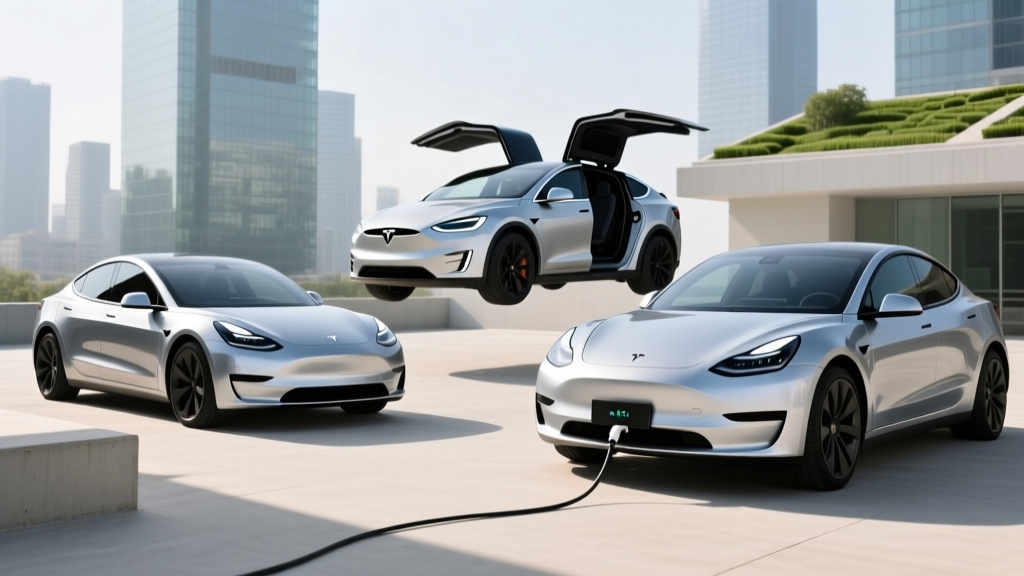
Tesla currently sells five vehicles in the United States. The refreshed Model 3 ("Highland") and Model Y ("Juniper") represent the volume sellers, while the Model S and Model X continue as premium flagship options. The Cybertruck, now in its second full model year, rounds out the lineup as Tesla's entry into the electric truck segment.
| Model | EPA Range | Battery (kWh) | Chemistry | 0-60 mph | HP | Drivetrain | Base MSRP |
|---|---|---|---|---|---|---|---|
| Model 3 RWD | 363 mi | ~66 kWh (usable) | LFP | 5.8 sec | 283 | RWD | $44,130 |
| Model 3 Long Range AWD | 363 mi | ~79 kWh (usable) | NMC | 4.2 sec | 346 | Dual-Motor AWD | $51,130 |
| Model Y Long Range AWD | 320 mi | ~79 kWh (usable) | NMC | 4.8 sec | 384 | Dual-Motor AWD | $48,130 |
| Model S Long Range | 402 mi | ~100 kWh (usable) | NMC | 3.1 sec | 670 | Dual-Motor AWD | $79,990 |
| Model X Long Range | 348 mi | ~100 kWh (usable) | NMC | 3.8 sec | 670 | Dual-Motor AWD | $84,990 |
| Cybertruck AWD | 340 mi | ~123 kWh (usable) | NMC | 4.1 sec | 600 | Dual-Motor AWD | $79,990 |
Source: fueleconomy.gov and Tesla's official specifications. MSRP includes destination charge. Specs reflect 2026 model year.
Real-World Range: What the EPA Sticker Doesn't Tell You
The EPA estimate assumes a mix of city and highway driving at moderate temperatures. In practice:
- Highway driving (75+ mph): Expect 10–15% less than EPA. A Model 3 LR rated at 363 miles will deliver roughly 305–325 miles on a flat highway at 75 mph.
- Cold weather (below 32°F): Range drops 20–30% depending on cabin heating demands and whether you precondition. An LFP Model 3 RWD in January in Chicago may see 250–280 effective miles.
- City/commuter driving: You'll often match or slightly exceed EPA thanks to regenerative braking recapturing energy in stop-and-go traffic.
Tesla's trip planner and in-dash energy app are among the best in the industry for predicting arrival State of Charge (SoC), which partially offsets the sticker-vs-reality gap.
The LFP (lithium iron phosphate) battery in the Model 3 RWD offers slightly lower energy density than the NMC (nickel manganese cobalt) packs in Long Range variants. The trade-off: LFP cells tolerate regular 100% charging without accelerated degradation, meaning you can use the full 363 miles daily. NMC owners should typically charge to 80% for daily use, reserving 100% for road trips — effectively giving a Long Range AWD about 290 usable daily miles on an 80% charge.
Charging Speed: Supercharger Network and Home Charging
Charging remains one of Tesla's strongest competitive advantages, largely because the Supercharger network is the most reliable DC fast-charging ecosystem in North America. Here's what each model supports:
| Model | Max DC Fast Charge | 10–80% Time | Level 2 Home Rate | Miles Added/Hr (L2) |
|---|---|---|---|---|
| Model 3 (all trims) | 250 kW | ~25 min | 11.5 kW (48A) | ~44 mi/hr |
| Model Y (all trims) | 250 kW | ~27 min | 11.5 kW (48A) | ~40 mi/hr |
| Model S / Model X | 250 kW | ~30 min | 11.5 kW (48A) | ~36 mi/hr |
| Cybertruck AWD | 250 kW (350 kW capable) | ~28 min | 11.5 kW (48A) | ~30 mi/hr |
A critical detail often overlooked: peak kW is not sustained kW. Teslas, like all EVs, follow a charge curve that tapers significantly above 80% SoC. A Model 3 Long Range may pull 250 kW briefly between 10–30% SoC, then ramp down to ~150 kW by 50%, and below 50 kW past 80%. The 10–80% time is the practical metric that matters for road-trip planning.
At home, Tesla's Wall Connector delivers up to 11.5 kW on a 60-amp circuit (48 amps continuous). Installation typically runs $800–$2,000 depending on whether your electrical panel needs an upgrade. For a 200-amp panel with spare capacity, expect the lower end. Homes with older 100-amp panels may need a $2,000–$4,000 panel upgrade — a cost that surprises many first-time EV buyers.
Tesla now uses the NACS (North American Charging Standard) connector natively on all vehicles. This is the same connector adopted by Ford, GM, Rivian, and most major automakers for 2025+ models. Tesla owners have full access to the expanding Supercharger network, while non-Tesla EVs are gaining access to select Supercharger stalls via built-in NACS ports or adapters.
Pricing, Trims, and Federal Tax Credit Eligibility
Tesla's pricing has shifted multiple times over the past two years. Here's the current 2026 lineup with federal tax credit context:
| Model / Trim | Base MSRP | §30D Credit Eligibility | Effective Price (with max credit) |
|---|---|---|---|
| Model 3 RWD | $44,130 | Up to $7,500 (if sourcing requirements met) | ~$36,630 |
| Model 3 Long Range AWD | $51,130 | Up to $7,500 (if sourcing requirements met) | ~$43,630 |
| Model Y Long Range AWD | $48,130 | Up to $7,500 (if sourcing requirements met) | ~$40,630 |
| Model S Long Range | $79,990 | Not eligible (exceeds $55,000 sedan MSRP cap) | $79,990 |
| Model X Long Range | $84,990 | Up to $7,500 (SUV MSRP cap is $80,000) | ~$77,490 |
| Cybertruck AWD | $79,990 | Up to $7,500 (truck MSRP cap is $80,000) | ~$72,490 |
Under IRS §30D, the new clean vehicle credit provides up to $7,500, split into two halves:
- $3,750 requires battery components manufactured or assembled in North America (thresholds increase annually).
- $3,750 requires critical minerals sourced from the U.S. or a free-trade-agreement partner.
Additional requirements:
- Income caps: Modified AGI ≤ $150,000 (single), $225,000 (head of household), $300,000 (joint).
- MSRP caps: $55,000 for sedans; $80,000 for SUVs, vans, and trucks.
- Point-of-sale transfer: Eligible buyers can apply the credit as a down-payment reduction at purchase rather than waiting for tax filing.
Tesla's battery sourcing has evolved, but eligibility for the full $7,500 vs. $3,750 varies by build date and supply chain changes. Always verify current eligibility on fueleconomy.gov before purchasing.
Performance and Efficiency: By the Numbers
Tesla's performance credentials remain strong across the lineup. Even the base Model 3 RWD hits 60 mph in 5.8 seconds — quicker than most gas-powered sedans in its price range. The Model S Plaid (not listed above; $89,990, 1,020 HP, 1.99-second 0-60) continues as a halo performance variant.
Efficiency is where Tesla has historically led the industry, and the 2026 models maintain that edge:
- Model 3 RWD: 132 MPGe combined / 25 kWh per 100 miles
- Model 3 Long Range AWD: 134 MPGe combined / 25 kWh per 100 miles
- Model Y Long Range AWD: 117 MPGe combined / 29 kWh per 100 miles
- Model S Long Range: 122 MPGe combined / 28 kWh per 100 miles
- Cybertruck AWD: 79 MPGe combined / 43 kWh per 100 miles
For context, the Hyundai Ioniq 6 SE Long Range achieves 140 MPGe, making it slightly more efficient than the Model 3 on paper. However, Tesla's combination of range, performance, and Supercharger access keeps its real-world road-trip efficiency highly competitive.
Interior, Cargo, and Technology
The 2026 Model 3 Highland refresh brought meaningful interior upgrades: ventilated front seats, ambient lighting, rear-seat touchscreen, improved sound insulation, and a refined suspension. Build quality has improved noticeably over pre-2024 Model 3s, though panel gaps still occasionally draw criticism compared to BMW or Mercedes standards.
Cargo and passenger space:
- Model 3: 23 cu ft trunk + front trunk (frunk); 42.2" front legroom, 35.3" rear legroom
- Model Y: 30 cu ft behind second row, 72 cu ft with seats folded; 41.8" front legroom, 41.6" rear legroom
- Model S: 28 cu ft rear cargo + frunk; 42.4" front legroom, 35.4" rear legroom
- Model X: Up to 88 cu ft with seats folded (5-seat config); falcon-wing rear doors ease child-seat installation
- Cybertruck: 6.5-ft bed with motorized tonneau; 34.7" rear legroom (tight for a truck this size)
Tech and driver assistance: Every Tesla includes a 15.4" central touchscreen (Model S/X get a 17" display), over-the-air updates, integrated navigation with real-time Supercharger routing, and Tesla's Basic Autopilot (adaptive cruise + lane centering). Full Self-Driving (Supervised) remains a $8,000 add-on or $99/month subscription.
Tesla Autopilot and FSD (Supervised) are SAE Level 2 driver-assistance systems. The driver must remain fully engaged — eyes on the road, hands available to steer — at all times. These systems are not "self-driving." Tesla's camera-only vision approach has improved substantially, but it does not replace an attentive driver. Only Level 4 systems (like Waymo's robotaxi service) operate without human supervision, and those are limited to geofenced areas.
Warranty and Long-Term Ownership
Tesla's warranty structure is competitive but not class-leading:
- Basic vehicle warranty: 4 years / 50,000 miles
- Battery and drive unit (Model 3/Y RWD): 8 years / 100,000 miles
- Battery and drive unit (Long Range / Performance / S / X / Cybertruck): 8 years / 120,000 miles (150,000 mi for Model S/X)
- Battery capacity retention guarantee: Minimum 70% capacity retention during the warranty period
Real-world battery degradation data from large Tesla fleet datasets (including Tesla's own impact reports) show that NMC packs typically lose about 10–12% capacity over 150,000 miles. LFP packs show slower degradation curves but start with slightly less energy density. Out-of-warranty battery replacement costs range from $12,000–$16,000 for Model 3/Y packs to $20,000+ for Model S/X — a figure buyers planning long-term ownership should factor in.
What's Next: The Future of Tesla Beyond 2026
Tesla has announced or strongly hinted at several developments that will shape its near-term trajectory:
- Next-generation compact vehicle: Tesla has referenced a smaller, more affordable EV (widely speculated at a ~$25,000–$30,000 starting price). As of early 2026, this vehicle has not been officially unveiled or made available for order. All specs remain preliminary and unconfirmed.
- Robotaxi ambitions: Tesla continues to develop its "Cybercab" concept for autonomous ride-hailing. This would require regulatory approval for driverless (Level 4) operation, which has not been granted in any U.S. jurisdiction as of this writing.
- FSD licensing: Tesla has discussed licensing its FSD software to other automakers. No confirmed partnerships have been announced.
- Full NACS Supercharger expansion: Tesla is opening more Supercharger stalls to non-Tesla EVs, potentially creating a significant new revenue stream.
Who Should Buy a Tesla in 2026?
Choose the Model 3 if: You want the best efficiency-to-price ratio in Tesla's lineup, commute under 50 miles daily, and value access to the Supercharger network for road trips. The LFP RWD version is ideal if you can charge at home nightly (charge to 100% without worry).
Choose the Model Y if: You need SUV cargo space for a family, want AWD for snow-belt states, and prioritize the most practical Tesla. It's the best-selling EV in America for a reason.
Choose the Model S/X if: Budget is flexible, you want maximum range (Model S at 402 mi), and premium features like the yoke steering option and rear-seat entertainment matter. Understand that these exceed the §30D sedan MSRP cap.
Choose the Cybertruck if: You need a truck bed, want standout styling, and can accept that real-world efficiency (79 MPGe) is significantly lower than Tesla's cars. Towing will reduce range by 40–50%.
Look elsewhere if: You prioritize traditional luxury build quality (consider BMW i4/iX, Genesis GV60), want physical buttons and stalks (Tesla relies heavily on touchscreen controls), or need a proven Level 4 autonomous driving experience (Waymo is the current leader there).
- Best-in-class Supercharger network access
- Industry-leading efficiency (kWh/100mi)
- Over-the-air updates continuously add features
- LFP option allows daily 100% charging
- Strong real-world range prediction tools
- Point-of-sale tax credit transfer available
- Touchscreen-heavy controls frustrate some drivers
- Build quality improved but still inconsistent vs. German/Japanese rivals
- FSD (Supervised) costs $8,000 and remains Level 2 only
- No Apple CarPlay or Android Auto support
- Model S/X exceed federal tax credit MSRP caps
- Cybertruck efficiency and rear-seat space disappoint for the price
Frequently Asked Questions
What is the real-world range of a Tesla Model 3 in 2026?
The EPA rates the Model 3 Long Range AWD at 363 miles. In real-world highway driving at 75 mph, expect 305–325 miles. In cold weather (below freezing), plan for 250–290 miles depending on cabin heat usage and whether you precondition the battery. The LFP RWD model's 363-mile EPA rating holds up well for city commuting, where you'll often match or exceed the sticker number.
How fast does a Tesla charge at home and on the road?
On a DC fast charger (Supercharger), Tesla's current vehicles peak at 250 kW, achieving a 10–80% charge in approximately 25–30 minutes depending on the model. At home with a Tesla Wall Connector on a 60-amp circuit (11.5 kW), you'll add roughly 30–44 miles of range per hour — enough to fully recharge overnight for any daily commute. A standard 120V outlet (Level 1) adds only 3–5 miles per hour and is suitable only for emergency or very low-mileage use.
How much does a Tesla cost after the federal tax credit?
The Model 3 RWD starts at $44,130 and can drop to approximately $36,630 if you qualify for the full $7,500 §30D credit. The Model Y Long Range AWD at $48,130 can reach roughly $40,630 after the credit. The Model S is not eligible because its $79,990 MSRP exceeds the $55,000 sedan cap. Eligibility depends on your income (≤$150K single / $300K joint), the vehicle's battery component sourcing, and MSRP limits. Verify current status on IRS.gov.
Is a Tesla worth buying vs. competitors like Hyundai Ioniq 5 or BMW i4?
Tesla's advantages are the Supercharger network, efficiency, and continuous OTA improvements. The Hyundai Ioniq 5 offers faster 10–80% charging (~18 min at 350 kW on 800V architecture), Apple CarPlay, and competitive pricing. The BMW i4 delivers superior build quality and a more traditional driving experience. If road-trip charging reliability is your top priority, Tesla still leads. If interior quality, charging speed, or infotainment flexibility matter more, the competition is strong.
Does Tesla's Full Self-Driving actually drive the car by itself?
No. Tesla FSD (Supervised) is an SAE Level 2 driver-assistance system. It handles steering, acceleration, braking, and some intersection navigation, but requires continuous driver supervision — eyes on the road and hands ready to take over. It is not autonomous driving. Tesla has not received regulatory approval for driverless operation in any U.S. jurisdiction.
How long do Tesla batteries last?
Tesla warranties its battery packs for 8 years / 100,000–150,000 miles (depending on model) with a guaranteed minimum 70% capacity retention. Fleet data shows most Tesla packs retain 88–90% capacity at 150,000 miles. LFP batteries tend to degrade more slowly but start with lower energy density. Out-of-warranty replacement costs $12,000–$20,000+ depending on the model.