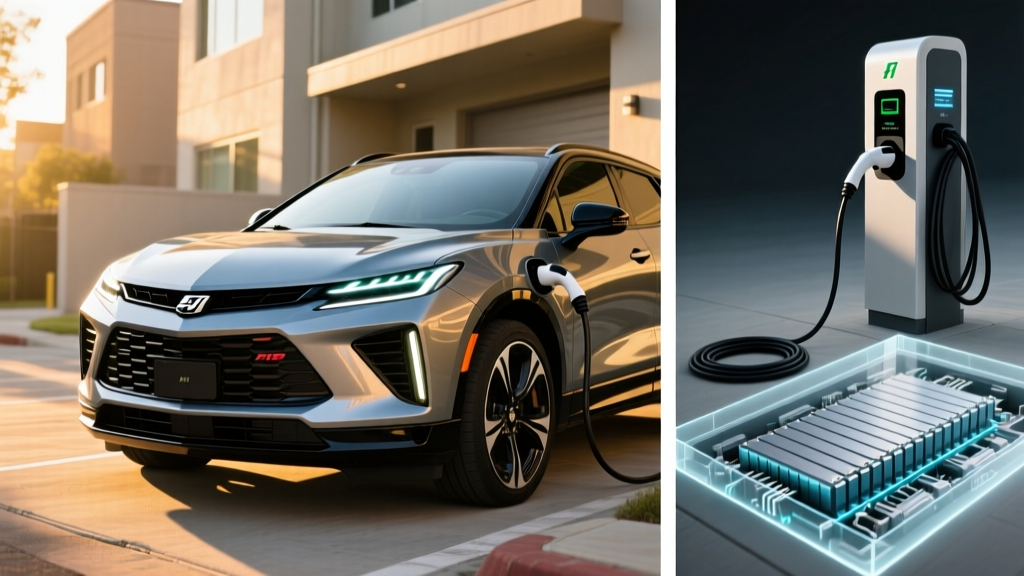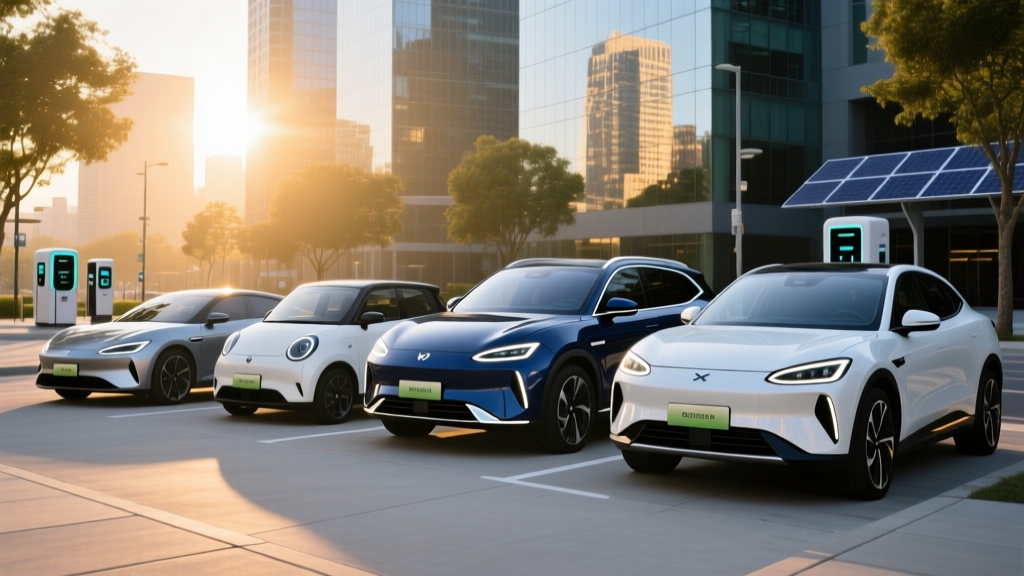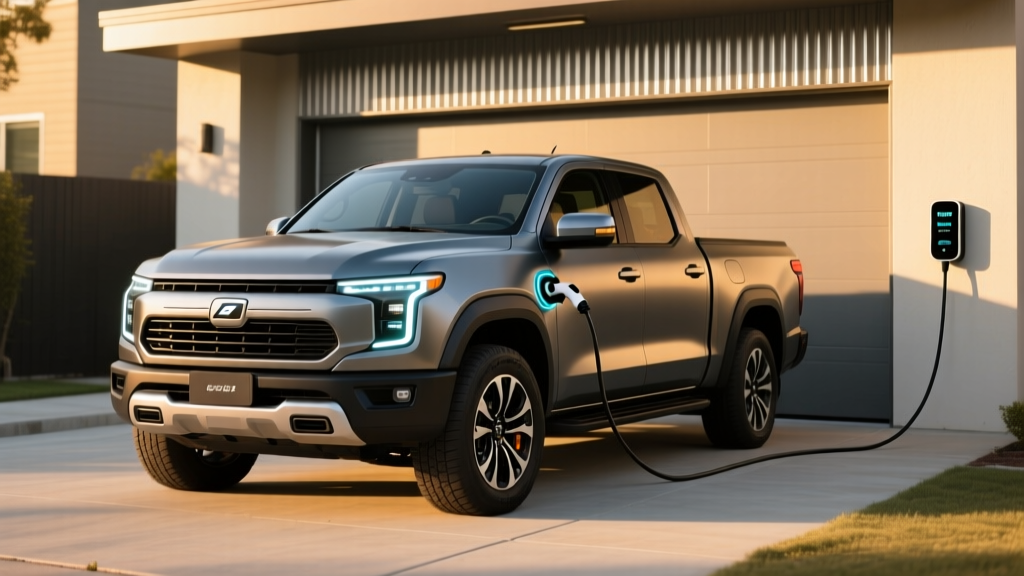
Quick Answer: The 2026 full size electric pickup truck market offers four primary options: the Ford F-150 Lightning, Chevrolet Silverado EV, GMC Sierra EV, and Rivian R1T (midsize but frequently cross-shopped). Expect real-world range between 230–340 miles depending on model, battery size, and conditions — typically 15–25% below EPA estimates when towing or driving in cold weather. Base prices span roughly $50,000 to $80,000 before incentives. Federal tax credit eligibility under §30D is highly model- and trim-dependent due to battery-sourcing and MSRP cap rules. If you have Level 2 home charging and drive under 250 miles daily, an electric truck can save $1,500–$2,500 annually in fuel costs versus a gas equivalent.
The Full Size Electric Pickup Truck Landscape in 2026
The electric truck segment has matured past early-adopter growing pains. Ford's F-150 Lightning is now in its fourth model year with proven reliability data. GM's Ultium-based Silverado EV and Sierra EV have ramped up production after initial delays. Rivian's R1T, while technically midsize (roughly 208 inches long vs. 230+ for the F-150), competes aggressively on price and capability and is included here for cross-shopping context.
What hasn't changed: electric pickups still carry a price premium over gas equivalents, towing slashes range by 40–50%, and public DC fast-charging infrastructure remains inconsistent in rural areas where trucks are most commonly used. This guide cuts through marketing claims with hard numbers so you can make a grounded purchase decision.
Spec-by-Spec: How the Top Electric Trucks Compare
| Spec | 2026 Ford F-150 Lightning | 2026 Chevy Silverado EV | 2026 GMC Sierra EV | 2026 Rivian R1T |
|---|---|---|---|---|
| EPA Range (Max Pack) | 320 mi | 390 mi (4WT) | 390 mi (Denali) | 352 mi (Max Pack) |
| Battery (Usable kWh) | ~131 kWh (NMC) | ~200 kWh (NMC) | ~200 kWh (NMC) | ~149 kWh (NMC) |
| Peak DC Fast Charge | 150 kW | 350 kW | 350 kW | 220 kW |
| 10–80% Charge Time | ~41 min | ~20 min | ~20 min | ~30 min |
| Level 2 Rate (kW) | 19.2 kW | 19.2 kW | 19.2 kW | 11.5 kW |
| Horsepower | 580 hp | 754 hp (4WT) | 754 hp (Denali) | 665 hp (Dual) |
| 0–60 mph | ~4.0 sec | ~4.5 sec | ~4.5 sec | ~3.0 sec |
| Max Towing Capacity | 10,000 lbs | 12,500 lbs | 12,200 lbs | 11,000 lbs |
| Payload | 2,235 lbs | 1,800 lbs | 1,750 lbs | 1,764 lbs |
| Starting MSRP | ~$52,000 | ~$55,000 | ~$58,000 | ~$69,900 |
| Battery Warranty | 8 yr / 100k mi | 8 yr / 100k mi | 8 yr / 100k mi | 8 yr / 175k mi |
Sources: fueleconomy.gov, manufacturer spec sheets. Figures reflect highest-available battery/trim where noted.
Real-World Range: What the EPA Sticker Doesn't Tell You
EPA vs. Reality: The Silverado EV's 390-mile EPA figure is impressive on paper, but that's under ideal conditions — moderate temperatures, no cargo, mixed city/highway driving. Here's what to actually expect:
- Highway-only at 70+ mph: Subtract 10–15%. A 320-mile F-150 Lightning delivers roughly 270–285 miles on a flat interstate.
- Cold weather (below 32°F): Subtract 20–30%. That same Lightning drops to 220–255 miles. GM's Ultium trucks use a heat pump, which mitigates some loss, but physics is physics — battery chemistry slows in the cold.
- Towing a 7,000-lb trailer: Subtract 40–50%. This is the single biggest range killer. Expect 160–190 miles from the Lightning, 195–230 from the Silverado EV with its massive 200 kWh pack.
- Combined real-world daily driving: Most owners report achieving 85–90% of EPA in temperate climates with mixed use.
The Rivian R1T's Max Pack (352 miles EPA) holds up well in real-world testing, and its quad-motor variant trades some range for extraordinary torque vectoring. But if you tow frequently, no current electric truck is a drop-in replacement for a diesel's 500-mile loaded range without route planning around DC fast chargers.
Charging at Home and on the Road: The Practical Reality
Every full size electric pickup truck benefits enormously from Level 2 home charging. Here's the math that matters:
| Charging Level | Power (kW) | Miles Added Per Hour | Typical Use Case |
|---|---|---|---|
| Level 1 (120V outlet) | 1.4 kW | 3–5 mi/hr | Emergency only; insufficient for truck-sized batteries |
| Level 2 (240V, 48A) | 11.5 kW | 25–32 mi/hr | Standard home charger; full overnight charge |
| Level 2 (240V, 80A) | 19.2 kW | 42–55 mi/hr | Ford/GM trucks support this; faster overnight fill |
| DC Fast Charge | 150–350 kW | ~500–1,000+ mi/hr (burst) | Road trips; 10–80% in 20–41 minutes |
Home charging installation costs vary significantly. A basic Level 2 setup with a 50-amp circuit near your electrical panel might cost $500–$1,200 (charger + electrician). If you need a panel upgrade from 100A to 200A service — common in older homes — add $1,500–$3,000. The Ford and GM trucks accept up to 19.2 kW on Level 2, meaning you can recover a full 200+ kWh battery overnight on an 80-amp circuit. The Rivian caps at 11.5 kW, so a full Max Pack charge takes closer to 13 hours.
On the road, GM's Ultium trucks have a decisive advantage: 350 kW peak DC charging on compatible stations (primarily Electrify America and select EVgo locations). The Silverado EV can add roughly 100 miles of range in 10 minutes. The F-150 Lightning's 150 kW peak is noticeably slower — plan for 35–40 minute stops at DC chargers. All four trucks use the NACS (Tesla-style) connector or CCS1 with adapter access to the Tesla Supercharger network, dramatically expanding route options compared to 2023.
Electric Truck vs. Gas Truck: The Cost Breakdown
| Cost Category | F-150 Lightning (Extended Range) | F-150 Gas (3.5L EcoBoost, 4WD) |
|---|---|---|
| Base MSRP | ~$65,000 (XLT) | ~$52,000 (XLT) |
| Fed. Tax Credit (§30D) | Up to $7,500 (eligibility varies) | $0 |
| Effective Purchase Price | ~$57,500 | ~$52,000 |
| Fuel/Energy Cost (15k mi/yr) | ~$600–$900/yr (home charging) | ~$2,100–$2,500/yr (gas at $3.40/gal) |
| Annual Maintenance | ~$200–$400 | ~$600–$900 |
| Insurance (avg annual) | ~$1,800–$2,400 | ~$1,400–$1,900 |
| 5-Year Total Fuel Savings | Electric saves ~$7,000–$9,000 | |
The honest math: Even after the federal tax credit (assuming eligibility), a full size electric pickup truck typically costs $3,000–$8,000 more upfront than a comparably equipped gas model. You recoup that difference in 3–5 years through fuel and maintenance savings if you charge primarily at home. If you rely exclusively on public DC fast charging at $0.35–$0.50/kWh, your annual energy cost rises to $1,200–$1,800 — still cheaper than gas, but the payback stretches to 5–7 years.
Insurance premiums for electric trucks run 20–35% higher than gas equivalents, according to industry data. This is driven by higher repair costs (specialized high-voltage training, expensive battery modules) and elevated vehicle prices. Factor this into your total cost of ownership.
Federal Tax Credit Eligibility (§30D) — Current Rules
The §30D clean vehicle credit offers up to $7,500, but qualifying is not guaranteed. Per IRS guidelines, you must meet ALL of the following:
- MSRP cap: Pickup trucks must be under $80,000 MSRP
- Income cap: AGI ≤ $150,000 (single), $225,000 (head of household), $300,000 (joint)
- Battery sourcing: Minimum percentages of critical minerals and battery components must be sourced from the U.S. or free-trade-agreement countries — these thresholds tighten annually and disqualify some trims
- Point-of-sale transfer: As of 2024+, you can transfer the credit to the dealer for an immediate price reduction (rather than waiting for tax filing)
- Final assembly: Vehicle must be assembled in North America
Always verify eligibility on fueleconomy.gov for the specific trim and model year before purchasing. Tax rules are subject to change — consult a tax professional for your situation.
Towing, Payload, and the Range Trade-Off Nobody Advertises
This is where electric trucks face their steepest reality check. Towing a loaded trailer with any full size electric pickup truck will cut your range roughly in half. Here's why: a 7,000-pound box trailer creates enormous aerodynamic drag at highway speeds, and unlike regenerative braking in stop-and-go driving, highway towing offers almost no energy recovery.
In real-world towing tests, the F-150 Lightning with the extended-range 131 kWh pack delivers approximately 150–180 miles of range when pulling a 6,000–7,000 lb camper at 65 mph on flat terrain. Add hills or headwinds and that drops further. The Silverado EV's 200 kWh pack pushes towing range closer to 200–230 miles — a meaningful advantage if you tow regularly.
For context, a gas F-150 with the 36-gallon tank and EcoBoost V6 achieves 350–400 miles of towing range. If your use case involves frequent long-distance towing (boat to the lake, horse trailer, construction equipment), an electric truck requires deliberate route planning around DC fast chargers — and those chargers need pull-through spots designed for trucks with trailers, which remain rare outside major corridors.
Payload is less problematic. The F-150 Lightning's 2,235-lb payload capacity matches many gas F-150 configurations. The Silverado EV and Sierra EV are slightly lower at 1,750–1,800 lbs, which still handles most job-site and recreational needs but may limit heavy commercial use.
Myths vs. Facts: Clearing Up Common Misconceptions
| Myth | Fact |
|---|---|
| "Electric trucks can't tow anything useful" | All current models tow 10,000–12,500 lbs — comparable to half-ton gas trucks. The limitation is range while towing, not capability. |
| "The battery will need replacing in 5 years" | All four manufacturers warranty batteries for 8 years / 100,000+ miles with a minimum 70% capacity retention threshold. Real-world degradation data from 2022–2023 Lightning owners shows approximately 3–5% loss over the first 50,000 miles. |
| "Charging takes hours on road trips" | GM's 350 kW-capable trucks charge 10–80% in roughly 20 minutes at compatible stations. Ford's 150 kW peak takes ~41 minutes. Plan stops around meals or rest breaks. |
| "Electric trucks don't work in cold climates" | They work, but range drops 20–30% below freezing. Preconditioning the battery while plugged in (a feature all four trucks offer) recovers some efficiency. Owners in Minnesota and Canada report satisfactory daily use with adjusted expectations. |
| "You'll save money immediately" | Higher purchase price, elevated insurance, and potential home charger installation costs mean savings accrue over 3–7 years depending on your mileage, electricity rates, and tax credit eligibility. |
Decision Framework: Which Electric Truck (If Any) Is Right for You?
Choose the Ford F-150 Lightning if:
- You want the most proven platform (in production since 2022) with the widest dealer service network
- Your daily driving is under 250 miles and you primarily use the truck for commuting, light hauling, or job-site trips
- Pro Power Onboard (up to 9.6 kW V2L output) is a priority for powering tools or tailgating
- You value payload capacity (2,235 lbs) over maximum towing range
Choose the Chevrolet Silverado EV / GMC Sierra EV if:
- Range is your top priority — the 390-mile EPA figure (with the 4WT/Denali max pack) leads the segment
- You tow regularly and need the extra kWh to extend loaded range to ~200+ miles
- 350 kW DC fast charging matters for your road-trip patterns
- You're willing to pay a premium (Sierra Denali EV starts near $80,000, potentially above the §30D MSRP cap)
Choose the Rivian R1T if:
- Performance and driving dynamics are priorities (0–60 in ~3.0 seconds, best-in-class handling)
- You want a more adventure-oriented platform with the Gear Tunnel and available camp kitchen
- You don't need a full-size bed (the R1T's 4.5-foot bed is midsize; a bed extender adds ~2 feet)
- Rivian's direct-to-consumer service model works in your area
Stick with a gas or hybrid truck if:
- You frequently tow over 300 miles one-way without overnight stops
- You lack access to Level 2 home charging and your area has sparse public charging
- Your budget is firmly under $45,000 and you need a new truck today
- You operate in extreme cold (-20°F or below) regularly, where range loss compounds with cabin heating demands
First-Time Electric Truck Buyer: What You Need to Know Before Signing
If this is your first EV purchase, these ownership realities are worth internalizing before you commit:
Home charging is almost mandatory. Relying solely on public charging for a truck-sized battery (131–200 kWh) is expensive and time-consuming. A full charge at a public DC fast charger at $0.40/kWh costs $52–$80. The same charge at home on a residential rate of $0.14/kWh costs $18–$28. Budget $500–$2,500 for a quality Level 2 home charger installation — consider it part of the vehicle's purchase price.
Plan your electrical panel assessment early. Before ordering, have a licensed electrician evaluate your home's service panel. If you have 100-amp service and an electric range, dryer, and HVAC, you may need a 200-amp upgrade ($1,500–$3,000) to support a 48- or 80-amp EV circuit. This is the single most overlooked cost for first-time EV buyers.
Download charging apps before buying. Install PlugShare, EVgo, Electrify America, and the Tesla app (for Supercharger access via NACS/adapter). Map your most common routes and check charger availability. If your daily commute or regular trips pass through areas with no DC fast chargers, an electric truck may require lifestyle adjustments you're not ready for.
Understand the charge curve. DC fast charging doesn't sustain peak speed. A truck advertising "350 kW peak" may only hold that rate from 10–30% state of charge before tapering to 200 kW, then 100 kW above 60%. This is why manufacturers quote 10–80% times rather than 0–100%. Charging from 80–100% on DC is painfully slow — plan to charge to 80% and drive.
Check NHTSA and IIHS safety ratings. Electric trucks carry their battery mass low in the chassis, which helps rollover resistance, but the overall vehicle weight (6,000–9,000 lbs) affects braking distances and tire wear. Budget for premium tires every 30,000–40,000 miles — heavier vehicles wear rubber faster.
Frequently Asked Questions
How long do electric truck batteries last before replacement?
Current NMC lithium-ion batteries in these trucks are engineered for 200,000+ miles of usable life before reaching 70% capacity. All four manufacturers warranty their batteries for 8 years and 100,000–175,000 miles (Rivian leads here). Real-world data from early F-150 Lightning owners suggests approximately 3–5% degradation over 50,000 miles. Full battery replacement, if needed out of warranty, currently costs $15,000–$30,000 depending on the pack — a worst-case scenario most owners won't face.
Can I use an electric truck for my construction or trade business?
Yes, with caveats. The F-150 Lightning's Pro Power Onboard (up to 9.6 kW of 240V output) can run job-site tools — saws, compressors, welders — directly from the truck, eliminating the need for a separate generator. Payload ranges from 1,750–2,235 lbs, sufficient for most materials. The primary limitation is range under heavy load: if your daily route exceeds 150 miles with frequent stops and starts, you'll need reliable overnight charging at your shop or home.
Is a full size electric pickup truck practical without a garage?
It can be, but it's harder. Outdoor Level 2 chargers are rated for weather exposure (look for NEMA 4-rated units), and the trucks themselves are sealed against the elements. However, cold-soaking a large battery overnight in sub-freezing temperatures accelerates range loss and slows the next morning's regenerative braking. If you must park on-street, prioritize a truck with a robust battery preconditioning system and plan to use scheduled charging (which warms the battery before departure while still plugged in).
Do electric trucks qualify for the $7,500 federal tax credit?
Some trims do, some don't — it changes frequently based on battery-sourcing compliance and MSRP caps. Under current IRS §30D rules, pickup trucks must have an MSRP under $80,000, the buyer must meet income thresholds, and the battery must contain minimum percentages of U.S.-sourced critical minerals and components. Always check fueleconomy.gov's qualifying vehicle list for the specific trim you're considering, and confirm with your dealer before finalizing the purchase.
What happens if I run out of charge on the road?
Unlike a gas truck where a jerry can solves the problem, a depleted EV requires a flatbed tow to the nearest charger. All four trucks offer robust range-estimation algorithms and will route you to chargers when the battery is low. The practical advice: treat 10% state of charge as your "reserve" — don't plan routes that dip below 15% arrival charge until you know the charger at your destination is operational.