Quick Answer: Should You Buy a Fuel Cell Electric Vehicle?
Fuel cell electric vehicles (FCEVs) like the Toyota Mirai and Hyundai Nexo offer 380–420 miles of EPA range and a 5-minute hydrogen refuel — but they only make sense if you live within 10–15 minutes of a reliable hydrogen station. Hydrogen fuel costs $15–$36/kg in California (the only US state with a public passenger-car hydrogen network), translating to roughly $0.15–$0.30 per mile — comparable to or more expensive than gasoline. For most US buyers, a battery-electric vehicle (BEV) with home Level 2 charging remains the more practical and affordable electrified choice. FCEVs are best suited for drivers in hydrogen-served California corridors who lack home charging access and need fast refueling.
What Is a Fuel Cell Electric Vehicle, Exactly?
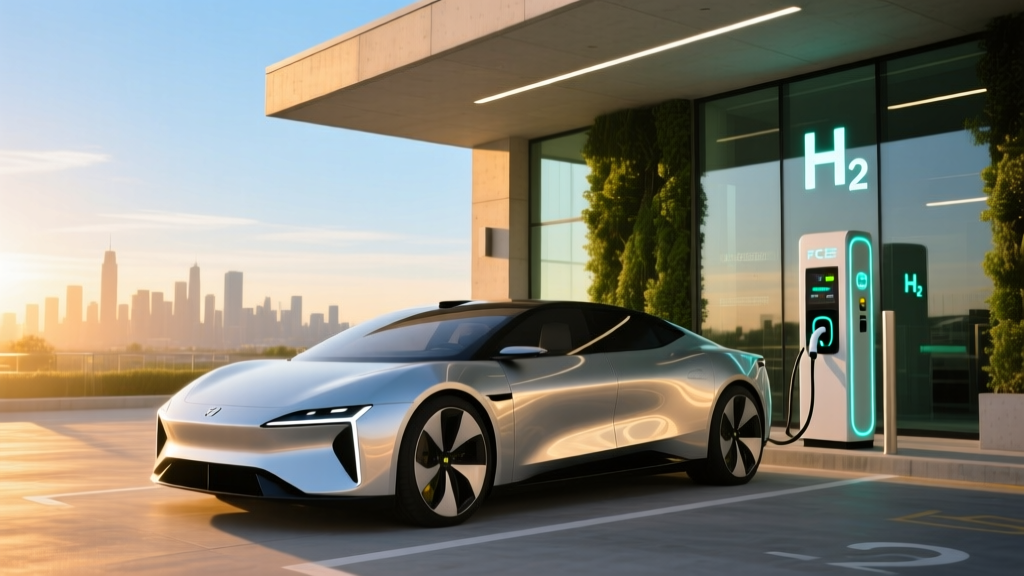
A fuel cell electric vehicle is technically an electric car — it's driven by an electric motor and has zero tailpipe emissions (only water vapor). The difference is how it stores energy. Instead of a large lithium-ion battery pack charged from the grid, an FCEV carries compressed hydrogen gas in high-pressure tanks (typically at 10,000 psi / 700 bar). That hydrogen passes through a proton-exchange membrane (PEM) fuel cell stack, which combines it with oxygen from the air to generate electricity on the fly.
The electricity powers the motor directly, with a small buffer battery (usually 1–2 kWh) handling regenerative braking and acceleration surges. Think of it as a BEV that generates its own electricity from hydrogen rather than plugging in.
Current 2026 FCEV Models Available in the US
| Model | EPA Range | H₂ Tank Capacity | Motor Output | 0–60 mph | Base MSRP |
|---|---|---|---|---|---|
| Toyota Mirai (XLE) | 402 mi | 5.6 kg (700 bar) | 182 hp | 9.0 sec | $51,490 |
| Toyota Mirai (Limited) | 357 mi | 5.6 kg (700 bar) | 182 hp | 9.0 sec | $64,490 |
| Hyundai Nexo (Blue) | 380 mi | 6.33 kg (700 bar) | 161 hp | 9.5 sec | $63,635 |
| Hyundai Nexo (Limited) | 354 mi | 6.33 kg (700 bar) | 161 hp | 9.5 sec | $67,285 |
Sources: fueleconomy.gov, Toyota Motor North America, Hyundai Motor America. Prices reflect 2025–2026 model year MSRP before incentives.
Real-World Range Reality
EPA sticker: 380–402 miles.
Real-world expectation: 300–350 miles in mild conditions; 250–300 miles in sustained highway driving or cold weather. FCEV range drops in cold temperatures because the fuel cell stack must divert energy to thermal management, and hydrogen tank density decreases slightly in extreme cold. Unlike BEVs, FCEVs don't suffer dramatic range loss from battery chemistry limitations, but real-world figures still fall 10–20% below the EPA estimate.
FCEV vs. BEV vs. Gas: The Ownership Comparison
The real question isn't whether FCEVs work — they do, and quite smoothly. The question is whether they make financial and logistical sense compared to alternatives. Here's how the numbers stack up across a 5-year, 75,000-mile ownership horizon.
| Cost Factor | FCEV (Toyota Mirai) | BEV (Tesla Model 3 LR) | Gas (Toyota Camry LE) |
|---|---|---|---|
| Base MSRP | $51,490 | $42,490 | $29,995 |
| Federal Tax Credit (§30D) | $0 (no qualifying credit) | Up to $7,500* | $0 |
| CA State Rebate (CVRP) | $4,500 | $2,000 | $0 |
| Fuel/Energy (75k mi) | $11,250–$15,000† | $2,250–$4,500‡ | $8,250–$10,500§ |
| Maintenance (5 yr) | ~$1,500 | ~$1,200 | ~$3,500 |
| 5-Year Estimated Total | $62,740–$67,490 | $37,240–$44,240 | $41,745–$43,995 |
* §30D eligibility depends on MSRP caps, buyer income limits, and battery sourcing requirements per IRS guidelines. Confirm eligibility with a tax professional.
† Hydrogen at $15–$20/kg; Mirai consumes ~1 kg per 65–70 miles.
‡ Home Level 2 charging at $0.12–$0.18/kWh vs. public DC fast charging at $0.30–$0.48/kWh.
§ Gasoline at $3.50–$4.50/gal; Camry rated at 32 MPG combined (fueleconomy.gov).
| Attribute | FCEV | BEV | Gas / Hybrid |
|---|---|---|---|
| Refuel / Recharge Time | 3–5 min (hydrogen) | 15–30 min (DC fast); 8–10 hr (Level 2 home) | 3–5 min (gasoline) |
| Refueling Infrastructure | ~60 stations, CA only | 190,000+ public ports nationwide | 150,000+ gas stations |
| Home Fueling Possible? | No | Yes (Level 1 or Level 2) | No |
| Real-World Range | 300–350 mi | 250–350 mi (varies by model) | 400–550 mi |
| Cold-Weather Impact | Moderate (10–15% loss) | Significant (20–40% loss) | Minimal |
| Tailpipe Emissions | Water vapor only | None | CO₂, NOₓ, particulates |
The Hydrogen Station Problem: Infrastructure Reality
This is the single biggest barrier to FCEV ownership, and no amount of engineering solves it at the consumer level. As of early 2026, there are roughly 60 retail hydrogen stations in the United States — virtually all of them in California, concentrated in the Los Angeles basin, San Francisco Bay Area, and Sacramento corridor. A handful of stations exist near other research campuses or fleet depots, but for passenger car owners, California is the only viable market.
Station reliability has been a persistent issue. Industry data and owner reports indicate that 20–30% of California hydrogen stations are offline at any given time due to equipment failures, hydrogen supply disruptions, or pressure-system maintenance. Unlike a BEV owner who can fall back to a slower Level 2 charger or even a standard 120V outlet, an FCEV driver with a broken local station has no alternative fuel source.
The California Fuel Cell Partnership and station operators like True Zero (FirstElement Fuel) and Iwatani have committed to network expansion, but growth has been slow — averaging roughly 5–10 new stations per year. If you cannot confirm at least two reliable hydrogen stations within a 15-minute drive of your home or workplace, an FCEV is not a practical daily driver.
Hydrogen Fuel Costs: The Uncomfortable Math
Hydrogen pricing is where many prospective FCEV buyers encounter sticker shock. In California, retail hydrogen prices in 2025–2026 range from $15 to $36 per kilogram, depending on the station operator, location, and whether promotional fueling credits are still active.
The Toyota Mirai holds approximately 5.6 kg of hydrogen at full capacity. At $20/kg, a full fill costs roughly $112 — comparable to filling a large SUV's gas tank. At $30/kg, that same fill reaches $168. Over 75,000 miles of driving, fuel costs alone can exceed $12,000–$15,000, erasing much of the maintenance savings over a gas car.
Toyota and Hyundai have historically included complimentary fueling credits (typically $15,000–$25,000 worth, or 3 years of fuel) with new FCEV purchases or leases. These credits significantly offset early ownership costs — but they expire, and you'll pay full retail hydrogen prices afterward. Budget accordingly.
Myths vs. Facts About Fuel Cell Electric Vehicles
| Myth | Fact |
|---|---|
| "FCEVs are more efficient than BEVs." | False. The well-to-wheel efficiency of hydrogen (electrolysis → compression → transport → fuel cell) is roughly 25–35%. A BEV using grid electricity directly achieves 70–80% well-to-wheel efficiency. BEVs use roughly half the primary energy per mile. |
| "Hydrogen is completely green." | Mostly false. Over 95% of US hydrogen is produced from natural gas ("gray hydrogen") via steam methane reforming, which generates CO₂. "Green hydrogen" from renewable-powered electrolysis exists but accounts for a small fraction of supply and costs significantly more. |
| "FCEVs are dangerous because hydrogen is flammable." | Misleading. Hydrogen is flammable, but FCEV tanks are built from carbon-fiber-reinforced composites tested to withstand gunfire, extreme impacts, and fire. Hydrogen dissipates rapidly upward if released (it's the lightest element), reducing explosion risk vs. pooling gasoline vapors. NHTSA has not flagged FCEVs as higher-risk than BEVs or gas cars. |
| "You can fuel an FCEV at home." | False. Residential hydrogen refueling does not exist at consumer scale. All refueling requires dedicated high-pressure (700 bar) hydrogen stations. |
| "FCEVs qualify for the $7,500 federal tax credit." | It depends. FCEVs are technically eligible under §30D as "clean vehicles," but the vehicle must meet critical mineral and battery component sourcing requirements, MSRP caps ($55,000 for sedans), and buyer income limits. The Mirai XLE at $51,490 may qualify; the Limited trim at $64,490 exceeds the sedan MSRP cap. Check fueleconomy.gov's credit lookup and consult a tax professional. |
Maintenance, Warranty, and Long-Term Costs
FCEVs have fewer moving parts than gas cars (no transmission, no oil changes, no spark plugs), but they're not maintenance-free. Key service items include:
- Air intake filter replacement: The fuel cell stack requires ultra-clean air. The Mirai's specialized air filter should be replaced every ~15,000 miles (~$80–$120).
- Fuel cell stack coolant: Requires periodic inspection and replacement per the manufacturer schedule.
- Hydrogen tank inspection: DOT regulations require tank inspection every 36 months; replacement at 15 years.
- Standard EV items: Brake fluid, cabin air filter, tire rotation, 12V battery.
Warranty Coverage
| Component | Toyota Mirai | Hyundai Nexo |
|---|---|---|
| Fuel Cell Stack | 8 yr / 100,000 mi | 10 yr / 100,000 mi |
| H₂ Tank & Key FC Components | 8 yr / 100,000 mi | 10 yr / 100,000 mi |
| Basic Vehicle | 3 yr / 36,000 mi | 5 yr / 60,000 mi |
| Powertrain | 5 yr / 60,000 mi | 5 yr / 60,000 mi |
Fuel cell stack replacement outside warranty is estimated at $15,000–$25,000 — comparable to a BEV battery pack replacement. However, fuel cell stacks have demonstrated strong durability in fleet testing, with many exceeding 150,000 miles without significant degradation.
Decision Framework: Is an FCEV Right for You?
Choose an FCEV if:
- You live in California within 10–15 minutes of two or more reliable hydrogen stations.
- You lack access to home or workplace charging (apartment, street parking, no electrical panel capacity).
- You regularly drive 300+ miles and cannot tolerate 20–30 minute DC fast-charging stops.
- You value the driving experience of an EV (smooth, quiet, instant torque) but want gas-like refueling speed.
- You can take advantage of manufacturer fuel credits and state rebates to offset the high MSRP.
Choose a BEV if:
- You can install a Level 2 home charger (~$500–$2,000 including equipment and electrician).
- You want the lowest cost per mile — home-charged BEVs run $0.03–$0.06/mile vs. $0.15–$0.30/mile for hydrogen.
- You live outside California or in a hydrogen-station desert.
- You want access to a growing national DC fast-charging network (Tesla Superchargers, Electrify America, etc.).
- You want a wider selection of models, trims, and price points.
Choose a Hybrid/PHEV if:
- You want electrified driving without any refueling infrastructure dependency.
- You frequently road-trip to areas with limited charging or hydrogen access.
- You want lower upfront cost ($28,000–$40,000 for most hybrids/PHEVs).
Frequently Asked Questions
Can I buy a fuel cell electric vehicle outside of California?
Practically, no. While Toyota and Hyundai technically sell the Mirai and Nexo nationwide, the complete absence of retail hydrogen stations outside California makes ownership unfeasible. Both manufacturers restrict most sales and leasing to California ZIP codes near existing stations. If you live in Hawaii, there is limited fleet hydrogen infrastructure, but no consumer retail network.
How long does it take to refuel a fuel cell vehicle?
A full hydrogen fill at a 700 bar station takes approximately 3–5 minutes — comparable to pumping gasoline. This is the FCEV's primary advantage over BEVs for drivers who cannot charge at home. However, station wait times can add 5–15 minutes during peak hours, and out-of-service pumps can create significant detours.
Do fuel cell vehicles work in cold weather?
Yes, but with some caveats. Modern FCEVs like the Mirai and Nexo include thermal management systems that handle sub-freezing starts. However, cold weather reduces range by roughly 10–15% due to energy diverted to stack warmup and cabin heating. This is less severe than BEV cold-weather loss (20–40%) but still meaningful. In extreme cold (below 0°F), startup time increases slightly as the fuel cell membrane must reach operating temperature.
What happens to fuel cell vehicles in a crash?
FCEVs undergo the same NHTSA and IIHS crash testing as all passenger vehicles. Hydrogen tanks are constructed from carbon-fiber-reinforced polymer and tested to withstand impacts, punctures, and fire exposure far beyond normal crash forces. In the event of a collision, automatic shutoff valves isolate the hydrogen supply. The Toyota Mirai earned an IIHS Top Safety Pick+ rating in prior testing years.
Will hydrogen stations expand beyond California?
Several states (New York, Colorado, Hawaii) have announced hydrogen infrastructure plans, but most focus on heavy-duty trucking and fleet operations, not passenger vehicles. Meaningful consumer hydrogen infrastructure outside California is unlikely before 2030. The federal DOE's Regional Clean Hydrogen Hubs program ($7 billion in funding) targets industrial and commercial hydrogen production, not retail passenger-car fueling.
Is hydrogen fuel cell technology a dead end for passenger cars?
For mass-market US passenger vehicles, the evidence points that direction. BEV charging speeds have improved (many 2026 models charge 10–80% in under 20 minutes), range has increased, and the charging network is expanding rapidly. Hydrogen's advantages — fast refueling and long range — are narrowing as BEV technology advances. However, FCEVs remain relevant for heavy-duty trucking, fleet operations, and markets where grid capacity cannot support mass BEV charging. Toyota, Hyundai, and BMW continue investing in fuel cell technology, primarily for commercial applications.
The Bottom Line on Fuel Cell Electric Vehicles
FCEVs are genuine, well-engineered electric vehicles that deliver a compelling driving experience with fast refueling and strong range. The technology works. The problem isn't the car — it's the fuel. At $15–$36/kg for hydrogen, with only ~60 stations in a single state and chronic reliability issues, the ownership proposition is difficult to recommend for most buyers.
If you're in California with verified station access and manufacturer fuel credits, the Mirai or Nexo can serve as a comfortable, zero-tailpipe-emission daily driver. For everyone else, a BEV with home charging delivers dramatically lower per-mile costs, vastly more refueling options, and a broader vehicle selection — making it the more pragmatic path to electric driving in 2026.