The Quick Answer: What Is the Ford Transit Connect Electric?
Bottom line: As of the 2026 model year, Ford does not sell a fully electric Transit Connect in the United States. The last electric Transit Connect was produced in 2014 with a 28 kWh battery and an EPA-estimated 56-mile range. Ford discontinued the Transit Connect entirely for the U.S. market after the 2023 model year. If you need an electric commercial van today, Ford's current offering is the E-Transit (full-size cargo van, EPA range ~126 miles, starting around $55,000), while the closest compact electric alternative from any brand is the BrightDrop Zevo 400 or upcoming entries like the Ram ProMaster EV.
Searches for a "Ford Transit Connect Electric" typically come from fleet managers, small business owners, and tradespeople who loved the compact Transit Connect's city-friendly dimensions and want a battery-electric replacement. That's a reasonable need — but the vehicle simply doesn't exist in 2026. This guide explains what happened, what you can actually buy, and how the economics of electric commercial vans stack up against their gas counterparts.
What Happened to the Transit Connect Electric?
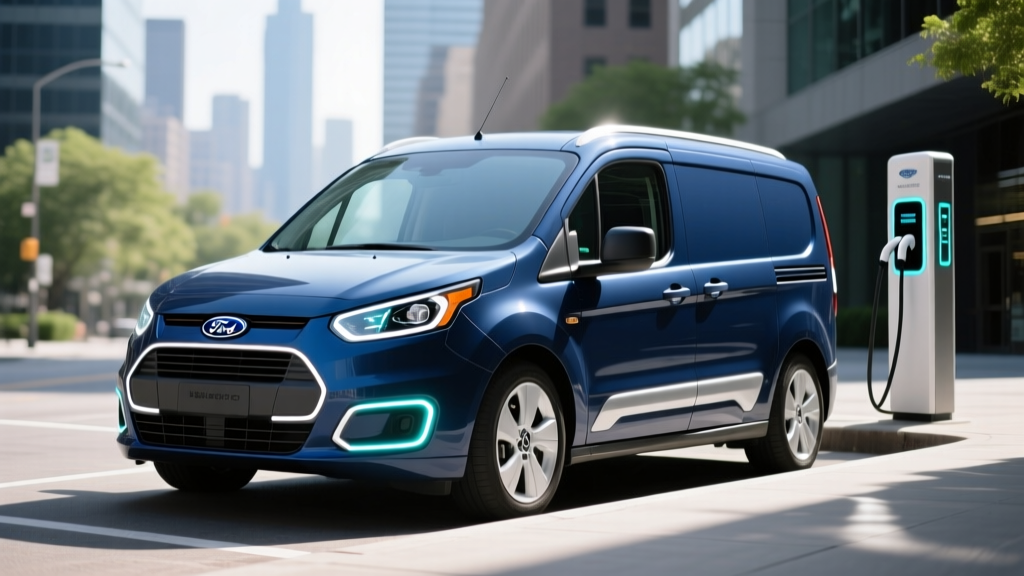
Ford produced the Transit Connect Electric in very limited numbers for the 2011–2014 model years. Built in partnership with Azure Dynamics and using Johnson Controls-Saft battery packs, it was essentially a conversion of the first-generation Transit Connect Wagon/Van. Here's what that vehicle delivered:
| Spec | 2011–2014 Transit Connect Electric |
|---|---|
| Battery | 28 kWh (usable), lithium-ion |
| EPA Range | 56 miles |
| Motor Output | 50 kW (67 hp) continuous |
| Top Speed | 75 mph (electronically limited) |
| DC Fast Charging | None (Level 2 only, ~6.6 kW AC) |
| Payload | ~1,000 lbs |
| Original MSRP | ~$57,400 (before incentives) |
Ford discontinued the Transit Connect nameplate in the U.S. after the 2023 model year due to declining sales and the "chicken tax" tariff structure that made importing compact vans uneconomical. Ford has not announced a next-generation compact electric van for the U.S. market. The larger Ford E-Transit remains the brand's sole electric commercial van.
What Can You Actually Buy Instead?
If your use case calls for a compact, city-friendly electric cargo van, here are the closest 2026 alternatives — along with how they compare on the specs that matter for fleet and small-business buyers.
| Vehicle | Class | EPA Range | Battery (kWh) | Max DC Charge (kW) | Starting MSRP |
|---|---|---|---|---|---|
| Ford E-Transit (2026) | Full-size van | ~126 mi | 68 kWh usable (NMC) | 115 kW | ~$55,000 |
| BrightDrop Zevo 400 | Mid-size step van | ~250 mi | 165 kWh (NMC) | 120 kW | Fleet pricing |
| Ram ProMaster EV (announced) | Full-size van | ~162 mi (est.) | 110 kWh (est.) | ~150 kW | TBA |
| Mercedes-Benz eSprinter | Full-size van | ~203 mi | 113 kWh usable (NMC) | 115 kW | ~$72,000 |
None of these match the Transit Connect's sub-$30,000 historical pricing or its compact 173-inch wheelbase. The E-Transit is roughly two feet longer and sits in a higher price bracket. If you specifically need the Transit Connect's footprint, your best current option is a used gas-powered Transit Connect (2014–2023) or waiting to see if Ford or a competitor introduces a compact electric van.
EV Van vs. Gas Van: Real Operating Costs
Let's compare the Ford E-Transit (the closest current Ford electric van) against a comparable gas-powered Ford Transit 150 to show what the ownership math looks like for a commercial driver doing 25,000 miles per year.
| Cost Factor (Annual) | Ford E-Transit (Electric) | Ford Transit 150 (Gas, 3.5L V6) |
|---|---|---|
| Fuel / Electricity | $1,250 (at $0.13/kWh, 2.0 kWh/mi) | $4,167 (at $3.50/gal, 16 MPG combined) |
| Maintenance | ~$400 (no oil, fewer fluids) | ~$1,200 (oil, filters, brakes wear faster) |
| Insurance (commercial) | ~$2,800 | ~$2,400 |
| Depreciation (est. 5-yr) | ~$7,500/yr | ~$5,500/yr |
| Total Annual Operating | ~$11,950 | ~$13,267 |
Key takeaway: The E-Transit saves roughly $1,300 per year in operating costs, primarily from fuel and maintenance. Over a 5-year ownership period, that's ~$6,500 in savings. However, the E-Transit's higher purchase price (~$55,000 vs. ~$43,000 for a gas Transit 150) means it takes roughly 4–5 years to break even — and that's before considering any federal tax credits or state incentives.
Per fueleconomy.gov, electric commercial vehicles typically achieve 2.0–2.5 kWh per mile depending on payload and route. Your actual cost per mile will vary based on local electricity rates, which range from ~$0.10/kWh in parts of the South to over $0.25/kWh in California.
Federal Tax Credits and Incentives for Commercial EVs
Tax credit eligibility for commercial electric vans is more complex than for passenger vehicles. The §30D Clean Vehicle Credit (up to $7,500 for personal use) has strict requirements:
- MSRP cap: Vans classified as SUVs/trucks must be under $80,000 MSRP
- Income caps: $150,000 single / $225,000 head of household / $300,000 joint filers
- Battery sourcing: Critical minerals and battery components must meet escalating domestic-sourcing thresholds per IRS guidelines
- Assembly: Final assembly must be in North America
For fleet/commercial buyers: The §45W Commercial Clean Vehicle Credit offers up to $7,500 for vehicles under 14,000 lbs GVWR (which covers the E-Transit). This credit has no income cap and no battery-sourcing restriction, making it more accessible for businesses. Consult a tax professional to confirm your eligibility — rules shift annually.
Real-World Ownership: What Fleet Buyers Should Know
Charging Infrastructure Is Your First Decision
Commercial electric vans live and die by depot charging. Before ordering any electric van, confirm:
- Electrical panel capacity: A single Level 2 charger (7.7–11.5 kW) requires a dedicated 40–60 amp circuit. Multiple vans may require a panel upgrade ($2,000–$5,000+).
- Level 2 install cost: Expect $800–$2,500 per charger installed (hardware + electrician + permit), per industry estimates.
- DC fast charging: If your vans need mid-day top-ups, a single 50–150 kW DC charger can cost $30,000–$80,000 installed. Most fleets rely on public networks like Electrify America or EVgo instead.
Range Reality for Delivery Routes
The E-Transit's EPA-estimated 126-mile range assumes moderate payload, temperate weather, and mixed city/highway driving. In practice:
- Cold weather (below 32°F): Expect 20–35% range loss. A 126-mile EPA range drops to roughly 82–100 miles.
- Heavy payload / stop-and-go: Regenerative braking partially offsets city inefficiency, but a fully loaded E-Transit will consume more kWh/mile.
- Highway speeds (70+ mph): Aerodynamic drag cuts range by 15–25% versus city driving.
If your daily route exceeds 100 miles, the E-Transit may not work without mid-day charging — which adds downtime and complexity. This is where gas vans retain a clear advantage for long or unpredictable routes.
Maintenance and Downtime
Electric vans eliminate oil changes, transmission fluid, spark plugs, and exhaust system repairs. Brake pad life typically doubles or triples due to regenerative braking. Ford backs the E-Transit's battery with an 8-year/100,000-mile warranty covering defects and capacity loss below 70%. For fleet operators, reduced maintenance means fewer days in the shop — a meaningful advantage when every vehicle-hour counts.
Common Misconceptions About Electric Commercial Vans
| Myth | Fact |
|---|---|
| "Electric vans can't handle heavy payloads." | The E-Transit offers up to 3,880 lbs of payload capacity (low-roof cargo van), competitive with many gas half-ton vans. |
| "Charging takes too long for commercial use." | Overnight Level 2 charging (8–10 hours) fully replenishes the E-Transit's 68 kWh battery. DC fast charging adds ~45 miles of range in 15 minutes at 115 kW. |
| "The battery will need replacing in a few years." | Modern NMC batteries in commercial vans are designed for 150,000+ miles with <15% degradation. Ford's 8-year warranty covers capacity below 70%. |
| "Electric vans are always cheaper to own." | Higher upfront cost, potentially higher insurance, and faster depreciation can offset fuel savings — especially for low-mileage fleets. Run the math for your specific routes. |
| "The Transit Connect Electric is still available." | It was discontinued after 2014. Ford ended all U.S. Transit Connect sales after 2023. |
Decision Framework: Should You Buy an Electric Commercial Van?
Choose an electric van (like the E-Transit) if:
- Your daily routes are under 100 miles round-trip
- You have depot or home charging access (Level 2 minimum)
- You operate in a city or metro area with predictable stop-and-go routes
- You qualify for the §45W commercial credit or local utility incentives
- You want to reduce maintenance downtime and lock in lower per-mile fuel costs
Stick with a gas van if:
- Your routes regularly exceed 150 miles per day
- You lack reliable charging infrastructure at your depot or home
- You operate in extreme cold climates without heated garage space
- Your budget is under $40,000 and you need a new vehicle
- You need a compact van the size of the old Transit Connect (no electric equivalent exists yet)
Frequently Asked Questions
Will Ford ever make an electric Transit Connect?
Ford has not announced any plans for a compact electric van to replace the Transit Connect. The company's European division has committed to an all-electric commercial lineup by 2030, but U.S. product plans remain unconfirmed. If Ford does introduce a compact electric van, expect a range of 150–200 miles and pricing in the $40,000–$50,000 range based on current battery costs.
What's the cheapest electric cargo van I can buy in 2026?
The Ford E-Transit starts around $55,000 before incentives. The Mercedes-Benz eSprinter starts near $72,000. There are no new electric cargo vans under $40,000 in the U.S. market. For budget-conscious buyers, a used gas Transit Connect (2019–2023) remains the most affordable compact cargo van option.
How much does it cost to charge an E-Transit at home?
At the U.S. average residential rate of ~$0.16/kWh, fully charging the E-Transit's 68 kWh battery costs roughly $10.88. That provides about 126 miles of range — equivalent to paying about $0.087 per mile for "fuel," compared to ~$0.22/mile for a gas Transit at 16 MPG and $3.50/gallon.
Can I tow with an electric commercial van?
The E-Transit is rated for up to 7,500 lbs of towing (with the proper equipment). However, towing significantly reduces range — expect a 30–50% reduction depending on trailer weight and speed. If towing is a regular part of your work, a gas van may be more practical.
Do electric vans qualify for the $7,500 federal tax credit?
It depends on how you use the vehicle. Personal-use buyers must meet §30D requirements (income caps, MSRP caps, battery sourcing rules). Commercial/fleet buyers may qualify for the §45W Commercial Clean Vehicle Credit (up to $7,500 for vehicles under 14,000 lbs) with fewer restrictions. Always verify current-year rules on IRS.gov and consult a tax professional.