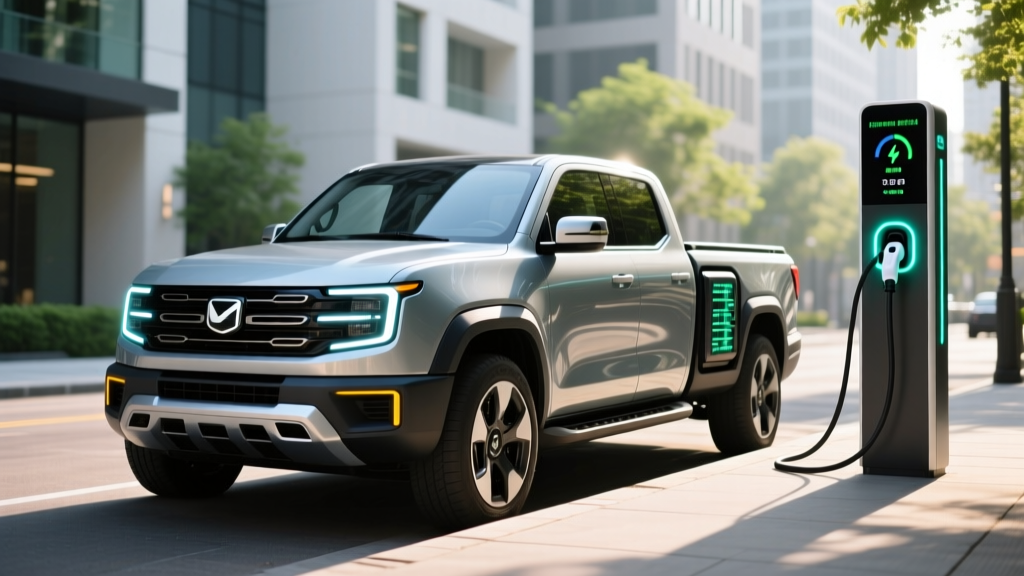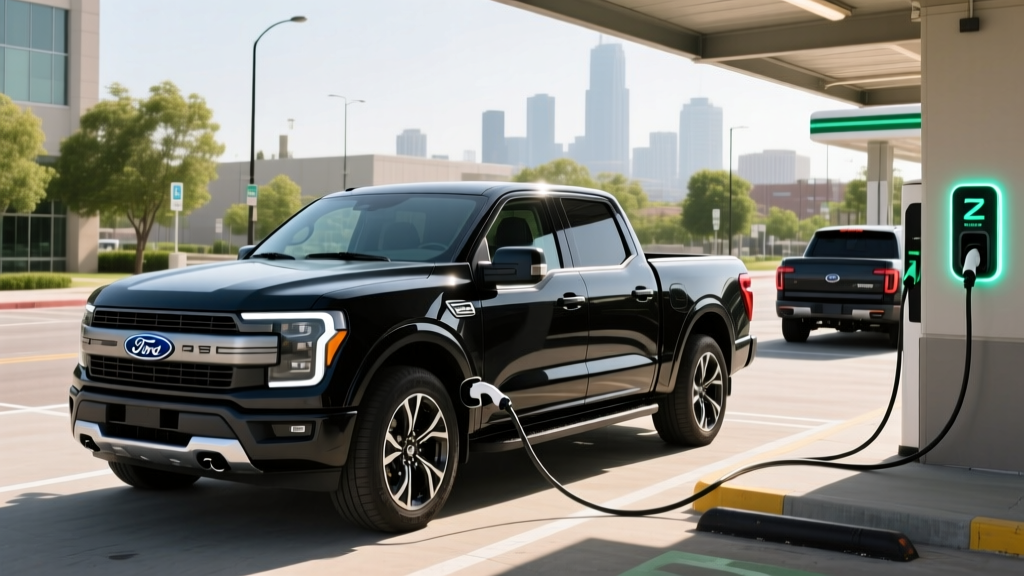
Searches for the 1994 Ford F-150 Lightning — the original SVT performance truck with its 5.8L V8 — still pull enthusiasts into Ford's electric-pickup orbit. The nameplate has evolved dramatically: the 2026 Ford F-150 Lightning trades pushrods for dual motors and a body-on-frame battery pack. Below is a spec-driven, owner-focused review of the current Lightning lineup, with real-world range, charging curves, tax-credit math, and a direct answer to whether it still earns the Lightning badge.
Standard Range (98 kWh usable): EPA 230 mi — expect ~190-210 mi highway, ~150-175 mi in sub-freezing cold.
Extended Range (131 kWh usable): EPA 320 mi — expect ~265-285 mi highway, ~210-240 mi in winter.
Highway efficiency drops roughly 15-20% vs city driving; towing a 5,000-lb trailer can cut range by 40-55%.
Ford F-150 Lightning 2026 Spec Sheet
| Spec | Standard Range (SR) | Extended Range (ER) |
|---|---|---|
| EPA Range | 230 mi | 320 mi |
| Battery (usable / chemistry) | 98 kWh / NMC (nickel manganese cobalt) | 131 kWh / NMC |
| Drivetrain | Dual-motor AWD | Dual-motor AWD |
| Horsepower / Torque | 452 hp / 775 lb-ft | 580 hp / 775 lb-ft |
| 0-60 mph | ~4.5 sec | ~3.8 sec |
| Max DC Fast Charge | 150 kW | 150 kW |
| 10-80% DCFC Time | ~44 min | ~49 min |
| Level 2 Home Charge | 11.3 kW (~22 mi/hr) | 19.2 kW (~37 mi/hr) w/ 80A Mobile Power Cord + Charge Station Pro |
| MPGe (combined) | 68 MPGe | 70 MPGe |
| Efficiency | 49 kWh/100 mi | 48 kWh/100 mi |
| Max Towing | 7,700 lb | 10,000 lb (w/ Max Tow pkg) |
| Payload | ~2,235 lb | ~1,952 lb |
| Battery Warranty | 8 years / 100,000 miles (70% capacity retention) | |
| Base MSRP | $54,995 (Pro SR) | $69,995 (Lariat ER) |
Range and Efficiency: The Honest Numbers
Ford offers two battery packs, both using NMC chemistry — a higher-energy-density choice versus LFP, but one that benefits from staying between 20-80% SoC for long-term health. The EPA's fueleconomy.gov listings show 230 miles for the Standard Range pack and up to 320 miles for Extended Range.
Real-world experience tells a tighter story. At 70 mph on a flat interstate with climate control at 72°F, expect to consume 2.0-2.2 kWh/mile in the Extended Range truck — translating to roughly 265-285 miles before hitting a 10% reserve. Cold weather (below 32°F) adds cabin heating and battery thermal-management load, shaving 25-35% from the sticker number. If you tow, plan conservatively: a 6,000-lb enclosed trailer effectively halves usable range, making the Lightning a worksite hauler, not a cross-country tow rig without careful DCFC route planning.
Charging Speed: DC Fast and Home Level 2
The Lightning peaks at 150 kW on DC fast chargers — respectable, though trailing rivals like the Silverado EV (350 kW peak) and Rivian R1T (220 kW). Ford's charge curve is relatively flat through 60% SoC, then tapers sharply past 80%, so plan stops at 10-80% rather than chasing a full fill.
| Charging Method | Power | Miles Added / Hour | Notes |
|---|---|---|---|
| Level 1 (120V) | ~1.4 kW | ~2-3 mi/hr | Emergency/top-up only |
| Level 2 (240V, 32A) | 7.7 kW | ~15 mi/hr | Mobile Power Cord included |
| Level 2 (240V, 48A) | 11.3 kW | ~22 mi/hr | Standard onboard charger |
| Level 2 (240V, 80A) | 19.2 kW | ~37 mi/hr | ER trucks + Charge Station Pro + 100A circuit |
| DC Fast Charge | 150 kW peak | ~140 mi in 20 min (10-50%) | 10-80% in ~44-49 min |
Home charging is where the Lightning shines. With Ford's Charge Station Pro (80A, hardwired) and a licensed electrician installing a dedicated 100A circuit, the Extended Range pack refills from 10-100% overnight — roughly 7-8 hours. Budget $1,200-$2,500 for a typical home install; older homes may need a $2,000-$4,000 panel upgrade to 200A service. Always precondition the battery via the FordPass app before DCFC stops to hit peak charge rates.
Performance and Drivetrain
The dual-motor AWD layout delivers full-time four-wheel traction without the mechanical losses of a traditional transfer case. The Extended Range powertrain's 580 hp and 775 lb-ft of instant torque posts a 3.8-second 0-60 mph run — quicker than the original 1994 SVT Lightning's 7.2 seconds and rivaling sports sedans. The Standard Range truck, at 452 hp, still dips under 5 seconds.
Ride quality is surprisingly composed for a 6,500-lb truck; the independent rear suspension (a Lightning exclusive versus the F-150 gas model's live axle) absorbs highway expansion joints cleanly. The trade-off: the solid rear axle on gas F-150s handles max-payload bed loads with less squat. Choose the Lightning for comfort and responsiveness; choose gas for maximum heavy-bed duty.
Cargo, Passenger, and Frunk Utility
The SuperCrew cab provides 43.6 inches of front legroom and 41.3 inches rear, with a 60/40 folding rear bench that lifts for in-cab cargo. The 5.5-foot Styleside bed offers 52.8 cu ft of volume — slightly shorter than the gas F-150's 6.5-foot option, a compromise for the rear motor and battery placement.
The signature feature is the Mega Power Frunk: 14.1 cu ft of lockable, drainable front-trunk space with 400 lb of payload capacity. It doubles as a cooler for tailgates and a secure tool chest for job sites. Pro Power Onboard (standard 2.4 kW, optional 9.6 kW on Lariat and up) turns the Lightning into a mobile generator — it can run a 240V welder, power a homes during outages via Ford Intelligent Backup Power, or run a campsite for days.
Pricing, Trims, and Federal Tax Credit
The 2026 Lightning lineup starts at $54,995 for the Pro Standard Range and climbs to roughly $96,000 for a fully optioned Platinum Extended Range. Key trims:
- Pro SR — $54,995: work-truck spec, vinyl-adjacent cloth, 12" touchscreen
- XLT SR — $61,995: alloy wheels, power tailgate, upgraded interior
- Lariat ER — $69,995: leather, 15.5" SYNC 4A screen, 9.6 kW Pro Power
- Platinum ER — $84,995: BlueCruise, premium audio, panoramic roof
- Up to $7,500 credit, transferable at point of sale as a rebate (dealers must be IRS-registered)
- MSRP cap: trucks must be ≤ $80,000 — Platinum trims above this cap do NOT qualify
- Buyer income cap: AGI ≤ $150K single / $225K head of household / $300K joint
- Battery sourcing: critical-mineral and battery-component percentages must meet annual thresholds per the Inflation Reduction Act — verify current-year compliance on IRS.gov's qualified vehicles list
- Always confirm with a tax professional before purchase — rules tighten annually
After the $7,500 credit, an XLT Standard Range can land near $54,495 before destination and dealer fees — competitive with a mid-trim gas F-150 when you factor five years of fuel and maintenance savings.
Driver Assist and Infotainment Tech
Ford's 15.5-inch portrait SYNC 4A touchscreen (Lariat and up) handles navigation, Apple CarPlay/Android Auto (wireless), and vehicle settings. Over-the-air updates via Ford Power-Up add features post-purchase — the Lightning has received new drive modes and charge-scheduling refinements since launch.
BlueCruise is Ford's SAE Level 2 hands-free highway assist — verified on 130,000+ miles of pre-mapped divided highways. It is not self-driving: the driver-monitoring camera requires eyes-on attention, and the system disengages on secondary roads, construction zones, and severe weather. For robotaxi-class autonomy (SAE Level 4), only Waymo-style services currently qualify in the U.S.
Lightning vs Key Rivals: Rivian R1T, Silverado EV, Cybertruck
Against the Rivian R1T Dual-Motor (~$69,900, 352 mi range, 220 kW DCFC), the Lightning trades range and charging speed for lower base pricing, a larger frunk, and a more traditional truck cab. The R1T wins on off-road sophistication (quad-motor tank turns) and efficiency; the Lightning wins on payload, dealer service network, and Pro Power Onboard.
The Chevy Silverado EV (4WT and RST trims) posts up to 400+ miles of range on its largest pack and 350 kW DC charging, but starts higher and has a less refined ride. Tesla Cybertruck undercuts on price for the AWD trim and offers a stainless exoskeleton, but its polarizing styling, 11,000-lb tow rating on paper only, and limited Supercharger access for non-Tesla trailers make the Lightning the safer fleet and family pick.
Pros, Cons, and Who Should Buy
- Class-leading frunk (14.1 cu ft) and Pro Power Onboard (up to 9.6 kW)
- Independent rear suspension delivers car-like ride quality
- BlueCruise hands-free highway driving reduces fatigue on commutes
- Strong dealer/service footprint vs startups
- Home backup power capability via Intelligent Backup Power
- 150 kW peak DC charging trails Rivian and Silverado EV
- Real-world highway and cold-weather range fall 15-35% below EPA
- Towing slashes range — not ideal for long-haul trailer duty
- Platinum trims exceed $80K MSRP cap, losing §30D credit
- Heavy curb weight (~6,500 lb) raises tire wear and insurance costs
Best for: suburban homeowners with Level 2 home charging, job-site power needs, daily commutes under 120 miles round-trip, and families who want a truck that doubles as a home-outage backup. Not ideal for: apartment dwellers without reliable DCFC access, long-distance trailer haulers, or buyers in extreme-cold climates without garage parking.
Frequently Asked Questions
What is the real-world range of the F-150 Lightning?
Expect ~265-285 highway miles from the Extended Range pack in mild weather, dropping to ~210-240 in winter. Standard Range delivers ~190-210 highway miles.
How fast does the Lightning charge at home and on the road?
Up to 19.2 kW on Level 2 with the 80A Charge Station Pro (full overnight refill), and 150 kW peak on DC fast chargers for a 10-80% charge in roughly 44-49 minutes.
Does the F-150 Lightning qualify for the federal EV tax credit?
Yes — up to $7,500 under IRS §30D, provided the truck's MSRP is ≤ $80,000 (excludes high-option Platinum), buyer AGI is within income caps, and current-year battery-sourcing rules are met. Confirm on IRS.gov before purchase.
Is the Lightning worth buying over the Rivian R1T or Silverado EV?
For traditional-truck buyers who want a massive frunk, home backup power, and a broad dealer network, yes. For buyers prioritizing maximum range and DC charging speed, the Silverado EV and R1T pull ahead.
How does the 2026 Lightning compare to the 1994 SVT Lightning?
The 1994 F-150 Lightning was a 5.8L V8 performance street truck with 240 hp and a 7.2-second 0-60. The 2026 Lightning produces more than double the horsepower (580 hp ER), hits 60 in 3.8 seconds, tows 10,000 lb, and runs on electricity — a fundamentally different mission, but the performance lineage holds.