The Quick Answer: What Is the Ford Retro Electric Truck?
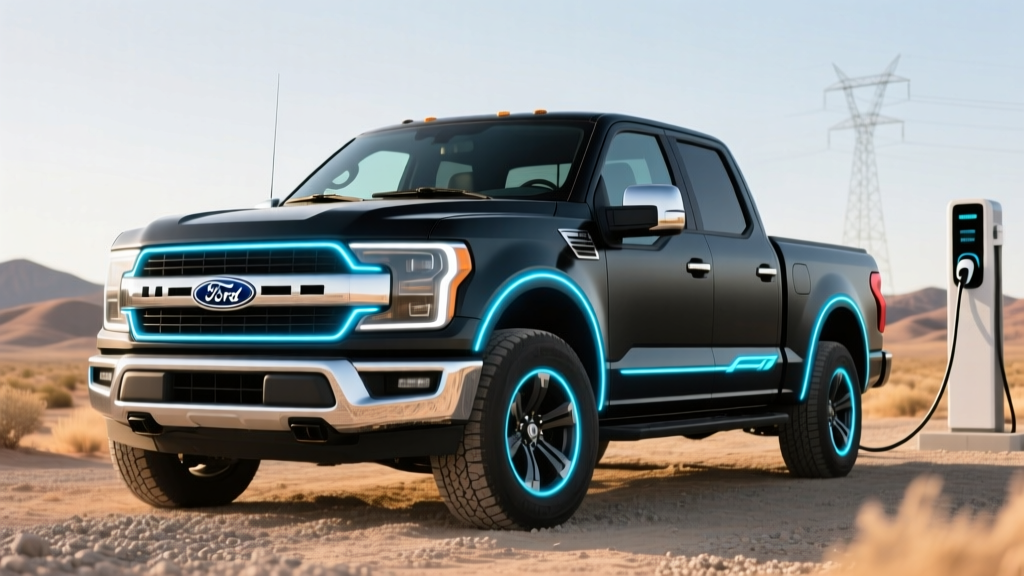
Bottom line: The "Ford retro electric truck" buyers search for in 2026 is the Ford F-150 Lightning Flash and Lariat Heritage Edition — trims that pair the Lightning's proven BEV powertrain with throwback styling cues (two-tone paint, chrome accents, vintage-inspired badging, and retro wheel designs). It is not a standalone model; it's an appearance and trim package layered onto the current-generation F-150 Lightning platform.
If you want the retro look with maximum range, the Flash trim with the Extended Range battery delivers an EPA-estimated 320 miles, peaks at 150 kW DC fast charging (10–80% in roughly 41 minutes), and starts around $69,995 MSRP before incentives. If you need towing and daily driving without the premium, the Standard Range Lariat Heritage starts near $59,995 with 240 miles of EPA range.
Ford Retro Electric Truck: 2026 Trim Specs at a Glance
| Spec | Flash Extended Range | Lariat Heritage Std Range | Platinum (Top Trim, Non-Retro) |
|---|---|---|---|
| EPA Range | 320 mi | 240 mi | 300 mi |
| Battery (usable) | 131 kWh (NMC) | 98 kWh (NMC) | 131 kWh (NMC) |
| Peak DC Fast Charge | 150 kW | 150 kW | 150 kW |
| 10–80% DCFC Time | ~41 min | ~34 min | ~41 min |
| Level 2 Charge Rate | 19.2 kW (80A) | 11.3 kW (48A) | 19.2 kW (80A) |
| Horsepower | 580 hp | 580 hp | 580 hp |
| Torque | 775 lb-ft | 775 lb-ft | 775 lb-ft |
| 0–60 mph | ~3.8 sec | ~3.9 sec | ~3.8 sec |
| Max Towing | 10,000 lbs | 7,700 lbs | 10,000 lbs |
| Base MSRP (2026) | $69,995 | $59,995 | $96,874 |
| Battery/Powertrain Warranty | 8 yr / 100,000 mi | 8 yr / 100,000 mi | 8 yr / 100,000 mi |
Sources: EPA fueleconomy.gov, Ford F-150 Lightning Specs. Real-world range will vary — see below.
Real-World Range vs. EPA Sticker: What to Actually Expect
EPA 320 mi (Extended Range) — real-world expectations:
- Mixed driving (suburban/city): 280–310 mi achievable in mild weather
- Highway sustained at 75 mph: 240–270 mi — trucks have the aerodynamics of a brick wall
- Cold weather (below 32°F): Expect 20–30% range loss; 220–260 mi from a full charge is realistic
- Towing a 5,000-lb trailer: Range drops to approximately 150–180 mi — towing is the range killer for all electric trucks
The 131 kWh Extended Range pack uses NMC (nickel manganese cobalt) chemistry. NMC offers higher energy density than LFP, which is why Ford uses it for the larger pack — but it also means Ford recommends daily charging to 80–90% for longevity, saving 100% for road trips. The battery management system includes a top and bottom buffer (roughly 5–8% combined) to protect against degradation, so the usable capacity is slightly less than the gross cell capacity.
Charging Reality: Home, Public, and the Curve You Need to Know
The Lightning's 150 kW peak DC fast charge rate is mid-pack for 2026 electric trucks. It won't match the Hyundai Ioniq 5's 240 kW peak, but for a 6,500-lb truck, it's adequate. Here's the charging-curve reality that spec sheets hide:
- 10–40% SoC: Sustains near 150 kW peak — fast and efficient
- 40–70% SoC: Tapers to ~100–120 kW
- 70–80% SoC: Drops further to ~70–90 kW
- Above 80%: Dramatic taper to 25–40 kW — charging from 80–100% can take as long as 10–80%
This is why the 10–80% metric matters more than peak kW. Plan road-trip stops around 10–80% charges to keep moving.
Home Charging Setup and Costs
Most Lightning owners charge at home. Here's a realistic cost breakdown for a Level 2 installation:
| Item | Low Estimate | High Estimate |
|---|---|---|
| Level 2 Charger (48A–80A, hardwired) | $500 | $900 |
| Electrician labor (4–8 hours) | $600 | $2,000 |
| Electrical permit | $50 | $250 |
| Panel upgrade (200A service, if needed) | $1,500 | $4,000 |
| Total (no panel upgrade) | $1,150 | $3,150 |
| Total (with panel upgrade) | $2,650 | $7,150 |
The Extended Range Flash supports 19.2 kW Level 2 charging (80 amps), meaning a full overnight charge in roughly 8–9 hours. If your home has a standard 200-amp panel, you may need an upgrade or a load-management device — consult a licensed electrician for final specs. The federal 30C alternative fuel refueling property credit can cover up to 30% (max $1,000) of home charger installation costs if you meet income and census-tract requirements.
Electric vs. Gas F-150: 5-Year Cost of Ownership
The retro-styled Lightning competes directly with the gas F-150 XLT/Lariat. Here's a data-driven comparison over 5 years and 75,000 miles (15,000 mi/year):
| Cost Category | F-150 Lightning Flash ER | F-150 Lariat Gas (3.5L EcoBoost) |
|---|---|---|
| MSRP (approx.) | $69,995 | $56,500 |
| Estimated Federal Tax Credit (§30D) | $0–$7,500* | $0 |
| Effective Purchase Price | $62,495–$69,995 | $56,500 |
| Fuel/Energy (5 yr, 75k mi) | $5,400–$7,800** | $13,500–$15,000*** |
| Maintenance (5 yr) | $1,200–$1,800 | $3,500–$5,000 |
| Insurance (5 yr avg.) | $11,000–$14,000 | $8,500–$11,000 |
| Estimated Depreciation (5 yr) | $28,000–$35,000 | $20,000–$25,000 |
| Total 5-Year Cost | $108,000–$128,500 | $102,000–$112,500 |
* §30D credit eligibility depends on MSRP caps (trucks: $80,000), buyer income limits ($300k MFJ / $150k single), and battery critical-mineral/clean-manufacturing sourcing. The Lightning has faced sourcing-related credit interruptions — verify current eligibility on IRS.gov before purchasing. Point-of-sale transfer is available if eligible.
** Based on $0.14/kWh avg. home charging + some DCFC at $0.40/kWh.
*** Based on 19 MPG combined, $3.50–$4.00/gal gas.
Key takeaway: The Lightning's fuel and maintenance savings are real — roughly $7,000–$9,000 over 5 years — but higher insurance premiums, steeper depreciation, and a higher starting price mean the total cost of ownership is roughly comparable to a well-equipped gas F-150, not dramatically cheaper. The EV wins more decisively if you have cheap home electricity (under $0.12/kWh), drive mostly in the city (where the Lightning's efficiency advantage is largest), and can capture the full $7,500 tax credit.
Federal Tax Credit: What the Retro Lightning Actually Qualifies For
The §30D Clean Vehicle Credit is not a guaranteed $7,500. For the 2026 F-150 Lightning, here's the eligibility checklist:
- MSRP cap: Trucks must be under $80,000 — the Flash ($69,995) qualifies; the Platinum ($96,874) does not
- Buyer income cap: Modified AGI must be ≤$300,000 (married filing jointly) or ≤$150,000 (single)
- Battery sourcing: Critical minerals and battery components must meet escalating annual thresholds — this has periodically disqualified the Lightning in past model years
- North American assembly: The Lightning is assembled in Dearborn, MI — this requirement is met
- Point-of-sale transfer: If eligible, you can transfer the credit to the dealer at purchase for an immediate price reduction rather than waiting for tax filing
Always confirm current eligibility on IRS.gov's clean vehicle credit page and with your dealer before signing. Rules change, and Ford's battery sourcing has shifted between model years.
Common Misconceptions About the Ford Retro Electric Truck
| Myth | Fact |
|---|---|
| "The retro truck is a separate model from the Lightning" | It's a trim/appearance package (Flash, Heritage Edition) on the existing F-150 Lightning platform — same powertrain, battery, and chassis |
| "Electric trucks can't tow" | The Lightning tows up to 10,000 lbs — competitive with gas F-150 configs. But towing at max capacity cuts range by 40–50% |
| "The battery will need replacing in 5 years" | Ford warrants the battery for 8 years/100,000 miles at 70%+ capacity retention. Real-world degradation data from 2022–2024 Lightnings shows ~5–8% loss at 60,000 miles — well within warranty |
| "You can charge from 0–100% in 41 minutes" | The 41-minute figure is 10–80%. Charging from 80–100% takes nearly as long due to the charge-curve taper. Plan accordingly on road trips |
| "Home charging is always cheap and easy" | If you need a panel upgrade (common in older homes), installation can exceed $5,000. And apartment/rental dwellers may lack home charging access entirely — a genuine ownership barrier |
| "It qualifies for the $7,500 credit no matter what" | Credit eligibility depends on battery sourcing, your income, and the trim's MSRP. It's not automatic — and has been interrupted for the Lightning before |
Who Should Buy the Ford Retro Electric Truck — And Who Shouldn't
Choose the Lightning Flash Heritage/Retro trim if:
- You have home charging access (garage or driveway with a 240V circuit) — this is the single biggest determinant of EV satisfaction
- Your daily driving is under 200 miles round-trip, with occasional longer road trips
- You value instant torque, quiet operation, and the frunk (front trunk, 14.1 cu ft of lockable storage)
- You want a distinctive, retro-styled truck that stands out from the standard Lightning fleet
- You live in a region with mild winters or have garage parking to mitigate cold-weather range loss
- You can verify §30D tax credit eligibility before purchase
Look elsewhere (gas F-150, hybrid F-150 PowerBoost, or a different EV) if:
- You cannot charge at home and rely solely on public DC fast charging — the cost and inconvenience add up fast
- You regularly tow heavy loads over 200+ miles — range drops dramatically and charging stops multiply
- You live in a rural area with limited DC fast-charger infrastructure (check PlugShare or the FordPass app for coverage)
- Your budget is under $55,000 — the retro trims start at ~$60K, and the Ford Maverick or a used 2022–2023 Lightning may be more attainable
- You need the absolute fastest charging on road trips — the Lightning's 150 kW peak trails the Rivian R1T and some newer platforms
A Note on the F-150 PowerBoost Hybrid Alternative
If range flexibility and towing are paramount but you still want electrification, the F-150 PowerBoost hybrid offers 25 MPG combined (vs. the gas F-150's 19–20 MPG), a 7,000-lb tow rating, and no charging dependency — starting around $54,000. It sacrifices the Lightning's instant torque and frunk, but eliminates range anxiety entirely. For buyers in charging deserts or frequent heavy towers, it's the pragmatic middle ground.
First-Time EV Buyer Essentials for the Lightning
If this is your first electric vehicle, here are the ownership realities that spec sheets don't emphasize:
- Preconditioning matters: Use the FordPass app to precondition the battery before arriving at a DC fast charger. A cold battery charges far slower — preconditioning warms it to optimal temperature and can shave 10+ minutes off your charge stop
- The Pro Power Onboard feature turns the Lightning into a mobile generator — 2.4 kW standard, up to 9.6 kW available. It can power tools at a job site, appliances during an outage, or a campsite. This is a genuine differentiator vs. gas trucks
- Regenerative braking enables one-pedal driving in most conditions. Set it to "One Pedal Drive" mode and you'll rarely touch the brake pedal in city traffic — it also reduces brake wear dramatically
- Tire costs are higher: EVs are heavy (the Lightning weighs ~6,200–6,700 lbs) and deliver instant torque. Expect to replace tires every 25,000–35,000 miles, and EV-specific tires cost $250–$400 each
- Insurance is typically 15–25% higher than a comparable gas F-150 due to repair costs and battery replacement exposure. Get quotes before committing
Frequently Asked Questions
Is there a standalone "Ford Retro Electric Truck" model separate from the F-150 Lightning?
No. The retro electric truck that buyers find in 2026 refers to appearance and heritage packages (Flash, Heritage Edition) applied to the F-150 Lightning. The powertrain, battery, charging hardware, and warranty are identical to other Lightning trims.
What is the real-world range of the Extended Range Lightning in winter?
In sustained below-freezing temperatures, expect 220–260 miles from a full charge on the 320-mile EPA Extended Range pack. Using the heat pump (standard on 2025+ models) and preconditioning while plugged in helps mitigate losses. In extreme cold (below 0°F), losses can reach 35%.
Can I use Tesla Superchargers with the Ford retro electric truck?
Yes. Ford was the first automaker to adopt the NACS (North American Charging Standard) connector. The 2025+ F-150 Lightning ships with a native NACS charge port, granting access to Tesla's Supercharger network (15,000+ stalls in the US) without an adapter. For older 2022–2024 CCS-equipped Lightnings, Ford provides an authorized NACS adapter.
How much does it cost to charge the Lightning at home vs. public DC fast chargers?
At the US average residential electricity rate of ~$0.16/kWh (EIA data), fully charging the 131 kWh Extended Range battery costs roughly $21 for 320 miles — about $0.066/mile. Public DC fast charging at $0.35–$0.48/kWh costs $46–$63 for the same fill — about $0.14–$0.20/mile. Home charging is dramatically cheaper and is the primary economic advantage of EV ownership.
What happens if the battery degrades past the warranty threshold?
Ford's battery warranty guarantees at least 70% capacity retention for 8 years or 100,000 miles. If the battery falls below that threshold, Ford will repair or replace it at no cost. Out-of-warranty replacement for the Extended Range pack is estimated at $18,000–$25,000 based on current dealer pricing — a significant cost, though real-world data suggests most packs will last well beyond the warranty period.
Does the retro Heritage/Flash trim affect performance or range vs. other Lightning trims?
No. The retro styling elements (badging, wheels, paint, chrome accents) are cosmetic. A Flash with the Extended Range battery performs identically to a standard Lariat Extended Range — same 580 hp, 775 lb-ft, 320-mile EPA range, and 150 kW peak charging.