Quick Answer: Is the Ford Ranchero EV Available Now?
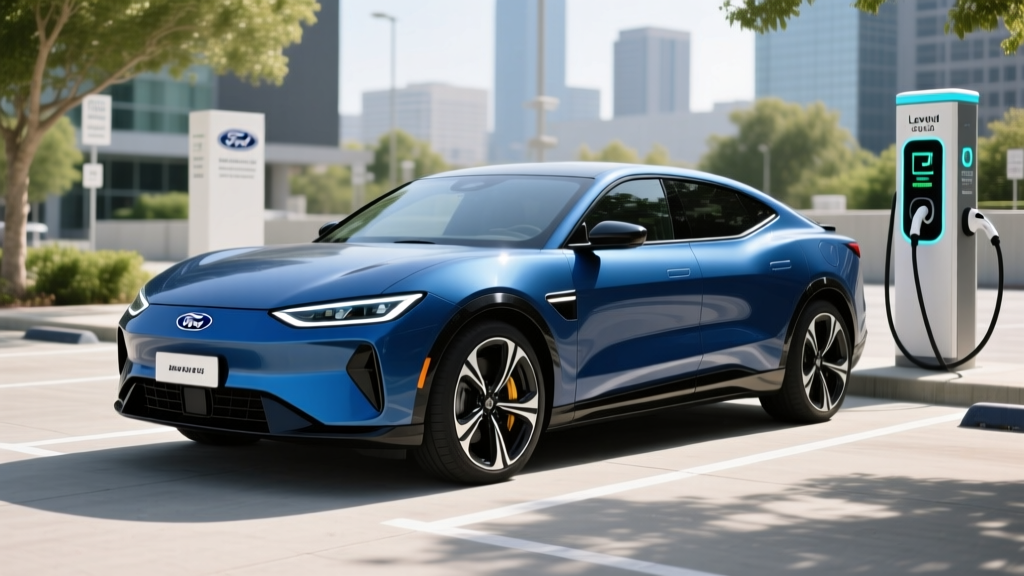
No. As of early 2026, the Ford Ranchero EV has not been officially unveiled or priced by Ford. It remains an anticipated compact electric pickup expected to slot below the F-150 Lightning and potentially share architecture with a next-generation unibody EV platform. Industry estimates suggest a starting MSRP in the $30,000–$40,000 range, a target EPA range of 250–300+ miles, and a potential market arrival in late 2027 or 2028. Until Ford confirms specs, all figures below are analyst estimates based on Ford's current EV portfolio and competitive benchmarks.
The compact electric pickup segment is heating up. Hyundai's Santa Cruz has proven buyers want a car-based ute, and the EV version of that formula — a small, efficient, affordable electric truck — is one of the most requested vehicles in enthusiast forums. Ford revived the Ranchero nameplate in trademark filings, and the industry consensus is clear: Ford intends to build a compact EV pickup to compete with the Hyundai Santa Cruz (ICE), the upcoming Tesla compact truck concepts, and any entry from Stellantis or GM.
Here's what we can reasonably project about the Ford Ranchero EV based on Ford's existing EV architecture, battery supply chain, competitive positioning, and current market dynamics.
Projected Platform and Powertrain
Ford has two primary EV architectures in play: the dedicated rear-wheel-drive/all-wheel-drive platform underpinning the Mustang Mach-E and the body-on-frame F-150 Lightning architecture. A compact pickup like the Ranchero EV would almost certainly use a unibody, dedicated EV platform — likely a derivative of what Ford internally references for its next-gen midsize and compact EVs.
Based on the Mach-E's powertrain options and the competitive landscape, here is a reasonable projection:
| Specification | Estimated (Base RWD) | Estimated (AWD Extended) |
|---|---|---|
| Platform | Unibody dedicated EV (next-gen Ford architecture) | |
| Battery Chemistry | LFP (Standard Range) | NMC (Extended Range) |
| Battery Capacity (usable) | ~65–70 kWh | ~85–95 kWh |
| EPA Range (est.) | ~250 miles | ~300+ miles |
| Motor / Drivetrain | RWD single motor | Dual motor AWD |
| Horsepower (est.) | ~260–290 hp | ~350–400 hp |
| 0–60 mph (est.) | ~6.5 sec | ~4.5–5.0 sec |
| Towing Capacity (est.) | ~2,000 lbs | ~3,500–4,000 lbs |
| Payload (est.) | ~1,200–1,500 lbs | |
| Bed Length (est.) | ~4.5 ft (compact class) | |
Battery chemistry matters here. Ford has publicly committed to LFP (lithium iron phosphate) batteries for standard-range models to cut costs and avoid cobalt/nickel supply constraints. LFP offers excellent cycle life and thermal stability but lower energy density than NMC, meaning the standard-range Ranchero EV would likely trade ~40–50 miles of range for a significantly lower price. The extended-range AWD model would use NMC for maximum energy density and highway range.
Charging Speed and Infrastructure Compatibility
Ford EVs now use the NACS (North American Charging Standard) connector natively, giving Ranchero EV owners direct access to Tesla Supercharger stations — the most reliable DC fast-charging network in the U.S. with over 25,000 stalls as of 2026.
| Charging Level | Power (kW) | Estimated Speed | Typical Use Case |
|---|---|---|---|
| Level 1 (120V) | ~1.4 kW | ~4–5 mi/hr | Emergency / overnight trickle |
| Level 2 (240V, 48A) | ~11.5 kW | ~30–35 mi/hr | Home daily charging |
| DC Fast (peak, est.) | ~150–175 kW | 10–80% in ~25–30 min | Road trips |
Real-world charging caveat: Peak DC fast-charge rates (e.g., 175 kW) are sustained only in a narrow state-of-charge window, typically between 15–50%. Above 80% SoC, charging speed tapers dramatically to protect battery health. On a road trip, plan for 25–35 minute stops from 10–80%, then drive on. Charging from 80–100% at a DC fast charger is painfully slow and unnecessary for most trips.
For home charging, a Level 2 wall connector on a dedicated 60A circuit (delivering 48A continuous) would fully replenish even the extended-range battery overnight. Expect home installation costs of $800–$2,500 depending on panel capacity and conduit runs — more if your home needs a 200A service upgrade.
Pricing, Tax Credits, and Ownership Economics
Ford's competitive target is clear: undercut the F-150 Lightning's ~$55,000 starting price and compete with the Hyundai Santa Cruz (starting ~$28,000 ICE) while offering an EV value proposition. Industry analysts project:
- Base RWD (Standard Range, LFP): ~$30,000–$35,000 MSRP
- Mid-tier AWD (Extended Range, NMC): ~$40,000–$45,000 MSRP
- Fully loaded (AWD, premium trim): ~$48,000–$52,000 MSRP
Federal §30D Tax Credit Eligibility (2026 Rules)
The Ranchero EV could qualify for up to $7,500 in federal tax credits — now available as a point-of-sale discount at the dealer — but only if all of the following are met:
- MSRP cap: Vehicle MSRP must not exceed $80,000 for trucks (the Ranchero EV should clear this easily)
- Buyer income cap: Modified AGI ≤ $150,000 (single) / $300,000 (joint)
- Battery sourcing: Critical minerals and battery components must meet escalating domestic/free-trade-partner thresholds per IRS rules
- Final assembly: Must occur in North America
- Foreign entity of concern (FEOC): Battery components and minerals cannot be sourced from prohibited entities
Check current rules at IRS.gov §30D. Eligibility is model- and build-date-specific and changes as sourcing requirements tighten annually.
| Cost Factor (5-Year / 75,000 mi) | Ranchero EV (est.) | Hyundai Santa Cruz (ICE) | F-150 Lightning (EV) |
|---|---|---|---|
| Purchase Price (base, before credit) | $33,000 | $28,000 | $55,000 |
| Federal Tax Credit | Up to -$7,500 | $0 | Up to -$7,500 |
| Effective Purchase Price | ~$25,500 | $28,000 | ~$47,500 |
| Fuel / Electricity (75k mi) | ~$3,400 (home charging) | ~$8,250 (27 MPG, $3.30/gal) | ~$4,500 |
| Maintenance (5 yr) | ~$1,200 | ~$3,500 | ~$1,400 |
| Insurance (5 yr avg) | ~$9,500 | ~$7,500 | ~$10,500 |
| Total 5-Year Cost | ~$39,600 | ~$47,250 | ~$63,900 |
The Ranchero EV's projected total cost of ownership significantly undercuts both the ICE compact truck and the full-size Lightning, primarily because of the lower purchase price (with credit), cheaper home electricity vs. gasoline, and minimal EV maintenance (no oil changes, fewer brake replacements thanks to regenerative braking).
EV vs. Gas Compact Truck: The Honest Comparison
Not every buyer should go electric. Here's how a Ranchero EV would stack up against a gas compact truck like the Hyundai Santa Cruz or Ford Maverick (ICE/hybrid):
| Factor | Ranchero EV (Projected) | Compact Gas Truck (e.g., Maverick Hybrid) |
|---|---|---|
| Starting Price | ~$33,000 (before credit) | ~$28,000 (Maverick Hybrid) |
| After Federal Credit | ~$25,500 | $28,000 |
| EPA Range / Tank | ~250–300 mi | ~500+ mi (16 gal × 37 MPG hybrid) |
| Refuel / Recharge Time | ~25–30 min (10–80% DC) | ~5 min (gas station) |
| Home Refueling | Yes (overnight, cheapest) | No (must visit gas station) |
| Cold-Weather Range Loss | ~20–30% reduction | Minimal |
| Towing Capacity | ~2,000–4,000 lbs | ~2,000–4,000 lbs |
| Towing Range Impact | Severe (~40–50% range loss) | Moderate (~20–30% MPG loss) |
| Maintenance | Very low | Moderate (oil, filters, brakes) |
| Bed Utility | Compact bed, potential frunk | Compact bed, no frunk |
The honest truth: If you regularly tow heavy loads over long distances, drive in extreme cold, or lack home charging access, a hybrid compact truck like the Maverick Hybrid (42 MPG city) remains a compelling, lower-risk choice. The Ranchero EV wins on daily commuting cost, home convenience, and performance — but it demands a lifestyle that supports charging.
Real-World Ownership: What First-Time EV Buyers Need to Know
If the Ranchero EV would be your first electric vehicle, these are the practical realities that spec sheets don't highlight:
Home Charging Is Non-Negotiable for Most Owners
Over 80% of EV charging happens at home. If you live in an apartment, condo, or street-parking situation without access to a dedicated 240V outlet, daily EV ownership becomes significantly harder. Public Level 2 chargers are slower and less convenient than home charging, and relying exclusively on DC fast charging accelerates battery wear and costs more per mile. Before committing to any EV, confirm you can install a Level 2 charger at your residence — and get an electrician's quote for the install.
Cold Weather Cuts Range — Plan for It
Lithium-ion batteries lose efficiency in cold temperatures, and cabin heating draws significant energy. Expect 20–30% range reduction in sustained sub-freezing conditions. A Ranchero EV rated at 280 miles EPA might deliver 195–225 miles on a 20°F winter highway drive. If your commute is 80+ miles round-trip in a cold climate, the extended-range battery becomes essential, not optional.
The Charge Curve Is More Important Than Peak kW
Automakers advertise peak DC charge rates (e.g., "175 kW"), but that number is sustained for only a few minutes. The charge curve — how quickly the rate tapers as the battery fills — determines your actual road-trip stop time. A truck that holds 150 kW from 10–50% then drops to 60 kW will fill faster than one that peaks at 200 kW but immediately tapers. We'll evaluate the Ranchero EV's actual charge curve when test data becomes available.
Insurance Costs Are Typically Higher for EVs
EV insurance premiums run 15–25% higher than comparable gas vehicles due to higher repair costs (battery pack damage, specialized labor, aluminum bodywork). Budget an extra $300–$500/year for insurance vs. an ICE compact truck. Get quotes before purchasing.
Common Misconceptions About the Ranchero EV
| Myth | Fact |
|---|---|
| "The Ranchero EV is available to order now." | As of 2026, Ford has not officially unveiled, priced, or opened orders for the Ranchero EV. It remains an anticipated future product. |
| "EV batteries need replacing every 5 years." | Modern EV batteries are designed to last 15–20 years with gradual degradation (~10–15% capacity loss over 100k miles). Ford's EV battery warranty covers 8 years / 100,000 miles with a minimum 70% capacity retention threshold. |
| "You'll get the full $7,500 tax credit automatically." | The §30D credit has strict income caps, MSRP caps, battery-sourcing rules, and FEOC restrictions that tighten annually. Eligibility depends on your specific tax situation and the vehicle's build date. Consult a tax professional and verify on IRS.gov. |
| "A compact EV truck can tow just like a gas truck." | Towing capacity may be similar, but towing range is drastically reduced — often 40–50%. Towing a 3,000-lb trailer at highway speed could cut a 280-mile range to 140–170 miles. |
| "Electricity is always cheaper than gas." | Home charging on a standard residential rate (~$0.14/kWh) is significantly cheaper. Public DC fast charging ($0.35–$0.55/kWh) can approach or exceed gasoline cost per mile. The savings depend heavily on your charging habits. |
Decision Framework: Should You Wait for the Ranchero EV?
Wait for the Ford Ranchero EV if:
- You want a compact electric truck with a sub-$35,000 starting price (before credits)
- You have reliable home Level 2 charging access
- Your daily driving is under 150 miles round-trip
- You primarily use a truck for commuting, light hauling, and weekend projects — not heavy towing
- You value NACS/Supercharger access and Ford's dealer/service network
- You can wait until late 2027 or 2028 for delivery
Buy something else now if:
- You need a truck immediately — the Ranchero EV is not yet available
- You regularly tow over long distances (consider the F-150 Lightning or a gas/hybrid truck)
- You lack home charging and your area has sparse public charging infrastructure
- You live in an extreme cold climate with a long commute (consider a PHEV like the Maverick Hybrid)
- You need maximum bed length or payload — a compact truck bed limits utility vs. midsize/full-size options
Competitive Landscape: What the Ranchero EV Will Face
The compact truck segment is already competitive, and by the time the Ranchero EV arrives, it will face:
- Ford Maverick Hybrid — Ford's own ICE/hybrid compact truck starting ~$28,000 with 42 MPG city. The biggest competitor may be in-house.
- Hyundai Santa Cruz — ICE-only compact ute, ~$28,000–$42,000, no EV variant confirmed yet.
- Tesla compact truck — Announced concepts but no confirmed production timeline as of 2026.
- Rivian R2/R3 — Rivian's smaller, more affordable platform (R2 starts ~$45,000, R3 potentially lower) could overlap in the compact EV space.
- Chevrolet Montana EV / compact truck — GM has signaled interest in a small electric truck for the U.S. market.
The Ranchero EV's success hinges on hitting that $30,000–$35,000 base price with real-world range above 250 miles and reliable Supercharger access. If Ford delivers on those metrics, it could define the affordable compact EV truck category.
Frequently Asked Questions
When will the Ford Ranchero EV be released?
Ford has not confirmed an official release date. Based on trademark activity, platform development timelines, and industry analysis, a reveal is expected in late 2026 or 2027, with customer deliveries potentially beginning in late 2027 or 2028. All timelines are estimates until Ford makes a formal announcement.
Will the Ranchero EV qualify for the $7,500 federal tax credit?
It's likely but not guaranteed. The truck would need to meet §30D requirements including North American final assembly, battery-sourcing thresholds, critical-mineral rules, and FEOC compliance. These rules tighten each year, so a 2028 model may face stricter sourcing requirements than a 2027 model. Always verify eligibility on IRS.gov and with your tax advisor before purchasing.
How much will it cost to charge the Ranchero EV at home?
At the U.S. average residential electricity rate of ~$0.16/kWh (2026 EIA data), fully charging a ~75 kWh battery from empty costs roughly $12. For a typical daily commute using 25–30 kWh, expect about $4–$5 per day in electricity — compared to $12–$15 per day in gasoline for a 25-MPG compact truck. Over a year of 12,000 miles, home charging saves roughly $1,000–$1,500 vs. gasoline.
Can the Ranchero EV tow a boat or trailer?
Projected towing capacity of 2,000–4,000 lbs (depending on trim and drivetrain) covers small boats, utility trailers, and light campers. However, towing drastically reduces EV range — expect 40–50% range loss at highway speeds with a loaded trailer. If you tow frequently over long distances, a gas or hybrid truck remains more practical.
What battery warranty does Ford offer on its EVs?
Ford currently covers EV batteries for 8 years or 100,000 miles (whichever comes first), with a minimum 70% capacity retention guarantee. If the battery degrades below 70% of original capacity within the warranty period, Ford will repair or replace it. We expect the Ranchero EV to carry the same or similar coverage.
Is the Ford Ranchero EV the same as the Maverick?
No. The Maverick is Ford's current compact truck offered with ICE and hybrid powertrains. The Ranchero EV would be a separate, all-electric compact pickup — potentially sharing some components or showroom space with the Maverick but built on a dedicated EV platform with a battery pack, electric motors, and no internal combustion engine.
Note: This article is based on industry analysis, Ford's public EV strategy disclosures, and competitive market data as of early 2026. The Ford Ranchero EV has not been officially unveiled. All specifications, pricing, and timelines are estimates and subject to change when Ford makes formal announcements. We will update this article with confirmed data upon official release.