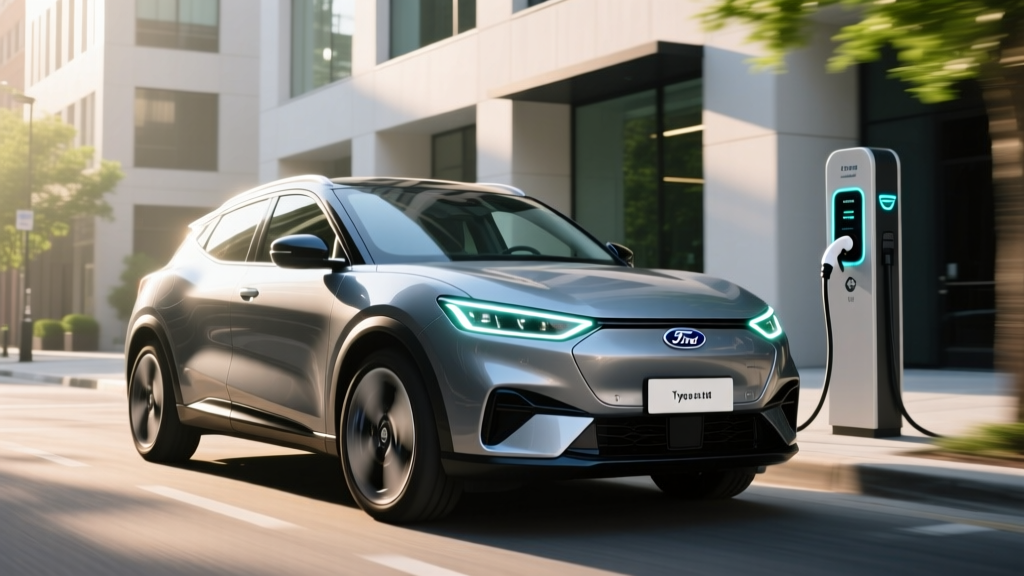
The Ford Puma EV is a compact electric crossover that aims to blend everyday practicality with zero-tailpipe-emission driving. If you're considering one, here's what matters most: the Puma EV targets an EPA-estimated range of approximately 250–280 miles depending on trim and wheel size, uses a ~58 kWh usable battery pack (NMC chemistry), supports DC fast charging up to 125 kW (10–80% in roughly 28 minutes), and carries an expected starting MSRP around $33,000–$36,000 before incentives. Real-world range will vary—expect 210–240 miles on highway-heavy trips and further reduction in cold climates. Whether it saves you money versus a gas or hybrid compact SUV depends heavily on your electricity rate, annual mileage, and home charging access.
Quick Verdict: Is the Ford Puma EV Worth It?
The Puma EV makes sense if you have reliable Level 2 home charging, drive under 250 miles daily, and want a compact crossover with low running costs. It's less ideal if you frequently road-trip in cold weather, lack home charging, or need maximum cargo space. Federal tax credit eligibility under IRS §30D depends on income, MSRP caps, and battery sourcing requirements—don't assume you'll get the full $7,500.
Range, Battery, and Efficiency: What the Numbers Actually Mean
Ford has positioned the Puma EV with a mid-size battery pack designed to balance cost, weight, and range. The estimated 58 kWh usable capacity (gross pack size slightly larger to account for buffer) uses NMC (nickel-manganese-cobalt) chemistry, which offers higher energy density than LFP but requires more careful state-of-charge management for long-term longevity.
| Spec | Value |
|---|---|
| EPA Range (est.) | 250–280 mi (varies by trim/wheels) |
| Battery (usable) | ~58 kWh, NMC |
| Efficiency | ~105–110 MPGe combined |
| Peak DC Fast Charge | 125 kW |
| 10–80% DC Charge Time | ~28 minutes |
| Level 2 Charge Rate | 10.5 kW (onboard charger) |
| Level 2 Full Charge Time | ~6 hours (0–100%) |
| 0–60 mph | ~7.5 sec (est.) |
| Horsepower | ~190 hp |
| Battery Warranty | 8 years / 100,000 miles (≥70% capacity retention) |
| Starting MSRP | $33,000–$36,000 (est.) |
Real-World Range vs. EPA Sticker
EPA estimate: 250–280 miles
Real-world highway (70–75 mph, moderate temps): ~210–240 miles
Cold weather (below 30°F, cabin heat): ~170–210 miles
City/mixed driving with regen: Close to EPA or slightly above
EVs lose efficiency at sustained highway speeds and in cold temperatures due to battery resistance and cabin heating loads. If your commute is 80+ miles round-trip on the highway in winter, plan charging accordingly.
The 125 kW peak DC fast charge rate means the Puma EV won't match competitors like the Hyundai Ioniq 5 (which peaks around 240 kW on 800V architecture), but it's adequate for most use cases. Understand the charge curve: the battery pulls peak power only between roughly 10–50% state of charge, then tapers progressively. That 10–80% time of ~28 minutes assumes preconditioned battery and optimal charger conditions—expect 35–40 minutes in colder weather without adequate preconditioning.
Cost Breakdown: Purchase, Charging, and Total Ownership
The sticker price is only the beginning. Here's a realistic five-year ownership cost comparison between the Puma EV, a comparable gas compact SUV (like the Ford Escape FWD), and a hybrid alternative (Escape HEV).
| Category | Ford Puma EV | Gas Compact SUV | Hybrid Compact SUV |
|---|---|---|---|
| Purchase Price (MSRP) | $34,500 | $30,000 | $33,500 |
| Federal Tax Credit (§30D) | Up to $7,500* | $0 | $0 (HEV) |
| Effective Purchase | ~$27,000 | $30,000 | $33,500 |
| Fuel/Energy (75k mi) | $2,800–$3,600 | $7,500–$9,000 | $4,500–$5,500 |
| Maintenance (5 yr) | $800–$1,200 | $2,500–$3,500 | $2,000–$2,800 |
| Insurance (5 yr avg) | $7,500–$9,000 | $6,000–$7,500 | $6,500–$7,800 |
| Estimated Total (5 yr) | $38,100–$40,800 | $46,000–$50,000 | $46,500–$49,600 |
*Federal tax credit eligibility depends on buyer income (AGI caps: $150k single / $300k joint), vehicle MSRP (under $80k for SUVs), battery critical-mineral and component sourcing, and point-of-sale transfer rules. Verify current-year requirements at IRS.gov. Credit amounts and eligibility change—this reflects early-2026 rules.
The EV's energy cost assumes home Level 2 charging at $0.13–$0.17/kWh (national average). If you rely primarily on public DC fast charging at $0.35–$0.48/kWh, your fuel cost rises to roughly $5,500–$7,000 over five years—still below gas but less dramatic in savings. Maintenance savings come from eliminating oil changes, transmission fluid, spark plugs, and reducing brake wear via regenerative braking.
Insurance is the offsetting cost. EV premiums run 15–25% higher on average due to repair complexity, battery replacement risk, and parts availability. Get quotes before purchasing—this varies significantly by zip code, driving record, and insurer.
EV vs. Gas vs. Hybrid: Which Powertrain Fits Your Life?
| Factor | Puma EV (BEV) | Gas SUV | Hybrid SUV (HEV) |
|---|---|---|---|
| Refuel/Recharge Time | 6 hr (L2 home) / 28 min (DC 10–80%) | 5 minutes | 5 minutes |
| Range (real-world) | 210–280 mi | 350–420 mi | 450–550 mi |
| Home Fueling Possible? | Yes (Level 2, requires 240V install) | No | No |
| Cold-Weather Penalty | 20–35% range loss | Minimal | Minimal |
| Road-Trip Convenience | Plan stops; 25–35 min each | Minimal planning | Minimal planning |
| Maintenance Burden | Low (tires, cabin filter, wipers) | Moderate (oil, belts, plugs) | Moderate (engine + hybrid system) |
| Tailpipe Emissions | None (upstream grid dependent) | Yes | Yes (lower per mile) |
The hybrid alternative deserves serious consideration if you lack home charging, live in a region with sparse DC fast chargers, or regularly drive 400+ mile trips. The Puma EV excels for drivers who can charge overnight at home and use DC fast charging for occasional road trips. The gas SUV is increasingly hard to justify on pure economics unless your annual mileage is very low (under 5,000 miles/year).
Home Charging Setup: What First-Time EV Buyers Need to Know
Level 1 charging (120V household outlet) adds roughly 3–4 miles of range per hour—adequate only if you drive under 30 miles daily and can plug in for 10+ hours overnight. Most Puma EV owners will want a Level 2 home charger.
| Component | Low End | High End | Notes |
|---|---|---|---|
| Level 2 Charger (hardware) | $350 | $700 | 32A–48A units; Wi-Fi-enabled models cost more |
| Electrician labor | $500 | $1,500 | Depends on panel proximity and conduit run |
| Electrical permit | $50 | $200 | Varies by municipality |
| Panel upgrade (if needed) | $1,500 | $3,500 | Required if existing panel is 100A or at capacity |
| Total (no panel upgrade) | $900 | $2,400 | Typical scenario for most homes |
| Total (with panel upgrade) | $2,400 | $5,900 | Older homes with 100A service |
A 48-amp Level 2 charger on a 240V/60A circuit delivers approximately 10.5 kW to the Puma EV, adding about 35–38 miles of range per hour. A full overnight charge (6–7 hours) easily replenishes the battery. Always hire a licensed electrician and pull permits—improper EV charger installation is a fire risk and may void homeowner's insurance coverage.
If you live in an apartment or lack dedicated parking, your options narrow considerably. Some municipalities and utilities offer curbside Level 2 chargers, and workplace charging can substitute if available. Public DC fast charging as your primary strategy gets expensive fast and adds wear to the battery from repeated high-C-rate charging.
Common Misconceptions About the Puma EV (and EVs in General)
| Myth | Fact |
|---|---|
| "The battery will need replacing in a few years and cost $20,000." | NMC batteries in modern EVs degrade ~1.5–2.5% per year under normal use. At year 8, expect ~85–90% capacity. Ford warranties the pack for 8 years/100,000 miles at ≥70% retention. Full replacements are rare and typically covered under warranty during that period. |
| "I'll be stranded because charging stations are unreliable." | Public charging reliability has improved but remains inconsistent. Networks like Electrify America and Tesla Superchargers (now NACS-open) average 85–92% uptime. Plan road trips with apps like PlugShare or A Better Routeplanner, and always maintain a 20% buffer. |
| "EVs are worse for the environment because of battery mining." | Lifecycle analyses from EPA and independent researchers consistently show BEVs produce fewer total emissions than gas cars over their lifetime, even accounting for battery production. The grid is also decarbonizing year over year. |
| "The $7,500 tax credit applies to everyone." | §30D has income caps ($150k single / $300k joint AGI), MSRP caps, battery sourcing requirements, and point-of-sale transfer options. Many buyers qualify for partial or no credit. Check current rules at IRS.gov before assuming. |
| "I need a huge battery and 400-mile range." | The average American drives ~37 miles per day (fueleconomy.gov). A 250-mile EV covers 95%+ of daily needs with overnight home charging. Larger batteries add cost, weight, and charging time. |
Decision Framework: Should You Buy the Ford Puma EV?
Choose the Ford Puma EV if:
- You have (or can install) Level 2 home charging on a 240V circuit
- Your daily driving is under 150 miles round-trip
- You want to minimize per-mile fuel costs and routine maintenance
- You qualify for the federal tax credit or your state offers EV incentives
- You value quiet, instant-torque driving and one-pedal regen capability
Choose a Hybrid Instead if:
- You lack home or workplace charging access
- You regularly drive 400+ mile trips in regions with sparse DC infrastructure
- You live in an extreme cold climate (sustained sub-10°F winters)
- You want maximum range flexibility with no charging planning
Stick with Gas (for now) if:
- You drive under 5,000 miles per year (the fuel-cost savings won't offset the price premium)
- Your budget is strictly under $28,000 and you can't access incentives
What First-Time EV Buyers Should Know Before Signing
Preconditioning matters. The Puma EV (like most modern EVs) can warm or cool its battery before you reach a DC fast charger if you set it as a navigation destination. Skipping preconditioning in cold weather can add 10–15 minutes to your charge stop and reduce peak charge rate significantly.
Don't obsess over 100% charges. For daily driving, set your charge limit to 80% (NMC chemistry prefers this for longevity). Charge to 100% only when you need the full range for a road trip, and don't let it sit at 100% for extended periods.
Tire costs are real. EVs are heavier and deliver instant torque, which accelerates tire wear. Budget for tire replacement every 25,000–35,000 miles rather than the 45,000–60,000 miles typical on gas cars. EV-specific tires (like Michelin e.Primacy) can help with efficiency and noise.
Check your electrical panel before buying. If your home has a 100-amp panel that's already near capacity (common in older homes with electric dryers, ranges, and A/C), a panel upgrade to 200A may be required before installing a Level 2 charger. Get an electrician's assessment early—this can add $1,500–$3,500 to your setup cost.
Test drive in conditions you'll actually experience. If you live in a cold climate, ask the dealer for a winter test or read cold-weather range reports from owners in similar conditions. The EPA sticker doesn't tell the whole story.
Frequently Asked Questions
Does the Ford Puma EV qualify for the $7,500 federal tax credit?
Potentially, but eligibility under IRS §30D depends on your adjusted gross income (must be under $150k single / $300k joint), the vehicle's MSRP (must be under $80k for SUVs), and whether the battery meets critical-mineral and component-sourcing requirements that tighten each year. The credit can now be transferred to the dealer at point of sale, reducing your purchase price directly. Verify current eligibility at IRS.gov and consult a tax professional for your specific situation.
How long does it take to charge the Puma EV at home?
On a Level 2 home charger (240V, ~10.5 kW), a full 0–100% charge takes approximately 6 hours. Most owners plug in overnight and wake up to a full battery. On a standard 120V outlet (Level 1), a full charge takes roughly 24–30 hours—only practical for low-mileage drivers topping off.
What happens to the battery after the warranty expires?
Modern NMC packs are designed for 1,500–2,000+ full charge cycles before significant degradation. At one full cycle per day (unlikely for most drivers), that's 4–5+ years of heavy use; in practice, partial cycles extend this considerably. Out-of-warranty battery replacements currently run $8,000–$14,000 depending on pack size and labor, but prices continue declining. Most EV batteries outlast the vehicle's useful life.
Can I use Tesla Superchargers with the Ford Puma EV?
Ford has adopted the NACS (North American Charging Standard) connector for newer models. If the 2026 Puma EV ships with a native NACS port, it can access Tesla Supercharger stations directly. If it ships with CCS1, Ford provides a NACS adapter. Confirm the specific connector at purchase, as transition timing varies by model. The Supercharger network remains the most reliable DC fast-charging option in the U.S.
Is the Puma EV a good first EV?
For buyers with home charging access and moderate daily mileage, yes. The range is sufficient for most commutes, the charging speed is adequate, and the compact crossover form factor is practical. The key risk for first-time EV buyers is underestimating the importance of home charging—if you can't install Level 2 at home, a plug-in hybrid or conventional hybrid may be a smoother transition.