Why Ford Mustang Mach-E Weight Matters for Range and Efficiency
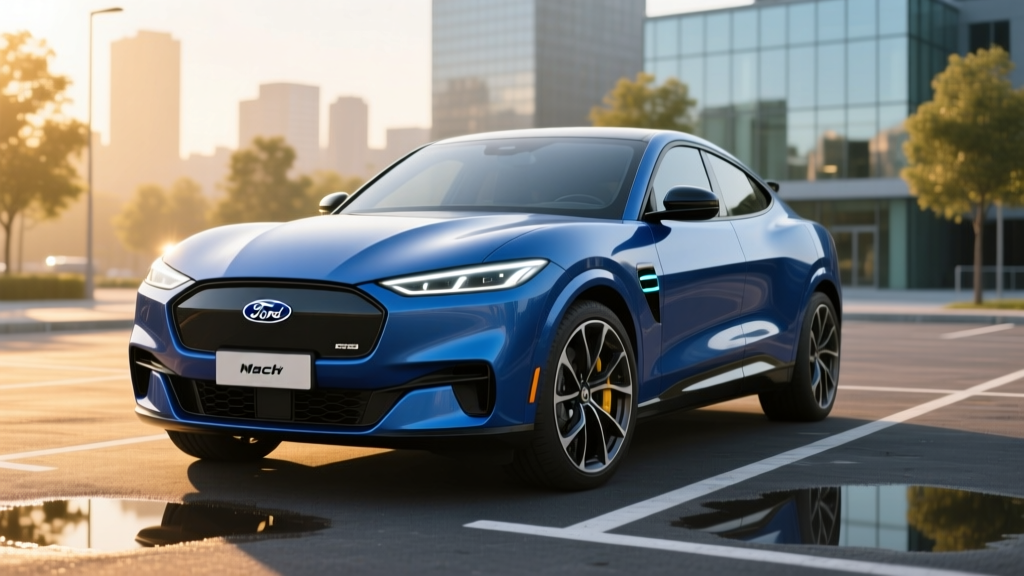
When shoppers search for Ford Mustang Mach-E weight, they're usually trying to answer a practical question: how does a 4,400–4,900-pound electric crossover affect real-world range, tire wear, and efficiency? The Mach-E is one of the heavier entries in the midsize electric SUV segment, and that mass directly shapes what you'll see at the charger and on your electricity bill.
Curb weight varies significantly across trims. The rear-wheel-drive Select starts around 4,442 pounds, while the dual-motor GT Performance Edition tips the scales near 4,920 pounds. For context, that's roughly 500–700 pounds heavier than a comparably equipped Tesla Model Y, which impacts energy consumption—especially at highway speeds where aerodynamic drag and rolling resistance compound.
Real-World Range vs. EPA Sticker
EPA Estimated Range: 250 miles (Select RWD Standard Range) to 320 miles (Premium/California Route 1 Extended Range RWD).
Real-World Expectation: Plan for 210–280 miles in mixed highway driving depending on trim. Highway-only trips at 75+ mph drop range by 10–15%. In freezing temperatures (below 32°F), expect a 20–30% reduction due to battery preconditioning demands and cabin heating load. The GT trim, with its 480 hp and heavier curb weight, often delivers closer to 230 real-world miles despite its 320-mile EPA sticker when driven aggressively.
Ford Mustang Mach-E Spec Table: Weight, Battery, and Performance
| Specification | Select RWD | Premium AWD (Ext. Range) | GT Perf. Edition |
|---|---|---|---|
| Curb Weight | ~4,442 lbs | ~4,803 lbs | ~4,920 lbs |
| Battery (usable) | 70 kWh (Standard Range, LFP) | 91 kWh (Extended Range, NMC) | 91 kWh (Extended Range, NMC) |
| EPA Range | 250 mi | 290 mi | 280 mi (est.) |
| Horsepower | 266 hp | 346 hp | 480 hp |
| 0–60 mph | ~6.1 sec | ~5.1 sec | ~3.5 sec |
| Drivetrain | RWD (single motor) | AWD (dual motor) | AWD (dual motor) |
| MPGe (combined) | 103 MPGe | 98 MPGe | 84 MPGe |
| kWh/100 mi | 33 | 34 | 40 |
| Max DC Fast Charge | 115 kW | 150 kW | 150 kW |
| 10–80% DCFC Time | ~38 min | ~36 min | ~36 min |
| Level 2 Home Charge | 10.5 kW (~30 mi/hr) | 10.5 kW (~30 mi/hr) | 10.5 kW (~30 mi/hr) |
| Base MSRP (2026 est.) | $42,995 | $51,995 | $62,995 |
| Cargo (rear seats up) | 29.7 cu ft | 29.7 cu ft | 29.7 cu ft |
| Front Trunk (Frunk) | 4.7 cu ft | 4.7 cu ft | 4.7 cu ft |
| Rear Legroom | 38.1 in | 38.1 in | 38.1 in |
| Battery Warranty | 8 yr / 100,000 mi | 8 yr / 100,000 mi | 8 yr / 100,000 mi |
Sources: fueleconomy.gov, Ford Motor Company spec sheets. Curb weights and EPA figures reflect published data; real-world results vary with conditions.
How Weight Impacts the Mach-E's Charging and Battery Chemistry
The Mach-E's mass is a direct consequence of its battery pack size and steel-intensive body structure. Ford offers two battery options:
- Standard Range (70 kWh usable, LFP chemistry): Lithium iron phosphate cells are heavier per kWh than NMC but offer longer cycle life, greater thermal stability, and tolerance for daily 100% charging without accelerated degradation. This pack suits commuters who charge nightly at home.
- Extended Range (91 kWh usable, NMC chemistry): Nickel-manganese-cobalt cells deliver higher energy density, keeping the heavier pack closer to 1,000 pounds. NMC is better for road-trippers who need the 290–320-mile EPA range but should limit routine charging to 80–90% to preserve long-term state of health.
The ~500-pound weight penalty of the Extended Range pack explains why the Premium AWD, despite carrying 30% more energy, only gains about 40 miles of EPA range compared to the Select RWD. Heavier vehicles expend more energy accelerating and climbing grades, partially offsetting the larger battery's advantage.
Charging Speed in Practice
Ford quotes a peak DC fast-charge rate of 150 kW for Extended Range models. However, the charge curve tapers significantly above 80% state of charge (SoC) to protect battery longevity. In testing, the Mach-E sustains roughly 120–130 kW between 10–60% SoC before stepping down to ~80 kW through 80%, and below 30 kW for the final stretch to 100%. Plan for 36–40 minutes for a 10–80% session at a 150+ kW station.
At home, the onboard 10.5 kW Level 2 charger adds approximately 30 miles of range per hour of charging. A full overnight session (8–10 hours) on a 48-amp Level 2 wallbox easily replenishes the Standard Range pack from empty. The heavier GT and AWD models will need 10–12 hours for a full charge on the same equipment.
Pricing, Trims, and Federal Tax Credit Eligibility
The 2026 Mustang Mach-E lineup spans five trims, with pricing that climbs steeply as you add battery capacity and dual-motor performance:
| Trim | Base MSRP | Est. As-Tested | §30D Credit Eligible? |
|---|---|---|---|
| Select RWD (Std Range) | $42,995 | $44,500 | Yes (up to $7,500) |
| Select AWD (Std Range) | $46,995 | $48,500 | Yes (up to $7,500) |
| Premium RWD (Ext. Range) | $48,995 | $52,000 | Yes (up to $7,500) |
| Premium AWD (Ext. Range) | $51,995 | $55,500 | Yes (up to $7,500) |
| California Route 1 (Ext. Range RWD) | $53,995 | $55,500 | Yes (up to $7,500) |
| GT (Ext. Range AWD) | $59,995 | $64,000 | Yes (up to $7,500) |
| GT Performance Edition | $62,995 | $67,500 | Yes (up to $7,500) |
IRS §30D Federal Tax Credit Rules (2026)
The Mustang Mach-E qualifies for up to $7,500 in federal EV tax credits, but eligibility depends on several conditions per IRS guidelines:
- MSRP Cap: SUVs/crossovers must be under $80,000 MSRP — all Mach-E trims qualify.
- Buyer Income Cap: Modified AGI must not exceed $150,000 (single), $225,000 (head of household), or $300,000 (joint filers).
- Battery Sourcing: A portion of the credit requires critical minerals and battery components sourced from the U.S. or free-trade-agreement countries. Ford has been actively reshoring supply chains, but the exact credit split ($3,750 + $3,750) can shift based on model year and build date.
- Point-of-Sale Transfer: Buyers can transfer the credit to the dealer at purchase for an upfront price reduction, provided income and sourcing requirements are met.
Consult a tax professional to confirm your eligibility. Credit rules are subject to change.
Tech, Interior, and Driver-Assist Features
The Mach-E's cabin centers on a 15.5-inch portrait touchscreen running Ford's SYNC 4A system with wireless Apple CarPlay and Android Auto. The interface is responsive, though some drivers find the lack of physical climate controls frustrating. A 10.2-inch digital instrument cluster handles speed, range, and navigation prompts.
Standard driver-assist technology includes Ford Co-Pilot360 2.0, bundling automatic emergency braking, blind-spot monitoring, lane-keeping assist, and rear cross-traffic alert. Available BlueCruise enables hands-free driving on pre-mapped divided highways — but this is an SAE Level 2 system. The driver must remain attentive, keep eyes on the road (monitored by an infrared camera), and be ready to take over instantly. It is not autonomous driving.
Notable drawbacks include a firm ride on the GT's adaptive dampers (especially over broken pavement), limited frunk space (4.7 cu ft) compared to the Hyundai Ioniq 5's 2.1 cu ft front trunk that at least offers a drain plug for use as a cooler, and the absence of a rear wiper on early models (now standard on 2025+ builds).
Who Should Buy the Mustang Mach-E?
The Mach-E makes the most sense for:
- Commuters who can charge at home nightly and want a comfortable, tech-forward crossover with strong safety ratings (IIHS Top Safety Pick+).
- Small families needing 29.7 cu ft of cargo space and 38.1 inches of rear legroom — enough for rear-facing car seats without crushing front-passenger knee room.
- Performance-oriented buyers who want Mustang-badged acceleration (3.5-second 0–60 in the GT) without gasoline.
It's less ideal for:
- Frequent road-trippers in regions with sparse DC fast-charging infrastructure — the 150 kW peak rate is slower than the Hyundai Ioniq 5's 240 kW or Tesla Model Y's 250 kW capability.
- Towing — the Mach-E is rated for just 1,500 pounds with the towing package, far below the Rivian R1S or even the Ford F-150 Lightning.
Pros and Cons
Pros
- Engaging driving dynamics for a 4,800-lb EV — sharp steering, low center of gravity
- LFP Standard Range pack allows daily 100% charging with minimal degradation concern
- All trims qualify for up to $7,500 federal tax credit (income/sourcing permitting)
- Spacious rear seat and comfortable ride quality on non-GT trims
- BlueCruise hands-free highway assist is well-calibrated and widely available
- Over-the-air updates continue to improve software and add features
Cons
- Heavy curb weight (4,442–4,920 lbs) reduces efficiency vs. lighter rivals
- DC fast-charge speed (150 kW peak) trails segment leaders
- Small frunk (4.7 cu ft) limits practical front storage
- GT ride quality is firm; not ideal for rough roads
- No rear wiper on some earlier model years
- Towing capacity limited to 1,500 lbs
Frequently Asked Questions
What is the real-world range of the Ford Mustang Mach-E?
EPA estimates range from 250 to 320 miles depending on trim and battery. In real-world highway driving at 70–80 mph, expect 210–280 miles. Cold weather (below 32°F) can cut range by 20–30%. The GT Performance Edition, driven hard, often returns closer to 220–230 miles.
How fast does the Mach-E charge at home and on the road?
On a DC fast charger, Extended Range models peak at 150 kW and charge from 10–80% in approximately 36–40 minutes. At home on a Level 2 (10.5 kW / 48-amp) wallbox, the Mach-E adds about 30 miles of range per hour, fully replenishing overnight.
How much does the Mach-E cost after tax credits?
Base pricing starts at $42,995 for the Select RWD. With the full $7,500 federal tax credit (subject to income, MSRP, and battery-sourcing rules), the effective price can drop to roughly $35,495 for the base trim. Higher trims like the GT start near $59,995 and can reach ~$67,500 as-tested, dropping to ~$52,495–$60,000 with the credit applied.
Is the Mach-E worth buying vs. the Tesla Model Y or Hyundai Ioniq 5?
The Mach-E offers more traditional crossover styling, a quieter cabin, and Ford dealer service familiarity. The Model Y wins on charging speed (250 kW), Supercharger network access, and cargo volume. The Ioniq 5 charges faster (240 kW on 800V architecture) and has a more distinctive design. Choose the Mach-E if you prioritize ride comfort, BlueCruise availability, and domestic brand support.
Does the Ford Mustang Mach-E qualify for the federal EV tax credit?
Yes — all 2026 Mach-E trims fall under the $80,000 SUV MSRP cap. However, the buyer must also meet IRS income limits ($150K single / $300K joint) and the vehicle must satisfy battery-sourcing requirements, which can change by build date. Always verify current eligibility on fueleconomy.gov and with your tax advisor.
Does the Mach-E's weight cause excessive tire wear?
EVs' heavier curb weight and instant torque do accelerate tire wear compared to equivalent gas vehicles. Many Mach-E owners report needing replacement tires between 25,000–35,000 miles. Ford equips some trims with EV-specific tires (like the Continental CrossContact RX) designed for lower rolling resistance and noise, but budget for a tire set ($800–$1,400) earlier than you might on a gas crossover.