Ford Mustang Mach-E Cargo Space: What You Actually Get
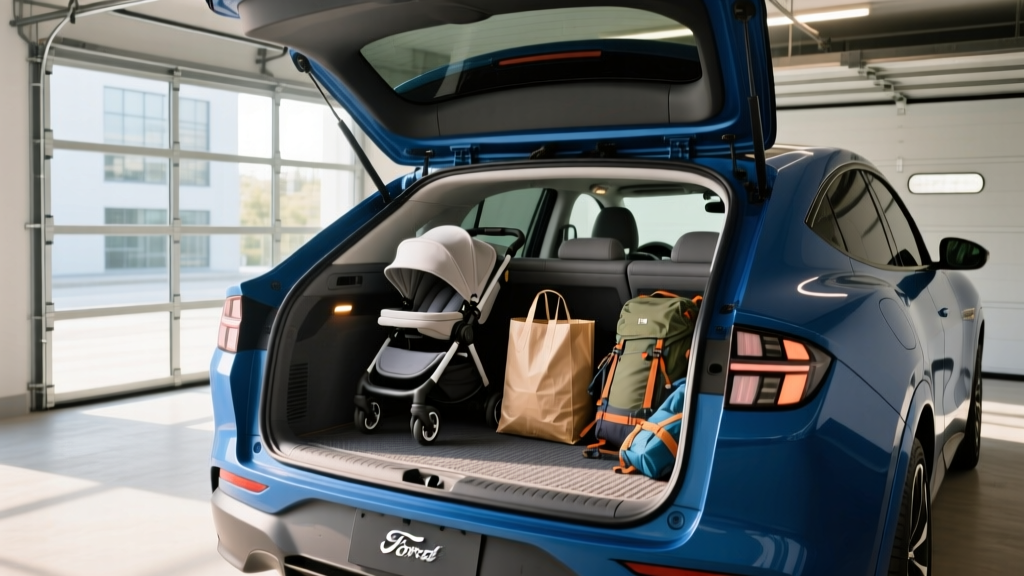
The Ford Mustang Mach-E has carved out a strong position in the electric crossover segment, and for many buyers, the conversation starts with one practical question: how much can you actually fit in the Mach-E trunk? Behind the second row, the Mach-E delivers 29.7 cubic feet of cargo volume — competitive with midsize gas crossovers and generous for an EV in its price class. Fold the 60/40 split rear seats flat, and that number jumps to 59.7 cubic feet, enough for a weekend's worth of gear for a family of four or a full Costco run.
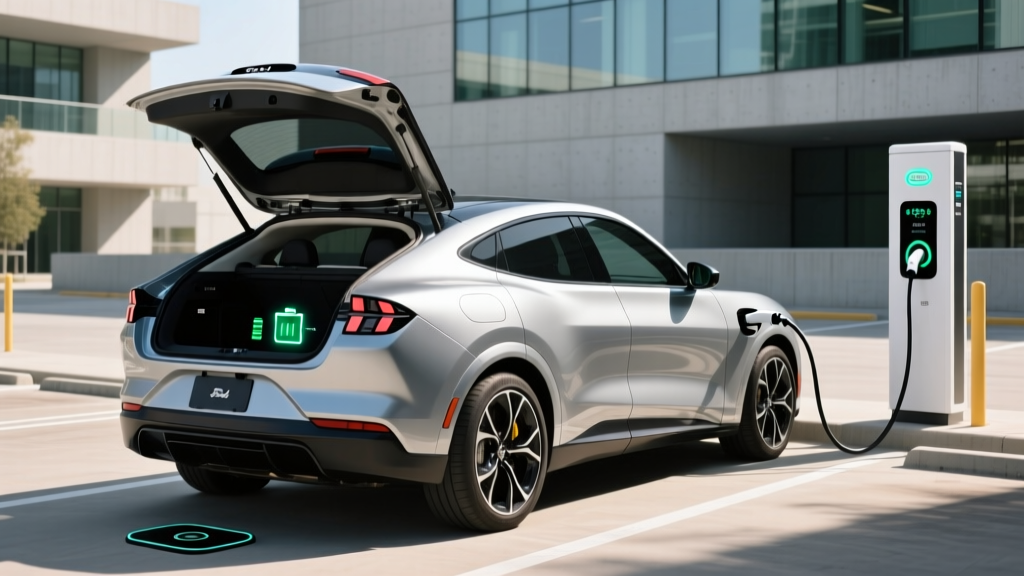
But cargo space is only part of the ownership equation. The Mach-E also features a front trunk (frunk) with 4.7 cubic feet of lockable, drainable storage — ideal for wet charging cables, a small cooler, or gym bags you want to keep separate from the main cabin. The frunk includes a latch release inside the cabin and can be optioned with a rubberized liner that makes cleanup easy.
| Spec | Value |
|---|---|
| EPA Range | 320 miles (Extended Range RWD: 320 mi; AWD: 290 mi) |
| Battery (usable) | 91 kWh (NMC lithium-ion, Extended Range) |
| Peak DC Fast Charge | 150 kW (CCS1 connector) |
| 10–80% DC Charge Time | ~45 minutes |
| Level 2 Home Charge Rate | 10.5 kW (~30 miles/hr) |
| 0–60 mph | 5.1 seconds (AWD Extended Range) |
| Horsepower | 365 hp (AWD ER); 290 hp (RWD SR) |
| MPGe (combined) | 101 MPGe (RWD); 94 MPGe (AWD ER) |
| Cargo (rear seats up) | 29.7 cu ft |
| Cargo (rear seats folded) | 59.7 cu ft |
| Frunk | 4.7 cu ft (drainable, lockable) |
| Rear Legroom | 38.1 inches |
| Front Legroom | 43.3 inches |
| Base MSRP | $43,895 (Select RWD Standard Range) |
| Battery Warranty | 8 years / 100,000 miles |
The cargo area itself is wide and relatively flat-floored, though the sloping roofline — part of the Mach-E's coupe-like silhouette — does cut into vertical space for taller items. If you regularly haul boxes or furniture, measure before you buy: the load-in height is moderate, and the rear hatch opening is broad but not class-leading in vertical clearance. A cargo cover is included on most trims, and Ford offers a reversible cargo mat (carpet/rubber) as a dealer accessory.
Real-World Range vs. EPA Estimates
EPA Sticker: 320 miles (Extended Range RWD) / 290 miles (Extended Range AWD)
Real-World Expectation: 260–285 miles on mixed highway driving at 70 mph; 230–250 miles in sub-freezing winter conditions with cabin heat. City/regen-heavy driving can match or slightly exceed EPA figures.
The Extended Range battery pack holds 91 kWh of usable capacity using NMC (nickel-manganese-cobalt) chemistry, which offers higher energy density than LFP but is more sensitive to sustained high or low state-of-charge storage. Ford recommends keeping daily charge limits at 90% for longevity, reserving 100% for road trips — at 90% SoC, expect roughly 288 miles (RWD) or 261 miles (AWD) before needing a plug.
Efficiency on the combined cycle lands at roughly 33–35 kWh/100 miles depending on trim and wheel size. The 19-inch wheels on the Select trim are more efficient than the 20-inch options on Premium and GT trims, a trade-off worth noting if maximizing range is a priority. According to fueleconomy.gov, the Select RWD achieves 101 MPGe combined, while the AWD Extended Range drops to 94 MPGe.
Charging Speed: DC Fast and Home Level 2
| Level | Power | Miles Added per Hour | Notes |
|---|---|---|---|
| Level 1 (120V household) | ~1.4 kW | ~3–4 mi/hr | Emergency/trickle only; full charge in 3+ days |
| Level 2 (240V home, 48A) | 10.5 kW | ~30 mi/hr | Full 10–100% in ~10 hours; overnight-ready |
| DC Fast Charge (CCS1) | 150 kW peak | ~150+ mi in 20 min (10–50%) | Tapers significantly above 80%; 10–80% ~45 min |
The Mach-E's 150 kW peak DC fast-charge rate is the most common criticism among EV buyers comparing it to rivals. The Hyundai Ioniq 5 and Kia EV6, built on 800V architectures, peak at 240 kW and hit 10–80% in roughly 18 minutes. The Mach-E, on its 400V architecture, takes approximately 45 minutes for the same 10–80% session. On a road trip, that's two extra stops of 10–15 minutes each over a 600-mile drive — not catastrophic, but noticeable if you road-trip frequently.
The charge curve is the real story: the Mach-E holds near-peak rates from roughly 10% to 50% SoC, then tapers progressively. From 80% to 100%, charging slows to Level 2 speeds (~11 kW), which is typical for NMC batteries but worth planning around. Preconditioning the battery (available via the FordPass app when you set a departure time or navigate to a charger) helps the pack reach optimal temperature for faster DC charging, especially in cold weather.
For home charging, the Ford Connected Charge Station (48A, hardwired, NACS or CCS connector depending on model year) adds roughly 30 miles of range per hour. A full overnight charge from 10% is realistic for most commuters. Installation typically requires a 60A breaker on a 240V circuit; budget $800–$2,000 for a licensed electrician depending on panel proximity and local permit costs.
Performance and Driving Dynamics
The Mach-E lineup spans a wide performance envelope. The base Select RWD with the Standard Range pack produces 290 hp and hits 0–60 mph in roughly 6.3 seconds — quick for daily commuting and highway merging. The Extended Range AWD bumps output to 365 hp and drops the sprint to 5.1 seconds. At the top of the range, the GT trim delivers 480 hp (563 lb-ft with the Performance Upgrade) and a 3.5-second 0–60 time that genuinely earns the Mustang badge, at least in straight-line terms.
Drivetrain options include single-motor RWD and dual-motor AWD across most trims. The AWD system uses independent front and rear motors with no mechanical connection, allowing torque vectoring that makes the Mach-E feel planted in wet and snowy conditions. Steering is communicative by EV standards, and the low center of gravity (battery pack under the floor) keeps body roll well-controlled through corners.
One-pedal driving is available via the "L" gear selector and provides strong regenerative deceleration, though it doesn't quite bring the car to a complete stop without brake intervention — a behavior that differs from the Nissan Leaf or Chevrolet Bolt's true one-pedal implementations. The BlueCruise hands-free driving system (SAE Level 2) is available on divided highways and works well on long interstate stretches, but the driver must remain attentive and keep eyes on the road at all times.
Pricing, Trims, and Federal Tax Credit Eligibility
The 2026 Mach-E lineup starts at $43,895 for the Select RWD with Standard Range and climbs to $65,995 for the GT with Extended Range and the Rally package. Here's how the trims break down:
- Select (SR RWD): $43,895 — 290 hp, 250 mi range, 19" wheels, basic BlueCruise prep
- Select (ER AWD): $50,395 — 365 hp, 290 mi range, added features
- Premium (ER RWD): $51,895 — panoramic roof, B&O audio, 320 mi range
- Premium (ER AWD): $54,395 — AWD with premium amenities
- GT (ER AWD): $59,995 — 480 hp, MagneRide suspension, performance brakes
- Rally: $65,995 — off-road-oriented GT variant, limited production
| Requirement | Mach-E Status |
|---|---|
| MSRP Cap (SUVs/crossovers: $80,000) | ✅ All trims under cap |
| Buyer Income Cap (MFJ: $300K; Single: $150K) | ⚠️ Varies by buyer — confirm with tax professional |
| Battery Component Sourcing (N. America assembly) | ✅ Assembled in Cuautitlán, Mexico (qualifying under USMCA) |
| Critical Minerals Sourcing | ⚠️ Partial — credit may be $3,750 (minerals only) or $7,500 (both) depending on supply chain updates |
| Point-of-Sale Transfer | ✅ Available — apply credit at purchase to reduce down payment |
The Mach-E's tax credit situation requires attention to detail. Because battery-sourcing requirements under IRS §30D update periodically, the credit may be the full $7,500 or the partial $3,750 depending on when you purchase and which battery batch your vehicle received. Always verify with the dealer and your tax professional before finalizing a purchase. The point-of-sale transfer option lets you apply the credit directly at the dealership, reducing your out-of-pocket cost at signing rather than waiting until tax filing.
Technology, Interior, and Daily Usability
The Mach-E's cabin centers on a massive 15.5-inch vertical touchscreen running Ford's SYNC 4A system. The interface is responsive, supports wireless Apple CarPlay and Android Auto, and handles over-the-air updates that have meaningfully improved the vehicle since launch. Navigation, media, and climate controls are all accessed through the screen — there are minimal physical buttons, which some buyers love and others find frustrating for quick climate adjustments while driving.
A 10.2-inch digital instrument cluster sits behind the steering wheel, showing speed, range, and driver-assist status. The available panoramic fixed-glass roof floods the cabin with light (it doesn't open, which improves headroom and structural rigidity). Heated front seats and a heated steering wheel are standard on Premium and above; the Select trim offers them in a cold-weather package.
Driver-assistance features include Ford Co-Pilot360 2.0 as standard: automatic emergency braking, blind-spot monitoring, rear cross-traffic alert, lane-keeping assist, and adaptive cruise control with stop-and-go. BlueCruise (hands-free highway driving on pre-mapped divided roads) is a $2,100 option or included on higher trims, with a three-year subscription included before renewal fees apply. This is an SAE Level 2 system — the driver must remain engaged and eyes on the road.
Pros, Cons, and the Verdict
Pros
- 29.7 cu ft trunk + 4.7 cu ft frunk is practical for a crossover coupe
- Strong real-world efficiency (33–35 kWh/100 mi) and up to 320 mi EPA range
- Competitive pricing; all trims under the $80K MSRP cap for §30D credit
- Engaging driving dynamics, especially GT and AWD trims
- Over-the-air updates have continuously improved the platform since 2021
- Spacious rear seat with 38.1 inches of legroom
Cons
- 150 kW peak DC charge rate is slower than 800V rivals (Ioniq 5, EV6)
- 10–80% charge in ~45 minutes adds time on road trips
- Sloping roofline limits vertical cargo space for tall items
- Almost no physical buttons — climate and seat controls are screen-only
- BlueCruise subscription renewal cost after the initial 3-year period
- NMC battery chemistry requires more careful SoC management than LFP
The Mach-E is a strong choice for daily commuters and small families who prioritize driving engagement, a practical Mach-E trunk layout, and a well-integrated tech experience. It's less ideal for buyers who road-trip frequently and can't tolerate 45-minute charging stops, or those who prefer tactile controls over touchscreen-only interfaces.
How It Compares to Key Competitors
Against the Hyundai Ioniq 5, the Mach-E gives up charging speed (150 kW vs. 240 kW, 800V architecture) but offers a more traditional crossover driving position and slightly better rear-seat comfort. The Ioniq 5's 27.2 cu ft of rear cargo is smaller than the Mach-E's 29.7 cu ft, though its frunk is marginally larger on RWD trims.
The Tesla Model Y offers more total cargo volume (30.2 cu ft rear + 4.1 cu ft frunk, or 76.2 cu ft folded) and access to the Supercharger network natively, but its interior materials and ride quality trail the Mach-E's more refined cabin. The Model Y also qualifies for the full $7,500 credit as of early 2026, with well-established battery sourcing.
The Kia EV6 matches the Ioniq 5's 800V charging architecture and offers sporty styling, but its 24.4 cu ft of rear cargo is noticeably smaller than the Mach-E's, making the Ford a better pick for buyers who regularly haul gear.
Frequently Asked Questions
What is the real-world range of the Mustang Mach-E?
Expect 260–285 miles in mixed highway driving for the Extended Range RWD (EPA-rated 320 mi). Cold weather (below 32°F) with cabin heat reduces that to roughly 230–250 miles. City driving with regenerative braking can approach or slightly exceed EPA estimates.
How fast does the Mach-E charge at home and on the road?
On a Level 2 home charger (48A, 240V), the Mach-E adds about 30 miles per hour, reaching a full charge overnight in roughly 10 hours. On DC fast chargers, it peaks at 150 kW, reaching 10–80% in approximately 45 minutes — slower than 800V competitors but adequate for most road-trip planning.
Does the Mustang Mach-E qualify for the $7,500 federal tax credit?
It may qualify for the full $7,500 or the partial $3,750, depending on battery critical-mineral sourcing at the time of purchase. All trims are under the $80,000 MSRP cap, and the vehicle meets North American assembly requirements. Buyer income caps ($300K MFJ / $150K single) apply. Verify current eligibility on irs.gov or with your tax professional.
Is the Mach-E worth buying over the Tesla Model Y or Hyundai Ioniq 5?
Choose the Mach-E if you want a more traditional crossover feel, a practical trunk and frunk, engaging driving dynamics, and a refined interior. Choose the Ioniq 5 or EV6 if DC fast-charge speed is your top priority. Choose the Model Y if Supercharger access and maximum cargo volume matter most.
How big is the Mach-E frunk, and is it useful?
The front trunk holds 4.7 cubic feet — enough for a charging cable bag, a small cooler, or a couple of backpacks. It's lockable, drainable (there's a plug at the bottom), and opens via a button on the key fob or an interior release. It's a genuine utility feature, not just a novelty.
What is the battery warranty on the Mach-E?
Ford covers the high-voltage battery for 8 years or 100,000 miles (whichever comes first) against defects and capacity loss below 70% of original capacity. The electric powertrain components carry the same 8-year/100,000-mile coverage. The basic vehicle warranty is 3 years/36,000 miles.
Can the Mach-E tow?
Yes — when equipped with the factory tow package, the Mach-E is rated for up to 1,500 pounds (AWD trims). That's enough for a small utility trailer or a pair of dirt bikes, but not a full camping trailer. Towing reduces range by approximately 30–40% depending on weight and aerodynamics.
The Mustang Mach-E remains one of the most well-rounded electric crossovers on the market. Its trunk and cargo layout are genuinely practical, its range is competitive, and its driving experience stands out in a segment that often prioritizes efficiency over engagement. If 45-minute fast-charge sessions fit your road-trip tolerance and you value a driver-focused cabin, the Mach-E deserves a serious test drive.