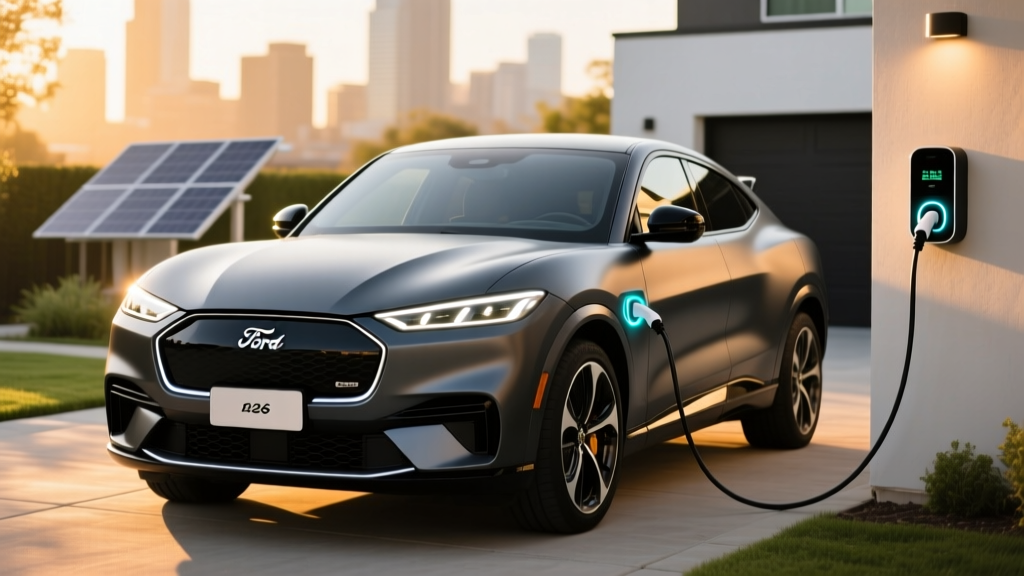
The Ford Mustang Mach-E SUV occupies a rare position in the electric-vehicle market: it's a mainstream crossover that drives with genuine enthusiasm while offering competitive range and practicality. For 2026, Ford continues to refine the Mach-E lineup with updated battery chemistry options, expanded NACS (Tesla-style) charging port availability, and revised pricing that keeps it in the crosshairs of the Tesla Model Y, Hyundai Ioniq 5, and Chevrolet Blazer EV. This review covers every number that matters — from real-world highway range to DC fast-charge taper curves — so you can decide whether the Mach-E earns a spot in your driveway.
Quick Verdict: Who the Mustang Mach-E SUV Is For
The 2026 Mustang Mach-E is best suited for drivers who want an engaging electric crossover with strong road-trip charging infrastructure access, a premium-feeling interior, and enough cargo space for a family of four. Commuters will appreciate the 250+ mile range on most trims, while road-trippers benefit from Ford's integration with Tesla Supercharger access via the NACS port (now standard on new builds). If you prioritize maximum rear-seat room or class-leading efficiency, competitors like the Ioniq 5 or Model Y may edge it out — but the Mach-E's driving dynamics and BlueCruise hands-free highway capability keep it firmly in the conversation.
Choose the Mach-E if: You want a sporty-driving EV crossover, plan to use Tesla Superchargers on road trips, and value available hands-free driving on mapped highways.
Look elsewhere if: You need maximum rear legroom (Ioniq 5 wins), the absolute longest EPA range per dollar (Model Y Long Range leads), or a third row (Kia EV9 or traditional SUV territory).
2026 Mustang Mach-E Specs at a Glance
| Spec | Select / Premium (RWD) | Premium (AWD) | GT |
|---|---|---|---|
| EPA Range | 250 mi | 290 mi (Ext. Range) | 280 mi (Ext. Range) |
| Battery (usable) | 70 kWh (LFP) | 91 kWh (NMC) | 91 kWh (NMC) |
| Horsepower | 266 hp | 346 hp | 480 hp |
| 0–60 mph | 6.3 sec | 5.1 sec | 3.5 sec |
| Drivetrain | RWD (single motor) | AWD (dual motor) | AWD (dual motor) |
| Max DC Fast Charge | 115 kW | 150 kW | 150 kW |
| 10–80% DCFC Time | ~38 min | ~36 min | ~36 min |
| Level 2 Home Charge | 10.5 kW (~30 mi/hr) | 10.5 kW (~30 mi/hr) | 10.5 kW (~30 mi/hr) |
| MPGe (combined) | 105 MPGe | 101 MPGe | 84 MPGe |
| Base MSRP | $39,995 | $45,995 | $57,995 |
| Battery Warranty | 8 years / 100,000 miles | ||
Sources: fueleconomy.gov, Ford Motor Company press specifications.
Range and Efficiency: Real-World vs. EPA Sticker
The EPA publishes combined-cycle range estimates under controlled conditions, but your actual mileage depends heavily on speed, temperature, and terrain. The 2026 Mach-E's EPA figures are competitive, though not class-leading.
EPA Range: Up to 290 miles (Premium AWD Extended Range)
Real-World Expectation: Plan for ~230–260 miles on sustained highway driving at 70+ mph. In cold weather (below 32°F), expect a 20–30% reduction, bringing effective range down to approximately 180–210 miles on the Extended Range battery. City driving with regenerative braking can match or slightly exceed EPA estimates.
The Standard Range battery (70 kWh LFP) on the Select trim delivers an EPA-rated 250 miles. LFP chemistry offers excellent cycle life and allows routine 100% charging without the degradation concerns associated with NMC packs — a meaningful advantage for daily commuters who want to maximize usable range every morning.
Efficiency varies significantly by trim. The RWD Select achieves 105 MPGe combined (roughly 32 kWh/100 mi), while the GT's performance tuning drops that to 84 MPGe (~40 kWh/100 mi). For context, the Tesla Model Y Long Range AWD achieves approximately 117 MPGe combined, giving it a meaningful edge in cost-per-mile for high-mileage drivers.
Charging Speed: DC Fast Charge and Home Level 2
Charging speed is where the Mach-E is adequate but not exceptional. Ford equips the Extended Range models with a 150 kW peak DC fast-charge rate, while the Standard Range LFP battery tops out at 115 kW. For 2026, all new Mach-E builds feature the NACS charge port, granting native access to Tesla's Supercharger network — the most reliable public fast-charging infrastructure in the U.S.
| Charging Method | Power / Rate | What You Get |
|---|---|---|
| Level 1 (120V household) | ~1.2 kW | ~3–4 miles per hour |
| Level 2 (240V home, 48A) | 10.5 kW | ~30 miles per hour; full charge in ~9 hrs |
| DC Fast Charge (Std Range) | 115 kW peak | 10–80% in ~38 min |
| DC Fast Charge (Ext Range) | 150 kW peak | 10–80% in ~36 min |
Charge curve reality check: The Mach-E's peak 150 kW rate is sustained only between roughly 10–40% state of charge. Above 50%, the rate tapers progressively — dropping to ~80 kW by 60% SoC and below 50 kW past 80%. This is standard behavior for NMC lithium-ion packs managed conservatively, but it means your last 20% takes significantly longer than the first 50%. On road trips, plan stops around the 10–80% window for the fastest turnaround.
At home, a 48-amp Level 2 charger (like the Ford Charge Station Pro or a third-party unit such as the ChargePoint Home Flex) delivers a full overnight charge. If your home has a 60-amp circuit available, you're set; older homes with 100-amp panels may require a $1,500–$3,000 panel upgrade before adding a dedicated 240V/60A circuit. Budget $800–$2,000 total for a professional Level 2 installation including the charger hardware, wiring, and permits.
Performance and Driving Dynamics
The Mustang badge isn't just marketing — the Mach-E GT genuinely delivers sports-car acceleration with a 3.5-second 0–60 mph time, rivaling the Tesla Model Y Performance. Even the base RWD Select feels responsive, with 266 hp and a low center of gravity that keeps body roll well-controlled through corners.
The dual-motor AWD models use a front and rear permanent-magnet motor for instant torque delivery. Regen braking is adjustable via steering-wheel paddles, and one-pedal driving mode is available for stop-and-go commuting. The ride quality is firm but compliant — sportier than the Ioniq 5, more composed than the Blazer EV over broken pavement.
One area where the Mach-E distinguishes itself: Ford BlueCruise 1.4, the brand's Level 2 hands-free driving system. On over 130,000 miles of pre-mapped divided highways, BlueCruise allows you to take your hands off the wheel (eyes must remain on the road, monitored by an infrared camera). This is not self-driving — it's SAE Level 2 automation, meaning you remain the responsible driver at all times. But for long highway commutes and road trips, it meaningfully reduces fatigue compared to conventional adaptive cruise control.
BlueCruise is SAE Level 2 — not autonomous. You must keep your eyes on the road. The system disengages on unmapped roads, in heavy construction zones, and during heavy precipitation. You are legally and operationally the driver at all times.
Interior, Cargo, and Technology
The Mach-E's cabin uses a vertical 15.5-inch touchscreen running Ford's SYNC 4A system with wireless Apple CarPlay and Android Auto. The interface is responsive, though some users find the climate controls buried in the touchscreen rather than dedicated physical buttons — a common EV trade-off.
Cargo volume:
- Behind second row: 29.7 cu ft
- Rear seats folded: 59.7 cu ft
- Front trunk (frunk): 4.7 cu ft (drainable — useful for wet gear or tailgating)
Passenger space:
- Front legroom: 43.3 inches
- Rear legroom: 38.9 inches
- Rear headroom: 38.2 inches
Compared to the Hyundai Ioniq 5 (41.7 inches rear legroom), the Mach-E gives up some second-row space. For taller passengers or rear-facing car seats, the Ioniq 5's flat floor and longer wheelbase provide noticeably more room. However, the Mach-E's cargo area is well-shaped and the frunk adds practical versatility that sedans can't match.
Standard driver-assist features include automatic emergency braking with pedestrian detection, blind-spot monitoring, rear cross-traffic alert, lane-keeping assist, and adaptive cruise control. The available 360-degree camera and Active Park Assist 2.0 (hands-free parallel/perpendicular parking) round out a strong safety suite. The Mach-E holds an IIHS Top Safety Pick rating.
Pricing, Trims, and Federal Tax Credit Eligibility
The 2026 Mustang Mach-E lineup starts at $39,995 (Select RWD with Standard Range LFP battery) and climbs to $57,995 for the GT. A fully loaded Premium AWD Extended Range with the BlueCruise subscription and panoramic roof typically lands in the $50,000–$53,000 range before incentives.
| Trim | Base MSRP | Est. After §30D Credit* |
|---|---|---|
| Select (RWD, Std Range) | $39,995 | ~$32,495 |
| Premium (RWD, Ext Range) | $43,495 | ~$35,995 |
| Premium (AWD, Ext Range) | $45,995 | ~$38,495 |
| GT (AWD, Ext Range) | $57,995 | ~$50,495 |
*Estimated price assumes full $7,500 federal tax credit eligibility. Actual credit depends on your income, the vehicle's battery sourcing compliance, and MSRP caps. See IRS rules below.
Federal EV tax credit eligibility under IRS §30D requires meeting several conditions simultaneously:
- MSRP cap: SUVs/crossovers must have an MSRP at or below $80,000 (all Mach-E trims qualify)
- Buyer income limits: Modified AGI ≤ $300,000 (joint), $225,000 (head of household), or $150,000 (single)
- Battery sourcing: Critical minerals and battery components must meet phased-in domestic/free-trade sourcing thresholds — Ford has worked to qualify the Mach-E's supply chain, but specific eligibility can change; verify at fueleconomy.gov before purchasing
- Point-of-sale transfer: You can transfer the credit to the dealer at purchase for an immediate price reduction rather than claiming it on your tax return
- North American final assembly: The Mach-E is assembled in Cuautitlán, Mexico — which meets USMCA requirements under current rules, but confirm current eligibility at the time of purchase
Important: Tax credit rules change frequently, and battery-component sourcing requirements tighten annually. Always verify the specific vehicle's VIN eligibility on the IRS/Fuel Economy website before signing a purchase agreement, and consult a tax professional if your situation is complex.
Ownership Costs: Warranty, Insurance, and Long-Term Value
Ford backs the Mach-E's high-voltage battery and electric powertrain components with an 8-year/100,000-mile warranty, covering defects and capacity loss below 70% of original capacity. The limited vehicle warranty runs 3 years/36,000 miles — typical for the segment.
Insurance costs for the Mach-E tend to run 15–25% higher than an equivalent gas-powered crossover, reflecting higher repair costs for EV-specific components and the vehicle's performance capability. Expect annual premiums in the $1,800–$2,600 range depending on your state, driving record, and trim (GT costs more to insure than Select).
Maintenance savings are real: no oil changes, no spark plugs, no transmission fluid. Brake pad life extends significantly thanks to regenerative braking — many EV owners report original brake pads lasting 80,000+ miles. Budget for cabin air filter replacement (~$50–80 annually), tire rotation, and windshield washer fluid. Tires wear faster on EVs due to instant torque and higher vehicle weight; expect replacement every 30,000–40,000 miles at $800–$1,200 for a set of four.
Pros and Cons
Pros
- Engaging, sporty driving dynamics uncommon in the EV crossover segment
- NACS charge port provides native Tesla Supercharger access for road trips
- BlueCruise hands-free highway driving reduces long-trip fatigue
- LFP battery option allows daily 100% charging without degradation worry
- Competitive pricing after federal tax credit (Select under ~$33K)
- Drainable frunk adds practical versatility
Cons
- DC fast-charge speed (150 kW peak) trails Hyundai Ioniq 5 (230+ kW) and rivals
- Rear legroom tighter than Ioniq 5 and Model Y
- GT trim's efficiency (84 MPGe) increases fueling costs for high-mileage drivers
- Climate controls buried in touchscreen — no dedicated physical buttons
- BlueCruise requires a paid subscription after the trial period
- Cold-weather range loss is significant without a heat pump on all trims
Frequently Asked Questions
What is the real-world range of the Ford Mustang Mach-E SUV?
The EPA rates the 2026 Mach-E Extended Range AWD at 290 miles combined. In real-world highway driving at 70+ mph, expect 230–260 miles. In freezing temperatures, plan for 180–210 miles effective range. The Standard Range LFP model delivers about 250 miles EPA, with real-world highway use around 200–220 miles.
How fast does the Mach-E charge at home and on the road?
At home on a 240V Level 2 charger (48A), the Mach-E adds roughly 30 miles of range per hour, fully charging overnight in about 9 hours. On DC fast chargers, Extended Range models peak at 150 kW, achieving 10–80% in approximately 36 minutes. The Standard Range LFP battery peaks at 115 kW with a similar 10–80% time of about 38 minutes.
Does the 2026 Mustang Mach-E qualify for the $7,500 federal EV tax credit?
All Mach-E trims fall under the $80,000 MSRP cap for SUVs. However, full credit eligibility depends on your income (≤$150K single / ≤$300K joint), battery component and critical mineral sourcing compliance, and North American assembly rules. The Mach-E is assembled in Mexico under USMCA provisions. Verify your specific vehicle's eligibility at fueleconomy.gov and consult a tax professional before purchasing.
Is the Mach-E worth buying over the Tesla Model Y or Hyundai Ioniq 5?
The Mach-E wins on driving engagement, BlueCruise availability, and (for some buyers) the traditional-dealer purchase experience. The Model Y offers longer range, faster Supercharging, and a more spacious rear seat. The Ioniq 5 charges faster (800V architecture), has more rear legroom, and offers V2L capability. Test-drive all three — the right choice depends on which trade-offs you prioritize.
How long will the Mach-E battery last?
Ford warranties the high-voltage battery for 8 years or 100,000 miles against defects and capacity loss below 70%. Real-world data from earlier model-year Mach-Es shows typical degradation of 5–8% over the first 60,000 miles for NMC packs. LFP packs (Standard Range) show even slower degradation and tolerate routine 100% charging, making them a strong choice for high-mileage commuters who plan to keep the vehicle long-term.
Can I tow with the Mustang Mach-E?
Yes, but modestly. The Mach-E is rated to tow up to 2,300 pounds when properly equipped — enough for a small utility trailer or a pair of dirt bikes, but not a camper or boat. Towing significantly reduces range; expect a 30–50% reduction depending on trailer weight and aerodynamics.