Quick Verdict: The Mach-E Select at a Glance
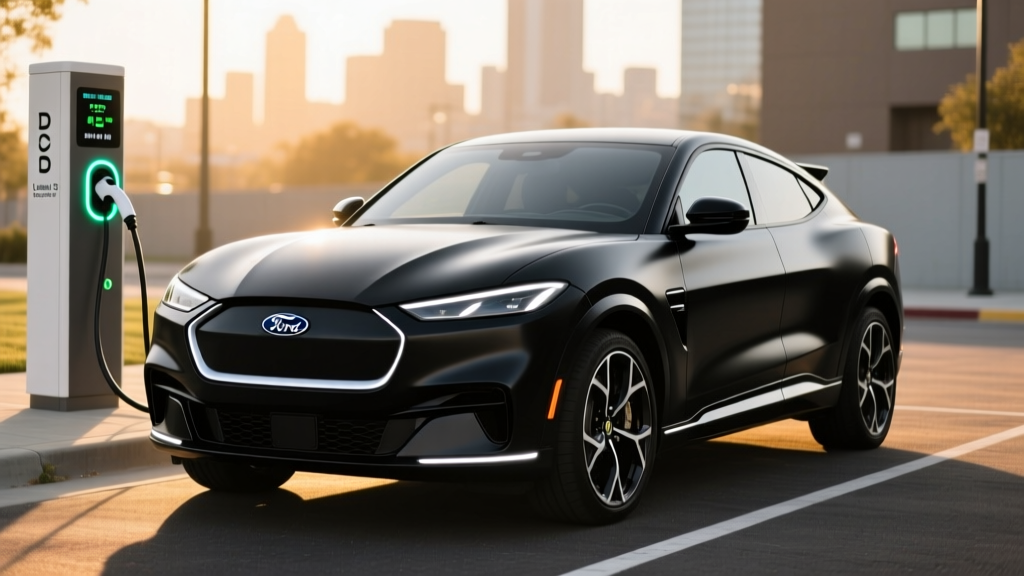
The 2026 Ford Mustang Mach-E Select remains the entry point into Ford's electric crossover lineup, and it continues to punch above its price class in practicality. With a 250-mile EPA-estimated range on the Standard Range battery, a proven 150 kW DC fast-charging capability, and a starting MSRP that positions it squarely against the Hyundai Ioniq 5 and Tesla Model Y, the Select trim is the value play for buyers who don't need extended range or dual-motor performance. It's not the longest-range EV in its segment, but for daily commuters with home charging access, it's one of the most rational purchases available.
| Spec | 2026 Mach-E Select (RWD, Std Range) |
|---|---|
| EPA Range | 250 miles |
| Battery (Usable) | 75.7 kWh (NMC) |
| Max DC Fast Charge | 150 kW |
| 10–80% DC Charge Time | ~34 minutes |
| Level 2 Home Charge Rate | 10.5 kW (~32 mi/hr) |
| Motor / Drivetrain | Single motor / RWD |
| Horsepower / Torque | 266 hp / 317 lb-ft |
| 0–60 mph | 6.1 seconds |
| MPGe (City / Hwy / Combined) | 111 / 94 / 103 |
| Efficiency | 33 kWh/100 mi |
| Cargo (Behind Rear Seats) | 29.7 cu ft |
| Cargo (Seats Folded) | 59.7 cu ft |
| Front Trunk (Frunk) | 4.7 cu ft |
| Rear Legroom | 38.9 inches |
| Base MSRP | $39,995 |
| Price After Est. §30D Credit | ~$32,495 |
| Battery Warranty | 8 yr / 100,000 mi |
Real-World Range: What to Actually Expect
EPA Sticker: 250 miles
Real-World Highway (70–75 mph): ~210–225 miles
Real-World City / Mixed Commute: ~240–255 miles
Cold-Weather (Below 32°F): ~175–200 miles (20–30% reduction)
The EPA's 250-mile estimate for the Mach-E Select RWD with the Standard Range battery is a reasonable baseline for mixed driving, but real-world results depend heavily on your conditions. On highway road trips at sustained 70–75 mph speeds, expect to see closer to 210–225 miles before needing a charge. EVs are least efficient at highway speeds because aerodynamic drag scales with the square of velocity — there's no regenerative braking to recover energy on a flat interstate.
Around town, where regenerative braking recaptures energy at every stop, the Mach-E Select can actually meet or slightly exceed its EPA rating. In mild weather (50–80°F) with city-heavy driving, owners regularly report 240–255 miles of usable range.
Cold weather is the unavoidable reality for EV owners in northern climates. Lithium-ion batteries lose efficiency in low temperatures, and cabin heating draws significant power. In sustained sub-freezing conditions, plan for a 20–30% range reduction — putting real-world winter range at roughly 175–200 miles. The Mach-E does include a heat pump on 2026 models, which mitigates some of this loss compared to resistive heating, but the physics of cold-weather battery chemistry can't be fully eliminated. Fueleconomy.gov lists the combined efficiency at 33 kWh per 100 miles, which translates to roughly 3 miles per kWh — a competitive figure for a crossover of this weight.
Charging Speed: DC Fast and Home Level 2
Charging speed is where the Mach-E Select's Standard Range battery shows its most noticeable limitation compared to extended-range competitors. The peak DC fast-charge rate is 150 kW, which is respectable but not class-leading. The Hyundai Ioniq 5 peaks at 240 kW on its 800-volt architecture, and the Tesla Model Y can accept up to 250 kW at V3 Superchargers.
| Charging Method | Power | Speed | Time |
|---|---|---|---|
| DC Fast Charge (150 kW peak) | Up to 150 kW | ~180 mi/hr peak | 10–80% in ~34 min |
| Level 2 (240V, 48A) | 10.5 kW | ~32 mi/hr | 0–100% in ~8.5 hr |
| Level 1 (120V, 12A) | 1.4 kW | ~4 mi/hr | 0–100% in ~55 hr |
The critical detail that spec sheets gloss over is the charge curve. The Mach-E Select does not sustain its 150 kW peak for the entire session. Peak rate is typically achieved between roughly 10–35% state of charge (SoC), after which the rate tapers progressively. By 60% SoC you're likely seeing 80–100 kW, and above 80% the rate drops sharply to protect battery longevity. This is why the 10–80% time of approximately 34 minutes is the more meaningful metric than peak kW alone.
For home charging, the onboard charger accepts up to 10.5 kW on a 240-volt, 48-amp Level 2 circuit. That translates to roughly 32 miles of range added per hour of charging. A full overnight charge from near-empty takes about 8.5 hours — easily achievable with a standard overnight plug-in. Most owners will arrive home with 40–60% battery remaining and wake up to a full charge every morning, making the DC fast-charging speed largely irrelevant for daily use.
If you're installing a Level 2 charger at home, you'll need a dedicated 60-amp circuit (the charger draws 48 amps continuously, and electrical code requires a 125% safety margin). Expect installation costs of $500–$2,000 depending on your panel's proximity to the garage and whether a panel upgrade is needed. Always consult a licensed electrician for final specs.
Performance and Driving Dynamics
The Mach-E Select RWD pairs its 75.7 kWh usable battery with a single rear-mounted permanent-magnet motor producing 266 horsepower and 317 lb-ft of torque. The 0–60 mph time of 6.1 seconds is genuinely quick for a base-trim crossover — torque delivery is instant from zero RPM, which makes the Mach-E feel punchier in city driving than the horsepower figure alone suggests.
The RWD layout gives the Select a slightly lighter curb weight than AWD variants, which benefits both efficiency and handling balance. Ford tuned the Mach-E's steering and suspension with a sporty bias that lives up to the Mustang badge more than most expected. Body roll is well-controlled, and the low center of gravity from the under-floor battery pack keeps things planted through corners.
For buyers who need all-weather traction, the Select is available with AWD (dual-motor), which bumps output to 325 hp and drops the 0–60 to approximately 5.2 seconds. However, AWD reduces range to an EPA-estimated 230 miles and adds roughly $3,000 to the MSRP. If your winters are mild or you run dedicated winter tires, RWD with regenerative braking on slippery surfaces is manageable for most drivers.
Pricing, Tax Credits, and Total Cost
The 2026 Mach-E Select starts at $39,995 including destination charge. This positions it competitively, but the real story is what happens when you apply the federal EV tax credit under IRS §30D.
| Trim | MSRP | Est. §30D Credit | Effective Price |
|---|---|---|---|
| Select RWD (Std Range) | $39,995 | Up to $7,500 | ~$32,495 |
| Select AWD (Std Range) | $42,995 | Up to $7,500 | ~$35,495 |
| Premium RWD (Ext Range) | $46,995 | Up to $7,500 | ~$39,495 |
| GT (AWD, Ext Range) | $55,995 | Up to $7,500 | ~$48,495 |
Critical caveats on the tax credit: The §30D credit is not guaranteed for every buyer. As of 2026, eligibility depends on several requirements per IRS guidelines:
- MSRP cap: The vehicle must have an MSRP below $80,000 for SUVs (the Mach-E qualifies comfortably).
- Buyer income cap: Modified adjusted gross income must not exceed $150,000 (single), $225,000 (head of household), or $300,000 (joint filers).
- Battery sourcing: A percentage of critical minerals and battery components must be sourced from the U.S. or free-trade-agreement countries. These thresholds increase annually. Ford has worked to qualify the Mach-E's battery supply chain, but verify current-year eligibility on the IRS qualified vehicles list before purchasing.
- Point-of-sale transfer: As of 2024, buyers can transfer the credit to the dealer at purchase, receiving the amount as a down-payment reduction rather than waiting for a tax refund. This effectively lowers the drive-off price.
Always confirm eligibility with your tax professional and check the latest IRS qualified vehicle list before signing a purchase agreement. Rules can change mid-year.
Interior, Cargo, and Technology
The Mach-E Select's interior is dominated by a large 15.5-inch vertically oriented touchscreen running Ford's SYNC 4A infotainment system. The interface is responsive, supports wireless Apple CarPlay and Android Auto, and includes over-the-air (OTA) update capability — meaning the software will continue to improve post-purchase without dealer visits.
Practicality is strong for a midsize crossover. Behind the rear seats, you get 29.7 cubic feet of cargo space — enough for a week's groceries, a couple of suitcases, or a full set of golf clubs. Fold the rear seats flat and capacity expands to 59.7 cubic feet. The front trunk (frunk) adds 4.7 cubic feet with a drainable compartment that's useful for storing wet gear, ice, or charging cables.
Rear-seat passengers get 38.9 inches of legroom, which is generous for the segment and comfortable for adults on longer trips. Headroom is adequate even with the panoramic glass roof option, though the sloping roofline does cut into space for taller passengers.
Standard driver-assistance features include Ford Co-Pilot360 2.0 with automatic emergency braking, blind-spot monitoring, lane-keeping assist, and rear cross-traffic alert. The available BlueCruise system enables hands-free driving on pre-mapped divided highways — but it's important to understand that this is an SAE Level 2 system. The driver must remain attentive, and the cabin camera monitors eye gaze. BlueCruise is not autonomous driving and will disengage if you look away from the road for extended periods.
Pros
- Strong value at ~$32,500 after federal credit
- Competitive real-world efficiency (33 kWh/100 mi)
- Spacious cargo area with useful frunk
- Responsive SYNC 4A with OTA updates
- Sporty handling for a crossover
- Heat pump included for better cold-weather efficiency
- BlueCruise hands-free highway assist available
Cons
- 150 kW DC fast charge trails Ioniq 5 and Model Y
- 250-mile range limits road-trip flexibility vs. 300+ mi rivals
- No LFP battery option (NMC only)
- BlueCruise requires a subscription after trial period
- Rear visibility compromised by thick C-pillars
- Cold-weather range loss remains significant despite heat pump
Battery Chemistry, Degradation, and Warranty
The Mach-E Select uses an NMC (nickel-manganese-cobalt) lithium-ion battery pack with 75.7 kWh of usable capacity. NMC chemistry offers higher energy density than LFP (lithium iron phosphate), which means more range in a lighter, more compact pack — but it comes with trade-offs. NMC batteries are more sensitive to sustained high states of charge and extreme temperatures, and they typically show slightly faster long-term degradation than LFP packs.
Based on data from early Mach-E owners (2021–2024 models), NMC pack degradation has been modest — averaging approximately 5–8% capacity loss over the first 100,000 miles. This means a 250-mile new battery might deliver roughly 230–238 miles after several years of typical use. Ford's battery management system includes a buffer (the total pack capacity is larger than the usable 75.7 kWh) to protect against deep discharge and overcharge, which extends longevity.
Ford backs the battery and electric powertrain with an 8-year / 100,000-mile warranty covering defects and capacity loss below 70% of original capacity. This is the industry-standard threshold. If your battery degrades below 70% within the warranty period, Ford will repair or replace it. For most owners driving 12,000–15,000 miles annually, this warranty covers the vehicle well into its second decade of ownership.
Longevity tips for NMC owners: Avoid routinely charging to 100% for daily use — setting a daily charge limit of 80–85% significantly reduces degradation. Use DC fast charging sparingly (it's fine for road trips, but daily fast-charging accelerates wear). In extreme heat, precondition the battery before fast charging using the vehicle's navigation-routed preconditioning feature.
How the Mach-E Select Stacks Up Against Competitors
The Mach-E Select's natural competitors are the Hyundai Ioniq 5 SE (Standard Range), Tesla Model Y (RWD), and Volkswagen ID.4 (Standard). Here's how they compare on the metrics that matter most:
| Metric | Mach-E Select RWD | Ioniq 5 SE (Std Rng) | Model Y RWD | VW ID.4 (Std) |
|---|---|---|---|---|
| EPA Range | 250 mi | 220 mi | 283 mi | 206 mi |
| Battery (Usable) | 75.7 kWh (NMC) | 58 kWh (NMC) | 60 kWh (LFP) | 62 kWh (NMC) |
| DC Fast Charge Peak | 150 kW | 175 kW | 170 kW | 135 kW |
| 10–80% Time | ~34 min | ~18 min | ~30 min | ~33 min |
| 0–60 mph | 6.1 sec | 7.4 sec | 6.6 sec | 7.7 sec |
| Cargo (Rear Seats Up) | 29.7 cu ft | 27.2 cu ft | 30.2 cu ft | 30.3 cu ft |
| Base MSRP (2026) | $39,995 | $39,900 | $41,990 | $38,995 |
The Mach-E Select occupies a middle ground: it has more range than the Ioniq 5 Standard Range and the ID.4 Standard, but less than the Model Y. Its DC fast-charging speed is slower than the Ioniq 5's (which benefits from an 800-volt architecture for remarkably fast 10–80% times), but faster than the ID.4. Where the Mach-E wins is the combination of performance (6.1 seconds to 60 mph is the quickest in this group), cargo practicality with its frunk, and available BlueCruise technology.
If road-trip charging speed is your top priority, the Ioniq 5's 18-minute 10–80% time is hard to beat. If maximum range on a single charge matters most, the Model Y's 283 miles and Tesla's Supercharger network dominance are compelling. But for a balanced daily-driver crossover with strong performance, good tech, and competitive pricing after the tax credit, the Mach-E Select holds its ground.
Who Should Buy the Mach-E Select?
Buy it if:
- You commute 40–80 miles round-trip and have reliable home Level 2 charging
- You want a sporty-driving crossover that doesn't feel like an appliance
- You value a strong warranty and Ford's dealer network for service
- Your road trips are typically under 200 miles between stops
- You want hands-free highway driving via BlueCruise (with subscription)
Look elsewhere if:
- You frequently drive 300+ mile routes with limited charging infrastructure
- You need the fastest possible DC charging for heavy road-trip use
- You live in a region with extreme cold and have no garage (consider extended-range AWD or a PHEV instead)
- You want LFP chemistry for maximum battery longevity and daily 100% charging
Frequently Asked Questions
What is the real-world range of the Mach-E Select?
The EPA rates it at 250 miles combined. In real-world highway driving at 70+ mph, expect 210–225 miles. City driving in mild weather can yield 240–255 miles. In cold weather below freezing, plan for 175–200 miles.
How fast does the Mach-E Select charge?
On a DC fast charger, it peaks at 150 kW and charges from 10–80% in approximately 34 minutes. On a home Level 2 charger (240V, 48A), it adds about 32 miles of range per hour, fully charging overnight in roughly 8.5 hours.
Does the 2026 Mach-E Select qualify for the federal EV tax credit?
The Mach-E Select has historically qualified for up to $7,500 under IRS §30D, but eligibility depends on current-year battery sourcing requirements, your income level, and the vehicle's MSRP (which is well under the $80,000 SUV cap). Always verify on the IRS qualified vehicles page and consult a tax professional before purchase.
Is the Mach-E Select worth buying over a Tesla Model Y?
It depends on your priorities. The Model Y offers more EPA range (283 vs. 250 miles) and access to the Supercharger network, which remains the most reliable public charging system. The Mach-E Select counters with sportier driving dynamics, a more traditional crossover interior layout, BlueCruise availability, and a strong price after tax credits. If Supercharger access is critical and you don't have a NACS adapter, the Model Y has an edge. If you prefer Ford's build quality and driving feel, the Mach-E is a strong alternative.
What is the biggest drawback of the Mach-E Select?
The 150 kW DC fast-charging speed is the most common complaint, especially compared to the Ioniq 5's 800-volt architecture that delivers 10–80% in roughly 18 minutes. On long road trips, the Mach-E's 34-minute charge stops add up. For daily commuters who charge at home, this is a non-issue.
Does the Mach-E Select have a heat pump?
Yes. The 2026 Mach-E Select includes a heat pump as standard, which improves cabin heating efficiency in cold weather compared to resistive heaters. This reduces winter range loss, though a 20–30% reduction in extreme cold is still expected.
What battery chemistry does the Mach-E Select use?
The Mach-E Select uses NMC (nickel-manganese-cobalt) lithium-ion cells. NMC provides higher energy density than LFP but is more sensitive to high-SoC storage and extreme heat. For daily use, setting your charge limit to 80–85% will maximize long-term battery health.