Why Ford Mustang Mach-E Sales Still Matter in 2026
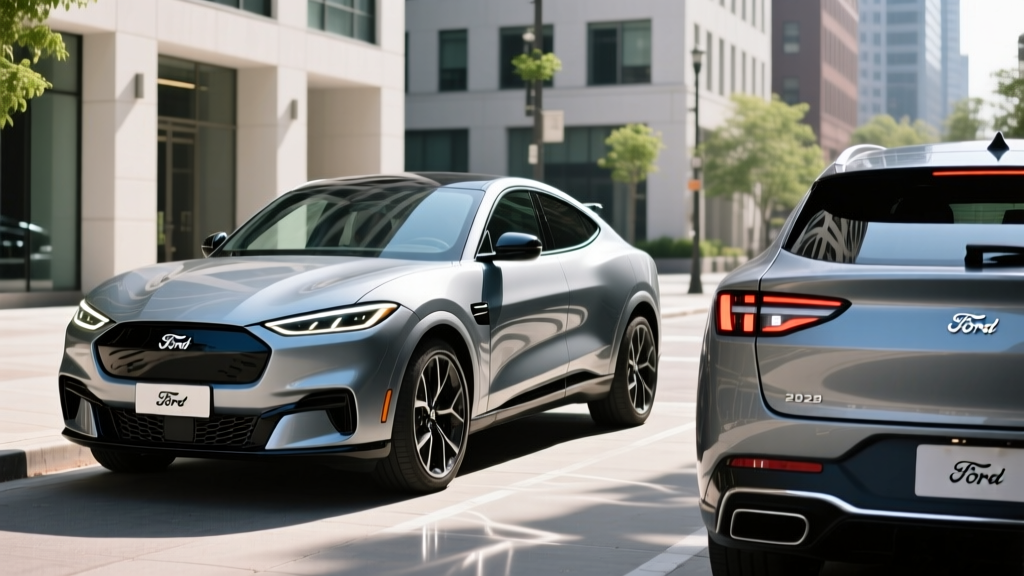
The Ford Mustang Mach-E has been one of the most closely watched EVs since its launch, and Ford Mustang Mach-E sales figures continue to serve as a bellwether for mainstream EV adoption in the U.S. Through 2025 and into 2026, the Mach-E has maintained its position as one of the top-selling electric crossovers, competing directly with the Tesla Model Y, Hyundai Ioniq 5, and Chevrolet Equinox EV. Ford has kept the model fresh with iterative battery upgrades, new trim configurations, and the critical addition of the NACS charge port for Tesla Supercharger access — a move that significantly broadened its charging footprint.
But sales numbers only tell part of the story. For buyers researching the Mach-E in 2026, the real questions are about daily usability: What range will you actually get? How fast does it charge on a road trip? Does it still qualify for the federal tax credit? This review breaks down every spec, cost, and ownership factor you need to decide whether the Mach-E belongs in your driveway.
Ford Mustang Mach-E Sales Performance: Market Position
Ford Mustang Mach-E sales have fluctuated with broader EV market dynamics — incentive shifts, lease-vs-purchase trends, and competitive pricing pressure. The Mach-E consistently ranks among the top three non-Tesla electric SUVs in U.S. sales volume. Ford's decision to equip 2025+ models with the native NACS (North American Charging Standard) port, rather than relying solely on CCS adapters, gave the Mach-E a practical advantage for buyers who value Supercharger network reliability.
Key sales drivers include:
- Tax credit eligibility on select trims (more on this below)
- Expanding public charging access via the Tesla Supercharger network
- Competitive pricing starting under $40,000 for the Select trim
- Strong brand recognition — the Mustang nameplate carries weight with traditional car buyers transitioning to electric
However, increased competition from the Hyundai Ioniq 5 (with its 800V ultra-fast charging), the redesigned Tesla Model Y, and newer entrants like the Chevrolet Equinox EV have pressured Ford to keep pricing aggressive and feature content high.
Range, Battery, and Real-World Efficiency
The 2026 Ford Mustang Mach-E is offered with two battery pack sizes and multiple drivetrain configurations. Here's what the EPA says — and what you'll actually experience.
| Spec | Select (Std Range) | Premium (Ext Range RWD) | GT (Ext Range AWD) |
|---|---|---|---|
| EPA Range | 250 mi | 320 mi | 290 mi |
| Battery Capacity (usable) | 70 kWh (LFP) | 91 kWh (NMC) | 91 kWh (NMC) |
| Drivetrain | RWD (single motor) | RWD (single motor) | AWD (dual motor) |
| Horsepower | 266 hp | 290 hp | 480 hp (GT) |
| 0-60 mph | 6.1 sec | 5.5 sec | 3.5 sec (GT) |
| MPGe (combined) | 103 MPGe | 105 MPGe | 91 MPGe |
| Efficiency (kWh/100 mi) | 33 kWh | 32 kWh | 37 kWh |
| Max DC Fast Charge | 150 kW | 150 kW | 150 kW |
| 10-80% DCFC Time | ~36 min | ~42 min | ~42 min |
| Level 2 Home Charge Rate | 10.5 kW (~33 mi/hr) | 10.5 kW (~33 mi/hr) | 10.5 kW (~33 mi/hr) |
| Base MSRP | $39,995 | $45,995 | $56,995 |
Real-World Range: What to Actually Expect
EPA Sticker: 250-320 miles depending on trim and battery.
Highway driving (70-75 mph, moderate temps): Expect roughly 220-280 miles from the Extended Range pack. The RWD Premium trim's 320-mile EPA rating translates to about 270-280 real-world highway miles in fair conditions.
Cold weather (below 32°F): Plan for a 20-30% range reduction. An Extended Range AWD model rated at 290 miles may deliver 200-220 miles in freezing temperatures, especially with cabin heating. The Mach-E's heat pump (standard on 2025+ models) helps mitigate this compared to earlier model years, but physics still applies.
City/regenerative driving: You can meet or slightly exceed EPA estimates in stop-and-go traffic thanks to strong regenerative braking recapturing energy.
Source: EPA Fueleconomy.gov
Battery Chemistry: LFP vs NMC in the Mach-E
Ford uses LFP (lithium iron phosphate) chemistry in the Standard Range pack and NMC (nickel manganese cobalt) in the Extended Range pack. This matters for long-term ownership:
| Factor | LFP (Standard Range) | NMC (Extended Range) |
|---|---|---|
| Energy Density | Lower — smaller pack, less range | Higher — more range per kg |
| Longevity / Cycle Life | Superior — 3,000+ cycles with minimal degradation | Good — 1,500-2,000 cycles typical |
| Charging to 100% Daily | Recommended — LFP handles full SoC well | Not ideal — charge to 80% daily for longevity |
| Cold-Weather Performance | More range loss in extreme cold | Better cold-weather retention |
| Cost | Lower — enables the $39,995 price point | Higher — premium for range and power |
Practical takeaway: If you charge at home nightly and mostly commute under 60 miles round-trip, the LFP Standard Range is a smart, durable choice. If you road-trip frequently or live in a cold climate, the NMC Extended Range pack is worth the premium.
Charging Speed and Infrastructure
Charging capability is where the 2026 Mach-E shows both its strengths and its limitations relative to competitors like the Hyundai Ioniq 5 (which peaks at 240+ kW on 800V architecture).
| Charging Level | Power / Rate | Miles Added per Hour | Use Case |
|---|---|---|---|
| Level 1 (120V household) | ~1.4 kW | ~3-4 mi/hr | Emergency / overnight trickle |
| Level 2 (240V home) | 10.5 kW | ~33 mi/hr | Daily home charging |
| DC Fast Charge (peak) | 150 kW | ~150 mi in 20 min (Std Range) | Road trips |
Understanding the Charge Curve
The Mach-E's peak charge rate of 150 kW is achievable at low states of charge (10-30% SoC) on a capable DC fast charger. However, like all EVs, charging speed tapers significantly as the battery fills:
- 10-50% SoC: Near-peak speeds, ~120-150 kW sustained
- 50-80% SoC: Tapers to ~80-100 kW
- 80-100% SoC: Drops sharply to ~20-30 kW — avoid charging past 80% on road trips unless necessary
The 10-80% time of approximately 36-42 minutes is competitive but not class-leading. The Ioniq 5 achieves 10-80% in roughly 18 minutes thanks to its 800V system. For Mach-E owners, this means slightly longer rest stops on road trips — plan for 35-45 minute breaks at chargers.
NACS port advantage: 2025+ Mach-E models come with the native NACS connector, granting direct access to Tesla Superchargers without an adapter. This dramatically expands reliable fast-charging options, particularly on highways where Supercharger stations outnumber CCS networks. Earlier CCS-port Mach-E models can use a Ford-provided adapter for Supercharger access, but the native port is cleaner and more reliable.
Performance and Driving Dynamics
The Mach-E's driving character varies enormously by trim. The Select RWD delivers adequate acceleration for commuting, while the GT — particularly with the Performance Upgrade — is genuinely quick.
- Select RWD (266 hp): 0-60 in 6.1 seconds. Peppy around town, confident highway merging.
- Premium RWD (290 hp): 0-60 in 5.5 seconds. Smooth, effortless passing power.
- GT AWD (480 hp): 0-60 in 3.5 seconds. Sports-car acceleration with the practicality of a crossover.
- GT Performance Upgrade (480 hp, 634 lb-ft): 0-60 in 3.3 seconds. Ford's MagneRide dampers tighten body control.
All trims feature one-pedal driving mode with strong regenerative braking, though Ford also offers a "Whisper" drive mode that softens regen for drivers transitioning from gas cars. The AWD dual-motor setup provides excellent traction in rain and light snow, though the Mach-E's 6.5 inches of ground clearance limits serious off-road capability.
Pricing, Trims, and Federal Tax Credit Eligibility
| Trim | Base MSRP | Est. Federal Credit (§30D) | Effective Price |
|---|---|---|---|
| Select RWD (Std Range) | $39,995 | Up to $7,500* | ~$32,495* |
| Premium RWD (Ext Range) | $45,995 | Up to $7,500* | ~$38,495* |
| Premium AWD (Ext Range) | $48,995 | Up to $7,500* | ~$41,495* |
| GT AWD (Ext Range) | $56,995 | Up to $7,500* | ~$49,495* |
| Rally (Ext Range AWD) | $58,995 | Up to $7,500* | ~$51,495* |
*Tax credit eligibility depends on multiple factors. The §30D credit is not automatic.
Federal Tax Credit: What You Must Know
The IRS §30D Clean Vehicle Credit can reduce your federal tax liability by up to $7,500 — or, as of 2024+, be transferred to the dealer at point of sale as an immediate price reduction. However, eligibility hinges on several requirements:
- MSRP cap: The Mach-E qualifies as an SUV (MSRP cap: $80,000). All current trims fall under this limit. ✓
- Buyer income cap: Modified AGI must not exceed $150,000 (single), $225,000 (head of household), or $300,000 (joint). ✓ Check your situation.
- Battery component sourcing: A percentage of battery components must be manufactured or assembled in North America, and critical minerals must meet sourcing thresholds. These percentages increase annually. Ford has worked to localize supply chains, but verify current-year eligibility on fueleconomy.gov before purchasing.
- Final assembly: Must occur in North America. The Mach-E is assembled in Cuautitlán, Mexico. ✓
- Transferability: You can elect to transfer the credit to the dealer at purchase, reducing your out-of-pocket cost immediately — even if your tax liability is less than $7,500.
Critical caveat: Battery sourcing requirements tighten each year. A trim that qualified for the full $7,500 in 2024 may qualify for $3,750 or nothing in 2026 depending on supply chain shifts. Always verify on the official DOE/EPA credit lookup tool before signing paperwork.
Cargo, Interior, and Daily Practicality
The Mach-E is a mid-size crossover with practical dimensions for a family of four:
- Cargo behind rear seats: 29.7 cu ft
- Cargo with rear seats folded: 59.7 cu ft
- Front trunk (frunk): 4.7 cu ft — useful for charging cables or a small bag
- Rear legroom: 38.9 inches — competitive with the Model Y and Ioniq 5
- Front headroom: 40.4 inches
The interior uses Ford's latest SYNC 4A infotainment system on a 15.5-inch vertical touchscreen. Wireless Apple CarPlay and Android Auto are standard. The Mach-E also features Ford Co-Pilot360 2.0 with adaptive cruise, lane centering, and automatic emergency braking. The available BlueCruise hands-free driving system (on mapped divided highways) is a SAE Level 2 driver-assist feature — you must remain attentive, and the system monitors your eyes via an infrared camera.
BlueCruise Is Not Self-Driving
Ford BlueCruise is an SAE Level 2 system. It handles steering, acceleration, and braking on approved highways, but the driver must remain fully engaged and ready to take over at any moment. It does not navigate city streets, construction zones, or unmapped roads. Do not confuse it with Level 4 robotaxi services like Waymo.
Warranty, Ownership Costs, and Longevity
Ford backs the Mach-E with competitive warranty coverage:
- Battery warranty: 8 years / 100,000 miles (retains ≥70% capacity)
- Electric powertrain: 8 years / 100,000 miles
- Bumper-to-bumper: 3 years / 36,000 miles
The 70% capacity retention threshold is industry-standard. In practice, most Mach-E owners report 3-5% degradation over the first 50,000 miles, with LFP packs showing even less loss. Ford's battery management system includes a thermal preconditioning feature that optimizes battery temperature before fast charging, which helps preserve long-term health.
Estimated 5-year cost of ownership advantages vs. a comparable gas SUV:
- Fuel savings: ~$4,500-$6,000 (based on $3.50/gal gas, $0.14/kWh electricity, 12,000 mi/yr)
- Maintenance savings: ~$1,500-$2,500 (no oil changes, fewer brake replacements due to regen)
- Insurance: Typically 10-15% higher than gas equivalents — get quotes before purchasing
Pros, Cons, and the Competition
Pros
- NACS port enables direct Tesla Supercharger access (2025+)
- LFP battery option offers exceptional longevity for daily commuters
- Competitive pricing under $40K for the Select trim
- BlueCruise hands-free driving on 130,000+ miles of approved highways
- Strong regenerative braking enables true one-pedal driving
- Spacious rear seat and practical cargo area with frunk
Cons
- 150 kW peak DC charging is slower than Ioniq 5 (240 kW) and Porsche Macan EV (270 kW)
- Extended Range trims push past $50K, where competition intensifies
- 10-80% charge time of 36-42 minutes trails 800V competitors
- Build quality and panel gaps have drawn owner complaints in earlier model years
- No towing package available (unlike the F-150 Lightning or Rivian R1S)
Mach-E vs. Key Competitors
| Spec | Ford Mach-E (Ext RWD) | Tesla Model Y LR | Hyundai Ioniq 5 (LR RWD) |
|---|---|---|---|
| EPA Range | 320 mi | 330 mi | 310 mi |
| Peak DC Charge | 150 kW | 250 kW | 240 kW (800V) |
| 10-80% Time | ~42 min | ~25 min | ~18 min |
| Base MSRP (comparable trim) | $45,995 | $46,630 | $46,500 |
| Charging Network | NACS (Supercharger + others) | NACS (Supercharger native) | NACS adapter / CCS |
| 0-60 mph | 5.5 sec | 4.8 sec | 5.8 sec |
Who Should Buy the Mach-E?
Choose the Mach-E if: You want a proven electric crossover with Supercharger access, value the Mustang brand, prefer a traditional dealership purchase experience, and want LFP battery durability at a sub-$40K price point (Select trim).
Choose the Tesla Model Y if: Charging speed and Supercharger seamlessness are your top priorities, and you prefer OTA updates with the largest Supercharger network.
Choose the Hyundai Ioniq 5 if: Ultra-fast 800V charging (18-min 10-80%) matters for your road-trip habits, and you want distinctive styling.
Frequently Asked Questions
What is the real-world range of the Ford Mustang Mach-E?
The EPA rates the Extended Range RWD at 320 miles, but expect 270-280 miles on the highway in fair weather and 200-220 miles in freezing temperatures. The Standard Range LFP model delivers roughly 210-220 real-world highway miles. City driving with regenerative braking can meet or slightly exceed EPA estimates.
How fast does the Mach-E charge at home and on the road?
At home on a Level 2 (240V) charger, the Mach-E adds about 33 miles of range per hour at 10.5 kW — a full overnight session easily replenishes a day's driving. On a DC fast charger, it peaks at 150 kW, reaching 10-80% in approximately 36-42 minutes depending on battery size. Charging past 80% slows dramatically, so plan road-trip stops around the 10-80% window.
Does the 2026 Mach-E qualify for the $7,500 federal EV tax credit?
It can — but eligibility depends on your income, the specific trim's battery sourcing compliance, and current-year IRS rules. All Mach-E trims fall under the $80,000 SUV MSRP cap. Buyer income must not exceed $150K (single) / $300K (joint). The credit can be transferred to the dealer at point of sale for an immediate price reduction. Verify current eligibility at fueleconomy.gov and consult a tax professional for your specific situation.
Is the Mach-E worth buying over the Tesla Model Y or Ioniq 5?
The Mach-E is a strong choice if you value dealership support, LFP battery longevity (on the Select trim), and a more traditional crossover driving feel. The Model Y charges faster and has a more mature software ecosystem. The Ioniq 5 charges significantly faster (800V architecture). For buyers who prioritize road-trip charging speed above all, the Ioniq 5 or Model Y has the edge. For daily commuters who charge at home, the Mach-E's real-world usability and pricing are compelling.
What are the biggest drawbacks of the Mach-E?
The primary limitations are its 150 kW peak charging speed (slower than key rivals), no towing capability, and build quality inconsistencies reported on earlier model years. The GT trim's $57K+ price also enters territory where luxury EV crossovers become viable alternatives. For most daily-driving use cases, these are manageable trade-offs, but road-trip-heavy buyers should note the charging speed gap.
How long will the Mach-E battery last?
Ford warrants the battery for 8 years / 100,000 miles with a minimum 70% capacity retention. Real-world data from high-mileage owners suggests 5-8% total degradation over 100,000 miles for NMC packs, and potentially less for LFP. With proper care (avoiding frequent 100% charges on NMC, using preconditioning before DC fast charging), the battery should remain functional well beyond 150,000 miles. Full battery replacement, if ever needed, is estimated at $12,000-$18,000 depending on pack size.