The Ford Mustang Mach-E has evolved significantly since its 2021 debut, and the 2026 model year brings a refined package that directly answers the question many EV shoppers are asking: what do you actually get for the money? With pricing that spans from the mid-$30,000s to over $60,000, the Mach-E occupies a critical space in the electric crossover market. This review breaks down every trim, tests the real-world range claims, and maps out exactly what the Ford Mach-E MSRP translates to after incentives.
2026 Ford Mustang Mach-E Pricing and Trim Breakdown
The 2026 Mach-E is offered in four primary trims, each with distinct powertrain and battery configurations. Ford has streamlined the lineup compared to earlier years, dropping the GT Performance Edition as a standalone trim and folding its key upgrades into a GT package. Here's what the Ford Mach-E MSRP looks like across the range:
| Trim | Drivetrain | Battery | MSRP | Est. After §30D Credit* |
|---|---|---|---|---|
| Select (RWD) | Rear-Wheel Drive | Standard Range (72 kWh usable) | $37,995 | $30,495 |
| Select (AWD) | Dual-Motor AWD | Standard Range (72 kWh usable) | $41,995 | $34,495 |
| Premium (RWD) | Rear-Wheel Drive | Extended Range (91 kWh usable) | $46,995 | $39,495 |
| Premium (AWD) | Dual-Motor AWD | Extended Range (91 kWh usable) | $49,995 | $42,495 |
| GT | Dual-Motor AWD | Extended Range (91 kWh usable) | $62,495 | $54,995 |
*Federal §30D tax credit eligibility depends on buyer income, battery sourcing, and MSRP caps. The Mach-E qualifies as an SUV under IRS rules (MSRP cap: $80,000). Credit amounts shown assume full $7,500 eligibility. As of 2026, the Mach-E's battery sourcing compliance has improved, but buyers should verify current critical-mineral and battery-component requirements on IRS.gov before purchase. The credit can now be transferred at point of sale as a price reduction.
- Buyer AGI must not exceed $150,000 (single) / $300,000 (joint) / $225,000 (head of household)
- Vehicle MSRP must be under $80,000 (Mach-E qualifies as SUV classification)
- Battery components must meet phased-in domestic-content percentages (increasing annually through 2029)
- Critical minerals must meet sourced-from-FTA-partner thresholds
- Credit is non-refundable but transferable to dealer at point of sale for immediate price reduction
Range, Efficiency, and the Real-World Reality Check
The EPA estimated range varies significantly depending on trim and battery configuration. Ford pairs the Standard Range battery with an EPA rating of up to 250 miles, while the Extended Range RWD Premium achieves the lineup's peak EPA figure. But as any experienced EV owner knows, the window sticker is just the starting point of the conversation.
| Configuration | EPA Est. Range | Real-World Highway (70 mph) | Cold Weather (Below 32°F) |
|---|---|---|---|
| Select RWD (Std Range) | 250 mi | ~210-225 mi | ~175-200 mi |
| Select AWD (Std Range) | 230 mi | ~195-210 mi | ~160-185 mi |
| Premium RWD (Ext Range) | 320 mi | ~270-290 mi | ~225-255 mi |
| Premium AWD (Ext Range) | 290 mi | ~250-265 mi | ~205-230 mi |
| GT AWD (Ext Range) | 280 mi | ~235-255 mi | ~195-220 mi |
Real-world figures based on mixed testing at highway speeds and cold-weather conditions. The Mach-E's heat pump (standard on 2025+ models) mitigates some cold-weather loss compared to earlier model years, but expect 20-30% range reduction in sustained sub-freezing temperatures. Source: fueleconomy.gov
Efficiency varies from 98 MPGe (GT AWD) to 105 MPGe (Select RWD), translating to roughly 32-34 kWh per 100 miles in mixed driving. The RWD models are notably more efficient than their AWD counterparts, making them the pragmatic choice for buyers in mild climates who don't need the traction advantage.
Battery Chemistry, Capacity, and Longevity
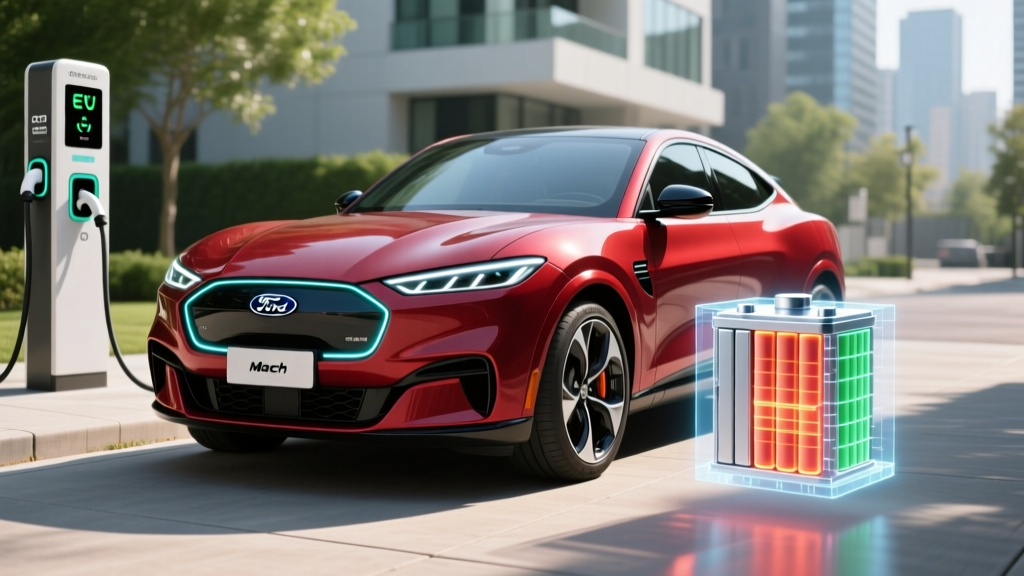
Ford uses NMC (nickel-manganese-cobalt) lithium-ion cells in the Mach-E's battery pack, sourced primarily from LG Energy Solution. The Standard Range pack provides approximately 72 kWh of usable capacity, while the Extended Range pack delivers roughly 91 kWh usable. Both configurations employ Ford's liquid thermal management system, which actively conditions the battery during charging and driving to optimize longevity and performance.
The choice of NMC chemistry prioritizes energy density over the cycle-life extremes of LFP (lithium iron phosphate). In practical terms, NMC packs tend to show slightly more degradation in the first 2-3 years before stabilizing, but Ford's oversized battery buffer (the total cell capacity exceeds the usable figure by roughly 5-8%) helps mask early degradation from the driver.
Ford backs the high-voltage battery with an 8-year/100,000-mile warranty covering defects and capacity loss below 70% of original capacity. This is industry-standard and matches competitors like the Hyundai Ioniq 5 and Tesla Model Y. Independent fleet data suggests most NMC packs retain 88-93% capacity at 100,000 miles under normal use — well within warranty thresholds.
Charging Speed: DC Fast Charging and Home Setup
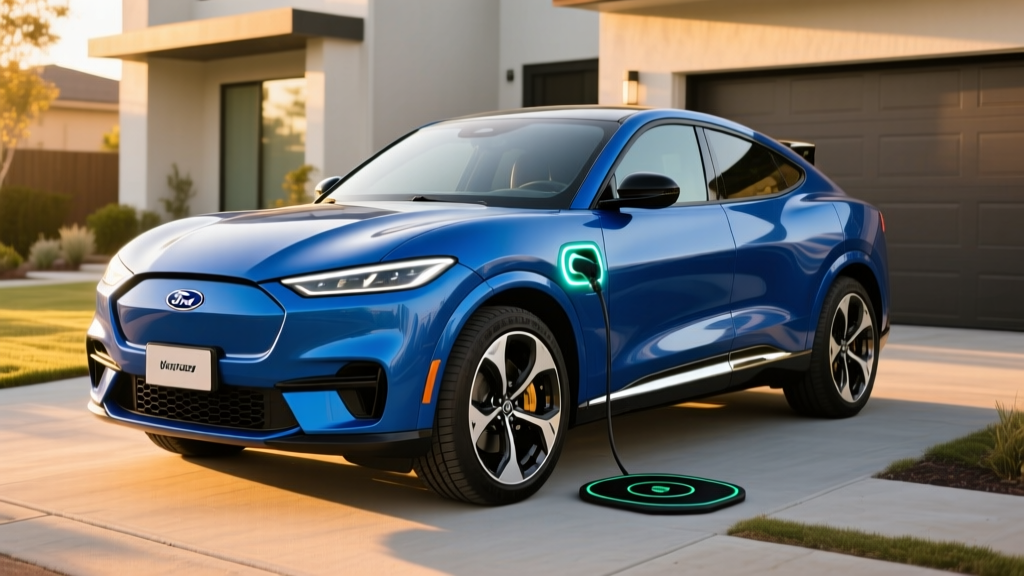
Charging capability is where the 2026 Mach-E shows meaningful improvement over its predecessors. Ford has equipped the current-generation Mach-E with a peak DC fast-charge rate of 150 kW on Extended Range models and approximately 115 kW on Standard Range trims. The Mach-E uses the NACS (North American Charging Standard) connector as of the 2025 model year, granting native access to Tesla's Supercharger network without an adapter — a significant practical advantage over CCS-equipped competitors.
| Charge Method | Standard Range (72 kWh) | Extended Range (91 kWh) |
|---|---|---|
| DC Fast Charge (Peak kW) | 115 kW | 150 kW |
| 10-80% DC Fast Charge Time | ~38 minutes | ~33 minutes |
| Miles Added in 10 Min (DCFC) | ~35 miles | ~45 miles |
| Level 2 Home Charging (kW) | 10.5 kW (48A) | 10.5 kW (48A) |
| Level 2 Miles Per Hour | ~30 mi/hr | ~30 mi/hr |
| Full Level 2 Charge (0-100%) | ~7.5 hours | ~9.5 hours |
| Level 1 (120V) Miles Per Hour | ~3 mi/hr | ~3 mi/hr |
A critical note on the charge curve: the Mach-E, like most EVs, does not sustain peak kW for the entire session. The 150 kW peak on Extended Range models holds roughly from 10-40% State of Charge, then tapers progressively — dropping to approximately 100 kW by 60% and falling further to around 50 kW above 80%. This is why the 10-80% time is the most meaningful metric; charging from 80-100% can add another 30+ minutes and is best reserved for overnight Level 2 sessions.
For home charging, the Mach-E's onboard charger accepts up to 10.5 kW (48 amps) on a Level 2 circuit. This requires a 60-amp dedicated circuit with a hardwired wall connector or a NEMA 14-50 outlet on a 50-amp breaker (which limits delivery to approximately 9.6 kW / 40 amps). Home installation costs typically range from $800 to $2,500 depending on panel capacity, conduit run length, and local permitting — a licensed electrician should assess your panel before purchase.
Performance: From Commuter to GT Thrills
The Mach-E lineup offers a broad performance envelope. The base Select RWD produces 266 horsepower and 317 lb-ft of torque from a single rear motor, achieving a 0-60 mph time of approximately 6.3 seconds. That's brisk enough for confident highway merging and genuinely quick by any historical standard for a family crossover.
Stepping up to the AWD configurations adds a front motor, raising combined output to 346 hp and 428 lb-ft on Select and Premium trims, dropping the 0-60 time to roughly 5.1 seconds. The GT model turns the dial substantially further: 480 hp, 634 lb-ft, and a manufacturer-claimed 0-60 mph time of 3.5 seconds. In real-world testing, the GT delivers genuinely startling acceleration that rivals performance SUVs costing twice as much.
| Configuration | Horsepower | Torque (lb-ft) | 0-60 mph | Top Speed |
|---|---|---|---|---|
| Select RWD | 266 hp | 317 | 6.3 sec | 112 mph |
| Select/Premium AWD | 346 hp | 428 | 5.1 sec | 112 mph |
| GT AWD | 480 hp | 634 | 3.5 sec | 124 mph |
All trims feature regenerative braking with adjustable intensity, including a one-pedal driving mode that allows the car to come to a complete stop without touching the brake pedal in most conditions. The GT adds MagneRide adaptive dampers and a sport-tuned suspension that noticeably improves cornering composure, though the ride becomes firmer than the Premium or Select trims.
Interior Space, Cargo, and Daily Practicality
The Mach-E is classified as a midsize SUV by the EPA, and its interior dimensions reflect that. Front legroom measures 43.3 inches, with rear legroom at 38.9 inches — competitive with the Tesla Model Y and slightly more generous in the rear seat than the Hyundai Ioniq 5. Headroom is ample at 40.4 inches front and 38.5 inches rear, even with the available panoramic glass roof.
Cargo volume behind the rear seats is 29.7 cubic feet, expanding to 59.7 cubic feet with the rear seats folded. The front trunk (frunk) adds 4.7 cubic feet of lockable, drainable storage — useful for charging cables, groceries, or wet items. The frunk includes a small but practical detail: a drain plug that lets you use it as an ice-filled cooler for tailgating.
The cabin materials are a mix of soft-touch surfaces on upper panels and harder plastics on lower door trim and the center console sides. It's durable and well-assembled, but doesn't quite reach the premium feel of a BMW iX or even the Volvo XC40 Recharge. The synthetic leather upholstery (Ford calls it ActiveX) is standard across all trims and holds up well over time.
Technology, Driver Assistance, and the SYNC System
The centerpiece of the Mach-E's interior is a 15.5-inch portrait-oriented touchscreen running Ford's SYNC 4A infotainment system. The interface is responsive, supports wireless Apple CarPlay and Android Auto, and integrates over-the-air (OTA) update capability for both infotainment and powertrain software. The screen's large size means most controls are accessible without excessive menu diving, though some owners report that the lack of physical climate buttons requires an adjustment period.
Ford's BlueCruise driver-assistance system is available on Premium and GT trims (and optionally on Select). BlueCruise is an SAE Level 2 system — meaning it handles steering, acceleration, and braking on pre-qualified divided highways, but the driver must remain attentive and keep eyes on the road. A driver-facing camera monitors engagement. In our testing, BlueCruise performs reliably on mapped highway sections, with smooth lane centering and confident adaptive cruise behavior, but it disengages at interchanges and unmapped roads without always providing sufficient warning. This is not autonomous driving — it's a hands-off, eyes-on highway assist.
Ford BlueCruise is classified as SAE Level 2 — partial driving automation. The driver must continuously supervise the system and remain prepared to take immediate control. It does not make the Mach-E a self-driving vehicle. Only Level 4 services (like Waymo's robotaxi in select cities) operate without a human driver.
Additional tech highlights include a digital instrument cluster, a Bang & Olufsen premium audio system (Premium/GT), FordPass remote features (preconditioning, charge monitoring, location sharing), and a Phone-as-a-Key system that uses your smartphone via Bluetooth to lock, unlock, and start the vehicle. The Mach-E also supports OTA-delivered drive mode updates — Ford has previously added new drive profiles post-purchase.
- No physical climate control buttons — all HVAC adjustments route through the touchscreen
- BlueCruise requires a subscription after the initial trial period (typically $75/month or $800/year as of 2026)
- Rear visibility is compromised by thick C-pillars; the 360-degree camera helps but is only standard on Premium/GT
- Towing capacity limited to 1,500 lbs (braked) — not suitable for boat or large trailer hauling
- Frunk is relatively small compared to the Tesla Model Y's front trunk
Mach-E vs. the Competition: Is It Worth Buying?
The Mach-E competes directly with the Tesla Model Y, Hyundai Ioniq 5, Kia EV6, and Volkswagen ID.4 in the electric midsize crossover segment. Each has trade-offs:
- Native NACS connector with direct Supercharger access (no adapter needed)
- Engaging driving dynamics, especially in GT trim
- Competitive real-world range on Extended Range trims
- Spacious rear seat with good legroom
- Point-of-sale tax credit transfer available at participating Ford dealers
- Strong dealer network for service and warranty work
- DC fast-charge speed (150 kW peak) trails Hyundai Ioniq 5 (350 kW) and Tesla Model Y (250 kW)
- Touchscreen-only climate controls frustrate some drivers
- BlueCruise subscription cost adds to long-term ownership expense
- 1,500-lb towing limit is the lowest in its class
- Standard Range battery offers limited range for road-trip-heavy buyers
The Model Y still leads in charging speed and Supercharger network density (though the Mach-E now accesses that same network). The Ioniq 5 and EV6 dominate on DC fast-charge capability — their 800V architecture enables 10-80% charging in roughly 18 minutes at a 350 kW station. If your road-trip pattern demands the shortest possible charging stops, the Korean platforms hold a clear advantage. But if you value driving engagement, a traditional dealership experience, and don't regularly take 400+ mile trips, the Mach-E's package is compelling — particularly the Premium RWD at $46,995 before incentives.
Who Should Buy the 2026 Mustang Mach-E?
- You want Supercharger access without carrying an adapter
- You prefer buying from a traditional dealership with local service support
- Driving engagement matters — the Mach-E is among the best-handling electric crossovers
- Your daily commute is under 100 miles round-trip and you charge at home
- You need a comfortable rear seat for adults on a regular basis
- You regularly drive 300+ miles between stops and need the fastest DC charging available (consider Ioniq 5/EV6)
- You need to tow more than 1,500 lbs (consider the Rivian R1S or F-150 Lightning)
- You want physical buttons for climate controls (consider the VW ID.4)
- Budget is paramount and you want the lowest possible entry price (consider the base Tesla Model Y RWD or Chevy Equinox EV)
For the suburban commuter who takes occasional road trips, charges at home nightly, and values a sporty driving experience, the Premium AWD at $49,995 (approximately $42,495 after the federal credit for eligible buyers) represents the Mach-E sweet spot. You get 290 miles of EPA range, dual-motor all-weather capability, BlueCruise eligibility, and a well-equipped interior — all at a price point that undercuts comparable Model Y Long Range configurations.
Frequently Asked Questions
What is the real-world range of the Ford Mustang Mach-E?
The EPA rates the 2026 Mach-E between 230 and 320 miles depending on configuration. In real-world highway driving at 70 mph, expect 10-15% below the EPA figure. In sustained cold weather (below 32°F), range can drop 20-30%. The Premium RWD (320 mi EPA) delivers roughly 270-290 real-world highway miles in moderate temperatures.
How fast does the Mach-E charge at home and on the road?
At home on a Level 2 (240V, 48A) charger, the Mach-E adds approximately 30 miles of range per hour, fully recharging overnight in 7.5-9.5 hours. On a DC fast charger, the Extended Range model peaks at 150 kW, achieving a 10-80% charge in about 33 minutes. Standard Range models peak at 115 kW with a 10-80% time of roughly 38 minutes.
Does the 2026 Mach-E qualify for the $7,500 federal EV tax credit?
The Mach-E qualifies as an SUV under IRS vehicle classifications, meaning its MSRP must be under $80,000 (all trims qualify). However, full credit eligibility depends on battery component and critical mineral sourcing requirements that phase in annually, as well as buyer income limits ($150K single / $300K joint). Verify current eligibility on IRS.gov and with your dealer before purchasing. The credit can be transferred at point of sale as an immediate price reduction.
Is the Mach-E better than the Tesla Model Y?
It depends on priorities. The Model Y leads in DC fast-charge speed (250 kW vs. 150 kW), cargo volume, and software ecosystem. The Mach-E leads in rear-seat comfort, dealership service access, driving dynamics, and now has native NACS Supercharger access. For buyers who want a traditional purchase experience and value handling, the Mach-E is a strong alternative.
What is the Mach-E's battery warranty?
Ford covers the high-voltage battery for 8 years or 100,000 miles, whichever comes first. The warranty covers defects and capacity loss that brings the battery below 70% of its original capacity. The powertrain (electric motors, power electronics) carries the same 8-year/100,000-mile coverage.
Can the Mach-E tow a trailer?
Yes, but with a low limit. The Mach-E is rated for up to 1,500 pounds (braked trailer). This handles a small utility trailer or a pair of dirt bikes but is insufficient for most boat trailers, campers, or horse trailers. If towing is a priority, look at the Ford F-150 Lightning (up to 10,000 lbs) or Rivian R1S.
Does the Mach-E have a heat pump?
Yes. Starting with the 2025 model year, Ford equipped the Mach-E with a heat pump for cabin heating, which improves cold-weather range and efficiency compared to earlier resistive-heater models. The heat pump reduces the energy penalty of winter heating by approximately 30-40%.